







When Should I Use a 15mm Pipe Stiffener Insert?
Introduction
When working with small plumbing pipes, a secure connection is very important. A plastic fittings may look strong on the outside, but its wall can still flex when a fitting is tightened or connected. This is especially true with plastic pipe. A pipe stiffener insert helps solve this problem by supporting the pipe from inside.
A 15mm pipe stiffener insert is designed for 15mm plastic pipe. It fits inside the pipe before the pipe is connected to a suitable fitting. As a result, the pipe gets extra support at the connection point.
This simple part can help create a more stable joint. It can also help the pipe keep its shape when a fitting is installed.
For anyone working with plastic fittings, understanding when to use an insert is useful. It can help prevent poor connections and make installation easier. In this guide, we will explain what pipe inserts are, how they work, what they are made of, how to use them, and when you should choose a 15mm or 22mm option.
What Is a 15mm Pipe Stiffener Insert?
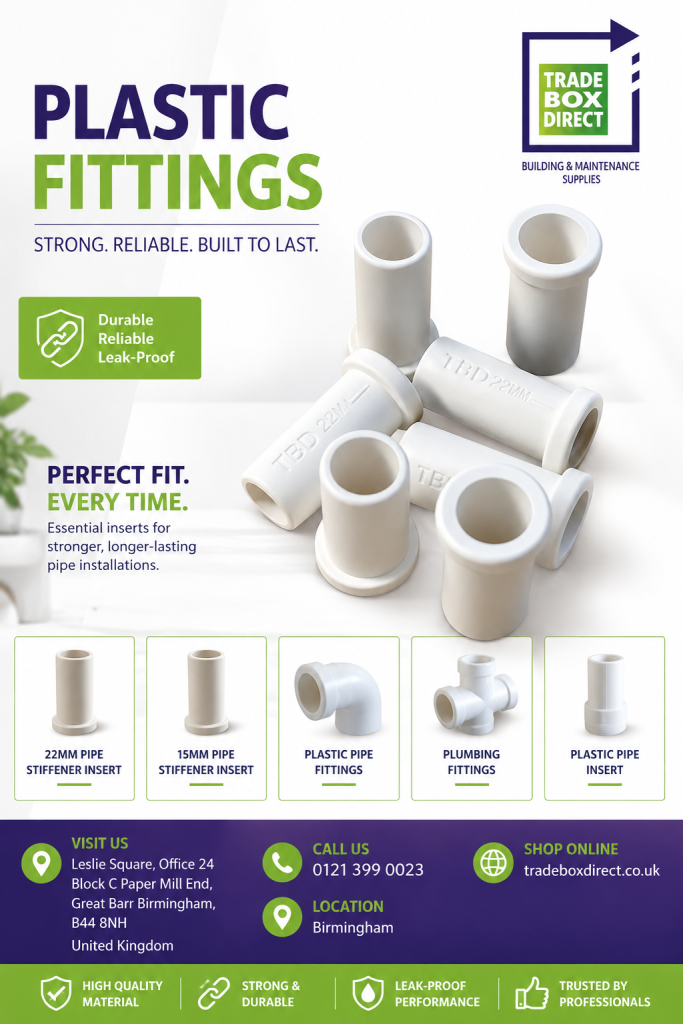
A 15mm pipe stiffener insert is a small component that goes inside a 15mm plastic pipe. It supports the pipe wall from the inside.
The insert is also known as a 15mm pipe insert or pipe support insert. It is commonly used when connecting plastic pipe to suitable plumbing fittings.
The main purpose is simple. The insert helps the pipe maintain its round shape at the joint. This gives the fitting a stronger and more stable surface to grip.
Plastic pipe is flexible by nature. This flexibility makes it easy to cut, bend, and install. However, that same flexibility can be a problem at a connection point. Therefore, an internal insert can provide extra support where it is needed most.
For many plastic fittings, the quality of the pipe connection is just as important as the fitting itself. A correctly selected insert can help make that connection more reliable.
When Should I Use a 15mm Pipe Stiffener Insert?
You should use a 15mm pipe stiffener insert when a compatible 15mm plastic pipe requires internal support at a fitting connection.
It is especially useful when you are using plastic pipe with compatible push-fit, compression, or other approved connection systems that require or recommend pipe support.
Before installation, always check the instructions for your fitting and pipe. Different manufacturers may have different requirements.
A 15mm insert can be useful when:
- Connecting 15mm plastic pipe to a suitable fitting
- Supporting the pipe wall inside the fitting
- Helping the pipe keep its shape
- Working on domestic plumbing systems
- Replacing an old connection
- Installing new pipework
- Using a fitting system that specifies an internal pipe insert
However, do not assume that every fitting needs the same type of insert. Some systems have specific inserts designed for their pipe and fitting range. Therefore, checking compatibility is important.
How Does a Pipe Stiffener Insert Work?
A pipe insert works from inside the pipe.
First, the plastic pipe is cut to the correct length. Next, the end of the pipe is prepared. The insert is then pushed into the open end of the pipe.
Once inside, the insert supports the pipe wall. The pipe can then be connected to the compatible fitting.
The insert helps reduce the amount of movement or deformation that can happen when the connection is made. As a result, the pipe has better internal support at the joint.
Think of it like placing a small support inside a soft tube. The outside may still be flexible, but the supported section is less likely to change shape.
This is why pipe inserts are useful in many plastic pipe systems. They provide support without making the pipe difficult to handle.
What Are Pipe Stiffener Inserts Made Of?
The material used for a pipe stiffener insert depends on the product and manufacturer.
Many inserts are made from a strong material that can provide internal support while resisting normal conditions inside a plumbing system. Some products use metal, while others may use engineered plastics or other suitable materials.
For this reason, you should always check the product specification before buying.
The important points are strength, correct size, compatibility, and suitability for the pipe system.
A good insert should fit the inside of the pipe correctly. It should not be so large that it damages the pipe. At the same time, it should provide enough support to help the pipe maintain its shape.
What Size Pipe Insert Do I Need?
The size of the insert must match the pipe it is designed for.
For example, a 15mm pipe insert is intended for compatible 15mm pipe. A 22mm insert is intended for compatible 22mm pipe.
It is important not to choose an insert based only on the outside appearance of the pipe. Pipe dimensions and product standards can vary. Always check the pipe manufacturer’s information and the fitting manufacturer’s instructions.
For a 15mm plastic pipe system, look for a product specifically designed for that pipe type.
For a 22mm system, use a suitable 22mm insert.
Using the correct size helps the insert sit properly inside the pipe. It also helps the connection system work as intended.
15mm Pipe Stiffener Insert vs 22mm Pipe Stiffener Insert
Both products have the same basic purpose. The main difference is the pipe size they are designed to support.
15mm Pipe Stiffener Insert
A 15mm insert is designed for compatible 15mm plastic pipe.
It is often useful for smaller domestic pipe runs and connections. For example, 15mm pipe is commonly found in parts of domestic water and heating installations.
22mm Pipe Stiffener Insert
A 22mm pipe stiffener insert is designed for compatible 22mm plastic pipe.
The larger size is suitable when the pipe system uses 22mm pipe. It should not be used in a 15mm pipe.
Therefore, selecting between the two is simple when you know the pipe size. Match the insert to the correct pipe and fitting system.
What Are Plastic Pipe Fittings?
Plastic pipe fittings are components used to connect, change, control, or terminate plastic pipe.
They come in many forms. Common examples include:
- Straight connectors
- Elbows
- Tees
- Reducers
- Adaptors
- Couplers
- Valves
- End stops
The correct fitting depends on the job.
Some fittings connect two pipes. Others change the direction of the pipe. A tee can create a branch, while an adaptor can connect different types of connections.
When using plastic pipe with fittings, the pipe must be prepared correctly. This is where a suitable insert may become important.
The insert is not a replacement for the fitting. Instead, it works with the connection system to provide internal pipe support.
How Do You Install a 15mm Pipe Insert?
Installing an insert is usually a simple process, but you should always follow the instructions supplied with the pipe and fitting.
Step 1: Check the Pipe
First, make sure you are working with compatible 15mm plastic pipe.
Check the pipe for cracks, damage, dirt, or deformation. A damaged pipe should not simply be hidden inside a fitting.
Step 2: Cut the Pipe
Cut the pipe cleanly and squarely.
A clean cut helps the pipe enter the fitting correctly. Avoid leaving rough edges or deep marks on the pipe.
Step 3: Prepare the Pipe End
Remove any burrs or rough edges if required by the pipe and fitting system.
The end should be clean and ready for the insert and fitting.
Step 4: Insert the Stiffener
Push the correct insert into the open end of the pipe.
Make sure it is fully seated according to the product instructions.
Step 5: Connect the Fitting
Insert the prepared pipe into the compatible fitting.
Follow the fitting manufacturer’s instructions for the correct insertion depth and connection method.
Step 6: Check the Joint
Finally, check the connection before putting the system into normal use.
If the system is designed for a pressure test, complete the test according to the manufacturer’s instructions.
Why Are Pipe Inserts Important?
Pipe inserts can provide valuable support in plastic pipe connections.
The main advantage is that they help support the pipe wall. This can be especially useful because plastic pipe can flex more easily than some rigid pipe materials.
Other benefits include:
Better Pipe Support
The insert supports the pipe from the inside. This can help keep the pipe stable at the connection.
Helps Maintain Pipe Shape
A flexible pipe can change shape when pressure is applied. An insert helps support the section inside the fitting.
Useful for Plastic Pipe Systems
Plastic pipe systems are lightweight and easy to install. Inserts can complement these systems by providing support at connection points.
Easy to Install
Most suitable inserts are small and simple to fit. They do not require complicated equipment.
Helps With Reliable Connections
A properly prepared pipe and compatible insert can contribute to a secure connection.
However, an insert cannot fix a damaged pipe or an incorrect fitting. Correct installation is still essential.
What Are the Benefits of Using Plastic Pipe Inserts?
The biggest benefit of plastic fittings and compatible pipe inserts is that they can make plastic pipe installation practical and efficient.
Plastic pipe is popular because it is lightweight, easy to handle, and often simple to cut. However, the pipe still needs suitable support at connection points.
An insert can help provide that support.
It can also make the installation process more controlled. Instead of relying only on the flexible pipe wall, the connection has additional internal support.
In addition, using the correct product can help reduce installation errors. You know that the insert has been selected for a specific pipe size and system.
Still, the insert must be compatible. Do not use a random insert simply because it appears to fit.
Common Mistakes to Avoid
Although installing an insert is usually straightforward, several mistakes can cause problems.
Using the Wrong Size
Do not use a 22mm insert in a 15mm pipe. Likewise, do not force a 15mm insert into a larger pipe.
Skipping Pipe Preparation
A poor cut can make the connection harder. Always prepare the pipe as recommended.
Using a Damaged Pipe
An insert cannot repair a split, cracked, or badly damaged pipe.
Mixing Incompatible Products
Not every pipe, insert, and fitting works together. Always check compatibility.
Forgetting the Manufacturer’s Instructions
Different systems can have different requirements. Therefore, the manufacturer’s instructions should always take priority.
Assuming Every Joint Needs an Insert
Some connection systems may require a stiffener, while others may have different requirements. Check before installation.
How Can I Choose the Right Product?
Choosing the right product starts with the pipe.
First, identify the pipe size. If you are working with compatible 15mm plastic pipe, look for a 15mm insert. If you are working with compatible 22mm plastic pipe, choose the 22mm option.
Next, check the pipe material and fitting system.
Then, confirm that the insert is suitable for that combination.
For example, if you are buying a plastic pipe insert for a domestic plumbing project, check the product description carefully. Look for information about pipe size, compatibility, material, and intended use.
At TradeBoxDirect, customers looking for plumbing components can compare suitable products within the plastic fittings category. The 15mm pipe stiffener insert and 22mm pipe stiffener insert are useful options to consider when the matching pipe system calls for internal support.
When Should I Choose a 22mm Pipe Stiffener Insert?
Choose a 22mm insert when you are working with compatible 22mm plastic pipe and the fitting system requires or recommends an insert.
The purpose is the same as the smaller version. It supports the inside of the pipe at the connection.
However, size matters. A 22mm insert is designed for a larger pipe, so it should not be substituted for a 15mm product.
If you are unsure which product you need, check the pipe marking or packaging. You can also check the manufacturer’s technical information.
Are Pipe Inserts Needed for All Plumbing Fittings?
No. The requirement depends on the pipe, fitting, connection system, and manufacturer.
Some plumbing fittings are designed to work with specific plastic pipe systems. Those systems may require an insert for the connection.
Other systems may use a different method of supporting the pipe.
Therefore, always check the fitting instructions before installation.
Using an insert when one is required is important. However, adding an unsuitable insert to a system can also cause problems.
The best approach is simple: match the pipe, insert, and fitting according to their specifications.
Where Can I Buy 15mm and 22mm Pipe Inserts?
If you are looking for pipe support components, start by checking the product specifications rather than choosing only by price.
For a 15mm system, look for a suitable 15mm pipe stiffener insert. For a 22mm system, look for the matching 22mm version.
TradeBoxDirect provides plumbing-related products for customers who need components for repair, maintenance, and installation work. You can browse the plastic fittings category to find products that match your project requirements.
Before ordering, confirm:
- Pipe size
- Pipe material
- Fitting type
- Insert compatibility
- Product quantity
- Manufacturer requirements
This simple check can help you order the correct component the first time.
Frequently Asked Questions
1. What is a 15mm pipe stiffener insert?
It is a small component that fits inside compatible 15mm plastic pipe. Its main purpose is to support the pipe wall at a connection point.
2. What does a pipe insert do?
A pipe insert supports the inside of the pipe. It helps the pipe maintain its shape where it enters a compatible fitting.
3. Can I use a 22mm insert in 15mm pipe?
No. A 22mm insert is designed for compatible 22mm pipe. Use the correct size for the pipe you are installing.
4. Are pipe inserts only used with plastic pipe?
They are commonly used with plastic pipe systems, but suitability depends on the specific product and connection system. Always check the manufacturer’s instructions.
5. Are pipe inserts easy to install?
Yes, suitable inserts are generally simple to install. The pipe should first be cut and prepared correctly before the insert is fitted.
6. What is the difference between pipe inserts and fittings?
An insert supports the pipe from inside. A fitting connects, changes, controls, or terminates the pipe. They perform different jobs but can work together.
7. Can an insert repair damaged pipe?
No. An insert is not a repair product. Damaged or unsuitable pipe should be replaced or repaired using an approved method.
8. Should I use an insert with every fitting?
Not necessarily. The requirement depends on the pipe and fitting system. Always follow the manufacturer’s instructions.
9. Why are pipe inserts useful in plastic plumbing?
They provide internal support to the pipe. This can help the pipe remain stable and correctly shaped at the connection point.
10. Which insert should I buy for 15mm plastic pipe?
Choose a compatible 15mm product, such as a suitable 15mm pipe stiffener insert. Always confirm compatibility before purchase.
Conclusion
A 15mm pipe stiffener insert is a small but useful component for compatible plastic pipe systems. Its main job is to support the pipe from the inside at a connection point.
When used correctly, it can help the pipe maintain its shape and provide better support inside a suitable fitting. The same basic principle applies to the 22mm pipe stiffener insert, although the two products are designed for different pipe sizes.
The most important rule is to choose the correct size and check compatibility. A 15mm pipe needs a suitable 15mm insert, while a 22mm pipe needs the matching 22mm product.
Whether you are replacing a connection, completing a new installation, or buying plumbing fittings, understanding how inserts work can help you make a better choice.
Before you buy, check the pipe size, material, fitting type, and manufacturer’s instructions. Then choose the correct insert for the system.
With the right components and careful installation, plastic fittings can provide a practical solution for many plastic pipe projects.