







When Should I Use a 22mm Pipe Insert in Plumbing?
Introduction
Plastic fittings needs the right parts. Each part has a clear job. Therefore, choosing the right size matters.
A 22mm pipe insert can support a suitable plastic pipe at a joint. It sits inside the pipe. As a result, it helps the pipe keep its shape during fitting.
This guide explains when you should use a 22mm pipe insert. It also covers how pipe inserts work, what they do, what they are made from, and how to fit them.
You will also learn about the difference between a 22mm pipe stiffener insert and a 15mm pipe stiffener insert.
If you are looking for plastic fittings, this guide can help you choose the right parts for your plumbing job.
What Is a 22mm Pipe Insert?
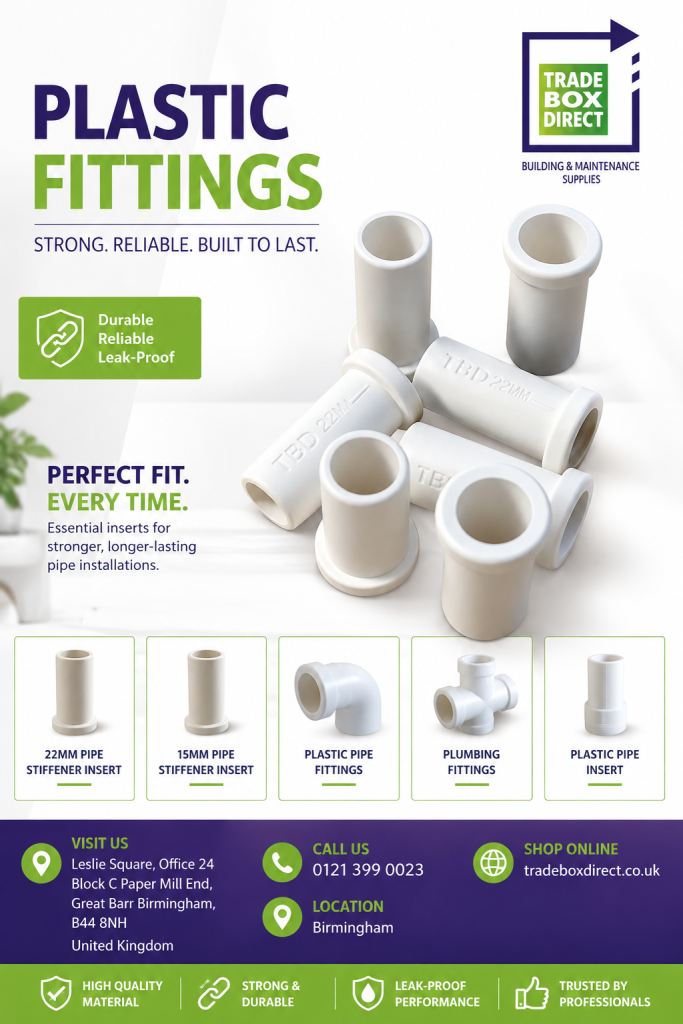
A 22mm pipe insert is a small support part. It fits inside a compatible 22mm pipe.
Its main job is simple. It supports the pipe from the inside.
Plastic pipe insert can bend or flex. This can happen when you connect the pipe to a fitting. A fitting may also place pressure around the pipe.
The insert gives the pipe extra support. Therefore, the pipe can keep its shape during the connection.
Think of the insert as a small sleeve. It sits inside the pipe. Meanwhile, the fitting sits around the pipe.
Together, they help create a stable connection.
A pipe insert does not join two pipes by itself. Instead, it works with a suitable fitting.
For that reason, always check the pipe and fitting instructions before use.
When Should I Use a 22mm Pipe Insert?
You should use a 22mm pipe insert when the pipe and fitting system calls for internal support.
There are several common situations where an insert can help.
1. When Joining 22mm Plastic Pipe
A 22mm plastic pipe fittings may need extra support at a joint. This is especially true with some mechanical fittings.
The insert sits inside the pipe. As a result, it helps the pipe keep its round shape.
This support can make the connection more stable.
However, not every 22mm pipe needs an insert. So, check the manufacturer’s instructions first.
2. When Using a Compression Fitting
Compression fittings use pressure to hold a pipe in place.
Some plastic pipes can flex under this pressure. Therefore, the pipe may need support from inside.
A suitable insert gives the pipe a firm inner surface. Then, the fitting can grip the pipe as intended.
Always follow the fitting instructions. In addition, avoid using too much force when tightening the fitting.
3. When the Pipe Needs Extra Support
Some plastic pipes are flexible. This makes them easy to move and install.
However, flexibility can also affect a joint. For example, the pipe may change shape when you tighten a fitting.
A pipe insert can help in this situation.
It supports the pipe wall from inside. Therefore, it can help reduce unwanted movement.
4. When the Manufacturer Requires One
This is the most important rule.
Always check the pipe manufacturer’s instructions. Also, check the fitting manufacturer’s guidance.
Some systems need an insert for certain connections. Other systems may use a different method.
Therefore, never assume that every 22mm pipe needs a stiffener.
How Does a 22mm Pipe Insert Work?
The idea is simple.
First, you prepare the pipe. Next, you place the correct insert inside it. Then, you connect the pipe to the correct fitting.
The insert supports the pipe from inside. At the same time, the fitting supports it from outside.
This gives the pipe support on both sides.
For example, imagine a soft tube. If you squeeze the tube, it may change shape. Now place a firm sleeve inside it. The sleeve helps the tube keep its shape.
A pipe insert works in a similar way.
It does not replace the fitting. Instead, it helps the fitting work with the pipe.
Therefore, the insert acts as a support part rather than a joining part.
What Are Pipe Inserts Made Of?
Manufacturers make pipe inserts from strong materials.
Many inserts use rigid plastic or other suitable materials. The exact material can vary by product.
Material choice matters. Plumbing fittings systems can face heat, water pressure, and movement.
Therefore, the insert must suit the pipe and fitting system.
Do not choose an insert only because it looks right. Instead, check its product details.
Look at the size. Then, check the material and compatibility. Finally, check the intended use.
This simple check can help you avoid the wrong product.
Why Do Plastic Pipes Need Internal Support?
Plastic pipes have many benefits.
They are light. They are also easy to cut and handle. In addition, they can make plumbing work quicker.
However, some plastic pipes can flex more than metal pipes.
That flexibility can affect some connections. For example, a fitting may press against the pipe and change its shape.
An insert can support the pipe at this point.
It sits inside the pipe. Therefore, it can help the pipe resist pressure from the fitting.
As a result, suitable plastic fittings can work more effectively with the correct support parts.
Still, you should always check the pipe system first.
What Is the Difference Between a 22mm and 15mm Pipe Insert?
The main difference is size.
A 22mm pipe stiffener insert suits a compatible 22mm pipe. On the other hand, a 15mm pipe stiffener insert suits a compatible 15mm pipe.
Both products provide internal support. However, they have different dimensions.
22mm Pipe Stiffener Insert
A 22mm pipe stiffener insert supports a suitable 22mm pipe.
You may find 22mm pipe in larger domestic plumbing runs. It can also appear in other plumbing systems.
The exact use depends on the pipe system.
Therefore, check the pipe details before buying the insert.
15mm Pipe Stiffener Insert
A 15mm pipe stiffener insert supports a suitable 15mm pipe.
Many domestic plumbing systems use 15mm pipe. Therefore, you may need this size for smaller pipe runs.
Again, check the pipe and fitting instructions first.
Can You Swap Them?
No.
A 15mm insert does not replace a 22mm insert. Likewise, a 22mm insert does not replace a 15mm insert.
The size must match the pipe system.
Can I Use a 22mm Pipe Insert With Any 22mm Pipe?
Not always.
The term “22mm” tells you the pipe size. However, it does not tell you every detail about the pipe.
Different pipes can have different wall thicknesses. They can also have different internal sizes and materials.
For example, two 22mm pipes may use different designs.
The fittings may also have different requirements.
Therefore, check these details before you choose an insert:
- Size
- Material
- Pipe construction
- Internal diameter
- Wall thickness
- Fitting type
- Connection method
- Manufacturer instructions
- Temperature limits
- Pressure limits
These checks take only a little time. However, they can prevent a poor product choice.
How Do I Fit a 22mm Pipe Insert?
Always follow the instructions for your specific product.
However, the basic process is easy to understand.
Step 1: Check the Pipe
First, check the pipe size.
Make sure it matches the insert. Also, look for cracks, cuts, or damage.
Step 2: Cut the Pipe
Use a suitable pipe cutter.
Make a clean and straight cut. A poor cut can make the joint harder to install.
Step 3: Clean the Pipe
Remove dirt from the pipe end.
Then, check the end for damage. If you find a damaged section, follow the pipe manufacturer’s guidance.
Step 4: Insert the Stiffener
Place the correct insert inside the pipe.
Push it into the correct position. Do not force it if it does not fit.
Instead, stop and check the size and product details.
Step 5: Fit the Connector
Place the pipe into the correct fitting.
Then, secure the fitting as the manufacturer advises.
Avoid over-tightening. Too much force can damage the pipe or fitting.
Step 6: Check the Joint
Finally, inspect the connection.
Check the alignment. Also, make sure the pipe sits correctly in the fitting.
If the system needs a pressure test, follow the correct testing procedure.
What Are the Benefits of Pipe Inserts?
Pipe inserts have several useful benefits.
They Support the Pipe
The insert supports the pipe from inside.
Therefore, it can help the pipe keep its shape at the joint.
They Can Reduce Deformation
A fitting can put pressure on a flexible pipe.
An insert can help the pipe resist this pressure. As a result, it can help reduce unwanted deformation.
They Suit Some Plastic Pipe Systems
Modern plumbing often uses plastic pipe.
Suitable inserts can provide extra support for some connection types.
They Are Small and Easy to Handle
Pipe inserts are small parts.
You can store them easily. You can also carry them without much effort.
They Can Help During Repairs
A suitable insert may help during repair work.
However, always check whether the pipe system allows its use.
They Support Stable Connections
The insert gives the pipe internal support.
Therefore, it can help create a more stable connection when you use the correct fitting and installation method.
For these reasons, pipe inserts often appear with plastic fittings and other plumbing parts.
What Mistakes Should I Avoid?
Small plumbing parts still need careful handling.
Using the Wrong Size
Do not use a 15mm insert in a 22mm pipe.
Likewise, do not use a 22mm insert in a 15mm pipe.
The wrong size may not provide the right support.
Ignoring Compatibility
Do not assume that every insert works with every pipe.
Instead, check the product information and manufacturer’s instructions.
Using a Damaged Pipe
An insert cannot repair a badly damaged pipe.
Replace or repair the affected section according to the system guidance.
Forcing the Insert
A correct insert should fit the intended pipe.
If it does not fit, stop. Then, check the size and product details.
Overtightening the Fitting
More pressure does not always mean a better joint.
Instead, follow the fitting manufacturer’s instructions.
Skipping the Instructions
Every plumbing system can differ.
Therefore, take a few minutes to read the product guidance before installation.
How Can I Choose the Right Plumbing Fittings?
Start with the pipe.
First, identify the pipe size. Next, check the pipe material. Then, confirm the pipe construction.
After that, choose a suitable fitting.
If you have compatible 22mm plastic pipe, look for a fitting designed for that pipe. Also, check whether the system needs a 22mm pipe insert.
For 15mm pipe, choose the matching 15mm components.
When shopping for plastic fittings, check the product information carefully.
Look for:
- Pipe size
- Material
- Compatibility
- Fitting type
- Connection method
- Intended use
- Manufacturer guidance
As a result, you can make a more informed choice.
Where Can I Find 22mm and 15mm Pipe Stiffener Inserts?
If you need pipe support for a suitable plumbing project, you can explore the relevant plastic fittings category at TradeBoxDirect.
The category includes products such as:
- 22mm pipe stiffener insert
- 15mm pipe stiffener insert
These products can help provide internal support for compatible pipe systems.
Before you order, compare the product details with your pipe.
If you need a 22mm pipe stiffener insert, check that the product suits your 22mm pipe system. Similarly, choose a 15mm pipe stiffener insert for a compatible 15mm system.
When you are unsure, check the pipe manufacturer’s technical guide.
Are Pipe Inserts the Same as Plastic Pipe Fittings?
No. They have different jobs.
A fitting can join pipes. It can also change direction or create a branch.
Examples include:
- Elbows
- Tees
- Couplers
- Adapters
- Connectors
A pipe insert has another role.
It supports the inside of the pipe.
Therefore, an insert normally works with a suitable fitting rather than replacing it.
Understanding this difference can make shopping easier. It can also help you avoid ordering the wrong part.
Why Does the Correct Pipe Insert Matter?
A pipe insert may look small. However, it can play an important role in a plumbing joint.
The wrong insert may not fit correctly. It may also fail to give the pipe enough support.
Therefore, start with accurate pipe information.
Check the pipe size first. Then, check the pipe construction and fitting requirements.
Finally, compare those details with the insert specifications.
This process can help you choose the right component.
Frequently Asked Questions
Can I use a 22mm pipe insert in a 15mm pipe?
No. A 22mm insert suits a compatible 22mm pipe system. For a 15mm pipe, use a suitable 15mm insert when the system requires one.
What does a plastic pipe insert do?
A plastic pipe insert supports the inside of a compatible pipe. It helps the pipe keep its shape when a suitable fitting applies pressure.
Does every plastic pipe need an insert?
No. The need depends on the pipe, fitting, and connection system. Therefore, always follow the manufacturer’s instructions.
Can I use a 15mm pipe insert with 22mm pipe?
No. The sizes differ. Therefore, choose an insert that matches the pipe system.
Does a 22mm insert connect two pipes?
No. An insert normally supports the inside of a pipe. A suitable coupler or connector joins the pipes.
Are pipe inserts hard to install?
Most inserts have a simple installation process. However, you still need to prepare the pipe correctly and follow the product instructions.
Conclusion
A 22mm pipe insert is a small but useful plumbing component. It supports the inside of a compatible 22mm pipe at a suitable connection.
The insert helps the pipe keep its shape. It can also help reduce deformation when a fitting applies pressure.
However, you should always choose the correct size. A 22mm pipe stiffener insert suits a compatible 22mm system. A 15mm pipe stiffener insert suits a compatible 15mm system.
Do not swap these sizes.
Before buying plastic fittings, check your pipe size and type. Then, check the fitting requirements. Finally, confirm whether you need a pipe insert.
If your system needs a 22mm insert, choose a suitable 22mm product. If it needs a 15mm insert, choose the correct 15mm option.
With the right plastic fittings, correct pipe inserts, and careful installation, you can create a strong and dependable plumbing connection.