




Can Furniture Accessories Improve the Life of a Cabinet?
Introduction
Cabinets store clothes, dishes, tools, and other items. They also support daily routines in homes, offices, shops, and work areas. However, daily use can place stress on doors, corners, joints, shelves, and panels. Over time, small problems can cause loose fittings, damaged edges, or weak connections.
This is where furniture accessories can help. The right parts can protect cabinet surfaces, support joints, reduce movement, and make everyday use easier. They may look small, but they can help keep a cabinet strong.
What Are Furniture Accessories?
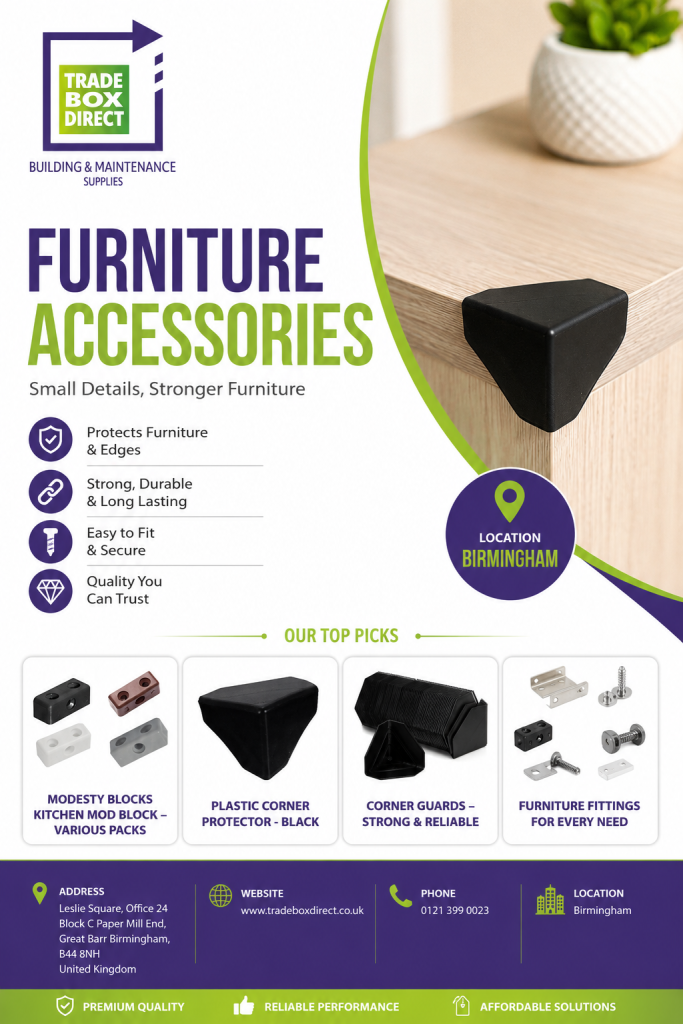
Furniture accessories are small parts used to build, protect, support, or improve furniture. They include corner protectors, brackets, blocks, screws, caps, hinges, handles, and other support items. Some parts are visible, while others sit inside the cabinet and stay out of sight.
For example, a modesty block can help join two panels. A corner protector can help shield an exposed edge from knocks. These simple parts can reduce wear and help a cabinet stay in better condition.
Therefore, choosing the right accessory is not only about appearance. It is also about strength, safety, and long-term use.
How Can Accessories Extend Cabinet Life?
A cabinet faces many small stresses each day. Doors open and close. Shelves carry weight. Drawers move in and out. People may bump into corners or lean against panels. As a result, weak points can slowly develop.
Well-chosen furniture accessories can help manage these stresses. They can support joints, protect exposed areas, and keep parts in the right position. In turn, this can reduce damage caused by repeated use.
However, accessories cannot fix every problem. A badly damaged cabinet may need repair or replacement. Still, good accessories can help prevent many common issues before they become serious.
Protecting Cabinet Corners
Cabinet corners often take a lot of impact. A chair, box, toy, tool, or other object can hit an exposed corner. Over time, repeated knocks can chip paint, damage laminate, or weaken the edge.
This is why corner protectors can be useful. They add a protective layer around vulnerable areas. In homes with children, they can also make sharp furniture edges safer.
A plastic corner protector is one simple option. Plastic is light, easy to fit, and suitable for many furniture projects. Depending on the design, it can protect an edge from everyday bumps and scratches.
A furniture corner protector can also help keep the cabinet looking neat. Instead of allowing an exposed edge to take repeated hits, the protector absorbs some of the impact.
Corner guards can provide extra coverage in busy spaces where furniture receives frequent contact.
Supporting Cabinet Joints
Cabinet joints are another important area. Panels need strong connections to stay stable. If a joint moves too much, the cabinet may become loose or uneven.
Furniture fittings can help create secure connections between panels. They are available in many shapes and sizes, so the right choice depends on the cabinet design and material.
For example, a modesty block can join two panels and add support. It is often placed inside furniture, so it can provide strength without changing the outside appearance.
Modesty blocks are especially useful when a clean finish matters. They can help reinforce a joint while keeping the connection simple.
In addition, mod blocks can be useful during furniture assembly and repair. They can help hold panels together and reduce unwanted movement when fitted correctly.
Reducing Wear on Furniture Panels
Cabinet panels can suffer from repeated pressure. A loose joint may cause one panel to rub against another. Likewise, a poorly supported shelf can place extra stress on side panels.
Furniture hardware can help reduce these problems. Strong hinges, brackets, screws, supports, and connectors can keep parts aligned. When parts stay in the correct position, they are less likely to rub, bend, or move too much.
This can be especially helpful for cabinets that are opened and closed many times each day. Kitchen cabinets, office storage units, and workshop cupboards often face this level of use.
Still, hardware must match the job. A small connector may not be suitable for a heavy panel. Therefore, check the size, material, load, and fitting method before installation.
Improving Cabinet Stability
A stable cabinet is less likely to suffer from stress caused by movement. If a cabinet rocks or shifts, its joints may loosen over time. Accessories can help create a more stable structure.
For example, support blocks can strengthen internal connections. Brackets can help secure parts. Corner protectors can protect vulnerable edges. Together, these small improvements can make a cabinet feel stronger.
Moreover, stable furniture is easier to use. Doors can align better, shelves can stay level, and drawers can move with less strain.
Choosing the Right Material
Material matters when selecting an accessory. Plastic, metal, wood, and other materials can suit different cabinet needs.
Plastic parts are often useful for light protection and simple support. A plastic corner protector can be a good choice for exposed furniture edges. Metal fittings may suit areas that need higher strength.
However, the best material depends on the application. Consider where the part will go, how much pressure it will face, and how often the cabinet will be used.
Also, think about moisture. Kitchen and utility cabinets may need parts that handle moisture well.
Simple Maintenance Can Make Accessories Work Better
Installing an accessory is only the first step. Regular checks can help keep the cabinet in good condition.
First, inspect screws and joints from time to time. Tighten loose connections when needed. Next, check protectors for cracks or movement. If a part becomes damaged, replace it before the problem grows.
Also, keep cabinet surfaces clean. Dirt can collect around hinges, blocks, and other fittings. This can affect movement and create extra wear.
Therefore, basic care combined with suitable furniture accessories can provide better long-term results.
Are Accessories Useful for Old Cabinets?
Yes, they can be useful for older cabinets. A cabinet does not always need complete replacement when a small part becomes weak or damaged.
For example, a damaged corner may need a protector. A loose joint may need a new block or fitting. A worn hinge may need replacement. These small repairs can restore useful function.
However, inspect the cabinet first. If the main panels have serious water damage, deep cracks, or major structural weakness, accessories may not be enough.
Using Accessories During Cabinet Assembly
It is often easier to protect a cabinet during assembly than to repair it later. Adding the right parts at the start can help reduce future wear.
During assembly, check every joint. Make sure panels sit correctly before tightening screws. Use suitable fittings and avoid forcing parts into place.
Protect exposed corners when the design allows it, especially on cabinets that move often.
Careful assembly can give accessories a better foundation and help the cabinet remain stable.
Do Furniture Accessories Improve Cabinet Appearance?
They can. Some accessories are designed to be hidden, while others add a neat finishing touch.
A well-fitted corner protector can create a clean edge. Suitable furniture fittings can keep visible connections tidy. Small blocks can sit inside the cabinet and remain almost invisible.
Replacing worn or broken parts can also make an older cabinet look cared for.
Furthermore, simple improvements can help a cabinet look more complete while also supporting its function.
What Should You Check Before Buying?
Before buying an accessory, check the cabinet and the job it needs to do.
Consider the following points:
- Measure the area where the part will fit.
- Check the thickness of the cabinet panels.
- Consider the expected load or pressure.
- Choose a material suited to the environment.
- Check whether the part is for indoor or outdoor use.
- Make sure screws or fixings match the material.
- Look for clear fitting instructions.
- Choose a trusted supplier where possible.
These checks can prevent poor fits.
Can Accessories Replace Proper Cabinet Care?
No. Accessories support good furniture care, but they do not replace it.
Avoid putting too much weight on shelves. Open and close doors gently. Clean spills quickly, especially around wooden or laminated panels. Also, fix loose joints as soon as you notice them.
When you combine careful use with suitable furniture accessories, you can reduce common causes of cabinet wear.
Final Thoughts
So, can furniture accessories improve the life of a cabinet? In many cases, yes. Small furniture accessories can protect corners, support joints, improve stability, and reduce daily wear.
Corner protectors can shield exposed edges. Furniture fittings can support connections. Furniture hardware can help keep moving and fixed parts secure. A plastic corner protector or furniture corner protector can reduce damage from everyday knocks. Corner guards can offer extra protection in busy areas. A modesty block, modesty blocks, or mod blocks can help strengthen cabinet joints.
Most importantly, choose the right part for the job. Check the size, material, load, and fitting method before use. Then, combine good accessories with regular maintenance and careful use.
A cabinet may be a large piece of furniture, but its long-term strength often depends on small details. With the right protection and support, you can help your cabinet stay useful, stable, and attractive for many more years.