








How Do I Choose the Right Furniture Fittings?
Introduction
Choosing the right parts for furniture accessories can make a big difference. Good fittings help furniture stay strong, safe, and easy to use. They can also improve the look of a cabinet, shelf, table, or cupboard. However, with so many options available, choosing the right ones can feel hard.
This is where furniture accessories can help. They include many useful parts that support furniture during daily use. These parts can protect corners, join panels, add strength, and improve safety. Therefore, it is important to know what you need before you buy.
Whether you are building new furniture or repairing an old cabinet, the right fittings can save time and money. So, how do you choose the best options? Let us look at the key points in a simple way.
1. Know What Your Furniture Needs
First, look at the type of furniture you are working on. A kitchen cabinet may need different parts from a bookcase or office desk. Therefore, start by checking the design, size, and purpose of the furniture.
For example, cabinets often need parts that hold panels together. Shelves may need supports to carry weight. Tables may need strong joints. In addition, furniture used by children may need extra safety protection.
Before buying furniture accessories, ask a few simple questions:
- What type of furniture am I working on?
- How much weight will it hold?
- Which parts need extra support?
- Are there sharp corners that need protection?
- Do I need parts for joining panels?
- Will the furniture be used often?
These questions can help you avoid buying the wrong products.
2. Choose the Correct Size
Size is one of the most important factors when choosing furniture fittings. A fitting that is too small may not provide enough support. On the other hand, a fitting that is too large may not fit correctly.
For this reason, measure your furniture before ordering anything. Check the thickness of panels, the size of corners, and the space available for installation.
For example, if you need a pipe or panel insert, check its exact size first. Similarly, when buying brackets or joining parts, make sure the fixing points match your furniture.
Good furniture accessories should fit the furniture without forcing or damaging the material.
3. Think About Strength and Durability
Furniture is used every day. Doors open and close. Drawers move in and out. Shelves carry books, dishes, or other items. Therefore, fittings must be strong enough for regular use.
When choosing furniture hardware, look at the material and build quality. Strong plastic, metal, and other durable materials can provide reliable support when used correctly.
For heavy furniture, choose fittings that can handle the expected load. Also, consider how often the furniture will be used. A fitting for a cupboard used once a week may have different needs from one used several times each day.
In addition, good quality parts can reduce the need for frequent repairs.
4. Consider Safety
Safety is another major part of choosing furniture fittings. Sharp furniture corners can cause bumps and injuries. This can be a bigger concern in homes with young children or older people.
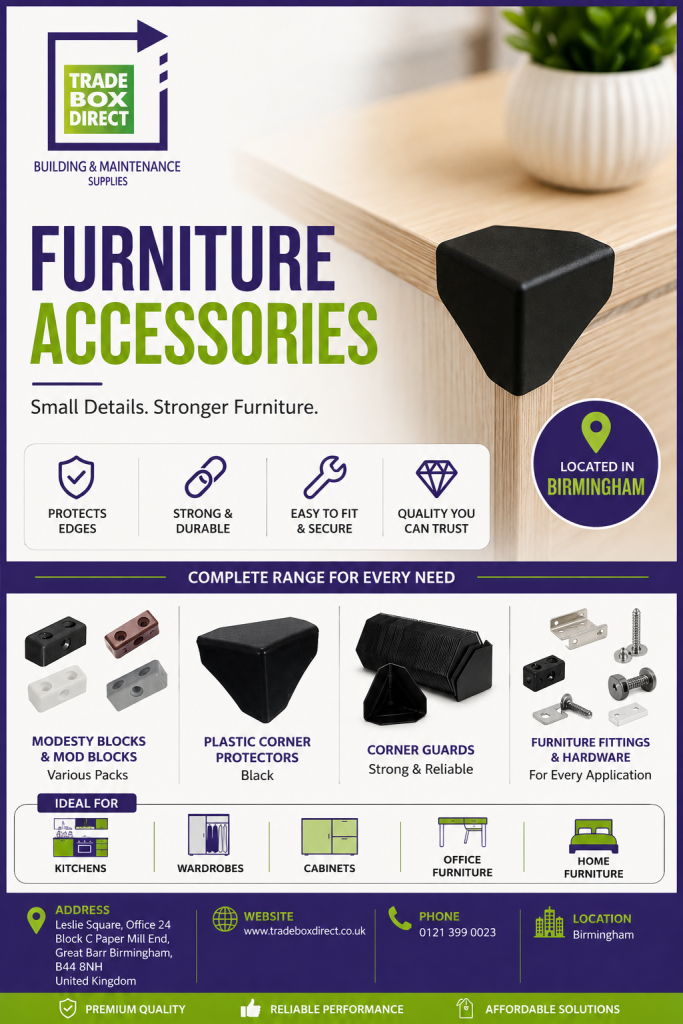
Corner protectors can help cover sharp furniture edges. They can be useful on tables, cabinets, shelves, desks, and other furniture.
A plastic corner protector is a simple option for many indoor furniture projects. It can cover an exposed corner and create a softer surface.
Likewise, a furniture corner protector can help reduce the risk caused by sharp edges. Before buying one, check the corner shape and size. The protector should sit securely and should not come loose during normal use.
Good furniture accessories should not only improve furniture. They should also help make it safer.
5. Look at the Material
The material of a fitting affects its strength, appearance, and lifespan. Therefore, always check what the product is made from.
Plastic fittings are often light and easy to handle. They can work well for many furniture protection and joining tasks. Metal fittings, meanwhile, can provide strong support for some applications.
However, the best material depends on the job. A small protective part may not need heavy metal construction. A joint that supports a large panel may need a stronger option.
Also, consider where the furniture will be used. Kitchen furniture may face moisture and regular cleaning. Office furniture may have heavy daily use. As a result, the material should suit the environment.
6. Use Corner Guards for Extra Protection
Corners are often overlooked during furniture design. Yet, they can become damaged over time. They may also create a safety risk.
Corner guards can protect exposed furniture corners from small impacts. They can also help reduce damage caused by regular knocks.
For example, a cabinet placed in a busy hallway may be hit by bags, boxes, or other objects. A suitable corner guard can add a layer of protection.
When selecting corner guards, check their shape, size, and fixing method. Some products may suit flat surfaces, while others are made for specific corner shapes.
As a result, choosing the correct guard is better than simply choosing the cheapest option.
7. Check How the Fitting Will Be Installed
Installation is another important point. Some fittings are easy to install with basic tools. Others may need screws, adhesives, or more careful positioning.
Before buying, check the installation method. Make sure you have the right tools and fixing materials.
For example, furniture fittings that require screws should match the panel thickness. Using screws that are too long may damage the surface. Similarly, poor positioning can weaken a joint.
Therefore, always read the product instructions when available. A simple installation can work well when the fitting is correctly positioned.
8. Use Modesty Blocks for Panel Support
When working with cabinets, desks, and other panel furniture, joining parts can be very useful. One popular option is a modesty block.
A modesty block can help connect panels and add support to furniture structures. It is often useful when two panels need to be joined in a simple and practical way.
Modesty blocks are commonly used in furniture assembly. They can help create a neat connection while adding stability.
You may also see the term mod blocks used for these products. The exact design can vary, so always check the product size and fixing method before installation.
When choosing furniture accessories, think about both appearance and function. A fitting should support the furniture while also working well with its design.
9. Match the Fitting With the Furniture Style
Function is important, but appearance also matters. Some fittings are hidden inside furniture. Others can be seen after installation.
If a fitting is visible, choose one that matches the furniture. For example, a black fitting may work well with darker furniture. A white fitting may blend better with light cabinets.
However, do not choose appearance over strength or safety. The fitting must first perform its main job.
A well-designed combination of furniture hardware and protective parts can make furniture look neat and professional.
10. Think About Long-Term Use
Furniture fittings should be chosen with future use in mind. A fitting may look suitable today, but will it still work after years of use?
Consider daily movement, weight, cleaning, moisture, and possible impacts. These factors can affect how long a fitting lasts.
For example, a cabinet door may be opened hundreds of times each year. Therefore, its fittings need to handle repeated movement.
Likewise, furniture placed in busy areas may need stronger protection. By thinking ahead, you can reduce repairs and replacement costs.
Good furniture accessories can help extend the useful life of furniture when they are correctly selected and installed.
11. Do Not Ignore Panel Thickness
Panel thickness can affect whether a fitting works correctly. This is especially important for joining blocks, brackets, screws, and other fixing parts.
Before installation, measure the panel. Then compare the measurement with the fitting requirements.
If the fitting does not match the panel, the connection may be weak. In some cases, it can also damage the furniture.
Therefore, measuring first is always a good idea. It takes only a few minutes and can prevent unnecessary problems later.
12. Choose Quality Over Price Alone
Price is important, especially when you need many fittings. However, the cheapest option is not always the best choice.
A low-cost fitting may wear out quickly or fail to provide enough support. This can lead to extra repair costs later.
Instead, compare quality, material, size, design, and intended use. Look for products that provide a good balance between price and performance.
This is especially important for furniture fittings used in furniture that receives heavy daily use.
13. Buy From a Reliable Supplier
Finally, choose a supplier that provides clear product information. A reliable supplier should make it easy to understand product size, material, use, and installation.
Clear information helps you compare different options. It also reduces the chance of ordering the wrong item.
If you are buying furniture accessories online, check product descriptions carefully. Look at measurements and application details before placing an order.
When possible, buy products that clearly state what they are designed to do. This makes the selection process much easier.
Common Furniture Fittings and Their Uses
Different fittings have different jobs. Here are some common examples:
Corner Protectors
These help protect exposed furniture corners. They can also improve safety by reducing sharp edges.
Furniture Fittings
This is a broad category that includes parts used to join, support, protect, or improve furniture.
Furniture Hardware
This includes many practical components used during furniture assembly and repair.
Plastic Corner Protector
These are useful for covering and protecting furniture corners. They can be a simple choice for many indoor applications.
Furniture Corner Protector
These products are designed to protect furniture corners from knocks and everyday contact.
Corner Guards
These provide added protection around exposed corners and edges.
Modesty Block
This type of fitting can help join furniture panels and improve structural support.
Modesty Blocks
These are useful for many cabinet, desk, and panel furniture projects.
Mod Blocks
This is another common term used for modesty blocks. Always check the product specifications before buying.
A Simple Buying Checklist
Before ordering any fitting, take a moment to check the following:
- Measure the furniture.
- Check the panel thickness.
- Identify the main purpose.
- Choose a suitable material.
- Check the fitting size.
- Consider safety.
- Check the installation method.
- Think about daily use.
- Compare quality and price.
- Buy from a reliable supplier.
This simple process can make furniture projects much easier.
FAQs About Choosing Furniture Fittings
1. What are furniture fittings used for?
Furniture fittings are used to join, support, protect, or improve furniture. They can help cabinets, desks, shelves, and other furniture stay stable and useful.
2. What are the most useful furniture accessories?
Useful options depend on the project. Corner protectors, joining parts, support blocks, and other protective fittings can be helpful for many furniture types.
3. Are plastic corner protectors suitable for furniture?
Yes. A plastic corner protector can be suitable for many indoor furniture applications. However, you should choose one that matches the corner size and shape.
4. What are corner guards used for?
Corner guards help protect exposed furniture corners. They can also reduce the risk of injury from sharp edges.
5. What is a modesty block?
A modesty block is a furniture fitting used to help join or support panels. It is often useful in cabinets, desks, and other panel-based furniture.
Final Thoughts
Choosing the right furniture fittings does not have to be difficult. Start by understanding what your furniture needs. Then measure the space, check the material, consider safety, and think about long-term use.
From corner protectors and corner guards to modesty blocks and other furniture hardware, each part has a specific purpose. The right choice can make furniture safer, stronger, and easier to maintain.
Most importantly, do not rush the buying process. Check the size and product details before ordering. When selected carefully, furniture accessories can provide practical support and protection for many types of furniture.
By following these simple steps, you can choose fittings with more confidence and make your furniture work better for years to come.