







What Are Furniture Corner Protectors Used For?
Introduction
Furniture corner protectors are small but useful items that can help protect furniture, people, and rooms. Sharp furniture corners can cause bumps, scratches, and damage. Therefore, adding a simple protector can make a big difference in furniture accessories.
Today, many homes, offices, shops, schools, and workshops use furniture accessories to improve the safety and life of furniture. Among these accessories, corner protectors are one of the easiest products to use.
A corner protector can cover a sharp edge on a table, cabinet, shelf, desk, or other furniture. As a result, it can reduce the risk of injury and help keep furniture looking neat.
This guide explains what furniture corner protectors are used for, where they can be fitted, and how to choose the right type.
What Are Furniture Corner Protectors?
Furniture corner protectors are small covers that fit over the corners or edges of furniture. They are often made from plastic, rubber, foam, or other soft materials.
The main purpose is simple. A protector creates a safer surface around a sharp or exposed corner. At the same time, it can help protect the furniture from small knocks and scratches.
For example, a sharp wooden table corner can cause pain if someone walks into it. A plastic corner protector can cover that edge and make it less harmful.
Many protectors are easy to fit. Some use adhesive backing, while others can be fixed with screws or other fittings. Therefore, the best choice depends on the furniture and the level of protection needed.
Why Are Furniture Corner Protectors Important?
Furniture corners can create several problems in busy spaces. People may walk into them, children may bump into them, and objects may hit them during daily use.
For this reason, corner protectors are useful in many settings.
First, they can improve safety. A covered corner is less likely to cause a sharp impact. Next, protectors can help reduce visible damage caused by regular knocks.
In addition, they can help furniture stay in good condition for longer. This makes them a practical part of furniture accessories for homes and workplaces.
A protector may also improve the look of older furniture. Instead of replacing a table because its corners are damaged, a suitable protector can provide a simple and affordable solution.
Where Can Furniture Corner Protectors Be Used?
There are many places where these products can be useful.
1. Tables and Desks
Tables and desks often have exposed corners. These areas can receive frequent knocks, especially in busy rooms.
A furniture corner protector can cover the exposed point. Therefore, it can help reduce the chance of cuts, bumps, and surface damage.
Desks in offices can also benefit from corner protection. Chairs, bags, equipment, and people can all come into contact with desk edges during the day.
2. Cabinets and Cupboards
Cabinets may have sharp corners and edges. This can be a concern in kitchens, bedrooms, offices, and storage areas.
Corner protectors can help cover these points. Furthermore, they can protect the cabinet finish from minor impacts.
For this reason, furniture fittings and protective products are often used together when building or maintaining cabinets.
3. Shelves
Shelves can also have exposed corners. A protector can make these areas safer while helping to reduce small marks.
This can be especially useful for shelves in children’s rooms, classrooms, and shared spaces.
4. Office Furniture
Office furniture receives regular use. Desks, cabinets, counters, and storage units can all experience daily knocks.
Using suitable furniture hardware and protective components can help keep office furniture safe and functional.
5. Children’s Furniture
Children often move quickly and may not notice sharp furniture corners. Therefore, corner protection can be helpful in playrooms, bedrooms, nurseries, and schools.
A soft or rounded protector may reduce the impact if a child bumps into a corner.
However, corner protectors should not replace proper supervision or other safety measures.
How Do Corner Protectors Protect Furniture?
Corner protectors work by creating a barrier between the furniture edge and outside objects.
Imagine a wooden table with a sharp corner. If a chair hits the corner, the impact may leave a dent. If a person walks into it, the sharp edge may cause pain.
A protector adds a protective layer around that point. As a result, the furniture corner receives less direct contact.
Some products also help prevent scratches. This can be useful for furniture that receives heavy daily use.
Therefore, corner guards can provide both safety and basic surface protection.
What Is a Plastic Corner Protector?
A plastic corner protector is a protective piece made from plastic. It is commonly used on furniture corners, cabinet edges, shelves, and other surfaces.
Plastic is popular because it is light, easy to handle, and suitable for many indoor applications. It can also be available in different shapes and colours.
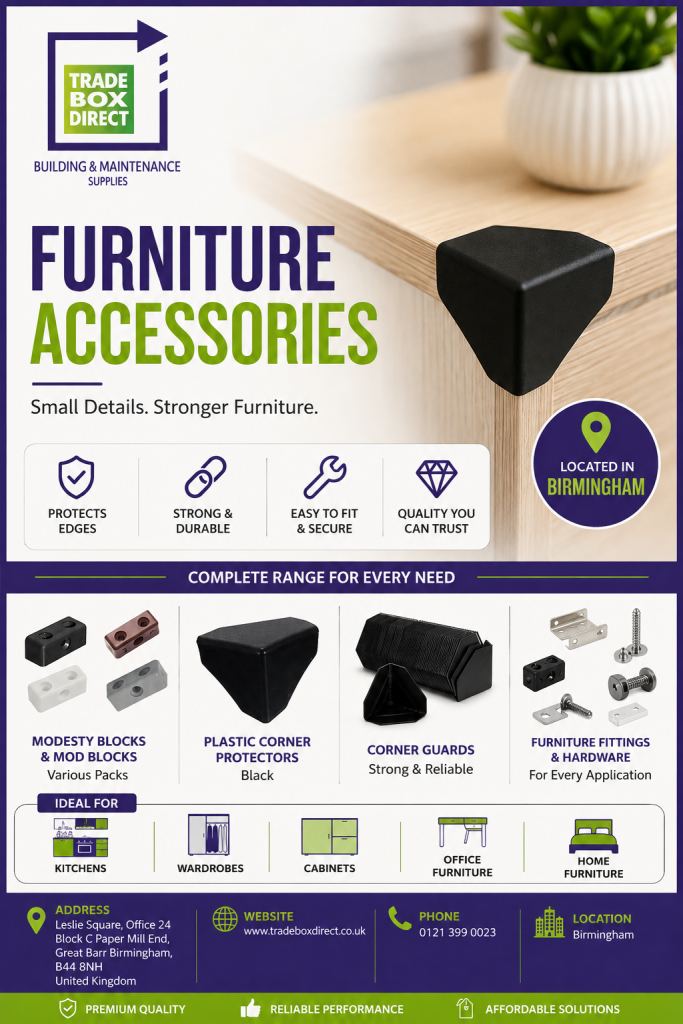
For example, a plastic corner protector – Black can provide protection while giving furniture a clean and simple appearance.
Black protectors can work well with dark furniture. They can also create a subtle contrast on lighter surfaces.
Before fitting one, check the corner size and shape. A protector should fit securely without creating another sharp or loose point.
What Is a Furniture Corner Protector?
A furniture corner protector is designed specifically to protect furniture corners. It can be used on tables, desks, cabinets, counters, shelves, and other furniture items.
The right product depends on several factors. These include the size of the corner, the furniture material, the location, and the level of protection required.
For light indoor use, a simple plastic protector may be enough. For areas with frequent impacts, a stronger or softer design may be more suitable.
As a result, choosing the right furniture accessories can make furniture safer and easier to maintain.
Can Corner Protectors Improve Furniture Life?
Yes, corner protectors can help reduce minor damage. Furniture corners often receive more impact than flat surfaces.
Over time, repeated knocks can cause chips, dents, scratches, or worn edges. A protector can reduce direct contact with these areas.
This does not mean that a protector will prevent every type of damage. However, it can provide an extra layer of protection.
For businesses, this can be useful because replacing furniture can cost more than adding simple protective products.
Likewise, homeowners can use protectors to keep furniture looking better for longer.
How Do You Choose the Right Corner Protector?
Choosing the right product does not need to be difficult. Start by checking the furniture corner.
Measure the width and depth of the corner if required. Then, check the product size before purchasing.
Next, consider the material. Plastic can be a good option for general protection. Softer materials may be better where impact protection is a higher priority.
You should also think about fitting. Some protectors can be attached quickly, while others may need additional furniture hardware.
Finally, consider the colour and appearance. A black protector may suit dark furniture, while another colour may blend better with a lighter finish.
Good furniture accessories should offer useful protection without making the furniture look untidy.
Corner Protectors and Other Furniture Accessories
Corner protection is only one part of furniture maintenance. Other components can help with furniture construction, strength, and stability.
For example, modesty blocks are commonly used to join and support furniture panels. They are useful in cabinets, desks, cupboards, and other furniture projects.
You may also see the terms modesty block and mod blocks when searching for these products. Although the names can vary, they are used for furniture assembly and panel joining.
One useful product is MODESTY BLOCKS KITCHEN MOD BLOCK – VARIOUS PACKS. It can be used for suitable furniture assembly tasks where panel support and joining are needed.
Therefore, corner protectors and modesty blocks have different jobs. One focuses on protection, while the other helps with furniture construction.
Both can be useful parts of a wider range of furniture accessories.
Why Are Corner Protectors Useful in DIY Projects?
DIY furniture projects often involve cutting, joining, and assembling panels. After construction, some corners may remain exposed.
A corner protector can provide a simple finishing touch. It can also help cover an exposed edge and reduce the chance of damage.
DIY users may combine corner protectors with suitable furniture fittings and furniture hardware to create a stronger and safer finished product.
Before installation, always make sure the surface is clean. Follow the fitting instructions supplied with the product. In addition, check that the protector sits firmly after fitting.
Are Corner Guards Only for Safety?
No. Safety is an important reason, but it is not the only benefit.
Corner guards can also help protect furniture from scratches, chips, and minor impact damage. They can provide a cleaner finish on exposed edges as well.
For older furniture, a protector may also hide a small damaged corner. This can improve the appearance without the need for a full repair.
As a result, corner guards can be useful for both practical and visual reasons.
How Can Businesses Benefit From Corner Protectors?
Businesses often use furniture every day. Offices, schools, hotels, shops, workshops, and other workplaces may have furniture that receives heavy use.
Protecting exposed corners can help reduce small repairs. It may also improve safety for staff, customers, and visitors.
Furthermore, businesses can use protective furniture accessories when setting up new workspaces or maintaining existing furniture.
A small protective product can therefore support a larger furniture maintenance plan.
Final Thoughts
Furniture corner protectors are simple products, but they can provide useful protection. They can help cover sharp corners, reduce minor impacts, and protect furniture from everyday wear.
They are suitable for many items, including tables, desks, cabinets, cupboards, shelves, and counters. Moreover, they can be useful in homes, offices, schools, shops, and DIY projects.
A plastic corner protector can be a practical choice for many indoor applications. Meanwhile, a furniture corner protector can help create a safer and cleaner furniture finish.
When choosing products, always check the size, material, fitting method, and intended use. Also, use suitable furniture fittings, furniture hardware, modesty blocks, and mod blocks where your furniture project needs them.
Overall, the right furniture accessories can make furniture safer, stronger, and easier to maintain. Even a small corner protector can make a noticeable difference when furniture is used every day.
Frequently Asked Questions
1. What are furniture corner protectors used for?
Furniture corner protectors are used to cover exposed furniture corners. They can help reduce sharp edges, minor impacts, scratches, and everyday wear.
2. Are plastic corner protectors suitable for tables?
Yes. Plastic corner protectors can be suitable for tables, desks, cabinets, and shelves. However, you should choose a size and design that fits the furniture corner correctly.
3. Can corner protectors be used on cabinets?
Yes. They can be used on many types of cabinets and cupboards. They may help protect exposed corners from knocks and small surface damage.
4. Are corner guards useful for children?
Corner guards can reduce the impact of sharp furniture corners. However, they should be used alongside proper supervision and other suitable safety measures.
5. What is the difference between corner protectors and modesty blocks?
Corner protectors are mainly used to protect exposed furniture corners. Modesty blocks, also called mod blocks or modesty blocks, are mainly used to join or support furniture panels.