




How Do Modesty Blocks Work? A Simple Guide for Furniture Projects
Introduction
When you build or repair furniture, small parts can make a big difference. One useful part is the modesty block. It is a simple fitting that helps join furniture panels and keep them in place. You may find these blocks in desks, cabinets, shelves, tables, and other furniture accessories.
For this reason, furniture accessories are not only about looks. They also help furniture stay strong, neat, and safe. Modesty blocks are a good example of a small part that can improve the way furniture is built.
What Is a Modesty Block?
A modesty block is a small plastic fitting used to join two furniture panels. It is often used where one panel meets another at a right angle. The block gives extra support at the joint.
Most modesty blocks have holes for screws. One side is fixed to one panel, while the other side is fixed to another panel. Once the screws are tightened, the two panels are held together.
Because the block is small, it can often be hidden inside the furniture. This gives the finished item a clean look. At the same time, it adds support without taking up much space.
Modesty blocks are also known as mod blocks. They are common in flat-pack furniture and home assembly projects.
How Do Modesty Blocks Work?
The basic idea is very simple. A modesty block creates a strong connection between two panels.
First, the panels are placed in the correct position. Next, the modesty block is placed against the inside corner of the joint. Screws are then used to attach the block to both panels.
Once the screws are tightened, the block helps stop the panels from moving. It also helps keep the joint square.
For example, imagine a desk top meeting a side panel. Without extra support, the joint may move when the desk is used. A modesty block can be fixed inside the joint. It then helps hold the two pieces together.
As a result, furniture accessories such as modesty blocks can make assembly easier and improve the stability of the finished item.
Why Are Modesty Blocks Used?
There are several reasons why modesty blocks are popular.
1. They Add Support
The main purpose is to add support to a joint. The block helps reduce movement between panels. This can make furniture feel more solid.
2. They Make Assembly Easy
Modesty blocks are simple to use. They do not need complex tools or special skills. In many cases, a screwdriver is enough.
3. They Save Space
A modesty block takes up very little room. It can be fitted inside a cabinet, desk, or unit without affecting the outside design.
4. They Give a Neat Finish
The block can often be hidden from view. Therefore, the furniture can look clean after assembly.
5. They Help With Repairs
If a furniture joint becomes loose, a modesty block can sometimes provide extra support. However, the panel should still be checked for damage before a new fitting is added.
These benefits show why furniture accessories have an important role in furniture construction and repair.
Where Are Modesty Blocks Used?
Modesty blocks can be used in many types of furniture. Their exact use depends on the design and panel material.
Common examples include:
- Desks
- Tables
- Cabinets
- Wardrobes
- Shelving units
- Storage units
- Kitchen cabinets
- Office furniture
- Bookcases
- Flat-pack furniture
They can be useful in both home and commercial furniture. For instance, office desks often need strong joints because they are used every day.
Kitchen furniture can also benefit from small joining parts. A suitable block can help keep panels aligned and supported.
When choosing furniture accessories, it is important to match the fitting with the panel size and type.
What Are Modesty Blocks Made From?
Many modesty blocks are made from plastic. Plastic is light, easy to shape, and suitable for many indoor furniture jobs.
A good plastic block can provide useful support while keeping the fitting lightweight. It can also be easy to handle during assembly.
The quality of the plastic still matters. A block should be suitable for the job and strong enough for the joint. Screws should also match the panel and the fitting.
Some designs may use other materials. However, plastic modesty blocks are widely used because they are practical and easy to fit.
This is one reason furniture hardware and plastic fittings are often used together in modern furniture projects.
Modesty Blocks and Furniture Fittings
A modesty block is one type of furniture fitting. Furniture fittings include many other small parts used to build, connect, adjust, or protect furniture.
For example, hinges help doors open and close. Shelf supports hold shelves in place. Drawer runners help drawers move. Joining blocks help connect panels.
Each fitting has a different job. Still, they work together to create a useful and stable piece of furniture.
The right furniture fittings should be chosen based on the furniture design. A fitting that works well for a small cabinet may not be suitable for a large or heavy unit.
Related Category: Corner Protectors
Another useful group of furniture accessories is corner protectors.
Corner protectors help cover sharp or exposed furniture corners. They can be useful in homes, offices, workshops, and other areas.
A plastic corner protector is often lightweight and easy to fit. It may help reduce damage to a furniture corner and protect people from sharp edges.
A furniture corner protector can also help protect the edge of a panel from small knocks.
You may also see the term corner guards used for similar products. These products can be helpful where furniture is used often or where exposed corners may cause problems.
Although corner protectors and modesty blocks have different jobs, both belong to the wider furniture hardware market.
How to Fit a Modesty Block
Fitting a modesty block is usually simple. However, care should still be taken during assembly.
Start by placing the furniture panels in the correct position. Check that the edges meet properly. Make sure the joint is square before fixing the block.
Next, place the modesty block on the inside of the joint. Mark the screw positions if required.
After that, use suitable screws to secure the block. Avoid using screws that are too long. A screw that is too long may damage the visible side of a panel.
Tighten the screws firmly, but do not over-tighten them. Too much force may damage a plastic block or the furniture panel.
Finally, check the joint. Make sure the panels do not move more than expected.
With the right furniture accessories, even a basic furniture assembly job can be easier to manage.
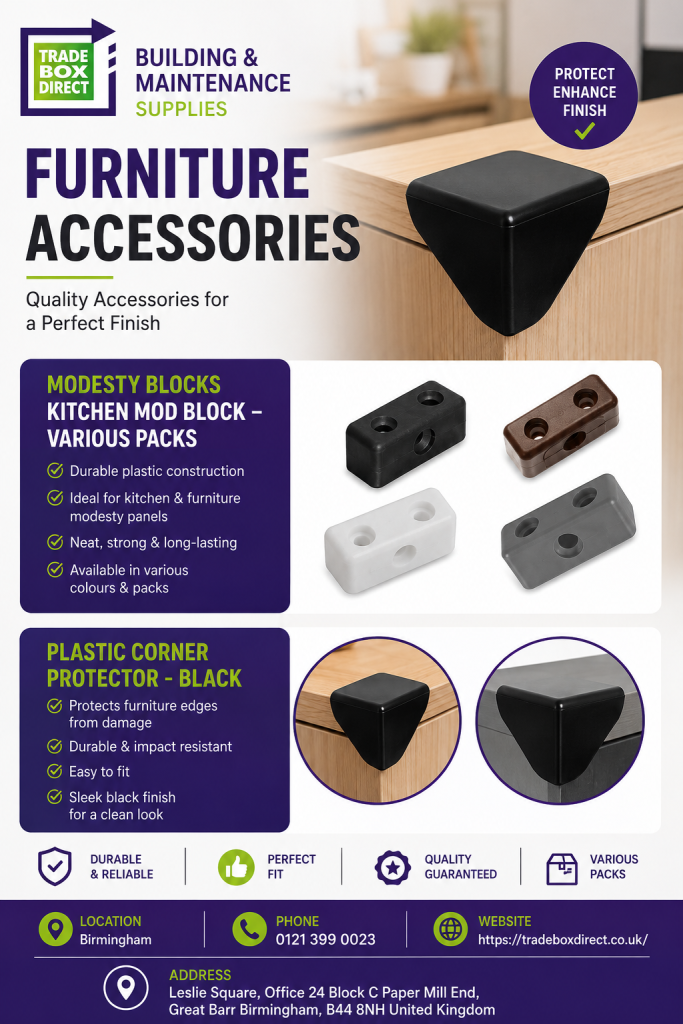
Product Example: MODESTY BLOCKS KITCHEN MOD BLOCK – VARIOUS PACKS
The MODESTY BLOCKS KITCHEN MOD BLOCK – VARIOUS PACKS is designed for furniture assembly and joining work. Modesty blocks like these can be useful for kitchen units, cabinets, desks, and similar furniture.
Different pack sizes can also be useful for different projects. A small repair may need only a few blocks. A larger furniture project may need more.
Before buying, check the block size, screw holes, pack quantity, and the type of furniture you plan to build.
Using the correct fitting can help reduce problems during assembly.
Product Example: Plastic Corner Protector – Black
The plastic corner protector – Black is another useful item for furniture projects. Unlike a modesty block, its main purpose is to cover and protect a furniture corner.
The black finish can suit many furniture designs. It can also provide a simple way to protect exposed edges.
For furniture projects, it can be useful to keep both joining and protection products available. Modesty blocks can support joints, while corner protectors can help protect exposed corners.
Together, these types of furniture accessories can support a more practical furniture setup.
What Are the Benefits of Using Modesty Blocks?
There are many practical benefits.
First, they can improve joint stability. A properly fitted block helps keep panels together.
Second, they can make furniture assembly easier. The design is simple, so fitting usually does not take much time.
Third, they are useful for repairs. A loose joint may sometimes be strengthened with a suitable block.
Also, they are compact. This means they can be placed inside furniture without taking up much room.
Finally, they can help create a neat result. The block can often be hidden inside the unit.
Therefore, furniture accessories such as modesty blocks can offer both practical and long-term value.
Choosing the Right Modesty Block
Not every block is right for every project. A few points should be checked before purchase.
Check the Size
Make sure the block fits the joint. A block that is too large may not sit correctly.
Check the Material
Plastic blocks are common for many indoor furniture projects. However, the material should match the intended use.
Check the Screw Holes
The screw holes should work with the screws you plan to use. The screws must also suit the panel material.
Check the Furniture Type
Consider where the block will be used. A kitchen unit, office desk, and light shelf may have different needs.
Check the Pack Size
Think about how many blocks your project needs. Buying a suitable pack can help avoid delays.
Good furniture hardware should always be selected with the complete project in mind.
Modesty Blocks vs Other Joining Methods
Furniture can be joined in many ways. Screws, dowels, brackets, cam fittings, and other connectors are often used.
A modesty block has one clear advantage: it is simple. It can be fixed to the inside of a joint and can provide extra support without changing the outside appearance.
However, it is not a replacement for every type of connector. Some furniture designs need stronger or more specialised fittings.
For this reason, the design of the furniture should always guide the choice of furniture fittings.
Common Mistakes to Avoid
Using a modesty block is easy, but a few mistakes should be avoided.
Do not use screws that are too long. They can damage the panel.
Do not place the block over a damaged or weak section of board. The joint should be checked first.
Avoid over-tightening the screws. Excess pressure can damage the fitting or panel.
Also, do not ignore alignment. If the panels are not square before fixing, the final furniture may not sit correctly.
Finally, choose the right size of fitting. A small fitting may not provide enough support for a larger joint.
Careful use of furniture accessories can help prevent simple assembly problems.
Are Modesty Blocks Suitable for DIY Projects?
Yes. Modesty blocks are often suitable for basic DIY furniture work.
They are easy to understand and simple to fit. Most small projects can be completed with basic tools.
However, users should still follow the furniture instructions where they are available. The fitting should also be used for its intended purpose.
If a piece of furniture carries a heavy load, the full structure should be considered. One small block cannot replace a correctly designed joint.
FAQs About Modesty Blocks
What does a modesty block do?
A modesty block joins and supports two furniture panels. It is usually fixed inside a corner joint with screws.
Are modesty blocks strong?
They can provide useful support when the correct block and screws are used. Their strength depends on the design, material, screws, and furniture panels.
Can modesty blocks be used on kitchen cabinets?
Yes. They can be used in many kitchen furniture applications when the fitting is suitable for the panels and joint.
Are mod blocks and modesty blocks the same?
Yes. “Mod blocks” is a common short term for modesty blocks.
Can I use a modesty block to repair furniture?
In some cases, yes. A suitable block can add support to a loose joint. However, damaged panels may need more than a new fitting.
Final Thoughts
So, how do modesty blocks work? They work by creating a simple support point between two furniture panels. Once fitted with suitable screws, the block helps hold the panels together and can reduce unwanted movement.
Their small size makes them useful in many projects. They are often used in desks, cabinets, kitchen units, tables, and flat-pack furniture.
At the same time, other products such as a plastic corner protector, furniture corner protector, and corner guards can help protect furniture from damage.
Whether you are building new furniture or repairing an old unit, choosing the right furniture accessories can make the work easier. Always check the fitting size, panel type, screw length, and intended use before installation.
With simple planning and the right products, even small fittings can help create furniture that looks neat, feels stable, and lasts longer.