








What Mounting Bracket for Wood Panels? A Complete Guide
Choosing the right mounting bracket for wood panels is important when you want a strong, safe, and neat installation. Wood panels can be used for walls, roofs, sheds, garden buildings, and other projects. However, the best bracket depends on the panel type, fixing surface, weight, and purpose of the installation.
For solar projects, the choice becomes even more important. A suitable bracket helps secure the panel system while reducing movement and supporting long-term performance. This is why installers often use different solar mounting systems, rails, hooks, and brackets based on the roof or mounting surface.
What Is a Mounting Bracket for Wood Panels?
A mounting bracket is a fixing component used to connect a panel or structure to a supporting surface. For wood panels, brackets can be fixed directly to timber using suitable screws or bolts.
The bracket needs to match the application. For example, a lightweight wall panel may need a simple L-bracket. A heavier structure may need a stronger metal bracket with several fixing points.
For solar installations, the bracket is normally part of a complete mounting system. The system may include hooks, rails, clamps, and other fixing parts.
Which Mounting Bracket Is Best for Wood Panels?
There is no single bracket that works for every wood panel. The right option depends on the job.
Common choices include:
- L-shaped metal brackets
- Flat joining plates
- Corner brackets
- Heavy-duty angle brackets
- Timber-to-metal brackets
- Adjustable mounting brackets
- Solar mounting brackets
For simple wood panel projects, a galvanised steel or stainless-steel bracket can provide good strength and durability. Outdoor projects need brackets that can handle moisture and changing weather.
If the wood panel is being used as part of a solar installation, however, you should use a bracket designed for the specific solar mounting system rather than a general furniture bracket.
Can Solar Mounting Brackets Be Used With Wood?
Yes, in some installations, solar mounting brackets can be fixed to suitable timber structures. However, the timber must be strong enough to support the system and the expected loads.
The fixing method is also important. Screws or bolts must have the correct length, diameter, and material for the timber and bracket.
For solar installations, the complete structure must also be designed to handle wind and other loads. Therefore, simply attaching a solar bracket to a piece of wood is not enough.
Understanding Solar Mounting Rails
Solar mounting rails are long metal sections used to support solar panels. They provide a secure fixing surface between the roof mounting points and the panels.
A typical system may work like this:
Roof or support structure → mounting hook/bracket → solar mounting rail → panel clamp → solar panel
The rail helps spread the fixing points along the panel installation area. It also makes panel positioning easier.
A solar mounting rail can be used with different roof mounting components, depending on the roof type and installation design.
What Is a Solar Panel Rail?
A solar panel rail is another common term for the rail used to support solar panels. These rails are usually made from strong, lightweight metal, such as aluminium.
The rail is attached to roof hooks or other mounting components. Solar panels are then secured to the rail with suitable clamps.
The exact rail size and fixing method should always match the solar mounting system and panel specifications.
What Is a Pantile Roof Hook?
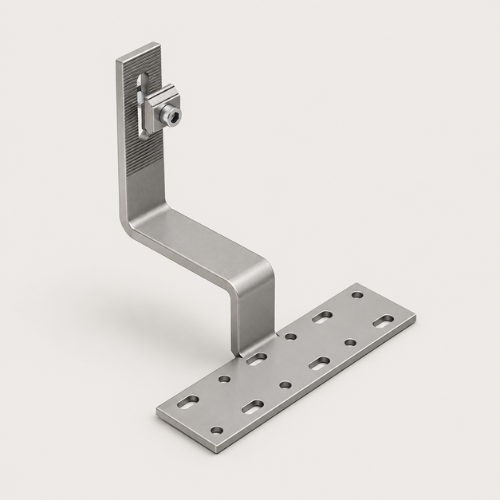
A pantile roof hook is designed for tiled roofs where pantiles are used. It provides a fixing point between the roof structure and the solar rail.
Pantile roofs have a different shape from plain tiled or slate roofs. Therefore, the hook needs to be suitable for the tile profile and roof construction.
The hook is normally secured to the underlying roof structure rather than relying only on the tile. The solar rail is then attached to the hook.
This creates a strong connection for the solar panel system.
What Is a Solar Roof Hook?
A solar roof hook is a mounting component used to connect solar rails to a roof structure. Different roof types require different hook designs.
For example, a solar installation on a tiled roof may use tile-compatible hooks. A pantile roof may require a dedicated pantile roof hook.
The correct hook should provide enough clearance between the roof covering and the rail. It should also allow the panels to sit securely without putting unnecessary pressure on the tiles.
How Do Solar Panel Mounting Brackets Work?
Solar panel mounting brackets connect the solar mounting system to the roof or supporting structure.
Depending on the roof type, a bracket may attach to:
- Timber rafters
- Roof trusses
- Metal structures
- Ground-mounted frames
- Other approved support structures
For tiled roofs, brackets are often combined with roof hooks and rails. The hook connects to the roof structure, while the rail provides the surface for mounting the solar panels.
This arrangement makes the system more flexible and easier to install.
Why Are Solar Mounting Systems Important?
A good solar mounting systems setup does more than hold panels in place. It also helps maintain the correct panel position and provides a stable connection to the building.
A suitable system should consider:
- Roof type
- Panel dimensions
- Panel weight
- Wind conditions
- Roof structure
- Rail compatibility
- Bracket spacing
- Fixing requirements
Using compatible components is essential. Mixing parts that were not designed to work together can create installation problems.
Choosing the Right Bracket for a Timber Structure
If your panels are mounted on a wooden structure, first check the strength and condition of the timber.
Avoid fixing heavy equipment to damaged, weak, or unsuitable wood. The bracket should connect to a strong structural section rather than only a thin decorative panel.
You should also consider the environment. Outdoor timber can experience moisture, temperature changes, and movement. Therefore, the bracket and fasteners should be suitable for outdoor use.
For solar projects, follow the mounting manufacturer’s instructions and make sure the timber structure is suitable for the intended load.
What About Solar Brackets?
Solar brackets are available in many designs. Some are made for tiled roofs, while others are designed for metal roofs, flat roofs, walls, or ground-mounted systems.
The best choice depends on the installation.
For a tiled roof, a roof hook and rail system may be suitable. For a timber frame, a different bracket or fixing method may be required.
The key is to select components that are compatible with the structure and the solar panels.
Common Mistakes to Avoid
Choosing a bracket based only on appearance can lead to problems. Strength and compatibility matter more than looks.
Avoid these common mistakes:
- Using a bracket that is too small
- Fixing into weak timber
- Using unsuitable screws
- Ignoring roof structure
- Mixing incompatible mounting components
- Applying excessive pressure to roof tiles
- Failing to consider wind loads
- Using indoor brackets outdoors
- Installing rails without checking panel compatibility
A professional installer can help determine the correct fixing method for larger or more complex solar projects.
Final Thoughts
So, what mounting bracket is best for wood panels? The answer depends on the panel, timber structure, weight, location, and intended use.
For general wood projects, strong angle or L-brackets can be useful. For solar installations, it is better to use a complete system made from compatible solar panel mounting brackets, hooks, rails, and clamps.
Products such as a solar mounting rail, solar roof hook, pantile roof hook, and suitable solar brackets can work together to create a secure installation when selected correctly.
Whether you are working with timber panels or planning a solar installation, always check the structure first. Then choose mounting components that are designed for the specific application. This approach can improve safety, stability, and long-term performance.