






What Types of Plastic Fittings Are Available?
Introduction
Plastic fittings are used to join, guide, extend, or finish pipe systems. Because there are many shapes and sizes, it is useful to know what each type does before buying.
This guide explains the main types, how they work, what they are made from, where they are used, and what to check before purchase. It also covers pipe inserts, plastic pipe fittings, plumbing fittings, plastic pipe insert options, and the popular 15mm pipe insert.
What Are Plastic Fittings?
Plastic fittings are connectors made from strong plastic materials. They help connect pipes and create a secure path for water or other fluids. Depending on the design, a fitting can join two pipes, change the direction of a pipe, reduce the pipe size, or close the end of a pipe.
For example, elbows are used for bends, tees create branches, and couplers join straight sections. Some fittings also support pipes inside push-fit connectors.
Most fittings are made for a specific pipe size. Therefore, checking the pipe diameter is an important first step. A fitting that is too small or too large may not make a safe connection.
What Are Plastic Fittings Made From?
Plastic fittings can be made from several types of plastic. The material depends on the job, temperature, pressure, and fluid being carried.
Polypropylene is often used because it is light and resistant to many chemicals. PVC is also common in water and drainage systems. ABS is another strong option and is often used where impact resistance is useful. Some specialist fittings use other engineered plastics for demanding applications.
The material matters because not every fitting is suitable for every system. So, always check the product details before installation.
Types of Plastic Fittings Available
There is a wide range of plastic fittings. Each type has a simple purpose. Understanding the main options makes product selection easier.
1. Straight Couplers
A straight coupler joins two pipes of the same size. It is useful when a pipe needs to be extended or repaired.
The fitting creates a neat connection without the need to replace the full pipe. This makes couplers useful for both new installations and repair work.
2. Elbow Fittings
Elbows change the direction of a pipe. Common options include 90-degree and 45-degree elbows.
A 90-degree elbow makes a sharp turn. In contrast, a 45-degree elbow creates a softer change in direction. These fittings are useful when pipes need to move around walls, cabinets, corners, or other obstacles.
3. Tee Fittings
A tee fitting has three openings. It allows one pipe to branch into two paths.
For example, a tee can be used when one water line needs to supply two different areas. Tee fittings are available in several sizes, so the correct pipe diameter must be checked before buying.
4. Reducer Fittings
A reducer connects pipes with different diameters. It is useful when a system changes from a larger pipe to a smaller pipe.
Reducers can be straight or shaped like other fittings. They are helpful when different pipe sizes must work together in one system.
5. End Caps
End caps close the end of a pipe. They can be used during temporary work or as a permanent finish.
A cap can stop water, dirt, dust, or other material from entering an unused pipe.
6. Adaptor Fittings
Adaptors help connect different types of pipe or connection systems. They can be useful when a project uses more than one pipe type.
For example, an adaptor may allow a plastic pipe fittings to connect to another fitting with a different connection style. Always check thread type, pipe size, and fitting compatibility.
7. Push-Fit Fittings
Push-fit fittings are popular because they can make installation quick and simple. The pipe is pushed into the fitting until it reaches the correct position.
Inside the connector, a gripping mechanism can hold the pipe. A seal helps prevent leaks. Some designs can also be released when changes or repairs are needed.
Push-fit systems are useful for many home plumbing jobs. However, the pipe should be cut cleanly and inserted to the correct depth.
8. Compression Fittings
Compression fittings use a nut and sealing ring to create a connection. They are available in plastic and mixed-material designs.
During installation, the nut should be tightened correctly. Too little tightening may cause a leak, while too much force can damage parts.
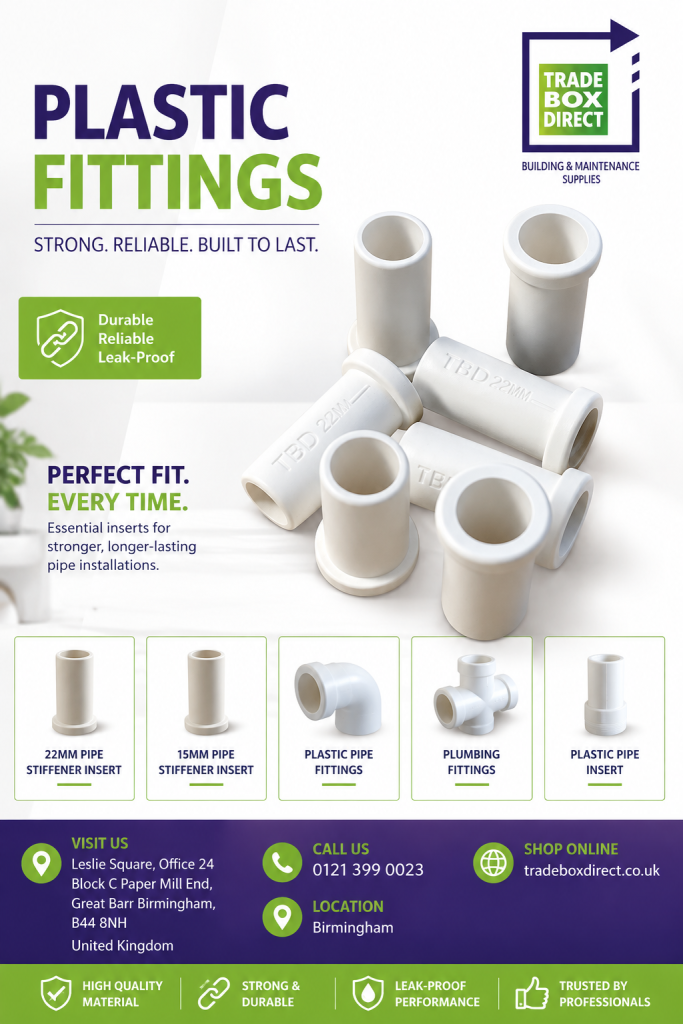
9. Pipe Inserts
Pipe inserts are small support pieces placed inside certain pipes. They help strengthen the pipe wall where the pipe enters a fitting.
This is especially useful with softer plastic pipe. The insert gives the pipe more support and can help the fitting grip the pipe correctly.
A plastic pipe insert is often selected to match a specific pipe size. Therefore, the pipe diameter should be checked before ordering.
10. 15mm Pipe Insert
A 15mm pipe insert is designed for compatible 15mm pipe systems. It is commonly used with plumbing pipe where extra support is needed at a fitting connection.
Before buying, check that the insert matches the pipe material and fitting system. A correct fit helps create a stable connection and reduces the risk of movement.
How Do These Fittings Work?
The way these fittings work depends on their design. However, the basic goal is the same: create a secure path between pipe sections.
With a push-fit fitting, the pipe is cut square and cleaned. It is then pushed into the connector. The internal grip holds the pipe, while the seal helps keep the joint watertight.
With a compression fitting, the pipe passes through a nut and sealing part. Tightening the nut compresses the sealing ring around the pipe.
With solvent-weld fittings, a suitable solvent can soften the plastic surfaces so they bond together.
Why Are Plastic Fittings Popular?
There are several reasons why plastic fittings are widely used.
First, they are light. This makes them easier to carry and handle during installation. Second, many plastic materials resist rust and corrosion. This can be useful in damp areas.
They are also available in many sizes and shapes. As a result, installers can find fittings for straight runs, corners, branches, reductions, and pipe ends.
In addition, many fittings are easy to install. Push-fit designs can save time because they do not always require heat, glue, or specialist tools.
However, the right fitting must still be selected for the job. A low-cost fitting that is not compatible with the pipe can cause problems later.
Where Are Plastic Fittings Used?
Plastic fittings are used in many settings. They can be found in domestic plumbing, water supply systems, heating installations, drainage work, irrigation, and workshop projects.
In homes, they can help connect pipes under sinks, behind cabinets, or near appliances. In larger systems, they can help create pipe branches and changes in direction.
They are also useful for repair work. If a damaged section of pipe needs to be replaced, a suitable connector can join the new section to the existing system.
How to Choose the Right Fitting
Choosing the right fitting starts with the pipe. First, measure the outside or inside diameter as required by the fitting manufacturer. Then check the pipe material.
Next, consider the connection type. Do you need push-fit, compression, threaded, or another style? After that, check the working temperature and pressure of the system.
It is also important to check what fluid will pass through the pipe. Water, heating fluid, chemicals, and waste systems can have different requirements.
Finally, check the product information before purchase. A good supplier should provide size, material, connection type, and intended use.
Benefits of Using Plastic Fittings
These fittings offer several practical benefits.
They are lightweight, so they are easy to transport and install. Many plastic materials do not rust, which can be an advantage in wet environments.
Another benefit is ease of installation. Some push-fit products can be installed with basic tools. This can make small repair jobs faster.
They can also offer a clean appearance. Many are available in white, grey, black, or other finishes to suit different systems.
Still, quality matters. Choose products that are designed for the pipe system and application. Follow the manufacturer’s instructions for the best result.
Common Mistakes to Avoid
One common mistake is choosing the wrong size. Even a small difference can prevent a proper connection.
Another mistake is failing to prepare the pipe. A rough, angled, or dirty pipe end may not seal correctly. Therefore, cut the pipe cleanly and remove sharp edges when required.
People also sometimes mix fittings and pipes without checking compatibility. Although two parts may look similar, they may not be designed to work together.
Finally, avoid forcing a fitting into place. If the connection does not fit, stop and check the size, material, and connection method.
Buying Plastic Fittings Online
Buying online can make it easier to compare sizes, designs, and prices. However, do not choose a product only because it is cheap.
Start by checking the product name and size. Then review the material, connection type, and intended application. Written specifications are more important than appearance.
If you need pipe inserts, check the exact pipe size. For example, a 15mm pipe insert should only be used where the pipe and fitting system are designed for that size.
A reliable supplier should provide clear product information. If you are unsure, contact the supplier before ordering.
For TradeBoxDirect customers, the plastic fittings category can be used to explore suitable connectors, inserts, and related plumbing fittings. Check each product page for its size and application before adding it to your basket.
Are Plastic Fittings Suitable for DIY Projects?
Many are suitable for simple DIY projects. Push-fit connectors are especially useful because they can be quick to install.
However, DIY work still needs care. Turn off the water supply before working on a water system. Make sure the pipe is clean and properly supported. Then test the connection slowly after installation.
For heating, gas, high-pressure, or specialist systems, use a qualified professional when required. Safety should always come first.
FAQs
What are plastic fittings used for?
They are used to join, extend, branch, reduce, turn, or close pipe sections. They are common in plumbing, water, heating, drainage, and other pipe systems.
What are the main types of plastic fittings?
Common types include couplers, elbows, tees, reducers, end caps, adaptors, push-fit connectors, and compression fittings. Pipe inserts are also used to support some plastic pipes.
What is a plastic pipe insert?
A plastic pipe insert is a support component that fits inside a compatible pipe. It can strengthen the pipe wall and help create a secure fitting connection.
What is a 15mm pipe insert used for?
A 15mm pipe insert is used with compatible 15mm pipe systems. It provides internal support where the pipe connects to a suitable fitting.
Can plastic fittings be used for plumbing?
Yes, many are made for plumbing applications. However, the fitting must match the pipe material, size, pressure, temperature, and connection method.
Are push-fit fittings easy to install?
Yes. They are designed for quick connection. The pipe must still be cut cleanly, prepared correctly, and pushed fully into the fitting.
Conclusion
Understanding the different types of plastic fittings makes pipe work easier. From couplers and elbows to tees, adaptors, reducers, and pipe inserts, each product has a clear purpose.
The right choice depends on pipe size, material, connection type, pressure, temperature, and application. Therefore, always check the product specifications before installation.
For home repairs and plumbing projects, choosing the correct plastic pipe fittings can save time and reduce the risk of leaks. Pipe inserts can also provide useful support, especially in compatible plastic pipe systems.
If you are ready to buy, explore the TradeBoxDirect range and check each product page for size, material, and intended use. With the right information, you can choose the correct fitting with confidence and complete your project more safely.