







What Is Considered Adequate Ventilation?
Introduction
Fresh air is important for ventilation in every home. It helps remove stale air, moisture, smells, and indoor pollutants. However, simply opening a window now and then does not always provide enough airflow.
So, what is considered adequate Ventilation?
In simple terms, adequate airflow means enough fresh air enters a room while stale, humid, or polluted air leaves. The right level depends on the room, the number of people, the building design, and how the space is used.
A good system should also work without creating strong drafts or unnecessary heat loss. Therefore, the goal is to create a steady and comfortable flow of air.
Why Is Adequate Ventilation Important?
Everyday activities can change indoor air quality. Cooking, showering, cleaning, drying clothes, and even breathing add moisture and other particles to the air.
If this air stays inside for too long, rooms can become stuffy. Condensation may also appear on windows and walls. Over time, excess moisture can create conditions that support mould.
Adequate Ventilation helps remove these problems before they become serious.
Fresh outdoor air replaces stale indoor air. At the same time, humid air can leave the building. As a result, rooms can feel fresher and more comfortable.
How Much Ventilation Does a Home Need?
There is no single amount that works for every home. A small bedroom with one person has different needs from a busy kitchen or bathroom.
The size of the room matters. So does occupancy.
A room used by several people may need more airflow than a room that is rarely occupied. Similarly, kitchens and bathrooms often need stronger extraction because they produce more moisture.
UK building guidance also sets performance requirements for ventilation in many homes. Therefore, when installing or changing a system, it is important to consider the property’s design and the relevant building standards.
For everyday homeowners, the simple rule is this: fresh air should enter, stale air should leave, and moisture should not remain trapped indoors.
What Are the Signs of Good Ventilation?
You can often identify good airflow without special equipment.
A well-ventilated room should feel fresh rather than stuffy. Strong smells should not remain for long. After a shower, bathroom moisture should clear within a reasonable time.
You should also look for signs around windows and walls.
Regular condensation, musty smells, peeling paint, and mould may suggest that airflow needs improvement.
However, these problems can have other causes. Leaks, poor insulation, cold surfaces, and rising damp may also create moisture problems.
Therefore, do not assume that every damp issue is caused by poor Ventilation.
The Role of Vents
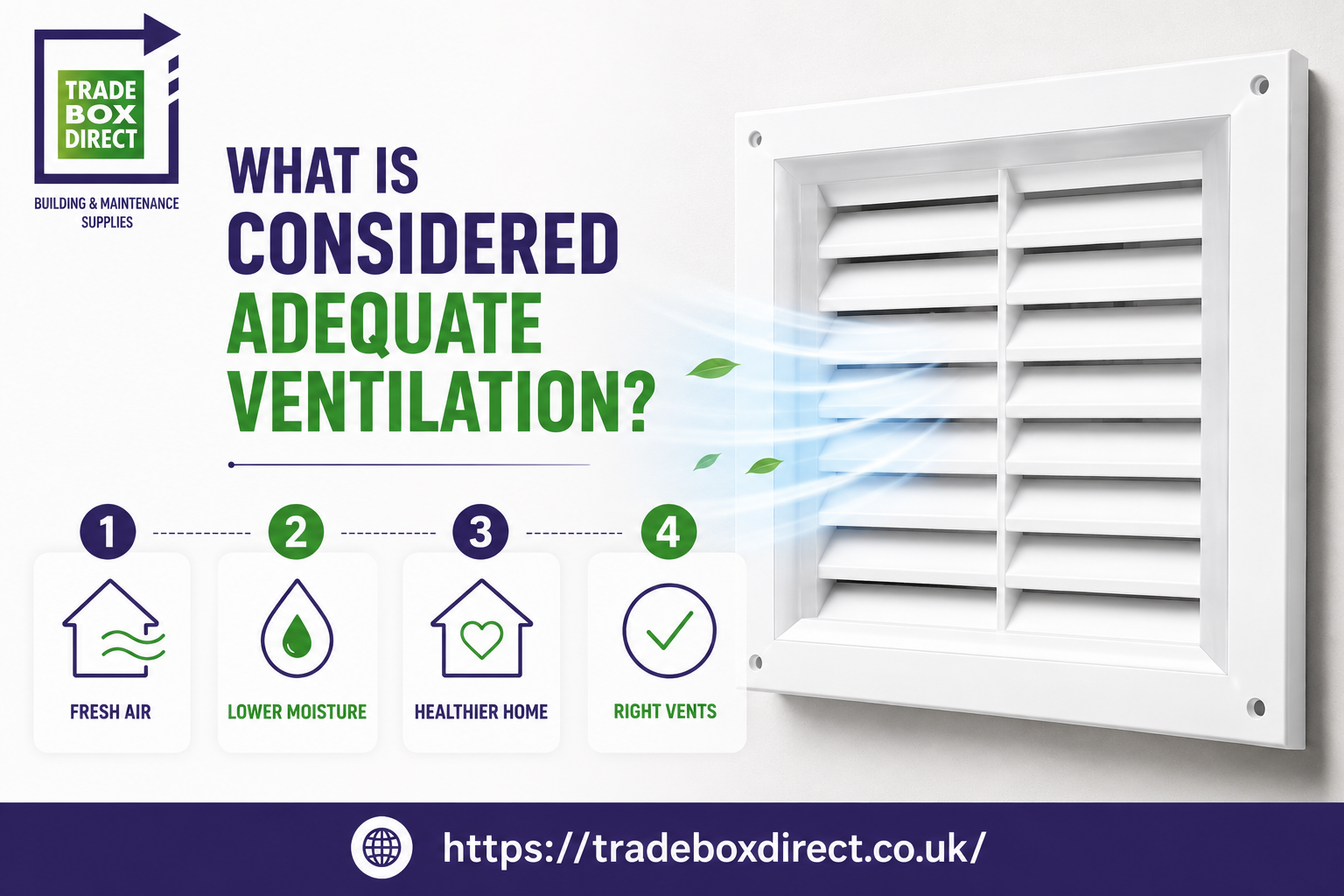
Small openings can have a major role in keeping air moving. These vents allow fresh air to enter or stale air to leave.
Trickle vents are often fitted to windows. They provide a small, controlled opening for fresh outdoor air.
Air bricks can also provide airflow in certain parts of a building. Some are used to ventilate suspended floors, while others serve specific building functions.
Extractor vents work differently. They remove air from areas where moisture or smells are created.
Each type has a different purpose. Therefore, vents should not be blocked simply because they create a small draft.
Adequate Ventilation in Bedrooms
Bedrooms need fresh air because people spend several hours sleeping in them.
During the night, breathing adds moisture and carbon dioxide to the room. If doors and windows remain closed and there is little airflow, the room can become stuffy.
A small window opening or trickle vent can help provide a steady supply of fresh air.
Mechanical systems can also provide controlled airflow. The best option depends on the property and existing system.
Try not to place furniture directly over vents. Keep openings clear so air can move properly.
Good bedroom Ventilation can make the room feel fresher, especially in homes with several occupants.
Adequate Ventilation in Bathrooms
Bathrooms produce high levels of moisture. A hot shower can quickly increase humidity.
For this reason, bathrooms usually need effective extraction.
An extractor fan should remove humid air from the room rather than simply move it around. The fan may include a timer or humidity sensor for better control.
Keeping the bathroom door closed during a shower can also help. It prevents moist air from spreading into other rooms.
After showering, allow the extractor to run for the recommended time. This helps remove remaining moisture.
Adequate Ventilation in Kitchens
Cooking creates steam, heat, and smells. Boiling water can release a surprising amount of moisture.
A cooker hood or extractor fan can remove these pollutants close to their source.
Use extraction while cooking and for a short period afterwards. This approach helps stop humid air from spreading around the home.
Opening a window can provide extra airflow, but it may also cause more heat loss during cold weather.
A suitable Ventilation system can provide a more controlled solution.
Natural Ventilation vs Mechanical Ventilation
Natural airflow uses windows, vents, air bricks, and other openings. It is simple and often inexpensive.
However, natural airflow can change with weather conditions. Wind, temperature, and building design all affect how air moves.
Mechanical systems use fans to control airflow. They can provide more consistent results.
Extractor fans are common in kitchens and bathrooms. More advanced systems can provide continuous airflow throughout a property.
Neither approach is automatically better. The right choice depends on the building, room use, and moisture levels.
How Can You Tell If Airflow Is Too Low?
Several signs may suggest inadequate airflow.
These include:
- Frequent condensation on windows
- Persistent musty smells
- Mould around corners
- Humid rooms
- Slow drying of wet surfaces
- Stale air in bedrooms
- Moisture remaining after showers
- Poor air quality when several people are present
A digital humidity monitor can provide extra information. It can show how indoor humidity changes during cooking, bathing, and sleeping.
However, humidity readings should be viewed alongside the condition of the building.
Can Too Much Ventilation Be a Problem?
Yes. More airflow is not always better.
Excessive airflow can create uncomfortable drafts. It can also increase heating demand because warm indoor air leaves the property faster.
That is why controlled airflow is important.
The aim is to remove moisture and stale air while maintaining comfort. Well-positioned vents can help achieve this balance.
Modern mechanical systems may also adjust airflow according to room conditions.
Ventilation and Energy Efficiency
Good airflow and energy efficiency can work together.
A well-insulated home needs enough fresh air. Otherwise, moisture and pollutants may become trapped inside.
At the same time, excessive airflow can waste heat.
Therefore, a balanced Ventilation strategy is important. Small controlled vents, efficient extractor fans, and suitable mechanical systems can provide fresh air without relying on wide-open windows all day.
For major renovation projects, heat recovery systems may also be considered. These systems can recover some heat from outgoing air before it leaves the property.
How to Improve Ventilation at Home
Improving airflow does not always require major work.
First, keep existing vents clear. Dust and paint can restrict airflow.
Next, use bathroom and kitchen extractors when moisture is produced. Keep doors positioned correctly so humid air does not spread into other rooms.
Also, avoid drying large amounts of laundry in poorly ventilated areas.
If you have condensation problems, check your windows, walls, roof, and plumbing for other possible causes.
Finally, do not block air bricks or vents without understanding their purpose.
These simple steps can make existing Ventilation work more effectively.
When Should You Get Professional Advice?
Professional advice may be useful if your home has persistent condensation, mould, or damp.
It is also sensible when you plan major changes to insulation, windows, or airtightness.
A professional can assess airflow and recommend suitable improvements.
Older properties may need extra care because their walls and floors can work differently from modern buildings.
Similarly, large renovations may require a more carefully designed ventilation system.
Final Thoughts
Adequate Ventilation means having enough fresh air to support good indoor air quality while removing stale air, moisture, and pollutants.
The correct amount varies from room to room. Bedrooms need steady fresh air, while bathrooms and kitchens need stronger moisture removal.
Windows, trickle vents, air bricks, and extractor fans can all have useful roles. However, they should be selected and positioned according to the needs of the property.
Most importantly, avoid blocking existing vents without checking their purpose.
A comfortable home needs a balance between fresh air, moisture control, energy efficiency, and temperature. With the right approach, adequate airflow can help create a healthier and more pleasant living space.
Frequently Asked Questions
1. What is considered adequate ventilation in a home?
Adequate airflow means enough fresh air enters the property while stale and humid air is removed. The exact requirement depends on the building and room use.
2. How can I tell if my home has poor ventilation?
Condensation, mould, musty smells, and stuffy rooms can be warning signs. However, other building problems can create similar symptoms.
3. Should vents always be left open?
Many vents are designed to provide continuous airflow. Unless the manufacturer says otherwise, they should generally remain clear and operational.
4. Do bedrooms need ventilation?
Yes. People release moisture and carbon dioxide while sleeping. Steady airflow can help keep bedrooms fresher.
5. Why does my bathroom stay damp after a shower?
The extractor may be too weak, poorly positioned, blocked, or not used for long enough. The room may also have limited fresh-air supply.