








Does Ventilation Help Reduce Energy Costs?
Introduction
Energy costs are an important concern for many households. Heating and cooling can use a large part of a home’s energy. At the same time, good airflow is needed to keep indoor spaces fresh and comfortable.
This may lead to an important question: can Ventilation help reduce energy costs?
The answer is yes, but it depends on the type of system, how the home is used, and how well the building keeps heat inside. Good airflow can help control moisture, reduce the need for excessive heating, and support a healthier indoor environment.
However, opening windows all day is not always the best approach. Instead, controlled airflow can provide fresh air while limiting unnecessary heat loss.
What Is Ventilation?
Ventilation is the process of moving fresh air into a building and removing stale indoor air. It helps control moisture, smells, pollutants, and excess heat.
Air can enter through windows, vents, doors, or mechanical systems. At the same time, humid and stale air can leave through extractor fans or other outlets.
Everyday activities create indoor moisture. Cooking, bathing, washing clothes, and even breathing add water vapour to the air. Without enough airflow, this moisture can build up.
Therefore, ventilation plays an important role in both comfort and building care.
How Can Ventilation Affect Energy Use?
At first, ventilation may seem like it increases energy costs. After all, warm air can leave the house when fresh air enters.
However, the situation is more balanced than it seems.
Poor airflow can create high humidity. Moist air can make a room feel uncomfortable and may encourage condensation. When a home feels cold or damp, people may turn the heating up.
Better airflow can remove excess moisture and help maintain a more comfortable indoor environment.
Furthermore, controlled ventilation can prevent the need to keep windows wide open for long periods. This can help reduce unnecessary heat loss.
The key is to use the right amount of airflow rather than simply increasing it.
Can House Window Vents Save Energy?
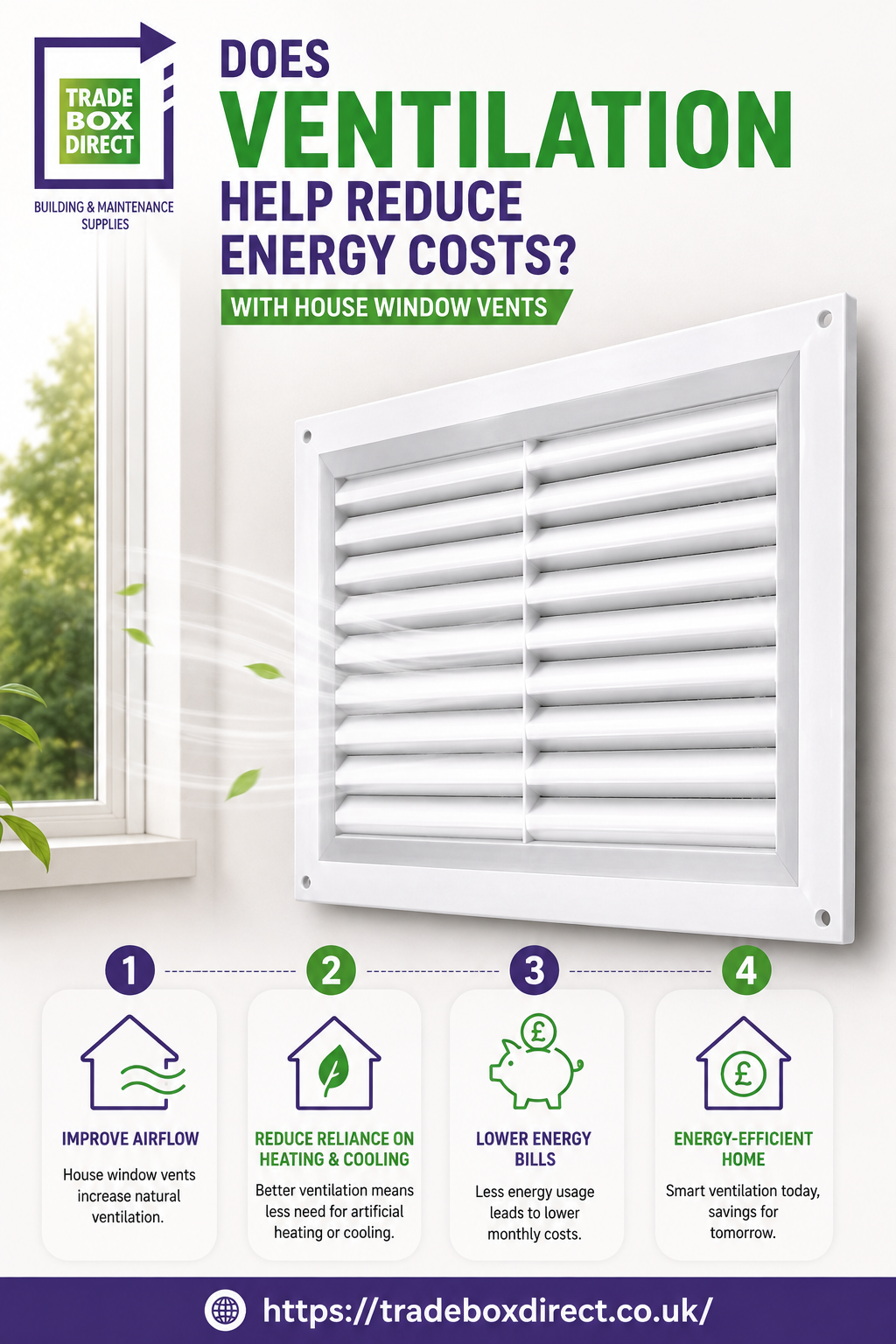
House window vents can provide a simple way to introduce fresh air without keeping windows fully open.
Trickle vents are small openings fitted into or around windows. They allow a controlled flow of outdoor air into a room.
This approach can be useful in bedrooms, living rooms, and other occupied spaces. Fresh air can enter gradually while the main window remains closed.
As a result, you can maintain airflow without creating the large opening that comes with a fully open window.
Still, house window vents do not directly create energy savings. Their main benefit is controlled airflow. The actual energy impact depends on the building, heating system, weather, and how the vents are used.
Why Is Moisture Control Important?
Moisture has a strong connection with indoor comfort. A home that stays too humid can feel unpleasant, especially during colder weather.
When warm, moist air touches a cold surface, condensation can form. You may notice water on windows, walls, or cold corners.
If this continues, mould may develop. Damp conditions can also damage finishes and building materials.
Good Ventilation helps remove humid air before it causes these problems. Therefore, it supports a drier and more comfortable home.
There is another benefit. A dry home can feel more comfortable at a lower temperature than a damp one. This may help some households avoid turning the heating up unnecessarily.
Does Opening Windows Reduce Energy Costs?
Opening windows can improve airflow quickly. However, it is not always the most energy-efficient method.
During winter, warm indoor air escapes through an open window. Cold outdoor air then enters. The heating system must work to bring the room back to the desired temperature.
Short periods of airing can still be useful. For example, opening a window for a few minutes can remove stale air and excess moisture.
Leaving windows open for long periods, however, may waste more heat.
Controlled Ventilation offers another approach. Small window vents and suitable mechanical systems can provide a steadier airflow.
Mechanical Ventilation and Energy Efficiency
Mechanical systems use fans to move air. Extractor fans are common in kitchens and bathrooms.
These systems can remove moisture close to its source. Therefore, they do not always need to move large amounts of air through the whole property.
Some modern systems offer even greater control. Mechanical ventilation with heat recovery, known as MVHR, extracts stale indoor air while bringing fresh air inside.
Before the stale air leaves the property, heat can be recovered from it. That heat can then help warm the incoming fresh air.
Because of this, MVHR can reduce the amount of heat lost through ventilation. It can be especially useful in well-insulated and more airtight homes.
However, installation can be more complex and expensive than fitting simple vents or extractor fans.
Ventilation and Insulation Work Together
Insulation and Ventilation serve different purposes, but they work well together.
Insulation helps slow down heat loss through walls, roofs, floors, and other parts of a building.
Ventilation manages air quality and moisture.
A well-insulated home still needs fresh air. In fact, modern insulation and airtight improvements can make airflow even more important.
If a property becomes more airtight without suitable ventilation, moisture may remain trapped indoors.
Therefore, energy efficiency should not mean sealing every possible opening. Instead, a home should have controlled airflow in the right places.
Can Ventilation Reduce Heating Costs?
It can contribute to lower heating demand, but it should not be viewed as a direct heating-saving device.
The main benefit comes from better moisture and air control. When rooms are comfortable and dry, occupants may not need to use as much heating simply to overcome a damp feeling.
Controlled systems can also reduce unnecessary heat loss compared with keeping windows open for long periods.
Still, heating costs depend on many factors. These include insulation quality, property size, heating controls, outdoor temperature, and household habits.
For this reason, good Ventilation should form part of a wider energy-efficiency plan.
Simple Ways to Improve Airflow and Save Energy
You do not always need a major upgrade. Small changes can make a useful difference.
First, keep window vents clear. Dust, paint, and furniture can restrict airflow.
Next, use bathroom extractors while showering and for a short period afterwards. This removes moisture before it spreads around the house.
In the kitchen, use extraction while cooking. This helps remove steam close to its source.
Also, avoid drying large amounts of wet laundry in rooms with poor airflow. If indoor drying is necessary, increase airflow and use suitable extraction.
Finally, keep internal doors positioned sensibly. During moisture-producing activities, closing the bathroom or kitchen door can stop humid air from spreading.
These habits help your Ventilation system work more effectively.
What Happens When Ventilation Is Poor?
Poor airflow can create several problems.
Rooms may feel stuffy or humid. Condensation may appear more often. Mould can become a concern. Unpleasant smells may also remain indoors for longer.
In addition, excessive moisture can affect walls, ceilings, furniture, and other surfaces.
These problems may eventually create extra maintenance costs. Therefore, good airflow can provide benefits beyond energy use.
It supports the condition of the property as well as indoor comfort.
How to Choose an Energy-Efficient Ventilation System
Start by looking at your home’s current problems.
If the main issue is bathroom moisture, a good extractor fan may be enough. If bedrooms need more fresh air, house window vents may provide a simple solution.
A property undergoing major renovation may benefit from a more advanced mechanical system.
Consider the following:
- The size of the property
- Existing airflow
- Insulation levels
- Window type
- Moisture problems
- Heating system
- Installation costs
- Ongoing running costs
Also, avoid choosing a system based only on its lowest purchase price. A reliable system with good control may offer better long-term value.
Final Thoughts
So, does Ventilation help reduce energy costs?
It can, especially when it is properly designed and used alongside good insulation and heating controls.
Controlled airflow can help manage moisture and indoor comfort. It can also reduce the need to keep windows open for long periods.
Simple options, such as house window vents and extractor fans, can work well for many homes. More advanced systems, such as MVHR, can provide greater heat recovery where the property is suitable.
The goal is not to remove as much air as possible. Instead, the aim is to remove stale and humid air while bringing in the right amount of fresh air.
When airflow, insulation, and heating work together, a home can become more comfortable and efficient.
Frequently Asked Questions
1. Does ventilation use a lot of energy?
Simple passive vents use little or no electricity. Mechanical systems use some power, but efficient models can keep energy use low.
2. Can house window vents reduce heating bills?
They can support controlled airflow and reduce the need to keep windows open. However, they do not directly guarantee lower heating bills.
3. Is it cheaper to open windows or use ventilation?
It depends on the system and the situation. Short window opening can provide quick airflow, while controlled vents may reduce unnecessary heat loss.
4. Does ventilation make a house colder?
Some heat can leave with outgoing air. However, controlled airflow can limit unnecessary heat loss and help maintain a comfortable indoor environment.
5. Can ventilation help with condensation?
Yes. It removes humid air and can reduce the amount of moisture available to form condensation.