






How Does a Tile Leveling System Make Tile Installation Easier?
Introduction
Laying tiles can give a room a clean and smart finish. However, getting every tile to sit at the same height can be difficult. Small differences between tiles may create raised edges, uneven joints, or an untidy surface. A tile leveling system can help solve this problem.
Whether you work on a kitchen floor, bathroom wall, hallway, or large commercial area, the right tiling tools can make the job easier. In addition, good preparation can help you achieve a neat and even finish.
What Is a Tile Leveling System?
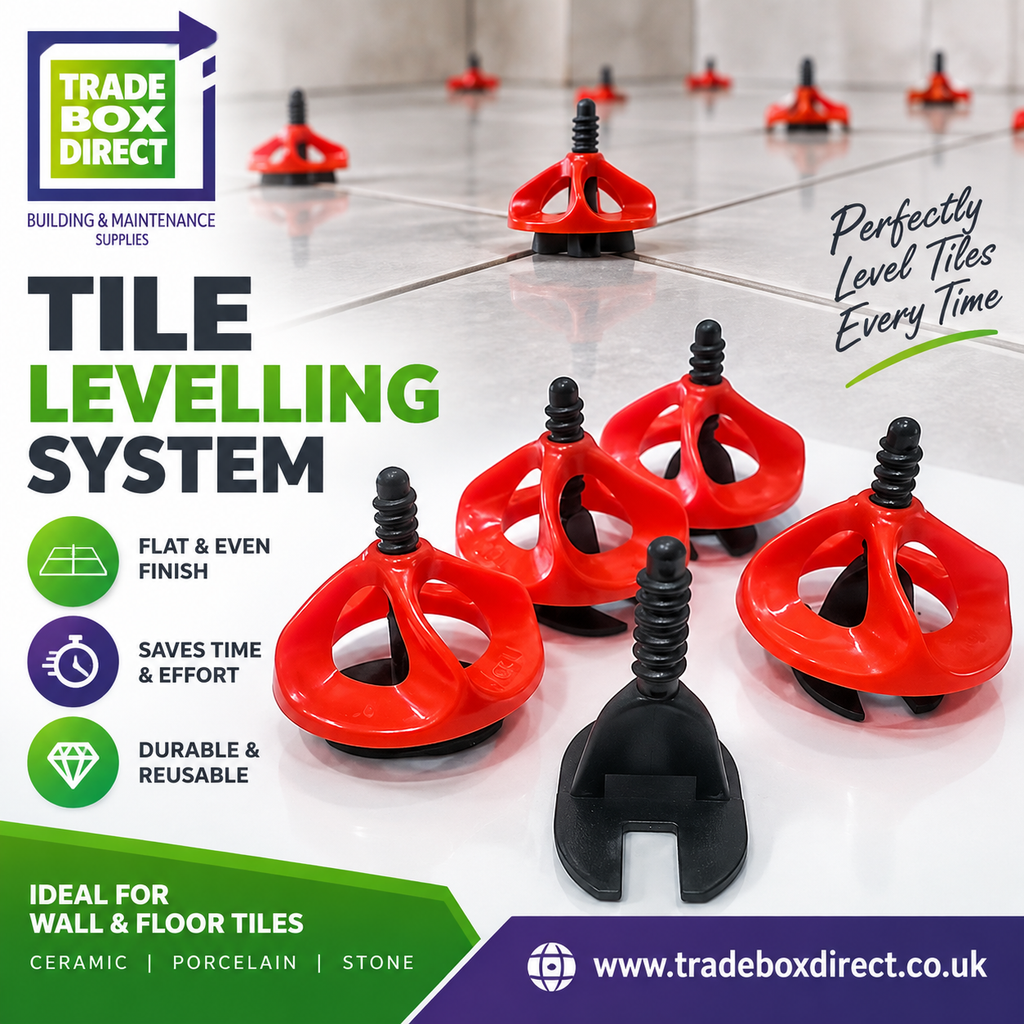
A tile leveling system is a set of simple tools that helps keep nearby tiles at a similar height while the adhesive sets. It normally uses spacers, clips, screws, wedges, or caps to hold tiles in position.
The main aim is simple. The system helps reduce height differences between tiles. As a result, the finished surface can look more even.
It can be especially useful with large format tiles. These tiles can show small height differences more clearly. Therefore, using suitable tile leveling spacers can make installation easier for both DIY users and professional tilers.
How Do Tile Leveling Spacers Work?
Tile leveling spacers sit between or around tiles during installation. They help maintain a consistent joint while also helping the tile edges stay aligned.
First, the adhesive is applied to the prepared surface. Next, the tiles are placed carefully. The spacer parts are then positioned at the tile joints.
After that, the screw, cap, or other locking part is fitted according to the product design. This creates gentle pressure between the tiles and helps keep their surfaces aligned.
Once the adhesive has set, the levelling parts can be removed. Always follow the product instructions because different systems use different removal methods.
What Are Tile Spacers Used For?
Tile spacers help create even gaps between tiles. These gaps are important because grout needs space between each tile.
Without suitable spacing, grout lines may look uneven. Therefore, tile spacers are a basic but important part of many tiling projects.
Different spacer sizes can create different joint widths. Your tile type, design, and project requirements will determine which size works best.
Why Use Floor Tile Spacers?
Floor tile spacers can help create consistent joints across a floor. This matters because floor tiles often cover a large area, where small errors can become easy to notice.
A level and well-spaced floor can also make the finished room look more professional. Moreover, consistent joints can make grouting easier.
When shopping for floor tile spacers, check the size and design before you buy. Make sure the product matches your tile thickness and installation method.
What Are the Main Benefits of a Tile Leveling System?
A tile leveling system offers several practical benefits.
First, it can help reduce uneven tile edges. Second, it can support consistent alignment. Third, it can make the installation process easier to manage.
Large tiles can be harder to align by hand because they cover more surface area. A suitable system can help hold them in place while the adhesive sets.
Furthermore, these systems can reduce the need for repeated adjustments. This can save time during a larger project.
However, a levelling system does not replace careful installation. The surface must still be clean, stable, and properly prepared.
What Tiling Tools Do You Need?
Tiling tools can include tile cutters, trowels, spacers, levelling systems, grout tools, measuring tools, and cleaning equipment.
The exact tools depend on the project. For example, a small wall project may need fewer tools than a large floor installation.
A good tile leveling system should work alongside your other tiling tools. Therefore, plan your work before you start and make sure you have the correct equipment.
It is also useful to check the working area before laying tiles. Remove dust and loose material, measure the surface, and plan the tile layout.
What Is a Tile Levelling System?
A tile levelling system is another common spelling for the same type of product. The words “levelling” and “leveling” describe the same basic purpose.
These systems are designed to help tiles sit more evenly. They can be useful for floors, walls, and other tiled surfaces.
The correct system depends on the tile size, tile thickness, joint width, and installation method. So, always check the product details before shopping.
Product Spotlight: Tile Spacer Levelling System 2mm Floor Twister Spacer Screws + Red Twister Nuts
The Tile Spacer Levelling System 2mm Floor Twister Spacer Screws + Red Twister Nuts is designed for projects that need 2mm tile joints.
Tile Spacer Levelling System 2mm Floor Twister Spacer Screws + Red Twister Nuts
The set combines spacer screws with twister nuts. Together, these parts help keep tiles aligned during installation.
How Is This Tile Levelling Product Made?
The components are manufactured from durable plastic materials designed for use during tile installation. The spacer section creates the required joint gap, while the twister nut provides pressure over the tile edges.
The red twister nut also gives the installer a clear part to grip and adjust. This can make the system easier to handle during installation.
As with any installation product, users should follow the supplied instructions and avoid excessive pressure.
How Does It Work?
Place the spacer between the tiles. Then fit the screw and twister nut as instructed. Tighten the nut until the tile surfaces sit at a similar level.
The system should provide enough pressure to help hold the tiles in position without forcing them. Once the adhesive has cured, remove the levelling components as directed.
A tile leveling system works best when the base, adhesive, and tiles have been prepared correctly.
What Are the Advantages?
The 2mm joint size can help create a clean and consistent tile layout. The screw and nut design can also make adjustment simple.
In addition, the product can be useful for floor tiling projects where tile edges need to remain aligned.
Before you buy, check the tile thickness and joint requirement. Also, make sure the system suits the adhesive and tile type you plan to use.
How Can Temperature Affect Tile Installation?
The working temperature can affect how quickly tile adhesive sets. Therefore, always check the adhesive manufacturer’s instructions before starting.
A suitable working environment can give you more time to position tiles correctly. Avoid rushing the installation, especially when working across a large floor.
How Often Should You Check Tile Alignment?
The installation frequency of your checks depends on the size of the project. However, checking tiles regularly is a good habit.
Look across the surface as you work. Check the joints, tile edges, and overall layout before the adhesive sets.
How Does a Tile Leveling System Improve Control?
A tile leveling system gives the installer better control over tile alignment while the adhesive cures.
Still, the system should support good technique rather than replace it. Use the correct adhesive amount, prepare the surface properly, and follow the tile manufacturer’s guidance.
Who Can Use a Tile Leveling System?
A tile leveling system can suit DIY users, home renovators, builders, and professional tilers.
For a beginner, it can make the alignment process easier to understand. For an experienced installer, it can help speed up repetitive work.
However, beginners should still learn basic tile preparation and adhesive techniques before starting a major project.
What Should You Check Before You Buy?
Before buying, check:
- Tile thickness
- Required joint width
- Product compatibility
- Number of pieces required
- Installation method
- Removal method
- Project size
It is also worth measuring the area carefully. Buying too few parts can delay the project, while buying too many can create unnecessary waste.
Why Shop for Tiling Products at TradeboxDirect?
TradeboxDirect provides products for flooring and tile projects. The category includes useful tiling accessories for different installation needs.
You can shop online, compare suitable products, and buy the equipment required for your project. In addition, checking product specifications before shopping can help you choose the right option.
Frequently Asked Questions
What is the purpose of a tile leveling system?
A tile leveling system helps keep nearby tiles at a similar height during installation. It can reduce raised tile edges and support a more even finished surface.
Are tile spacers and levelling systems the same?
Not exactly. Tile spacers mainly maintain the gap between tiles. A levelling system also helps reduce height differences between neighbouring tiles.
Can I use a levelling system for large tiles?
Yes, suitable systems can be useful with large format tiles. However, always check the product specifications and make sure the system suits your tile thickness and joint size.
What does a 2mm spacer mean?
A 2mm spacer creates an approximately 2mm joint between tiles when used correctly. The final result also depends on tile shape and installation technique.
Can beginners use this type of product?
Yes. The basic process can be easy to learn. However, beginners should understand tile preparation, adhesive use, spacing, and safe tool handling before starting.
When should the levelling parts be removed?
They should normally be removed after the adhesive has set enough, according to the manufacturer’s instructions. Do not leave temporary levelling parts in place longer than recommended.
Conclusion
A tile leveling system can make tile installation easier by helping keep neighbouring tiles aligned. Along with tile spacers, floor tile spacers, and other tiling tools, it can support a clean and even finish.
The Tile Spacer Levelling System 2mm Floor Twister Spacer Screws + Red Twister Nuts offers a practical option for projects that require 2mm joints. Its screw and twister nut design helps hold tile edges in position during the setting stage.
Before you shop, check your tile size, thickness, joint width, adhesive, and project requirements. Then choose the right tools for the job. With good preparation and careful fitting, a suitable levelling system can help you achieve a neat and professional-looking tiled surface.