





How Do I Choose the Right Screws for a DIY Project?
Introduction
Choosing the right fastener can make a DIY project much easier. The correct screws can give your project a strong hold, a neat finish, and a longer life. However, many types are available, so it can be hard to know which one to use.
The good news is that choosing the right screws does not need to be difficult. You only need to check a few key points. These include the material, length, thickness, head type, thread, drive type, and location of the project.
Whether you are fixing a shelf, building furniture, repairing a door, or working on a garden project, the right choice can make a big difference. This guide explains each point in simple terms.
Why Is Choosing the Right Screw Important?
Every DIY project has different needs. A small screw may work well for a light cabinet handle. On the other hand, a heavy timber shelf may need a longer and stronger fastener.
Using the wrong type can cause several problems. The joint may become loose. Wood can split. The screw head may stick out. In some cases, the fastener can even break.
Therefore, start by thinking about the job rather than the appearance of the fastener. Ask yourself what you are joining, how much weight the joint will carry, and where the project will be used.
Once you know these details, selecting the right option becomes much easier.
Start With the Material
The first thing to check is the material you are joining. Wood, metal, plastic, and masonry all have different needs.
For timber projects, wood screws are usually a good starting point. They have threads that are designed to grip wood effectively.
Metal projects may require machine screws, self-tapping screws, or self-drilling options. Masonry work normally needs specialist masonry fixings rather than standard wood fasteners.
Plastic also needs care. A very aggressive thread or excessive tightening can damage the material.
Therefore, always match the fastener to the material first. This simple step can prevent many problems later.
Consider the Screw Length
Length is one of the most important factors when choosing screws. The fastener needs enough length to create a secure grip without passing too far through the material.
For example, imagine joining two wooden boards. A very short screw may not enter the second board deeply enough. As a result, the joint may feel weak.
However, a screw that is too long can come through the other side. It may also damage cables, pipes, or other materials hidden behind the surface.
A useful approach is to measure the thickness of the materials before you start. Then select a suitable length based on the manufacturer’s recommendations.
Remember that head design can also affect the useful length, especially with countersunk designs.
Choose the Correct Diameter
Length is not the only size that matters. Diameter also affects performance.
A thicker screw can provide strong holding power. However, it may require more force to install. In wood, a large diameter can also increase the risk of splitting.
A thinner option may be better for small or delicate projects. Nevertheless, it may not provide enough strength for heavy loads.
Therefore, choose a diameter that suits both the material and the job. When in doubt, check the manufacturer’s size guide.
Countersunk Screws for a Neat Finish
Countersunk screws are useful when you want a smooth surface. Their angled head allows them to sit level with, or slightly below, the material.
This design is popular for furniture, cabinets, doors, shelves, and woodworking projects. Once installed, the head is less likely to catch on clothing or objects.
For a clean result, you may need to create a countersunk recess before installation. Some tools can create this recess at the same time as the pilot hole.
Countersunk screws are especially useful when appearance matters. However, they should still be matched to the correct material and load.
When Should You Use Construction Screws?
Construction screws are made for demanding building tasks. They are often used for timber framing, building repairs, structural woodwork, and other heavy-duty applications.
These fasteners are generally designed to offer strong holding power. Some also have protective coatings for improved resistance to corrosion.
However, not every construction screw is suitable for every job. Always check its intended application and load rating.
If you are working on a structural project, follow the relevant building guidance. A DIY project should never rely on guesswork when safety is involved.
Countersunk Wood Screws for Furniture and Joinery
Countersunk wood screws are a popular choice for woodworking. They combine a wood-friendly thread with a head that can sit neatly inside the surface.
These fasteners are useful for cabinets, furniture, timber panels, shelves, and many home projects.
When using them in hardwood, drilling a pilot hole can help. The hole gives the fastener a clear path and can lower the risk of splitting.
Softwood may not always need a pilot hole, but it can still help in some situations. In either case, avoid forcing the fastener into the material.
Why Are Wood Screws So Useful?
Wood screws are designed to grip timber. Their sharp tips and suitable threads help them enter wood and create a strong connection.
They are available in many lengths, diameters, head styles, and finishes. Therefore, you can find options for both small repairs and larger woodworking jobs.
For example, a small wood screw may be suitable for attaching a light fitting. A larger option can be used to join thick timber.
The important point is to select the size based on the project. Bigger does not always mean better.
Check the Screw Head
The head controls how the fastener sits on the surface. Different head shapes are designed for different jobs.
A countersunk head is useful when you want a flush finish. A pan head remains above the surface and can spread pressure over a wider area.
Other designs may be available for specialist applications. Therefore, consider both function and appearance.
If the fastener will remain visible, the head style can also affect the final look of your project.
Select the Correct Drive Type
The drive is the part of the head that accepts your screwdriver or drill bit. Common options include Phillips, Pozi, slotted, hex, and Torx designs.
Pozi screws are common in furniture and general DIY work. They have a cross-shaped drive that looks similar to Phillips, but the designs are different.
Using the correct bit is important. A poor fit can cause the bit to slip. It may also damage the screw head.
For the best result, place the bit straight into the drive and apply steady pressure while turning.
Pozi Screws for Everyday DIY
Pozi screws are widely used for furniture, cabinets, timber work, and general repairs. Their drive design gives good engagement with a matching Pozi bit.
They are particularly useful when working with power tools. Still, speed should not replace control.
Start at a low speed and increase it when needed. This approach can help prevent slipping and over-tightening.
If the head becomes damaged, replacing the fastener is usually better than trying to force it further into the material.
Think About the Environment
Where will your DIY project be used? This question is important because moisture can affect fastener performance.
Indoor projects in dry rooms have different needs from outdoor furniture, fencing, sheds, and garden structures.
For outdoor work, choose a fastener with suitable corrosion resistance. Stainless steel and coated options may be available for different environments.
Bathrooms and other damp areas also need careful selection. A standard steel fastener may not provide the same service life as a corrosion-resistant option.
Therefore, consider moisture before making your final choice.
Do You Need a Pilot Hole?
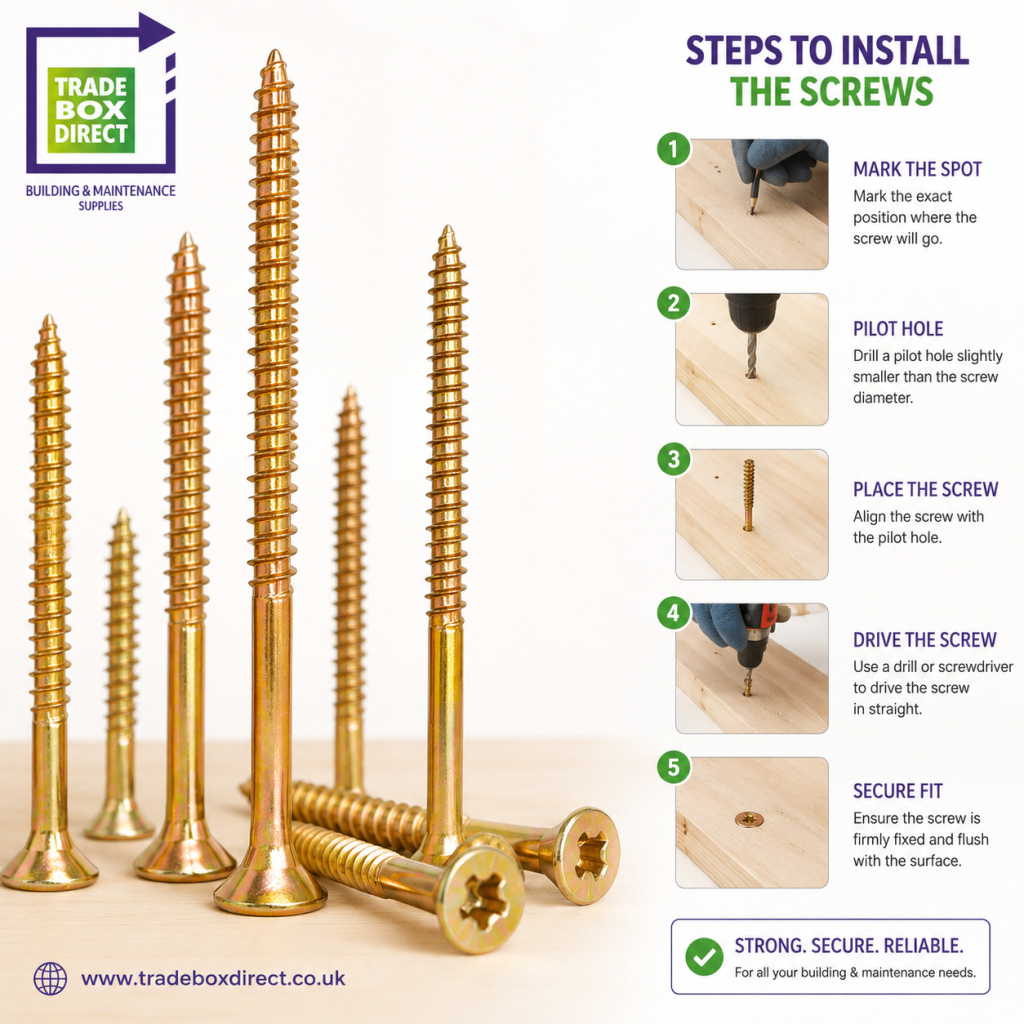
A pilot hole is a small hole drilled before installing the fastener. It can make installation easier and help guide the fastener.
Pilot holes are especially useful in hardwood. They can also help when working near the edge of a board.
The hole should not be too large. Otherwise, the thread may not grip the material properly.
On the other hand, a very small hole can make installation difficult. Always use the recommended pilot-hole size for the fastener and material.
Think About the Load
Weight is another major factor. A decorative project may need very little holding power. A shelf carrying books needs much more.
Consider both the weight of the item and the force placed on the joint. Movement, vibration, and repeated use can also affect the connection.
For heavier projects, use fasteners designed for the expected load. You may also need wall plugs, anchors, or other support systems.
Never assume that one fastener type can handle every situation.
Avoid Over-Tightening
More force does not always create a stronger joint. Over-tightening can damage both the fastener and the material.
In wood, excessive force can strip the thread or crush the surface. It can also damage the screw head.
When using a drill or driver, use a suitable torque setting. Start gently and increase the force only when needed.
A secure joint should feel firm without being forced.
Common DIY Screw Mistakes
Several simple mistakes can reduce the quality of a project.
First, avoid choosing a fastener only because it looks strong. Instead, check its intended use.
Next, do not ignore the material. Wood, metal, plastic, and masonry need different solutions.
Also, avoid using the wrong driver bit. A poor fit can quickly damage the head.
Another common mistake is choosing the wrong length. Measure the material first.
Finally, do not ignore corrosion. Outdoor and damp projects require suitable protection.
By avoiding these mistakes, you can make your DIY work safer and more reliable.
FAQs
1. What are the best screws for a DIY project?
There is no single best type. The right choice depends on the material, load, length, diameter, head style, and environment.
2. Can I use wood screws for all DIY jobs?
No. Wood screws are designed mainly for timber and wood-based materials. Other materials may need different fasteners.
3. When should I use countersunk screws?
Use them when you want the head to sit level with or below the surface. They are especially useful for furniture and woodworking.
4. Are construction screws stronger than standard wood screws?
Construction screws are designed for demanding building tasks, but strength depends on the exact product. Always check the manufacturer’s specifications.
5. What are Pozi screws used for?
Pozi screws are common in furniture, cabinets, woodworking, and general DIY projects. Use a matching Pozi bit for the best results.
Final Thoughts
Choosing the right fastener is an important part of any DIY project. Start with the material, then consider the length, diameter, thread, head, drive, load, and environment.
For timber work, wood screws and countersunk wood screws are common choices. For demanding building tasks, construction screws may be more suitable. When you need a neat finish, countersunk screws can help. Meanwhile, Pozi screws are a practical option for many everyday jobs.
Most importantly, take your time before installation. A few minutes spent checking the correct fastener can save you from loose joints, damaged materials, and unnecessary repairs. With the right choice and careful installation, your DIY project can look better, stay stronger, and last much longer.