



What Are Countersunk Screws Used For?
Introduction
Countersunk screws are a common choice when a smooth, neat finish matters. Their heads sit level with, or slightly below, the surface of the material. These Screws help prevent bumps, snags, and rough edges. As a result, they work well for woodwork, furniture, home repairs, and many building jobs.
The main product featured in this guide is MULTI-PURPOSE GOLDEN POZI COUNTERSUNK WOOD SCREWS. These fasteners offer a useful mix of grip, clean looks, and easy driving. They suit many everyday tasks, especially when you want the fixing point to look tidy.
What Is a Countersunk Screw?
A countersunk screw has a head with a sloped underside. When you drive it into a matching hole, the head moves into the surface. The top then becomes flush with the material.
This shape is useful for jobs where a flat finish is important. For example, a screw head that sticks out can catch on clothing or tools. It can also spoil the look of a finished panel. Countersunk screws solve this issue by sitting neatly within the surface.
You can find this style in several forms. Common choices include countersunk wood screws, construction screws, and pozi screws. Each type can suit a different task, so it helps to match the fastener to the material and job.
What Are Countersunk Screws Used For?
Screws with countersunk heads are mainly used to join materials while keeping the surface smooth. Woodworkers often use them on doors, frames, cabinets, shelves, and timber panels. DIY users may also choose them for small repairs around the home.
In construction, the same design can help create a clean finish on timber work. It is especially useful when another part must sit over the fixed surface. A flush head leaves less to catch or rub against.
Furniture is another key use. A neat head can make a finished item look more professional. Therefore, countersunk wood screws are popular for tables, cabinets, storage units, and wooden frames.
Why Is the Countersunk Head Useful?
The biggest benefit is the low-profile finish. Once fitted correctly, the head does not stand proud of the surface. This can make the finished job safer and cleaner.
Another benefit is appearance. A flat fixing point looks less distracting than a raised metal head. That matters when the screw will remain visible.
There is also a practical benefit. A flush head can reduce the chance of snagging. For example, a loose sleeve or cloth is less likely to catch on a well-fitted fixing.
However, the hole must suit the head shape. If the hole is too small, the head may remain above the surface. If it is too deep, the fixing may sit too far below the surface. A pilot hole and countersink can help create a better result.
Benefits of Screws
A good fixing can make a project easier to build and maintain. These Screws can offer a neat finish while keeping two pieces of material firmly joined. They are also available in many sizes, so users can choose an option that suits the task.
Main Uses in Woodwork
Woodwork is one of the most common areas for this fastener style. Countersunk wood screws suit timber jobs such as shelves, cabinets, frames, doors, trim, and furniture.
For softwood, the correct size can provide a strong grip. For hardwood, drilling a pilot hole is often a smart step.
The golden finish of MULTI-PURPOSE GOLDEN POZI COUNTERSUNK WOOD SCREWS can suit projects where the fixing remains visible. It gives the timber a warm, tidy look.
Countersunk Screws for Construction
Building work often needs strong and reliable fasteners. Construction screws can help join timber parts and secure wood-based materials.
A countersunk design is useful when the surface needs to stay fairly flat. Before choosing one, check the material, thickness, load, and environment. Outdoor work may need a finish that can handle moisture.
Construction screws can also help with general timber work where a clean surface is needed. Always check the product details before using a fastener for a heavy-duty job.
Why Choose Pozi Screws?
Pozi screws use a cross-shaped drive with extra features that help the bit stay in place. They are designed for use with a matching pozi driver bit.
This can make fitting easier, especially when the driver is held straight. A good bit fit also helps reduce slipping and damage to the screw head.
Pozi screws are popular in woodworking and general DIY. They work well with many power drills and screwdrivers. Even so, the driver size must match the screw head.
How to Choose the Right Size
Choosing the right size is important for a strong joint. A screw that is too short may not hold the materials well. One that is too long may come through the other side.
Start by checking the thickness of the materials. Then consider how much grip you need. The screw should have enough length to hold the joint without causing unwanted damage.
Diameter also matters. A thicker fastener can offer more strength, but it may need a larger pilot hole. Thin timber can split if the fixing is too large.
For this reason, match Screws to the job rather than choosing by appearance alone.
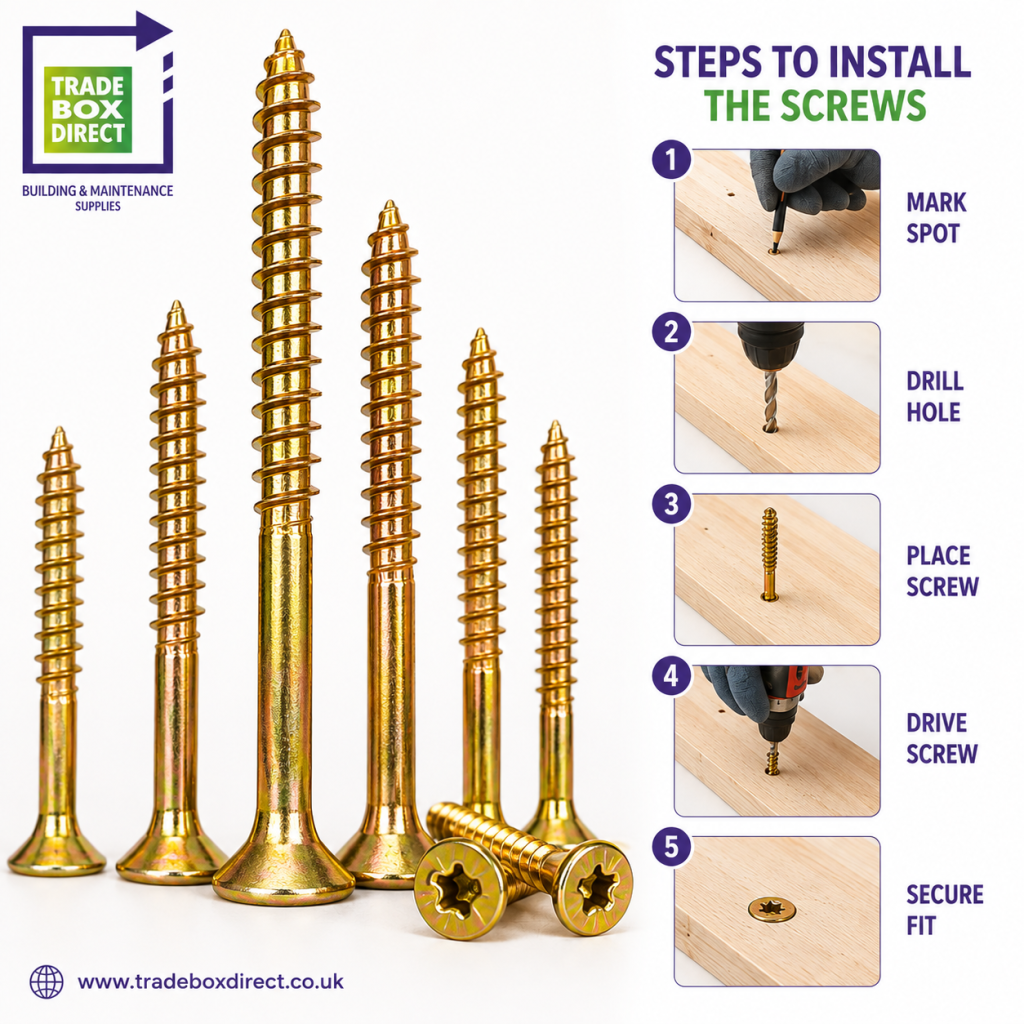
How to Install a Countersunk Screw
Good installation does not need to be hard. Follow these simple steps:
- Mark the fixing point.
- Choose the correct drill bit and driver bit.
- Drill a pilot hole when the material needs it.
- Make a countersink if the surface requires one.
- Place the screw into the hole.
- Drive it straight into the material.
- Stop when the head sits flush with the surface.
Avoid forcing the screw too far into soft timber. Excess pressure can damage the wood or strip the drive.
A power drill can speed up the job, but a hand screwdriver can also work well for small repairs. In either case, use steady pressure and keep the tool aligned with the head.
Common Mistakes to Avoid
Even simple fixing jobs can go wrong. One common mistake is using the wrong driver bit. A poor fit can damage the head and make removal difficult.
Another issue is skipping the pilot hole when the timber needs one. This can increase the risk of splitting. Driving too fast can also cause the head to sink too deeply.
Using the wrong length is another problem. A short fixing may give weak grip, while an overly long one can damage the material.
Finally, do not assume every fastener suits every surface. Check the product details before starting the job.
Are Countersunk Screws Good for DIY?
Yes, they are a practical choice for many DIY projects. Their simple shape makes them useful for furniture, shelves, frames, cabinets, repairs, and timber projects.
They are also easy to use with common screwdrivers and drills. With the correct size and bit, most basic jobs can be completed without special equipment.
Beginners should still take care with drilling and tool use. Eye protection is a good idea when drilling. Keep hands away from the drill bit and work on a stable surface.
Final Thoughts
Countersunk fasteners are useful because they combine strong fixing with a clean finish. They work especially well in timber, furniture, cabinets, frames, and general DIY tasks.
MULTI-PURPOSE GOLDEN POZI COUNTERSUNK WOOD SCREWS are a strong product choice when you want a versatile fixing for wood-based work. Their countersunk shape helps the head sit neatly, while the pozi drive supports easy installation with the right bit.
Before starting a project, check the screw size, material, length, and finish. With the right choice and careful fitting, you can create a joint that looks clean and holds well.
FAQs
1. What are countersunk screws used for?
They are used to join materials while keeping the head level with the surface. They are common in woodwork, furniture, cabinets, frames, and DIY projects.
2. Can I use countersunk screws in wood?
Yes. Countersunk wood screws are made for many timber jobs. The right size depends on the thickness and type of wood.
3. What are construction screws used for?
Construction screws are made for building and repair tasks where strong fixing is needed. Some are designed for timber and wood-based materials.
4. What does Pozi mean?
Pozi refers to the shape of the screw drive. It works with a matching pozi driver bit and is common in DIY and woodworking.
5. Do I need a pilot hole?
A pilot hole is often useful, especially in hardwood or near the edge of timber. It can reduce splitting and make driving easier.