







Which Is Better: South-Facing or West-Facing Solar Panel Mounting?
Introduction
Choosing the right direction is one of the most important steps when installing solar panels. In the UK, roof direction can change how much sunlight your panels receive during the day. Therefore, homeowners often ask whether a south-facing or west-facing roof is better.
In most cases, south-facing panels produce more energy across the whole day. However, west-facing panels can be a smart choice for homes that use more electricity in the afternoon and evening. So, the best option depends on your roof, energy use, and installation goals.
The right Mounting setup also matters. A strong system keeps panels secure, stable, and correctly positioned. As a result, good planning can help your solar system work well for many years.
South-Facing Solar Panels: The Traditional Choice
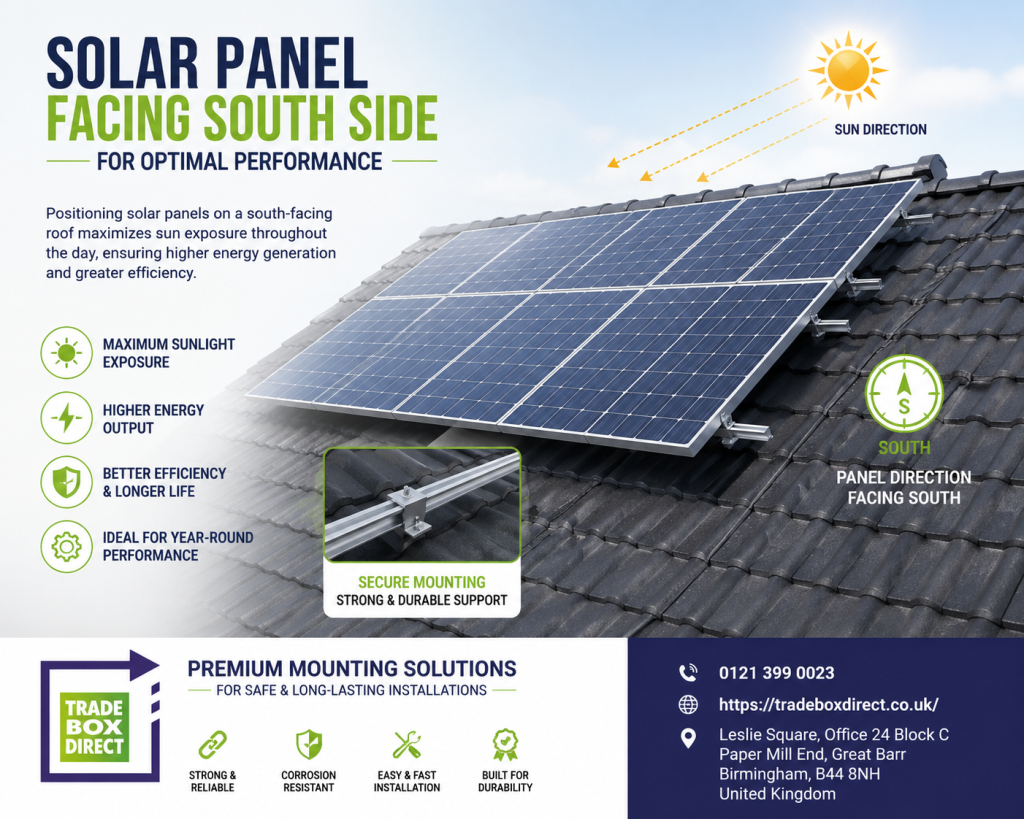
A south-facing roof is often seen as the best option for solar panels in the UK. This is because the sun moves across the southern part of the sky during the day. Therefore, south-facing panels can receive strong sunlight for a long period.
With suitable Mounting, the panels can capture sunlight from late morning through the afternoon. As a result, they often deliver strong total daily generation.
South-facing systems can be useful for homes that want to produce as much electricity as possible during daylight hours. They are also a common choice where the roof has a clear view of the sky.
However, a south-facing roof is not automatically the best roof. Trees, chimneys, nearby buildings, roof angles, and shade can reduce solar output. Therefore, the whole roof should be checked before a final decision is made.
West-Facing Solar Panels: A Useful Alternative
West-facing panels receive more sunlight later in the day. This can be especially useful for households that use electricity after work or school.
For example, a family may use more power between 3 pm and 8 pm. During this period, appliances, cooking equipment, computers, and lighting may be running. Therefore, west-facing solar panels can produce electricity closer to the time when household demand is higher.
Although a west-facing roof may produce slightly less energy over the full day than a similar south-facing roof, the difference is not always large. In addition, your local roof conditions can change the result.
A suitable Mounting arrangement can also help panels sit at a useful angle. The installer should consider the roof pitch, panel layout, wind exposure, and available roof space.
South vs West: Which Produces More Energy?
Generally, south-facing panels produce more total energy than west-facing panels when both roofs have similar conditions. South-facing panels usually receive useful sunlight for more hours across the day.
However, energy production is only one part of the decision.
West-facing panels can provide stronger output later in the day. Therefore, they may match the electricity use of some homes better. If your household uses most power in the evening, this timing can be valuable.
For instance, a south-facing system may generate more power at midday. Meanwhile, a west-facing system may generate more power during the later afternoon. So, your electricity habits should be considered along with total generation.
How Roof Angle Affects Solar Performance
Roof angle can have a major effect on solar performance. A well-positioned panel can receive more direct sunlight, while a poor angle may reduce generation.
Still, there is no need to worry if your roof is not at a perfect angle. Modern solar systems can work across a range of roof pitches. Instead, the installer should assess the roof and choose the most practical design.
This is where solar mounting systems become important. They can help installers secure panels and create a suitable layout for different roof types.
A good system should also allow the panels to remain firmly attached during strong weather. In addition, it should be suitable for the roof material.
The Role of Solar Mounting Rails
Rails provide a strong base for many rooftop solar installations. Panels are attached to the rails, while the rails are fixed to suitable roof supports.
For example, solar mounting rails can help create a neat and stable panel layout. They are commonly used with brackets, hooks, clamps, and other components.
The rail length and design should match the panel arrangement. Furthermore, the installer needs to check the load requirements before installation.
For a professional installation, a product such as the Fastensol Black Mounting Rail 3.55m can form part of a suitable rail-based system. The correct components should always be selected for the specific roof and panel design.
Roof Hooks for Tiled Roofs
Tiled roofs need suitable fixing methods. A roof hook can connect the rail system to the roof structure while working around the existing tiles.
A pantile roof hook is designed for roofs that use pantile-style tiles. Therefore, it can be useful when a solar installation is planned on this type of roof.
The Fastensol Pantile Roof Hook-Portrait is one product designed for this type of application. However, compatibility should always be checked before installation. Roof construction and tile shape can vary, so the correct hook is essential.
Similarly, a solar roof hook should be selected according to the roof type and the installation design. A secure fixing helps keep the panels stable and reduces the risk of movement.
Solar Brackets and Panel Fixings
Brackets are another key part of a rooftop solar installation. They connect different parts of the system and help create a secure structure.
For example, solar brackets may be used with rails and roof hooks to build a complete support arrangement. Each part needs to work correctly with the others.
Likewise, solar panel mounting brackets can help secure panels to the rail system. Correct clamps and brackets should be used because panels need to remain firmly fixed during wind and changing weather.
The installer should also check the manufacturer’s instructions. This helps ensure that the brackets, rails, hooks, and panels are compatible.
Does West-Facing Mounting Make Sense for Evening Energy Use?
Yes, it can.
West-facing panels may be useful when a home has high afternoon or evening electricity use. Instead of producing most of their energy around midday, these panels can continue producing useful power later in the day.
Therefore, west-facing Mounting may suit homes where people return from work or school in the afternoon.
Still, the final decision should not be based on direction alone. Battery storage can also change the picture. A battery can store surplus daytime electricity and release it later when demand increases.
As a result, a south-facing system with battery storage may still be a strong option for a household that needs evening power.
What About East and West Roofs Together?
Some homes have roofs that face both east and west. In such cases, panels can sometimes be installed on both sides.
East-facing panels can generate more power in the morning. West-facing panels can produce more later in the day. Together, they can create a wider generation pattern.
This arrangement can be useful for households with electricity demand throughout the day. However, the installer should check roof space, shade, structural conditions, and system design before choosing this option.
A solar mounting rail can help create an organised panel layout when the roof design allows it.
Important Factors Beyond Direction
Roof direction is important, but it is not the only factor.
First, check for shade. Trees, chimneys, and buildings can block sunlight. Even a well-facing roof may perform poorly if it remains shaded for long periods.
Next, consider roof condition. Solar panels can remain in place for many years, so the roof should be checked before installation.
You should also consider panel spacing and access. Good Mounting should provide enough room for secure fixing and future maintenance.
Finally, think about your household energy use. If you consume more electricity in the evening, west-facing panels may offer a useful production pattern.
Which Option Should You Choose?
For maximum yearly solar generation, south-facing is usually the better choice. It generally receives strong sunlight for more of the day.
On the other hand, west-facing can be better for some households. If afternoon and evening electricity use is high, later solar production can be helpful.
Therefore, there is no single answer for every home.
A professional installer can compare roof direction, pitch, shade, panel capacity, energy use, and available space. They can then create a system that suits the property.
The quality of Mounting components should also be considered. Strong rails, suitable hooks, reliable brackets, and correct clamps all contribute to a secure installation.
Why Quality Components Matter
Solar panels may receive most of the attention, but the support system is just as important. Panels need a stable structure underneath them.
For example, rails must be strong enough for the planned panel arrangement. Roof hooks must suit the roof type. Brackets must fit the system correctly. Clamps must hold the panels securely.
Together, these parts create the physical support for the solar array.
Good Mounting can also help create a clean and professional finish. Furthermore, using compatible components can make installation easier and reduce avoidable problems.
Final Verdict: South or West?
South-facing solar panels are usually the better choice when the main goal is maximum annual energy production. They offer strong sunlight exposure across much of the day.
West-facing panels, however, should not be ignored. They can be a smart option for homes with high afternoon and evening electricity use. In some cases, the timing of energy generation can matter more than a small difference in total output.
Therefore, choose based on the complete picture rather than roof direction alone.
A good Mounting design should match the roof, panel layout, weather conditions, and fixing requirements. With suitable components and careful planning, both south-facing and west-facing solar systems can provide valuable renewable energy.
Frequently Asked Questions
1. Is south-facing always better for solar panels?
No. South-facing is generally better for maximum yearly generation, but west-facing can work very well. Household energy use, shade, roof angle, and panel layout should also be considered.
2. Can west-facing solar panels produce enough energy?
Yes. West-facing panels can produce strong energy, especially during the afternoon. They can be useful for homes that use more electricity later in the day.
3. What is the best roof direction for solar panels in the UK?
South-facing is usually considered the best direction for total yearly output. However, east- and west-facing roofs can also provide good results when the system is planned correctly.
4. Do solar roof hooks work on tiled roofs?
Yes, suitable hooks can be used on many tiled roofs. However, the hook must match the tile and roof construction. A professional installer should check compatibility before installation.
5. What are solar panel mounting brackets used for?
They help connect solar panels and rails to the supporting structure. The correct brackets provide a secure connection and help keep the panels stable.
6. Does the roof angle matter?
Yes. Roof pitch affects how sunlight reaches the panels. However, solar panels can work well across many roof angles when the system is designed correctly.
7. Are solar mounting rails important?
Yes. Rails provide a stable base for attaching solar panels. They also help installers create a neat and secure panel layout.
8. Can I use both south-facing and west-facing panels?
Yes. A system can sometimes use more than one roof direction. This can spread electricity generation across different times of the day.
9. Which is better for evening electricity use?
West-facing panels can be useful because they tend to generate more electricity later in the day. However, a south-facing system with battery storage can also provide strong evening support.
10. What should I check before installing solar panels?
Check roof direction, shade, roof condition, pitch, available space, panel size, electrical demand, and the fixing system. The installer should also select compatible hooks, rails, brackets, and clamps.
Conclusion
South-facing and west-facing roofs can both support effective solar installations. South-facing usually wins for total yearly generation, while west-facing can offer better timing for afternoon and evening energy use.
Most importantly, the system should be designed around the property. Roof condition, shade, panel position, energy habits, and fixing components all matter.
With the right products and a carefully planned Mounting system, homeowners can build a secure solar array that performs reliably for years. Whether you choose south, west, or a combination of directions, professional planning remains the key to getting the best result.