

Plastic Fittings: A Simple Guide to Pipe Inserts and Plumbing Fittings
Plastic fittings play an important role in modern plumbing systems. They help create strong, secure, and leak-free connections. Whether you are a homeowner, plumber, or DIY enthusiast, choosing the right plastic fittings can improve the performance and lifespan of your plumbing system.
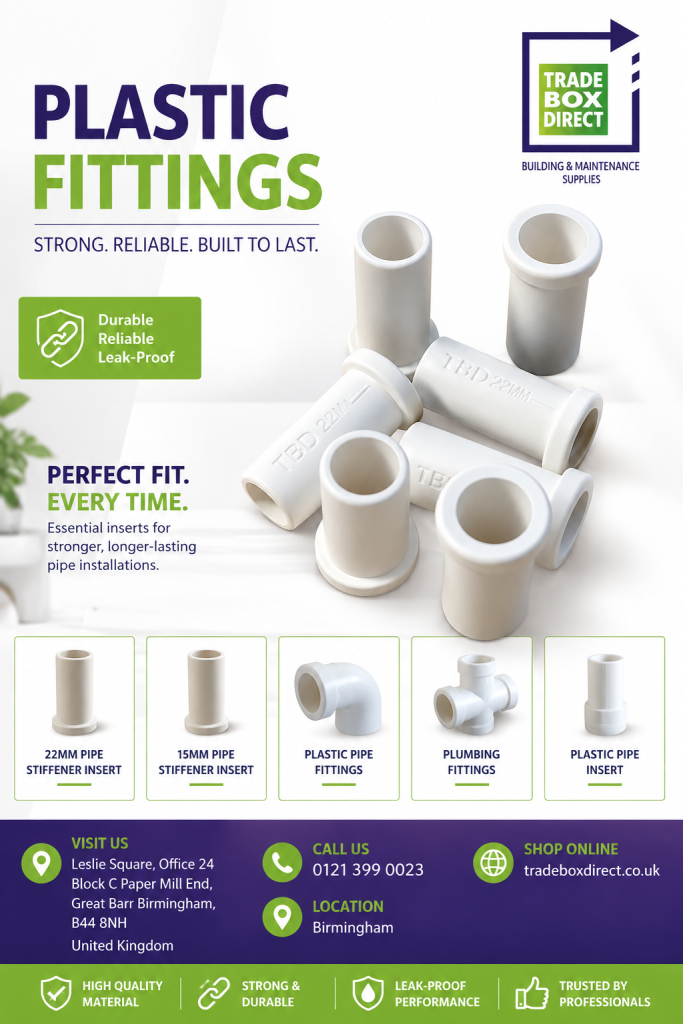
Today, many people prefer plastic materials because they are lightweight, affordable, and resistant to corrosion. In addition, they are easy to install and require very little maintenance. This guide explains everything you need to know about plastic pipe fittings, pipe inserts, and plumbing fittings, including when to use a plastic pipe insert, a 15mm pipe insert, and a 22MM PIPE STIFFENER INSERT.
What Are Plastic Fittings?
Plastic fittings are connectors used to join plastic pipes together. They help create reliable plumbing systems for homes, offices, gardens, and commercial buildings.
Unlike metal fittings, plastic options do not rust or corrode. As a result, they last for many years with very little maintenance. They are also available in many shapes and sizes, making them suitable for different plumbing jobs.
Most modern plumbing systems use plastic fittings because they are easy to install and offer excellent durability.
Why Plastic Pipe Fittings Are Popular
There are several reasons why plastic pipe fittings are widely used today.
Lightweight
Plastic fittings are much lighter than metal fittings. Therefore, they are easier to carry, transport, and install.
Corrosion Resistant
Unlike copper or steel, plastic does not rust. Consequently, the fittings remain reliable even in damp conditions.
Affordable
Plastic products usually cost less than metal alternatives. This makes them an excellent choice for both small and large plumbing projects.
Easy Installation
Most plastic pipe fittings can be installed quickly using push-fit or compression systems. As a result, installation time is reduced.
Long Service Life
Good-quality plastic fittings provide years of dependable performance with minimal maintenance.
What Is a Pipe Insert?
A pipe insert is a small component that fits inside a plastic pipe. Its main purpose is to strengthen the pipe and prevent it from changing shape when connected to compression or push-fit fittings.
Without a plastic pipe insert, soft plastic pipes may deform under pressure. This can lead to leaks or poor connections.
By using the correct pipe inserts, you improve the stability and reliability of your plumbing system.
Why Is a Plastic Pipe Insert Important?
A plastic pipe insert supports the inside of the pipe. It keeps the pipe round and strong while the fitting is tightened.
Using a pipe insert offers several advantages:
- Prevents pipe collapse
- Creates stronger pipe connections
- Reduces the risk of leaks
- Improves long-term performance
- Helps fittings seal correctly
For these reasons, professional plumbers recommend using pipe inserts whenever required by the fitting manufacturer.
Understanding the 15mm Pipe Insert
The 15mm pipe insert is one of the most commonly used inserts in domestic plumbing.
It is designed for standard 15mm plastic pipes used in:
- Kitchen plumbing
- Bathroom installations
- Hot and cold water systems
- Central heating systems
A 15mm pipe insert provides internal support and helps maintain the pipe’s shape during installation. Therefore, it creates a stronger and more secure connection.
Many plumbers consider this small component essential for reliable plumbing work.
What Is a 22MM PIPE STIFFENER INSERT?
The 22MM PIPE STIFFENER INSERT is designed for larger 22mm plastic pipes.
Larger pipes often carry higher water flow rates. Therefore, they require additional internal support during installation.
The 22MM PIPE STIFFENER INSERT helps:
- Strengthen larger plastic pipes
- Prevent pipe distortion
- Improve compression fitting performance
- Increase connection reliability
- Extend the life of the plumbing system
When working with 22mm plastic pipe, using the correct stiffener insert is highly recommended.
Choosing the Right Plumbing Fittings
Selecting the correct plumbing fittings is just as important as choosing the right pipe.
Consider these factors before buying:
Pipe Size
Always match the fitting to your pipe diameter, whether it is 15mm or 22mm.
Water Pressure
Choose fittings designed for your plumbing system’s pressure rating.
Material Compatibility
Use plastic pipe fittings that are compatible with your plastic pipe and pipe inserts.
Installation Method
Some fittings are push-fit, while others use compression connections. Select the option that suits your project.
Tips for Installing Plastic Pipe Fittings
Proper installation helps prevent future plumbing problems.
Follow these simple tips:
- Cut the pipe cleanly and square.
- Remove rough edges after cutting.
- Insert the correct plastic pipe insert before connecting the fitting.
- Push the pipe fully into the fitting.
- Tighten compression fittings correctly without over-tightening.
- Test the system for leaks after installation.
These steps help ensure a safe and long-lasting plumbing system.
Common Applications of Plastic Fittings
Plastic fittings are used in many different plumbing projects.
Common applications include:
- Domestic water systems
- Central heating installations
- Underfloor heating
- Garden irrigation
- Commercial plumbing
- Renovation projects
- New home construction
Their flexibility and durability make them suitable for almost every plumbing application.
Final Thoughts
Choosing high-quality plastic fittings is one of the best ways to build a reliable plumbing system. When combined with the correct plastic pipe fittings, pipe inserts, and plumbing fittings, they create strong, leak-resistant connections that last for years.
Whether you need a 15mm pipe insert for household plumbing or a 22MM PIPE STIFFENER INSERT for larger pipework, selecting the correct components makes installation easier and improves long-term performance. Investing in quality fittings today can help reduce maintenance costs and prevent future plumbing issues. Proper installation, combined with the right products, ensures your plumbing system remains efficient, dependable, and ready to perform for many years.
