







How Can I Make My Home More Energy Efficient With Ventilation?
Introduction
Making your home more energy efficient does not always mean adding more insulation or buying new heating equipment. Ventilation also plays an important role. A well-ventilated home can stay fresher, more comfortable, and easier to heat when the airflow is planned correctly.
Many homeowners worry that bringing fresh air into the house will waste heat. However, closing every window and blocking every air opening can create a different problem. Moisture, stale air, and indoor pollutants can build up. As a result, the home may feel damp and uncomfortable.
The key is to find the right balance between fresh air and heat retention.
In this guide, we will explain how Ventilation can improve energy efficiency. We will also look closely at trickle vents for windows, including how they work, where they should be used, and why they can be useful in modern homes.
Why Does Ventilation Matter for Energy Efficiency?
A home needs fresh air for several reasons. People breathe, cook, shower, clean, and dry clothes indoors. These everyday activities add moisture and pollutants to the air.
Without enough airflow, humid air can remain inside for long periods. Consequently, condensation may appear on windows, walls, and other cold surfaces.
At first, this may seem like a small issue. However, regular condensation can encourage mould and create a damp smell. It may also make rooms feel colder.
Good Ventilation helps move stale and humid air out while allowing fresh air to enter. Therefore, the heating system does not have to work against excessive dampness and poor indoor air quality.
Energy efficiency is not simply about keeping every door and window shut. Instead, it is about controlling how air enters and leaves your home.
What Is Energy-Efficient Ventilation?
Energy-efficient Ventilation means providing enough fresh air without creating unnecessary heat loss.
This balance can be achieved in several ways. For example, a home may use background vents, extractor fans, or a mechanical ventilation system.
The right solution depends on the property. A small flat will have different needs from a large detached house. Similarly, a modern airtight property may need a more controlled ventilation system than an older home.
Good planning is therefore important.
The aim is simple:
- Bring fresh air into living spaces.
- Remove stale and humid air.
- Reduce unnecessary draughts.
- Control indoor moisture.
- Maintain comfortable temperatures.
- Avoid wasting heating energy.
When these factors work together, your home can become healthier and more efficient.
How Do Trickle Vents for Windows Help?
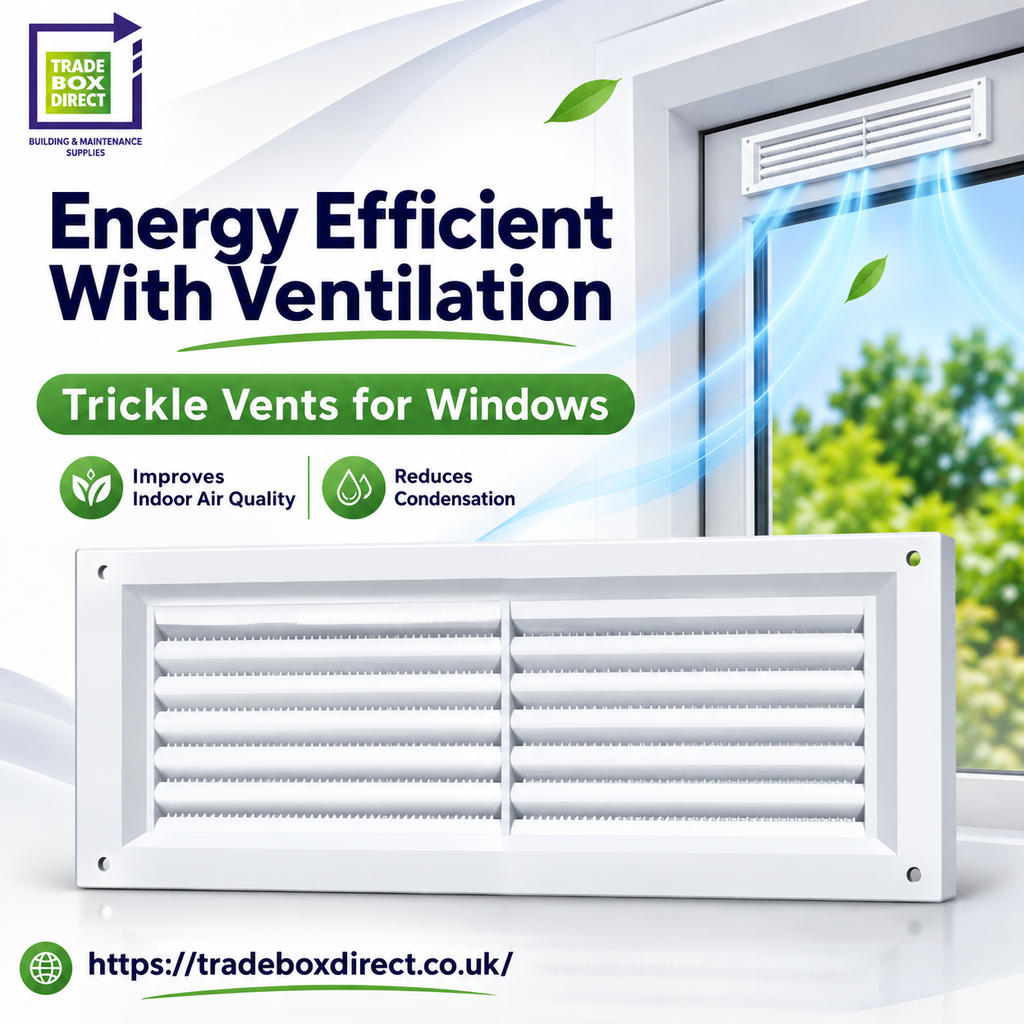
Trickle vents for windows are small openings fitted into or around a window frame. They allow a controlled amount of fresh outdoor air to enter the room.
Unlike opening a full window, a trickle vent provides background airflow without creating a large opening.
This makes them useful during colder weather. You can keep the main window closed while still allowing some fresh air into the room.
Modern homes can be relatively airtight. While this helps reduce unwanted draughts, it also means that natural air movement may be reduced. As a result, planned airflow becomes even more important.
Why Are Trickle Vents Useful?
There are several reasons why homeowners choose trickle vents for windows.
First, they provide continuous background airflow. Therefore, you do not need to open the entire window every time a room feels stuffy.
Second, they can help control moisture. Bedrooms, kitchens, and other occupied spaces can collect moisture during normal daily activities.
Third, they can support better indoor air quality. Fresh air can enter while stale air leaves through suitable extraction points.
Finally, they can help reduce the need for frequent full-window opening. This can be useful during cold, windy, or rainy weather.
However, trickle vents are not a replacement for every other form of ventilation. Bathrooms and kitchens may still need effective extractor fans.
Where Should Trickle Vents for Windows Be Used?
The best location depends on the room and the window design.
Bedrooms
Bedrooms are a common location because people spend many hours sleeping in them. During the night, occupants release moisture and carbon dioxide into the air.
A background air supply can help keep the room fresher. As a result, the bedroom may feel more comfortable in the morning.
Living Rooms
Living rooms can also benefit from controlled airflow. Several people may spend time there, especially in the evening.
Furniture, carpets, and soft furnishings can also affect indoor air quality. Therefore, steady fresh-air flow can be helpful.
Home Offices
Working from home means many people now spend longer periods indoors. A closed office can quickly feel warm and stuffy.
A suitable trickle vent can provide background airflow without requiring the window to stay open.
Do Trickle Vents Waste Heating Energy?
This is one of the most common questions about trickle vents for windows.
A small amount of outdoor air does enter through the vent. However, this controlled airflow serves an important purpose.
If a home has too little airflow, moisture can build up. High humidity can make the air feel uncomfortable and may increase condensation.
At the same time, opening a large window for long periods can create a much larger exchange of indoor and outdoor air.
A trickle vent provides a more controlled approach.
Therefore, the goal is not to stop all air movement. Instead, it is to manage airflow so that the home receives the fresh air it needs without relying on large, uncontrolled openings.
Improve Energy Efficiency by Controlling Moisture
Moisture is a major part of indoor comfort.
Everyday activities create water vapour. Cooking, showering, washing clothes, and drying laundry can all increase humidity.
When humid air meets a cold surface, condensation can form. Over time, repeated condensation can cause problems.
Good Ventilation helps remove moisture before it spreads around the home.
For example, use an extractor fan when cooking. Likewise, run the bathroom extractor during showers and for the recommended period afterward.
Where possible, dry clothes outdoors. If you must dry them indoors, provide suitable airflow.
These small changes can make a big difference.
Use Extractor Fans in High-Moisture Areas
Kitchens and bathrooms usually produce more moisture than bedrooms and living rooms.
For this reason, these areas need effective extraction.
A kitchen extractor can remove steam, cooking smells, and airborne particles near the source. Meanwhile, a bathroom extractor can remove humid air after a shower.
Fresh air must also be able to enter the property. Otherwise, extraction may become less effective.
This is where background vents can work as part of a wider system.
For example, fresh air may enter through a window vent in a bedroom or living space. Stale air can then move through the property before being removed from a bathroom or kitchen.
Keep Your Home Warm Without Blocking Ventilation
It may seem logical to block vents when the weather becomes cold. However, this can cause unwanted problems.
Blocked vents can reduce fresh-air supply. Consequently, moisture may stay inside for longer.
Instead, focus on improving the home’s overall efficiency.
Check for gaps around doors and windows that create uncontrolled draughts. Seal suitable gaps where appropriate, while keeping designed ventilation openings clear.
Good insulation also matters. Insulated walls, roofs, floors, and windows can help reduce heat loss.
The important point is that insulation and Ventilation should work together.
Insulation helps keep heat inside. Ventilation helps control air quality and moisture.
Open Windows Carefully
Opening windows is a simple way to refresh indoor air. However, leaving windows wide open for long periods can allow heat to escape.
A better approach can be short periods of purposeful airing when appropriate.
For example, open a window for a short time when indoor air feels stale. Afterward, close it and allow your normal background ventilation system to continue working.
During very cold weather, use your home’s designed ventilation rather than leaving large windows open for extended periods.
This can help maintain a better balance between fresh air and heating efficiency.
Maintain Your Ventilation Products
Even a good ventilation system will work less effectively if it is dirty or blocked.
Dust can collect around vents. Extractor fans can also collect dirt and grease, especially in kitchens.
Therefore, check vents regularly and clean them according to the manufacturer’s instructions.
Do not cover or block a trickle vent because you feel a draught. Instead, check whether the vent has an adjustable setting.
If airflow seems unusually weak, inspect the system. A professional may be needed if there is a larger problem.
Regular maintenance can help keep airflow consistent and efficient.
Make Your Home More Airtight in the Right Places
A common mistake is to think that an energy-efficient home should have no airflow at all.
That is not the goal.
A well-performing home should limit uncontrolled air leakage while maintaining controlled ventilation.
For example, sealing gaps around suitable areas can reduce unwanted draughts. At the same time, designed vents should remain open and functional.
This approach helps separate useful airflow from accidental heat loss.
As a result, your heating system can operate more efficiently while the home still receives fresh air.
Consider a Mechanical Ventilation System
Some homes may benefit from a mechanical ventilation system.
Mechanical systems use fans to control the movement of air. Depending on the system, they can either extract stale air, supply fresh air, or do both.
One advanced option is Mechanical Ventilation with Heat Recovery, commonly known as MVHR.
An MVHR system removes stale indoor air while bringing in fresh outdoor air. Importantly, it can recover some heat from the outgoing air and transfer it to incoming air.
This can be useful in well-insulated and airtight homes.
However, installation costs and system design should be considered carefully. A professional assessment can help determine whether such a system is suitable for your property.
Simple Ways to Improve Home Energy Efficiency
You do not always need a major upgrade.
Instead, start with simple changes:
- Keep designed vents clear.
- Use extractor fans during cooking and showering.
- Avoid drying large amounts of laundry in closed rooms.
- Check windows and doors for unwanted draughts.
- Use suitable trickle vents for windows for background airflow.
- Clean ventilation openings regularly.
- Improve insulation where needed.
- Avoid leaving windows open for long periods during cold weather.
- Monitor condensation around windows.
- Get professional advice if rooms remain damp or stuffy.
Small improvements can add up over time.
How to Know If Your Home Needs Better Ventilation
Several signs can suggest that airflow needs attention.
Watch for:
- Regular condensation on windows
- Mould around window frames
- Musty smells
- Stuffy bedrooms
- High indoor humidity
- Slow-drying surfaces
- Persistent cooking smells
- Steam that remains after showers
These signs do not always mean the ventilation system is faulty. However, they are worth investigating.
A simple humidity monitor can also help you understand indoor conditions.
FAQs About Energy-Efficient Ventilation
Can ventilation make my home more energy efficient?
Yes, when it is correctly designed and controlled. Good airflow can reduce excess moisture and improve indoor comfort while avoiding unnecessary air loss.
Are trickle vents for windows energy efficient?
They can support energy efficiency by providing controlled background airflow. They also allow fresh air to enter without requiring the whole window to remain open.
Should I close trickle vents in winter?
Usually, you should follow the manufacturer’s guidance and the ventilation requirements of your property. Blocking designed ventilation can reduce airflow and increase moisture problems.
Do trickle vents stop condensation?
They can help reduce condensation when poor airflow and excess indoor moisture are contributing factors. However, they are only one part of a complete moisture-control strategy.
Can I use trickle vents instead of extractor fans?
Usually, no. Trickle vents provide background airflow, while extractor fans are designed to remove larger amounts of humid or polluted air from areas such as kitchens and bathrooms.