








How Much Ventilation Does a Room Need?
Introduction
Good Ventilation helps keep a room fresh, comfortable, and healthy. It allows stale air to leave and lets fresh air enter. Without enough air movement, moisture, smells, dust, and indoor pollutants can build up.
However, many people ask an important question: how much ventilation does a room need? The answer depends on the room size, number of people, how the space is used, and how much moisture it produces.
A bedroom, kitchen, bathroom, and living room do not all need the same level of airflow. Therefore, it is important to understand the basic rules before choosing vents or other ventilation products.
Why Does a Room Need Ventilation?
Every home produces moisture and indoor pollutants during normal daily activities. Cooking creates steam. Showers add moisture to the air. Drying clothes indoors can also increase humidity. Even breathing adds a small amount of moisture.
At the same time, cleaning products, furniture, carpets, and some building materials can release particles or gases into indoor air.
Good Ventilation helps remove these unwanted elements. As a result, the room can feel fresher and more comfortable.
It can also help reduce condensation. When warm, moist air meets a cold surface, water can form. Over time, this may encourage mould growth and damage walls, ceilings, window frames, and other surfaces.
Fresh air also helps control unpleasant smells. Therefore, proper airflow is useful in almost every part of a home.
How Much Ventilation Does a Room Need?
There is no single airflow figure that suits every room. Instead, the required airflow depends on several factors.
Room size is one key factor. A large room normally needs more fresh air than a small room. Occupancy matters too. A room used by four people produces more moisture and carbon dioxide than the same room used by one person.
Room purpose is another important point. Kitchens and bathrooms often need stronger extraction because they create more moisture. Bedrooms and living rooms usually need a steady supply of fresh air.
For UK homes, ventilation should also follow the relevant building regulations and guidance. New or renovated homes may need specific ventilation systems based on the building design.
For simple home planning, however, a useful approach is to think about air changes per hour (ACH). This means how many times the air inside a room is replaced with fresh air during one hour.
For example, if a room contains 50 cubic metres of air and the system supplies 50 cubic metres of fresh air each hour, that equals one air change per hour.
The exact rate needed depends on the room and its use. Therefore, homeowners should not choose equipment based only on room size.
A Simple Way to Estimate Airflow
You can use a simple calculation to understand the basic airflow requirement:
Room volume = Length × Width × Height
For example, imagine a bedroom that is:
- 4 metres long
- 3 metres wide
- 2.4 metres high
The room volume is:
4 × 3 × 2.4 = 28.8 cubic metres
If you wanted one complete air change each hour, the basic airflow would be around 28.8 cubic metres per hour.
However, this does not mean that one air change per hour is always enough. Different rooms have different needs. Building regulations, occupancy, moisture levels, and the type of ventilation system should also be considered.
As a result, this calculation is best used as a simple guide rather than a complete design method.
Ventilation Needs by Room
Different rooms create different levels of moisture and pollutants. Consequently, they need different approaches to airflow.
Bedrooms
Bedrooms need fresh air because people spend several hours sleeping in them. During the night, occupants add carbon dioxide and moisture to the room.
A steady background airflow can help keep the air fresh without creating a strong draught. Window-based vents can be useful where suitable.
For example, window trickle vents can provide a small and continuous flow of fresh air while the window remains closed.
Living Rooms
Living rooms often have several occupants, furniture, carpets, and electronic equipment. Therefore, good background airflow can help maintain comfortable indoor air.
Opening windows for short periods can provide rapid air exchange. However, this method depends on weather, outdoor noise, security, and user habits.
A permanent ventilation solution can offer more consistent airflow.
Kitchens
Kitchens create a high level of moisture and heat. Cooking can quickly increase humidity, especially when boiling water or using a hob.
An effective extractor fan is often important in this area. It should remove moisture and cooking smells close to the source.
Fresh air must also enter the home to replace the air that the extractor removes. Otherwise, the extractor may not work as effectively.
Bathrooms
Bathrooms produce a lot of moisture in a short time. Showers and baths can fill the air with steam.
Therefore, bathrooms usually need effective extraction. A suitable extractor fan can remove humid air before it spreads through the house.
Keeping the bathroom door closed during and after a shower can also help control moisture. At the same time, allowing the extractor to run for the required period can improve results.
What Are Trickle Vents?
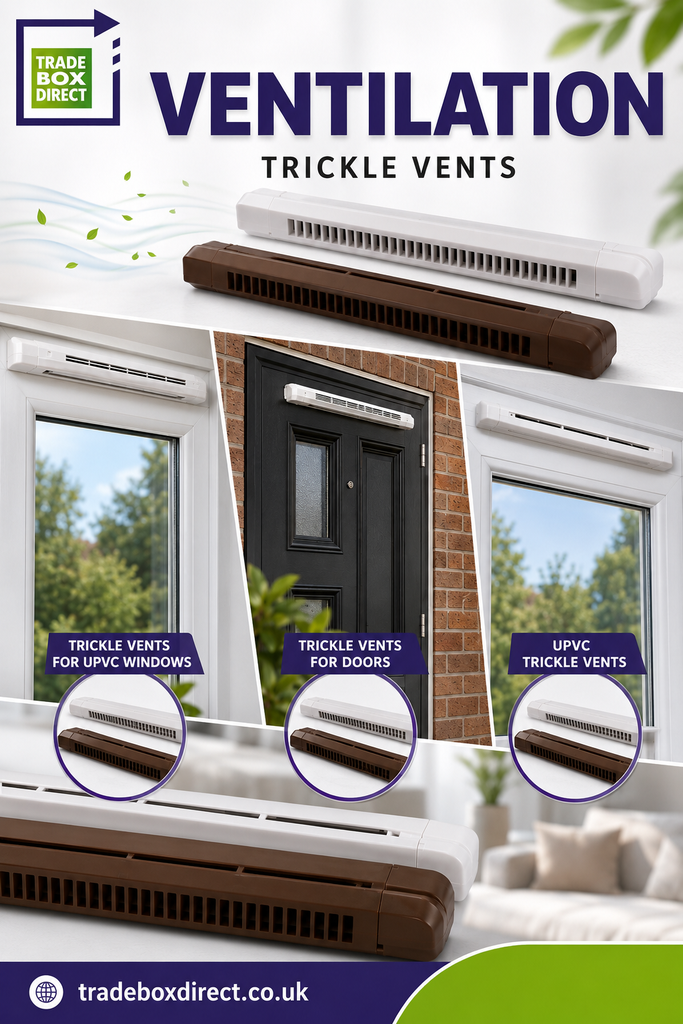
Trickle vents are small openings fitted into windows or doors. They allow a controlled amount of fresh air to enter a room.
Unlike opening a full window, these vents provide background airflow while the window stays closed. This can be useful during colder months when homeowners want fresh air without creating a large draught.
The design is simple. Outside air enters through the vent, while stale indoor air can leave through another ventilation route, such as an extractor fan or another opening.
There are several products available for different window and door types.
Trickle Vents for UPVC Windows
Trickle vents for UPVC windows are designed to provide background airflow through UPVC window systems.
They can be useful in bedrooms, living rooms, and other areas where steady fresh air is needed. However, the correct product should match the window design and installation requirements.
A suitable vent should also be fitted correctly. Poor installation can reduce airflow and may affect the performance of the window.
Trickle Vents for Doors
Trickle vents for doors can provide another way to introduce fresh air into a property.
They may be suitable for certain internal or external door applications, depending on the design. Before installation, check the product specifications and the requirements of the door.
In addition, the vent should not interfere with the door’s safety, security, or weather performance.
UPVC Trickle Vents
UPVC trickle vents are widely used with modern UPVC window systems.
These vents are available in different sizes, colours, and designs. Therefore, homeowners can often choose an option that matches the window frame.
The important point is not simply to select the smallest or cheapest product. Airflow capacity, compatibility, installation position, and room requirements all matter.
How Do Trickle Vents Help a Home?
Trickle vents can support background airflow throughout the day. This is especially useful when windows remain closed for security or comfort.
For instance, opening a window for ten minutes can quickly replace indoor air. Yet once the window closes, the airflow stops. A background vent can provide a more continuous supply.
That does not mean a trickle vent replaces every other ventilation method. Kitchens and bathrooms may still require mechanical extraction.
Instead, these vents can work as part of a wider ventilation strategy.
What Happens If a Room Has Too Little Ventilation?
Poor Ventilation can create several problems.
First, indoor air may become stale. People may notice a stuffy feeling, especially in bedrooms or rooms with several occupants.
Next, moisture can build up. This can lead to condensation on windows and cold surfaces.
Over time, repeated condensation may contribute to mould growth. Mould can leave marks on walls and ceilings and may create unpleasant smells.
Poor airflow can also allow cooking smells, cleaning fumes, and other indoor pollutants to remain in the room for longer.
Therefore, improving airflow can make a noticeable difference to indoor comfort.
Can a Room Have Too Much Ventilation?
Yes. Too much uncontrolled airflow can also cause problems.
Excessive airflow may create uncomfortable draughts. It can also make a home harder to heat, particularly during cold weather.
Furthermore, poorly planned openings may allow outdoor noise, dust, or pollution to enter.
The goal is not to create as much airflow as possible. Instead, the aim is to provide the right level of ventilation for the room and the people using it.
A balanced approach is usually more effective.
How Can You Improve Room Ventilation?
There are several simple ways to improve airflow.
1. Use Background Vents
Suitable window or door vents can provide a steady flow of fresh air.
2. Use Extractor Fans
Bathrooms and kitchens often benefit from mechanical extraction. These fans remove humid or polluted air close to the source.
3. Keep Air Paths Clear
Furniture should not block vents. Curtains, boxes, and other items can also restrict airflow.
4. Open Windows When Appropriate
Short periods of natural ventilation can refresh indoor air quickly. However, this should work alongside the home’s main ventilation system.
5. Control Moisture
Use lids while cooking and run bathroom extraction during showers. Dry clothes outdoors where possible.
6. Maintain Ventilation Products
Dust and dirt can reduce airflow. Therefore, vents and fans should be checked and cleaned according to the manufacturer’s instructions.
Choosing the Right Vent for Your Room
When choosing a vent, consider the room first. A bedroom may need background airflow, while a kitchen needs stronger moisture control.
Next, check the window or door material. UPVC, timber, and aluminium systems may require different products.
Then, check the airflow rate. A vent that is too small may not provide enough air. A product that is too large may create unwanted draughts.
Installation also matters. Follow the manufacturer’s instructions and relevant UK requirements.
If you are unsure about the correct airflow rate, speak with a qualified installer or ventilation professional.
Natural Ventilation vs Mechanical Ventilation
Natural Ventilation relies on windows, vents, air movement, and differences in indoor and outdoor pressure.
Mechanical ventilation uses fans or a dedicated system to move air.
Natural airflow can be simple and inexpensive. However, it depends on weather and user behaviour.
Mechanical systems offer more control. They can remove air from areas such as bathrooms and kitchens while supplying fresh air where required.
Some modern homes use mechanical ventilation with heat recovery, often called MVHR. These systems can exchange stale indoor air for fresh outdoor air while recovering heat from the outgoing air.
The best choice depends on the property, budget, building design, and ventilation needs.
Key Signs That a Room May Need Better Airflow
Look out for common warning signs:
- Regular condensation on windows
- Damp or musty smells
- Visible mould
- A stuffy feeling
- High indoor humidity
- Slow drying of wet surfaces
- Persistent cooking or bathroom smells
- Poor air quality when several people are in the room
One sign does not always mean there is a major problem. However, repeated issues should be investigated.
Frequently Asked Questions
How much ventilation does a bedroom need?
A bedroom needs enough fresh air to control carbon dioxide and moisture while people sleep. The exact airflow depends on room size, occupancy, and the home’s ventilation design.
Are trickle vents enough for a whole house?
Usually, trickle vents are part of a wider system. They provide background airflow, while kitchens and bathrooms may need mechanical extraction.
Should I leave window trickle vents open?
In most cases, these vents are designed to provide background airflow and can remain open when the room is occupied. Follow the manufacturer’s instructions and building requirements.
Do UPVC windows need trickle vents?
Some UPVC window installations require background ventilation. Whether a vent is needed depends on the property, window design, existing ventilation, and applicable building requirements.
Final Thoughts
The amount of air a room needs depends on its size, purpose, occupancy, and moisture level. Therefore, there is no single figure that works for every room.
A good Ventilation plan combines fresh-air supply with effective removal of stale and humid air. Bedrooms and living rooms can benefit from steady background airflow, while kitchens and bathrooms often need stronger extraction.
Products such as trickle vents for UPVC windows, trickle vents for doors, UPVC trickle vents, and window trickle vents can support this approach when they are correctly selected and installed.
Most importantly, do not focus only on airflow numbers. Consider comfort, moisture control, air quality, building design, and UK requirements together. With the right approach, a room can stay fresher, more comfortable, and less prone to condensation.