






How Can I Improve Ventilation With Wall Vents in My Home?
Fresh air plays an important role in a comfortable home. Good Ventilation helps stale air leave and lets fresh air enter. This can reduce stuffy rooms, extra moisture, and unwanted smells. Wall vents offer a simple way to support airflow when doors and windows stay closed.
A wall vent can become part of a wider home ventilation system. Good Ventilation also depends on a clear route between supply and extraction points. When a vent is placed and sized well, it helps create a steady route for air. However, the vent must work with other airflow points to give good results.
Why Does Your Home Need Better Airflow?
Indoor air can become stale during daily life. People breathe, cook, shower, dry clothes, and clean. These activities add moisture and other unwanted matter to the air. As a result, rooms can feel damp or uncomfortable.
Good Ventilation helps move this air out. At the same time, fresh air can enter through a suitable wall vent or other opening. This balance can make living areas feel fresher.
Poor airflow may also increase condensation. Moist air can settle on cold windows and walls. Therefore, better airflow can support a drier indoor space. Still, heating, insulation, and humidity levels also matter.
How Do Wall Vents Improve Ventilation?
Wall vents create a planned opening for air movement. Depending on the design, they can allow outdoor air to enter or help air move towards an extraction point.
For example, a living room may have a wall vent that supplies fresh air. Meanwhile, a bathroom extractor can remove moist air. This creates a simple path through the home.
Good Ventilation depends on this airflow path. Fresh air should reach the room instead of moving straight from one opening to another. Therefore, the position of each vent matters.
Keep wall vents clear. Furniture, storage, paint, and dust can restrict airflow. Regular checks can help keep the opening working well.
Choosing the Right Ventilation Grille
A ventilation grille covers an opening while allowing air to pass. It can also give the opening a neat finish. Some grilles include fly mesh, which helps reduce insect entry.
First, measure the opening. Next, check the fixing method and material. Also, consider whether the grille will face indoor or outdoor conditions.
A louvred design can suit many wall openings. The angled slats allow airflow while giving the opening some protection. However, a grille does not create airflow by itself. It works as one part of a planned system.
The opening size matters too. A grille that is too small may limit airflow. On the other hand, a poorly placed large opening may create drafts.
Where Can Wall Vents Be Used?
Wall vents can suit living rooms, utility rooms, storage areas, garages, and similar spaces when the building design allows them.
Bathrooms and kitchens need extra care because they produce more moisture. Extraction is important in these spaces. A wall vent can support the airflow route, but it should not replace suitable extraction where one is needed.
Bedrooms may also become stuffy when windows remain closed. A suitable wall vent can provide background airflow. However, stale air still needs a clear route out.
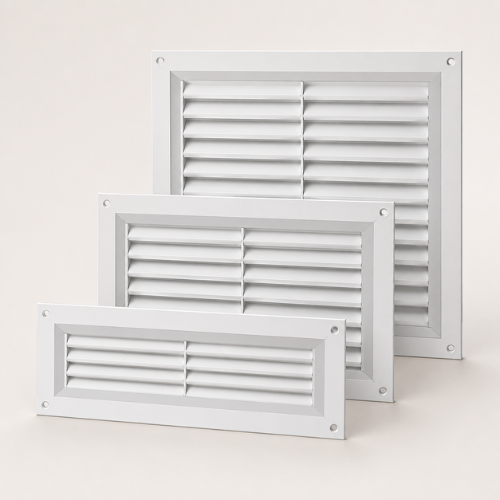
LOUVRED AIR VENT COVER WITH FIXED FLYSCREEN FLY MESH, PLASTIC VENTILATION GRILLE
The LOUVRED AIR VENT COVER WITH FIXED FLYSCREEN FLY MESH, PLASTIC VENTILATION GRILLE is designed to cover a suitable air opening. Its louvred face allows air to pass through. At the same time, the fixed fly mesh helps reduce insect entry.
This makes the product useful for suitable wall vent applications where airflow and basic insect protection are needed. The plastic construction also provides a practical option for selected locations, depending on installation conditions.
Measure the opening before fitting the grille. Check its width, height, fixing points, and available space. The wall surface should also suit the fixing method.
Remember that this product is one part of the airflow setup. It does not replace an extractor fan or a complete home ventilation system. Instead, it can protect and finish a suitable opening.
How Can You Get Better Results From Wall Vents?
Start by keeping every vent opening clear. Next, check nearby furniture and storage. These items can easily block air without being noticed.
Furthermore, look for signs of poor airflow. Stale smells, heavy condensation, damp patches, or a stuffy room can show that the airflow route needs attention.
A ventilation grille can help protect an opening while allowing air to move. Good Ventilation needs regular checks so blocked openings do not reduce airflow.
Cleaning is also important. Use a soft brush or cloth to remove loose dust. For a suitable plastic grille, a gentle damp cloth can clean the surface. Avoid damaging the fixed fly mesh.
How Does a Home Ventilation System Work With Wall Vents?
A home ventilation system may use wall vents, trickle vents, air bricks, extractor fans, ducts, and grilles.
Supply points bring fresh air into the home. Extraction points remove stale or moist air. Ducts guide air, while grilles protect and finish openings.
Together, these parts can create a balanced airflow route. As a result, air can move through the home without relying on open windows all day.
Good Ventilation also depends on room use. A kitchen may need stronger extraction than a bedroom. Likewise, a bathroom often needs fast moisture removal after a shower.
Final Thoughts
Wall vents can provide a simple way to support better airflow at home. With the right size, position, and airflow route, they can help fresh air enter and stale air leave.
A suitable ventilation grille can protect an opening and provide a clean finish. The LOUVRED AIR VENT COVER WITH FIXED FLYSCREEN FLY MESH, PLASTIC VENTILATION GRILLE adds fixed fly mesh to help reduce insect entry while supporting airflow.
For the best result, consider moisture, room use, extraction, insulation, and the wider home ventilation system. With a balanced approach, your home can feel fresher and more comfortable.
FAQs
Can wall vents improve indoor air quality?
Yes. A suitable wall vent can support fresh air entry and stale air removal. The full airflow route should also be considered.
Does a ventilation grille stop insects?
A grille with fixed fly mesh can help reduce insect entry while allowing air to pass through its louvred opening.
Where should a wall vent be placed?
The best position depends on the room, wall, airflow plan, and purpose. Keep the opening away from furniture and other obstructions.
Can wall vents help with condensation?
They can help move moist air when they form part of a suitable airflow plan. However, humidity, insulation, heating, and surface temperature also affect condensation.
Is a home ventilation system needed in every house?
The best setup depends on the building, room use, moisture levels, and airflow needs. A suitable system can help maintain fresher indoor air.
Trusted Product links
- https://tradeboxdirect.co.uk/product/5000-airflow-upvc-trickle-vent-for-windows-doors-white/
- https://tradeboxdirect.co.uk/product/louvred-air-vent-cover-with-fixed-flyscreen-fly-mesh-plastic-ventilation-grille/
- https://tradeboxdirect.co.uk/product/trickle-slot-vents-window-ventilation-real-pvc-plastic-300mm-400mm/
- https://tradeboxdirect.co.uk/product/vent-axia-double-louvred-airbrick-terracotta-220x90mm/