No products in the basket.









What Is Solar Equipment and How Do Solar Panel Components Work?
Introduction
Solar power is a simple way to produce clean energy from sunlight. More homes and businesses now use solar panels to lower their energy bills. However, a solar system needs more than panels to work well. It also needs several parts that work together.
These parts include inverters, batteries, cables, mounting rails and roof hooks. Each one has a special job. Together, they help turn sunlight into useful electricity.
In this guide, we explain how these parts work, how they are made and why they matter. We also share tips to help you choose the right products when shopping.
What Is Solar Equipment?
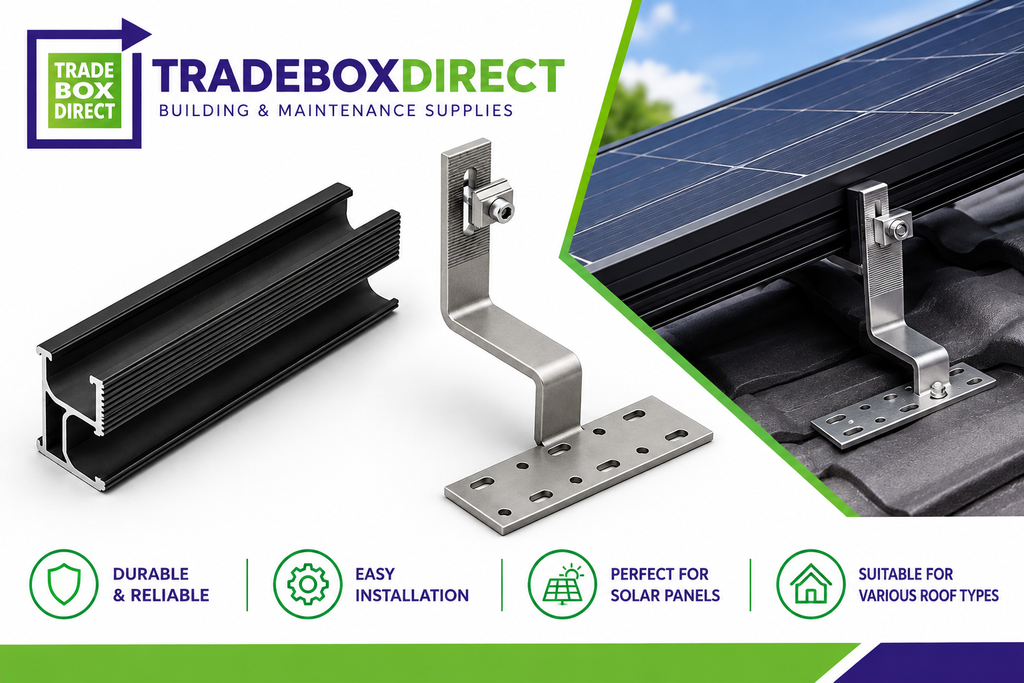
Solar equipment includes the products used to build and run a solar power system. These products help collect sunlight, produce electricity and send power to your home or business.
A typical solar system may include:
- Solar panels to collect sunlight.
- Inverters to change DC power into AC power.
- Batteries to store extra electricity.
- Mounting rails to hold the panels.
- Roof hooks to secure the mounting system.
- Cables and connectors to carry electricity.
- Safety devices to protect the system.
Each part has a clear purpose. Therefore, choosing the right products can help your system work as planned.
You can explore the solar equipment range at TradeBoxDirect to find products for different solar projects.
What Are Solar Panel Components?
Solar panel components are the parts that help a solar system produce and manage power. Some parts collect sunlight, while others carry, store or control electricity.
Let’s look at the main parts and how they work.
1. Solar Panels
Solar panels collect energy from sunlight. They contain small cells, which are often made from silicon.
When sunlight hits these cells, they produce direct current (DC) electricity. The inverter then changes this power into a form used by most home appliances.
Solar panels come in different sizes and power ratings. So, check your roof space and energy needs before choosing a panel.
2. Solar Inverters
An inverter changes DC electricity into alternating current (AC). This is the type of power used by most homes and businesses.
There are three common types:
- String inverters.
- Microinverters.
- Hybrid inverters.
A hybrid inverter can also work with a battery. As a result, you can store extra solar power for later use. However, always check that your inverter suits your battery and panels.
3. Solar Mounting Rails
Mounting rails hold solar panels in place. They connect to roof hooks or other suitable fixings.
Good rails provide firm support. In addition, they help keep panels in straight rows and at the right angle.
Most rails use aluminium because it is light and strong. However, the correct rail depends on your roof and panel design.
4. Roof Hooks and Brackets
Roof hooks connect the mounting rails to the roof structure. They help keep the panels secure in different weather conditions.
Different roofs need different fixing products. For example, tiled roofs often need tile roof hooks. On the other hand, metal roofs may need special roof fixings.
Always check the roof type before you buy these parts.
5. Solar Cables and Connectors
Cables carry electricity between panels, inverters and batteries. Meanwhile, connectors join the cables and help create secure links.
These parts must have the correct electrical ratings. Also, outdoor cables need strong insulation to handle rain, heat and sunlight.
6. Solar Batteries
Solar batteries store extra electricity for later use. For example, your panels may produce more power than your home needs during the day.
Instead of wasting this extra energy, you can store it in a suitable battery. Then, you can use it in the evening or when solar output is low.
However, check the battery size and inverter type before buying.
How Are Solar Panel Components Made?
Different materials and methods are used to make solar products.
Solar cells often use silicon. Manufacturers turn this material into thin wafers. They then treat the wafers so they can produce electricity when sunlight reaches them.
Next, manufacturers join the cells and place them between protective layers. Glass helps protect the front, while other layers help protect the back. A frame then gives the panel extra support.
Other parts use different materials:
- Mounting rails often use aluminium.
- Roof hooks may use stainless steel.
- Solar cables use copper wires.
- Connectors use strong plastic and metal parts.
- Batteries use special cells to store energy.
As a result, each part can perform a different job within the system.
What Are the Benefits of Quality Solar Panel Components?
Choosing good solar products can make a real difference. Here are some key benefits.
Better System Performance
Suitable parts help your system work as planned. For example, the right inverter can manage the power from your panels.
Strong Roof Support
Good rails and roof hooks help hold panels firmly. This is important during strong winds and heavy rain.
Longer Product Life
Solar products face heat, rain and sunlight every day. Therefore, strong materials can help them last longer.
Easier Installation
Well-made parts can make fitting easier. Also, compatible products help reduce problems during installation.
Better Energy Use
Batteries store extra power for later. As a result, you can make better use of the energy your panels produce.
How to Choose the Right Products When Shopping
Before you shop, think about the needs of your solar project. First, check your panel size and system type. Next, look at the ratings of your inverter, cables and connectors.
You should also check these points:
- Read the product details.
- Check the size and material.
- Choose parts for outdoor use.
- Check electrical ratings.
- Make sure all parts fit together.
- Compare products before ordering.
Also, check the surface where the mounting parts will sit. Make sure the fixing method suits the roof.
Pay attention to the edge of each panel when planning the layout. Finally, make sure all parts are compatible before you place an order.
If you need products for your project, you can buy solar panel components from TradeBoxDirect.
Why Choose TradeBoxDirect?
Finding the right solar products can take time. However, shopping from one product range can make the task easier.
TradeBoxDirect offers a range of products for solar installations and other building needs. You can browse the solar category to find suitable accessories for your project.
Before ordering, read each product description. Check the sizes, materials and technical details as well. This helps you choose the right solar equipment for your needs.
Frequently Asked Questions
1. What are the main parts of a solar system?
The main parts include solar panels, an inverter, mounting rails, roof hooks, cables and connectors. Some systems also use batteries.
2. How do solar panels make electricity?
Solar panels use special cells to collect sunlight. These cells produce DC electricity, which an inverter changes into AC power.
3. Why are mounting rails important?
Mounting rails hold the panels in place. They also connect the panels to the roof fixing system.
4. Can I add a battery to my solar system?
Yes, many systems can use a battery. However, you must check that the inverter and battery work together.
5. What should I check before buying solar parts?
Check the size, material, product rating and system fit. Also, make sure the parts suit your roof and installation.
6. Where can I shop for solar products?
You can browse the solar category at TradeBoxDirect. Read the product details to find suitable items for your project.
Conclusion
A solar system needs several parts to produce and manage electricity. Solar panels collect sunlight, while inverters change the power into a usable form. Meanwhile, batteries store extra energy, and mounting parts keep the panels secure.
Understanding how these parts work makes choosing products much easier. Therefore, take time to check sizes, ratings and product details before ordering.
Whether you are planning a new installation or replacing old parts, choose products that suit your needs. Visit TradeBoxDirect to explore the range of solar products and accessories for your next project.
What Are the Different Types of Air Vents and How Do They Work?
Air vents play an important role in every home and building. They help fresh air enter rooms and allow stale air to escape. As a result, they support a healthier and more comfortable indoor space. However, choosing the right type of vent can be confusing because there are many styles, sizes and materials available.
A good ventilation setup can improve indoor comfort and help reduce damp air. Whether you are updating a home, fitting new windows or working on a building project, the right products make a difference.
In this guide, we explain how different vents work, how manufacturers make them and what benefits they offer. We also look at useful products that you can shop for at TradeBoxDirect.
What Is Ventilation and Why Is It Important?
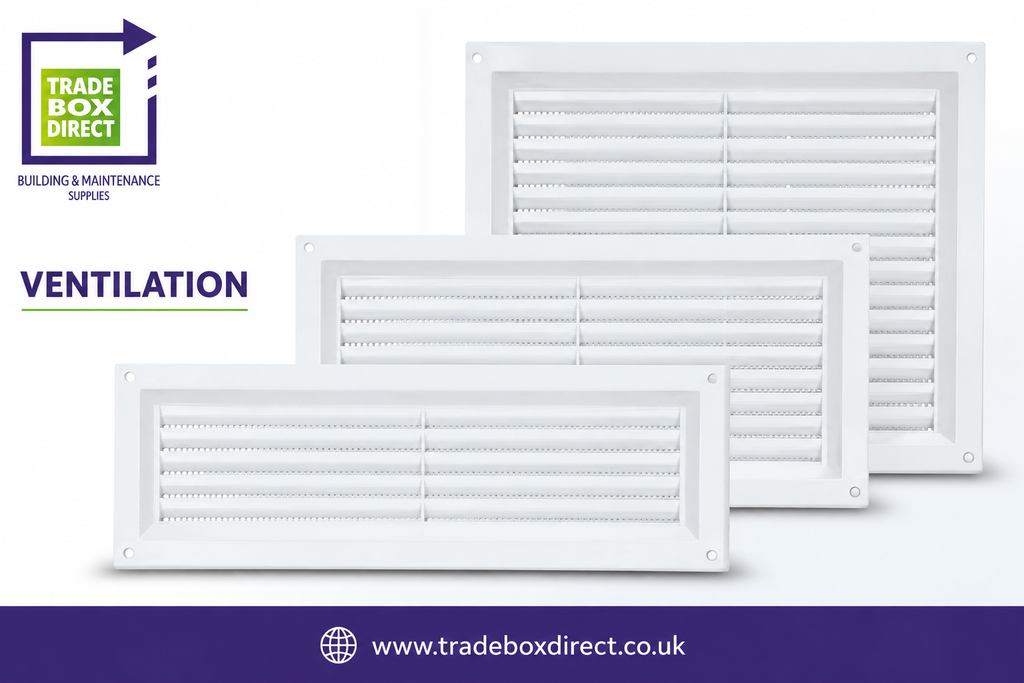
VENTILATION helps fresh outdoor air enter a building while allowing stale indoor air to leave. It also helps control indoor humidity and supports better air quality.
For example, kitchens and bathrooms need a steady supply of fresh air. Without it, moisture can build up and cause condensation on walls and windows.
A suitable home ventilation system can help solve this problem. It may include wall vents, window vents, air bricks and mechanical fans. Each product has a different purpose. Therefore, choosing the correct option depends on the room, building design and installation needs.
You can explore different products in the VENTILATION category at TradeBoxDirect.
What Are the Different Types of Air Vents?
There are several types of vents for homes and commercial buildings. Each design offers different benefits.
1. Air Brick Vents
An air brick vent allows fresh air to pass through an external wall. It is commonly used in houses, garages, extensions and other buildings.
A traditional ventilation air brick contains openings that allow air to move through the wall. Some designs also include a protective outer grille.
A terracotta airbrick is a popular option because it offers a traditional appearance. It can also blend well with brickwork and older building styles.
How is an air brick made?
Manufacturers usually make traditional terracotta versions from shaped clay. They mould the material, dry it and fire it at high temperatures. This creates a strong, durable product.
Plastic versions use moulded plastic materials. They are often lightweight and easy to handle.
Main benefits:
- Allows fresh air to enter buildings.
- Supports ventilation in enclosed spaces.
- Offers a simple and practical design.
- Comes in different colours and sizes.
- Provides a suitable option for new builds and renovation work.
For example, the Vent Axia – Double Louvred Airbrick Terracotta – 220x90mm provides a practical option for wall installations.
2. Window Vents and Trickle Vents
Window vents provide a controlled route for fresh air to enter a room. They are often fitted to modern windows and doors.
Window air vents come in different lengths and designs. In particular, trickle vents allow a small amount of fresh air to enter without opening the entire window.
Many homeowners choose trickle vents for UPVC windows because they work well with modern window frames.
Similarly, trickle vents for doors can provide an additional source of fresh air in suitable installations.
How are window trickle vents made?
Manufacturers commonly use PVC or UPVC plastic. They shape the material through an extrusion or moulding process. Next, they cut it to size and add opening controls where required.
These controls allow users to adjust the amount of air entering a room.
Main benefits:
- Provides controlled fresh air.
- Offers a compact design.
- Supports indoor air quality.
- Allows ventilation without fully opening windows.
- Comes in different lengths and finishes.
If you need a practical option, consider the 5000 AirFlow UPVC Trickle Vent for Windows & Doors | White.
You can also explore trickle vents for windows Ventilation Real PVC Plastic 300mm 400mm for different installation requirements.
3. Plastic Window Vents
Plastic window vents offer a lightweight and practical solution for modern buildings. They are often used with UPVC window frames.
These products come in different shapes, lengths and colours. Therefore, buyers can select a design that suits their existing windows.
UPVC trickle vents and window trickle vents are useful for rooms that need a steady supply of fresh air.
When shopping, check the product dimensions and compatibility with your window frame. Also, consider the opening size and installation method.
4. Ventilation Grilles and Air Vent Covers
Ventilation grilles cover openings in walls, doors and other surfaces. They help protect the opening while allowing air to pass through.
A ventilation grille may have fixed or adjustable openings. Some designs also include a mesh screen to help prevent insects from entering.
An air vent cover with fly screen is useful for homes that need ventilation with added insect protection.
Manufacturers often make plastic ventilation grilles through an injection moulding process. They heat plastic material, inject it into a shaped mould and allow it to cool. After that, they remove and finish the product.
Main benefits:
- Gives vent openings a neat finish.
- Helps protect internal openings.
- Offers different styles and sizes.
- Can include insect mesh.
- Provides a simple replacement option.
The LOUVRED AIR VENT COVER WITH FIXED FLYSCREEN FLY MESH, PLASTIC VENTILATION GRILLE is one option for suitable wall and ventilation openings.
5. Air Boxes and Vent Boxes
An air box is a ventilation component used in certain window and building installations. It can help direct air through a designed opening.
Air box trickle vents are another option for buyers looking for window ventilation products.
When choosing a vent box, check its measurements and installation requirements. A correct fit helps the product work as intended.
How Does a Home Ventilation System Work?
A home ventilation system works by bringing fresh outdoor air into a building and allowing stale indoor air to escape.
Natural systems use vents, windows and air bricks. Mechanical systems use fans and ductwork to move air around the building.
For example, wall-mounted air vents can support natural air movement. Meanwhile, kitchen and bathroom extractor fans remove unwanted indoor air.
Good window ventilation also helps maintain a comfortable indoor environment.
However, every building has different requirements. Therefore, you should select products based on room size, building design and the intended use.
What Are the Advantages of Installing the Right Vents?
Choosing suitable vents offers several benefits.
- Better indoor air quality: Fresh air helps reduce the build-up of stale indoor air.
- Improved comfort: A suitable ventilation setup helps maintain a more comfortable living space.
- Reduced damp air: Correct ventilation can help manage indoor humidity.
- Simple maintenance: Many plastic vents are easy to clean and maintain.
- Flexible installation: Different designs suit walls, windows and doors.
- Better protection: Some vent covers include mesh to help keep insects out.
However, vents alone may not solve every indoor air problem. You should also consider insulation, extractor fans and the overall building design.
How to Choose the Right Air Vents When Shopping
Before you buy, consider these important points:
- Product type: Decide whether you need wall vents, window vents or ventilation grilles.
- Material: Choose between plastic, UPVC and terracotta designs.
- Size: Check the length, width and opening dimensions.
- Location: Consider whether the product will go into a wall, window or door.
- Design: Select a finish that suits your building.
- Installation: Check whether the product needs professional fitting.
You can shop for different air bricks, air vent cover and window ventilation products in the TradeBoxDirect ventilation range.
Frequently Asked Questions
1. What is the main purpose of an air brick vent?
An air brick vent allows fresh air to pass through an external wall. It is commonly used in homes, garages and other buildings.
2. Are trickle vents suitable for UPVC windows?
Yes. Many trickle vents are designed for UPVC windows. However, you should check the product size and frame compatibility before purchasing.
3. What is the difference between an air brick and a ventilation grille?
An air brick is usually fitted into a wall opening to allow air movement. A ventilation grille is generally a cover fitted over an opening to provide a neat and protective finish.
4. Why should I choose a vent with fly mesh?
A vent with fly mesh allows air to pass through while helping prevent insects from entering. It is a useful option for suitable external openings.
5. How often should I clean air vents?
Check your vents regularly and remove dust or debris when needed. Always follow the manufacturer’s cleaning instructions.
6. Where can I buy window vents and air bricks?
You can shop for different window vents, air bricks, UPVC trickle vents and ventilation grilles at TradeBoxDirect.
Conclusion
Choosing the right vents is important for a comfortable and healthy building. From traditional terracotta air bricks to modern UPVC window vents, each product has a useful purpose.
VENTILATION products come in many designs, sizes and materials. Therefore, always check your installation needs before making a purchase.
Whether you are improving an existing property or working on a new project, TradeBoxDirect offers a range of practical products for different applications. Explore the ventilation product category and find suitable products for your next project.
Furniture Corner Protectors and Modesty Blocks: Uses, Benefits and Buying Guide
Introduction
Small furniture parts can make a big difference. They help keep furniture strong, safe and neat. They also make fitting and repairs much easier.
Corner protectors and modesty blocks are two useful products. They have simple designs, yet they serve important roles. Corner protectors help guard sharp edges. Modesty blocks help join furniture panels.
Whether you are a DIY user or a trade expert, good FURNITURE ACCESSORIES can help you get the job done. You can use them for kitchen units, cupboards, tables and other furniture.
In this guide, we will look at how these products work, how they are made and why they are useful. We will also help you find the right products for your next project.
What Are Furniture Corner Protectors?
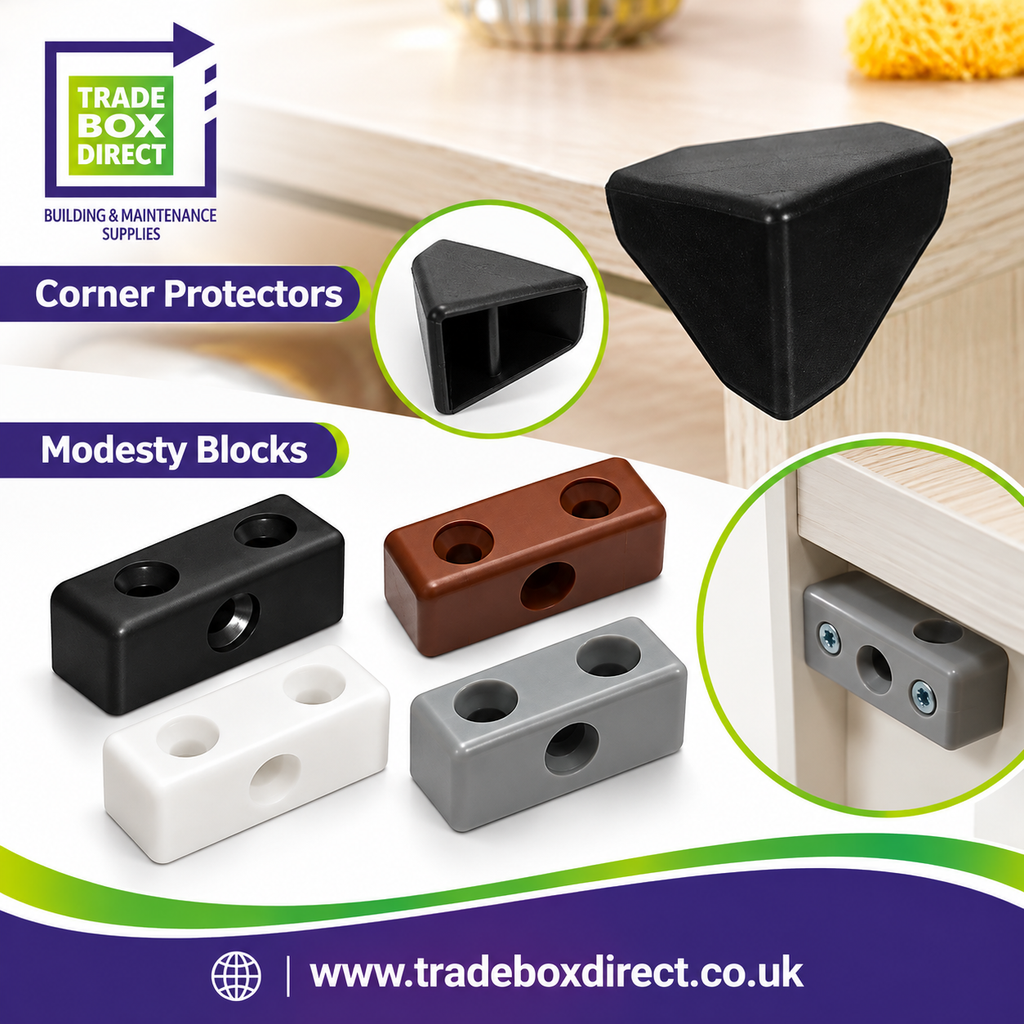
Corner protectors are small parts that cover exposed furniture edges. They help guard corners against knocks, bumps and scratches. As a result, they can help keep furniture in good shape.
A plastic corner protector is a popular choice. It is light, easy to handle and simple to fit. You can use it on many types of furniture.
Black corner protectors also give furniture a smart look. They work well with dark units, tables and cabinets.
PRODUCT: Plastic Corner Protector – Black
The Plastic Corner Protector – Black is a handy choice for many furniture jobs.
Main benefits:
- Helps guard exposed corners.
- Helps reduce chips and scratches.
- Has a neat black finish.
- Is light and easy to handle.
- Works well for many furniture tasks.
Before you order, check the size and shape of the corner. This will help you choose the right fitting.
How Are Plastic Corner Protectors Made?
Most plastic corner protectors are made through a moulding process. First, the maker heats the plastic. Next, the soft material goes into a mould.
The mould gives the plastic its shape. Then, the material cools and becomes firm. After this, the maker checks the size and finish.
This method helps create corner guards in many shapes and sizes. It also allows makers to offer different colours to suit many types of furniture.
What Are the Benefits of Corner Guards?
Furniture corners can suffer from daily wear. For example, moving a table or cabinet may cause marks and chips. However, corner guards can help reduce this type of damage.
Here are some key benefits:
- Better protection: They help guard exposed corners from knocks.
- Smart finish: They give furniture a neat look.
- Easy fitting: Many designs are simple to handle.
- Wide use: They suit many furniture types.
- Simple care: You can wipe most smooth plastic surfaces with a cloth.
Also, corner guards can help protect furniture during storage and transport. However, always check that the product suits your needs.
A good furniture corner protector can be a useful choice for both new furniture and repair work.
What Are Modesty Blocks?
Modesty blocks are small fittings that help join two furniture panels. They are often used when fitting kitchen units and cupboards.
They help hold panels in place and support a firm joint. Therefore, they are useful for both new builds and repair jobs.
People also call them mod blocks or kitchen mod blocks. They come in different colours and pack sizes. As a result, you can choose a pack that suits your work.
PRODUCT: Modesty Blocks Kitchen Mod Block – Various Packs
The Modesty Blocks Kitchen Mod Block – Various Packs is a useful option for kitchen fitters and DIY users.
Main benefits:
- Helps join furniture panels.
- Suits many kitchen fitting jobs.
- Offers a simple fixing method.
- Helps with furniture repairs.
- Comes in different pack options.
Check the pack size before you order. Also, make sure the blocks suit your panels and fixing needs.
How Do Modesty Blocks Work?
Modesty blocks help connect two parts of a furniture unit. First, place the panels in the right position. Next, fit the block at the joint.
You can then use suitable screws or fixings to secure the parts. The block helps hold the panels together.
For example, a kitchen fitter may use mod blocks when joining cabinet parts. They can also help with desks, cupboards and other furniture.
However, the right fixing method depends on the product. So, always check the product details before you start.
Other furniture fittings also play an important role. For example, a Hinge helps a door open and close. A Shelf provides space to store items.
Why Is Good Furniture Hardware Important?
Good furniture hardware helps keep furniture strong and useful. Even small parts can affect how well a unit works.
For this reason, it is worth choosing the right fittings. Good FURNITURE ACCESSORIES can help make fitting jobs easier. They can also help reduce the need for repairs.
Here are some points to check before you buy:
- Material: Choose a material that suits the job.
- Size: Check the measurements before ordering.
- Colour: Pick a colour that matches your furniture.
- Use: Make sure the product suits your project.
- Pack size: Check how many pieces you need.
Also, think about where the furniture will go. Moisture can affect some materials. Good airflow can help keep the area fresh. It may also help reduce condensation.
How to Choose the Right Furniture Fittings
Choosing the right parts is easy when you know what you need.
For example, corner guards suit exposed edges. Modesty blocks suit jobs that need two panels joined together.
First, check the size of your furniture. Next, look at the product details. Then, compare the colour, material and pack size.
If you are working on several kitchen units, a larger pack may be more useful. On the other hand, a small pack may suit a home repair.
Good FURNITURE ACCESSORIES can help you finish each job with care. So, take a little time to compare the options before shopping.
Where Can You Buy Furniture Accessories Online?
TradeBoxDirect offers a range of useful furniture fittings. You can find products for furniture repair, kitchen fitting and general assembly.
Whether you need corner guards or modesty blocks, check the product details before you order.
You can shop for FURNITURE ACCESSORIES at TradeBoxDirect. The range includes useful parts for trade workers, installers and DIY users.
Explore the FURNITURE ACCESSORIES range to find the right products for your next job.
Frequently Asked Questions
1. What are corner protectors used for?
Corner protectors help guard exposed furniture edges. They can reduce marks, chips and damage from daily use.
2. How are plastic corner protectors made?
Makers use a moulding process. They heat plastic, place it in a mould and let it cool. This gives the product its final shape.
3. What are modesty blocks used for?
Modesty blocks help join two furniture panels. They are often used in kitchen units, cupboards and desks.
4. Are modesty blocks good for kitchen cabinets?
Yes. They can help join cabinet panels and support a firm joint. Always check the size and fixing needs first.
5. What is the difference between corner guards and mod blocks?
Corner guards help protect furniture edges. Mod blocks help join furniture panels. Both have different uses.
6. How do I choose the right furniture hardware?
Check the size, material, colour and use of each product. Also, check the pack size before you place an order.
7. Where can I shop for furniture fittings?
You can shop online at TradeBoxDirect. Explore the range to find corner protectors, modesty blocks and other useful fittings.
Conclusion
Corner protectors and modesty blocks are small parts with useful benefits. Corner guards help protect furniture edges. Modesty blocks help join panels and support furniture assembly.
Choosing the right FURNITURE ACCESSORIES can make fitting and repair work easier. It can also help your furniture look neat and stay in good shape.
Explore the TradeBoxDirect range today. Find useful fittings for your home, kitchen or next trade project.
MULTI-PURPOSE GOLDEN POZI COUNTERSUNK WOOD SCREWS
What Are Multi-Purpose Golden Pozi Countersunk Wood Screws?
Choosing the right fixing is important for every project. Whether you build furniture or repair wooden items, you need a strong fixing. The right choice also helps you get a neat finish.
Multi-purpose golden Pozi countersunk wood screws are a popular choice for many jobs. They offer a simple and useful design. Moreover, they are suitable for many woodworking tasks.
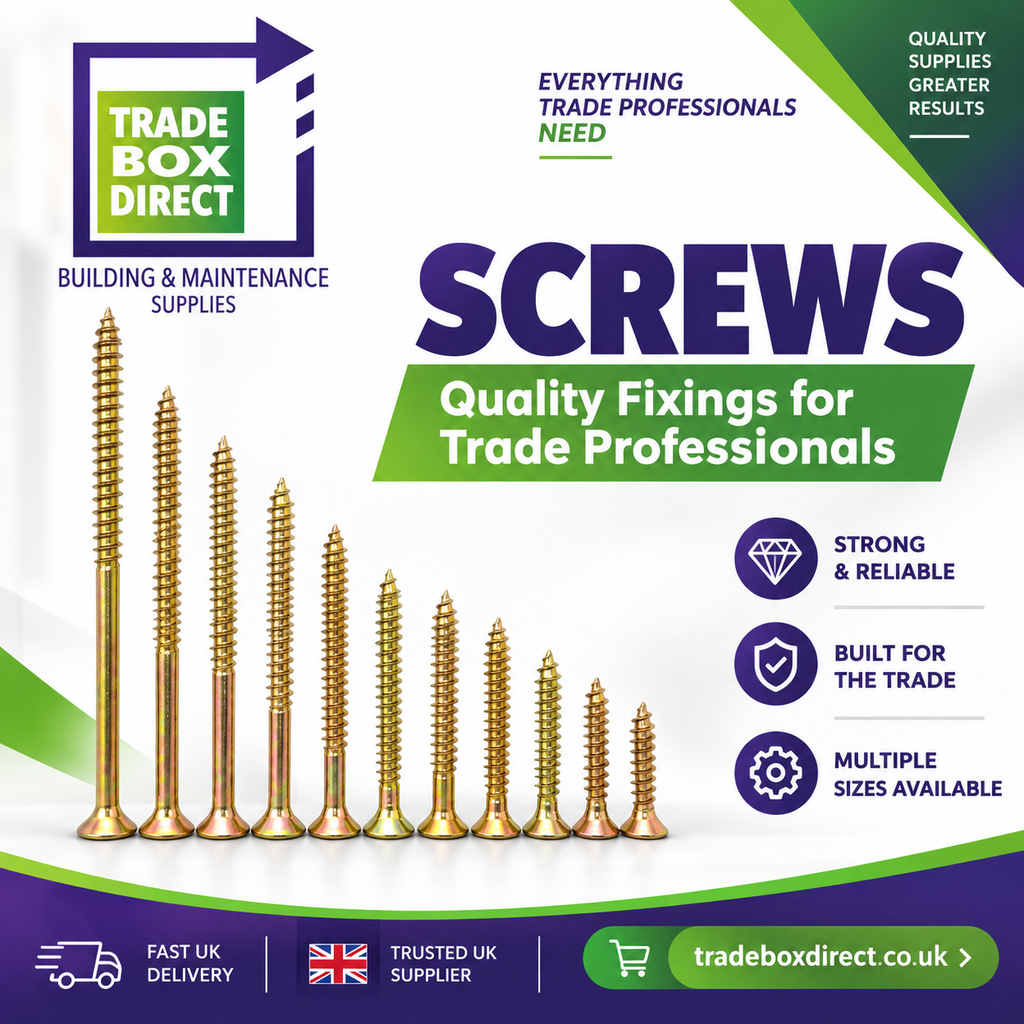
These fixings have a golden finish and a pointed tip. They also have a threaded body and a flat head. As a result, they can hold wooden parts together and give a smooth finish.
Today, SCREWS come in many shapes and sizes. Therefore, it is important to know what each type can do. This guide explains their design, uses and benefits. It also helps you choose the right product for your next project.
What Are Golden Pozi Countersunk Wood Screws?
Golden Pozi countersunk wood screws are made for joining wooden parts. They have a flat head with an angled underside. This shape helps the head sit level with the wood.
The Pozi drive has a cross-shaped slot with extra small sections. It works with a matching Pozi screwdriver bit. Therefore, it helps users turn the fixing with good control.
The golden finish also gives the product a smart look. In addition, the threaded body helps it grip the wood.
You can use these fixings for:
- Wooden furniture.
- Cabinets and cupboards.
- Shelves and storage units.
- Wooden frames.
- DIY repairs.
- General woodworking.
If you need more options, explore our range of countersunk screws.
How Are Golden Pozi Countersunk Wood Screws Made?
The making process uses several simple stages. Each stage helps create a useful and reliable product.
1. Choosing the Metal
First, the manufacturer selects suitable metal. Steel is a common choice because it offers good strength. The metal must suit the job and the intended use.
2. Shaping the Body
Next, machines shape the metal into a long body. They also form the pointed tip. This helps the fixing enter the wood during fitting.
3. Making the Thread
The next step creates the thread along the body. This thread helps the fixing grip the wood. As a result, it can hold two wooden parts together.
4. Forming the Head
The manufacturer then shapes the head. It has a flat top and an angled underside. Therefore, it can sit neatly in the wood.
5. Adding the Golden Finish
Finally, the product receives its golden finish. This gives it an attractive look. However, always check the product details before using it in areas that need extra protection.
What Are the Main Benefits of These Wood Screws?
There are many reasons to choose this type of fixing. Here are some of the main benefits.
1. A Neat Finish
The countersunk head helps create a smooth surface. This is useful when making furniture or fitting wooden panels. In addition, it can reduce the need for raised fixing heads.
2. Easy to Fit
The Pozi drive works with a matching screwdriver bit. Therefore, fitting is simple when you use the right tool. You can also use a suitable power screwdriver.
3. Strong Grip
The threaded body helps the fixing grip the wood. As a result, it can provide a firm joint when you choose the right size.
4. A Smart Golden Finish
The golden colour gives the product a clean look. This makes it a good option for many furniture and DIY projects.
5. Many Uses
These fixings work for many woodworking tasks. For example, you can use them for cabinets, shelves and wooden frames. They are also useful for home repairs.
What Is the Difference Between Different Types of Screws?
Not all fixings have the same design. Therefore, it is important to choose the right type for your job.
- Wood screws: These are made for joining wooden parts. They are useful for furniture and DIY work.
- Pozi screws: These have a Pozi drive. They need a matching screwdriver bit for best results.
- Construction screws: These are used for suitable building and fixing tasks. Their size and design depend on the job.
- Countersunk wood screws: These have an angled head. This helps create a flush finish on wooden surfaces.
You can browse our full range of wood screws and construction screws at TradeBoxDirect.
How Do You Choose the Right Size?
Choosing the correct size is very important. First, check the thickness of the wood. Then, think about the depth of the fixing.
Here are some useful points to consider:
Length: Choose a length that gives enough grip. However, make sure the tip will not come through the other side.
Diameter: Check the width of the fixing. It should suit the wood and the job.
Head type: Choose a countersunk head when you want a smooth finish.
Drive type: Use a matching Pozi screwdriver bit. This helps reduce slipping during fitting.
Finish: Check the finish before use. Also, consider the conditions in which the fixing will be used.
For example, moisture can affect some materials. Good airflow can help manage indoor conditions. It can also help reduce condensation.
PRODUCT: Multi-Purpose Golden Pozi Countersunk Wood Screws
Looking for a useful fixing for your next project? The Multi-Purpose Golden Pozi Countersunk Wood Screws are worth considering.
Their design makes them suitable for many woodworking tasks. Furthermore, the golden finish gives them a smart appearance.
You can use them for furniture, shelving and other suitable wooden parts. However, always check the available product sizes before placing your order.
View the product here:
Multi-Purpose Golden Pozi Countersunk Wood Screws – TradeBoxDirect
Why Shop for Screws at TradeBoxDirect?
Finding the right product can save time on your next job. TradeBoxDirect offers a range of fixings for DIY users and trade customers.
You can explore different sizes and types in one place. Moreover, the product range supports many home improvement and building tasks.
When shopping online, check the product details before you buy. This will help you choose the right fixing for your needs.
Browse our full range of Pozi screws and find suitable products for your next project.
Frequently Asked Questions
1. What are golden Pozi countersunk wood screws used for?
They are used to join wooden parts. For example, they are suitable for furniture, cabinets, shelves and wooden frames.
2. What is a countersunk head?
A countersunk head has an angled underside. This allows it to sit level with the wood surface. Therefore, it gives a neat finish.
3. What is a Pozi drive?
A Pozi drive is a shaped slot in the head. It works with a matching screwdriver bit. As a result, it helps users fit the fixing with better control.
4. Can I use these fixings for furniture?
Yes. They are suitable for many furniture projects. You can use them for cabinets, tables and shelves. However, always choose the correct size.
5. Are golden fixings suitable for DIY projects?
Yes. They are useful for many home projects. For instance, you can use them for repairs, wooden frames and shelving.
6. Where can I buy golden Pozi countersunk wood screws?
You can order them from TradeBoxDirect. Visit the product page to check the available sizes and details.
Conclusion
Golden Pozi countersunk wood screws are a useful choice for many woodworking jobs. They offer a neat head design, a practical drive and an attractive finish.
Moreover, they work well for furniture, cabinets, shelves and DIY repairs. Choosing the correct size is also important for a secure fit.
If you need reliable fixings for your next project, explore the SCREWS range at TradeBoxDirect. Compare the options and choose the right product for your work.
How Does a Tile Levelling System Work and What Are Its Benefits?
Introduction
Laying floor tiles can be a difficult task, especially when you want a smooth and even finish. Uneven tiles can create raised edges, poor alignment and an untidy appearance. However, the right tools can make tiling much easier. One useful tool for this job is a tile leveling system.
Whether you are a professional tiler or planning a home improvement project, this system helps you keep tiles level while the adhesive dries. It also helps create even gaps between tiles. As a result, you can achieve a neat and professional finish with less effort.
In this guide, we will explain how the system is made, how it works, its main advantages and what to consider before purchasing one.
What Is a Tile Levelling System?
A tile leveling system is a tiling tool that helps keep nearby tiles at the same height during installation. It reduces lippage, which means the difference in height between the edges of two tiles.
Most systems use a combination of clips, screws or wedges to hold tiles in position. These parts apply gentle pressure and help keep the tiles aligned while the adhesive sets.
The system is useful for different tiling projects, including:
- Kitchen floor installations.
- Bathroom wall and floor tiling.
- Large-format porcelain tiles.
- Ceramic floor tiles.
- Hallways and living room floors.
- Commercial flooring projects.
Furthermore, it can help beginners achieve better results without needing years of tiling experience.
How Is a Tile Levelling System Made?
A typical system contains several simple components. Each part has a specific job during tile installation.
1. Spacer Screws
Spacer screws fit between neighbouring tiles. They help maintain a consistent gap and support the tile edges.
A spacer creates a set distance between two objects. In tiling, this distance helps create even grout joints.
2. Twister Nuts
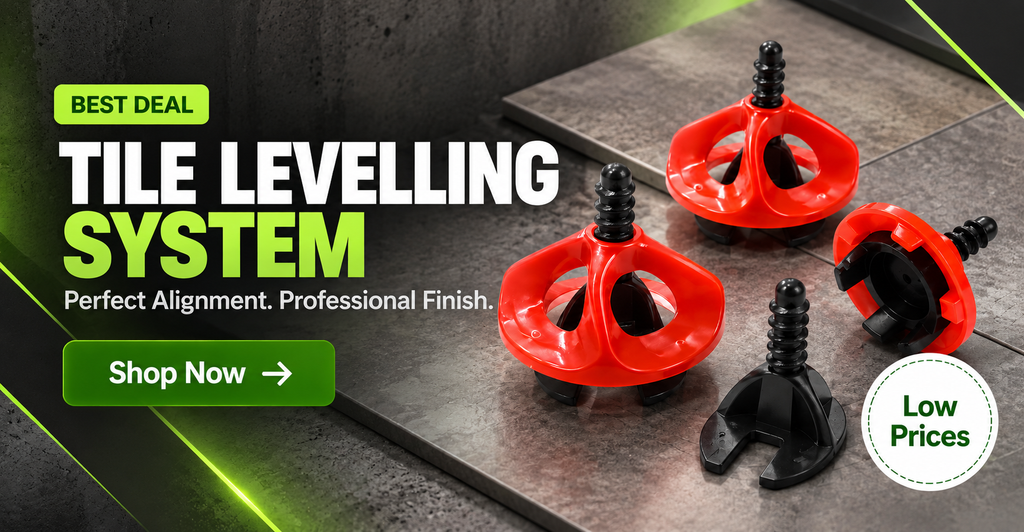
Twister nuts fit onto the spacer screws. You turn them by hand to apply pressure and bring nearby tile edges into alignment.
They help hold the tiles in place while the adhesive dries. However, avoid applying too much pressure, as this may affect the tile position.
3. Two-Millimetre Spacing
The 2mm design helps maintain a consistent joint between tiles. This spacing is useful for projects that require narrow grout lines, provided the tile manufacturer and installation instructions allow it.
Together, these components form a practical tile leveling system for floor installation.
How Does a Tile Levelling System Work?
Using the system is simple when you follow the correct steps.
Step 1: Prepare the Surface
First, clean and prepare the floor. Remove dust, dirt and loose material. Next, check that the surface is suitable for tiling.
Step 2: Apply Tile Adhesive
Spread the correct tile adhesive across the prepared area. Use a suitable notched trowel to create an even adhesive bed.
Step 3: Position the Tiles
Place the first tile carefully. Then position the next tile beside it, leaving the required gap.
Step 4: Insert the Spacer Screws
Place the spacer screws between the tiles. Make sure they sit correctly around the tile edges.
Step 5: Fit the Twister Nuts
Attach the red twister nuts to the screws. Turn each nut gently until the tile edges sit level with one another.
Step 6: Allow the Adhesive to Set
Leave the tiles undisturbed for the time recommended by the adhesive manufacturer. After the adhesive has set, remove the levelling components according to the product instructions.
Finally, clean the joints and apply grout to complete the installation.
What Are the Advantages of Using a Tile Levelling System?
Choosing the right tile leveling system offers several benefits for both professional installers and home users.
1. Creates an Even Tile Finish
One major benefit is that it helps reduce uneven tile edges. Therefore, your finished floor looks smoother and more professional.
2. Maintains Consistent Tile Gaps
The system helps keep a regular distance between tiles. This makes grout lines look neat and organised.
3. Saves Time During Installation
Keeping tiles aligned can take time when working without suitable tools. However, a levelling system makes this process easier and reduces repeated adjustments.
4. Suitable for Different Tile Projects
You can use suitable levelling components with many ceramic and porcelain tile installations. Always check that the system is compatible with your tile thickness and installation requirements.
5. Improves Installation Control
The twister mechanism helps installers adjust tile alignment during fitting. It offers better control over the positioning process and helps reduce unwanted movement.
6. Useful for Beginners and Professionals
Professional tilers can use it to improve installation efficiency. Similarly, beginners can use it to achieve more consistent results.
Why Choose Tile Levelling Spacers and Floor Tile Spacers?
Choosing suitable tile leveling spacers is important for achieving accurate tile alignment. These products help maintain consistent gaps and support neighbouring tiles during installation.
Likewise, floor tile spacers are useful for keeping grout joints even across larger flooring areas.
Before shopping, consider the following points:
- Tile thickness: Check the recommended thickness range.
- Joint width: Select the correct spacing for your project.
- Tile material: Check suitability for ceramic or porcelain tiles.
- Ease of use: Choose components that are simple to fit and remove.
- Product quality: Look for strong and reliable materials.
Also, make sure the components are compatible with your chosen tiles and installation method.
PRODUCT: Tile Spacer Levelling System 2mm Floor Twister Spacer Screws + Red Twister Nuts
If you need practical tiling tools for your next flooring project, consider the Tile Spacer Levelling System 2mm Floor Twister Spacer Screws + Red Twister Nuts from TradeBoxDirect.
This product combines spacer screws and red twister nuts to help keep floor tiles aligned during installation.
Key features and benefits:
- 2mm spacing for consistent tile joints.
- Twister nuts for convenient adjustment.
- Helps reduce uneven tile edges.
- Supports accurate tile positioning.
- Suitable for appropriate floor tiling projects.
- Useful for DIY users and professional tilers.
The twister design makes it easier to adjust neighbouring tiles during installation. Furthermore, the components help maintain their position while the adhesive sets.
You can explore the Tile Spacer Levelling System 2mm Floor Twister Spacer Screws + Red Twister Nuts at TradeBoxDirect.
Where Can You Shop for Quality Tiling Tools?
Having the correct equipment makes a big difference to your flooring project. Therefore, it is worth shopping for reliable tiling tools before starting work.
TradeBoxDirect offers a range of flooring and tiling products to help customers find useful installation supplies in one place.
You can explore the flooring and tiles category to compare available products and select suitable tile spacers for your project.
When choosing a product, check its measurements, material and intended use. Also, consider the tile edge design and the recommended grout joint.
Frequently Asked Questions
1. What Is the Main Purpose of a Tile Levelling System?
Its main purpose is to help keep neighbouring tiles at the same height during installation. It also helps maintain even gaps between tiles.
2. Can Beginners Use a Tile Levelling System?
Yes. Most systems are simple to use. Beginners can follow the fitting instructions to achieve better tile alignment.
3. Are 2mm Tile Spacers Suitable for Every Floor?
No. The correct joint width depends on the tile type, size, manufacturer recommendations and installation requirements. Always check before starting.
4. When Should I Remove the Twister Nuts?
Remove them after the tile adhesive has set for the period recommended by its manufacturer. Follow the product instructions to avoid disturbing the tiles.
5. Does a Tile Levelling System Replace Tile Adhesive?
No. It only helps position and align tiles. You still need suitable tile adhesive to secure them to the floor.
6. Can I Reuse Tile Levelling Components?
Some components may be reusable, while others are designed for single use. Check the manufacturer’s instructions before reusing them.
Conclusion
A tile leveling system is a useful addition to any flooring project. It helps maintain even tile heights, creates consistent grout gaps and reduces the risk of uneven edges. Moreover, it makes tile installation easier for both beginners and experienced professionals.
The right combination of tile levelling spacers, spacer screws and twister nuts can improve the overall installation process. If you are planning a new flooring project, explore the range at TradeBoxDirect and choose suitable products for your needs.
With the correct preparation and tools, you can create a neat, smooth and long-lasting tiled floor.
Solar Equipment: Types, Uses, Benefits and Buying Guide
Introduction
Solar power is a great way to make clean energy. It uses sunlight to produce electricity for homes and businesses. As a result, more people now choose solar power to lower their energy bills.
However, a solar system needs more than solar panels. It also needs the right parts to work well. These include mounting rails, roof hooks, cables, connectors and inverters. Each part has an important job.
This is where solar equipment becomes useful. The right products help create a safe and reliable solar system. Moreover, they can make fitting and maintenance much easier.
Whether you are a homeowner, installer or trader, choosing the right products matters. So, this guide explains how solar products work, how they are made and what benefits they offer.
What Is Solar Equipment?
Solar equipment includes all the main parts used in a solar power system. These parts help collect, convert and store energy from the sun.
For example, a standard solar system may need:
- Solar panels: These collect sunlight and make electricity.
- Solar inverters: These change DC power into AC power.
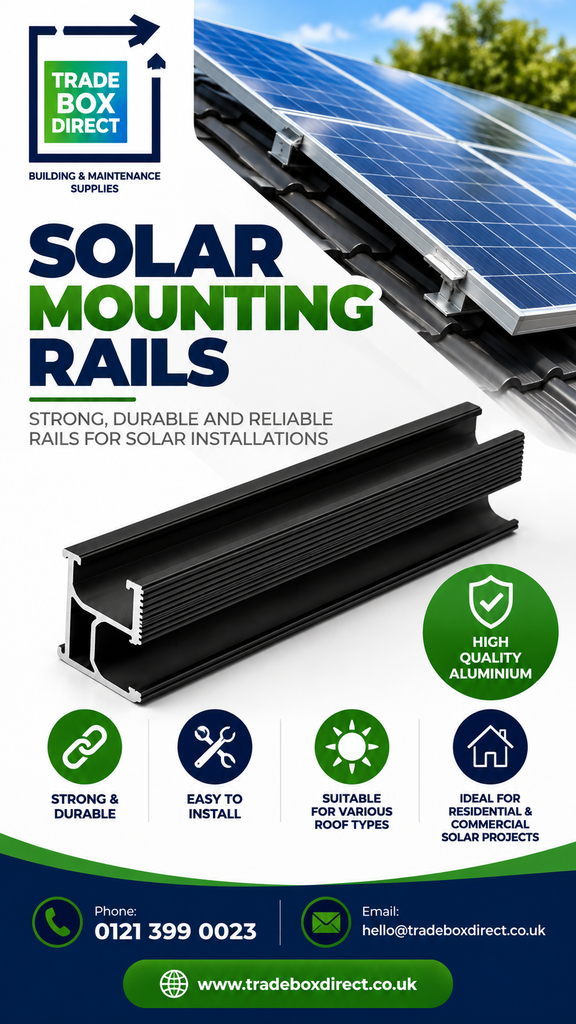
- Mounting rails: These hold solar panels in place.
- Roof hooks: These secure the mounting system to the roof.
- Solar cables: These carry power between system parts.
- Connectors: These join solar cables safely.
- Solar batteries: These store extra power for later use.
Each part has a clear purpose. Therefore, it is important to choose products that work well together.
You can explore a wide range of solar equipment at TradeBoxDirect.
How Is Solar Equipment Made?
The way solar products are made depends on their use. However, most products use strong materials that can handle outdoor conditions.
1. Solar Mounting Rails
Manufacturers often make mounting rails from aluminium. First, they shape the metal into long rails. Next, they cut it to the right size. Finally, they prepare it for fitting.
Aluminium is strong and light. It also helps support solar panels on different roof types.
2. Solar Roof Hooks
Roof hooks often use stainless steel or other strong metals. Manufacturers shape them to fit different roof designs.
These hooks hold the mounting rails in place. As a result, they help keep solar panels secure during strong winds and heavy rain.
3. Solar Cables and Connectors
Solar cables use special insulation to protect the wires. This helps them cope with heat, sunlight and outdoor use.
Likewise, connectors join cables and help create secure electrical links. However, installers must always choose the correct type for their system.
4. Solar Inverters
An inverter contains small electronic parts and circuit boards. These parts work together to change the power made by solar panels.
This allows homes and businesses to use solar electricity with normal electrical systems.
What Are the Benefits of Solar Equipment?
Good products can make a big difference to a solar installation. Here are some key benefits.
1. Better System Performance
The right parts help a solar system work well. For example, good cables and connectors help provide safe power links. Also, a suitable inverter helps convert electricity for daily use.
2. Strong and Durable Products
Solar systems face rain, wind, heat and sunlight. Therefore, they need parts that can handle these conditions.
Strong materials can help reduce wear and damage. As a result, they may also lower the need for repairs.
3. Improved Safety
Safety is vital in every solar project. For this reason, installers must use suitable brackets, cables and electrical protection parts.
Correct products help reduce the risk of loose fittings and poor connections.
4. Lower Energy Bills
Solar panels can help reduce the amount of electricity you buy from the grid. In addition, a battery can store extra power for use later.
This can help homes and businesses make better use of the energy they produce.
5. Easy Installation
The right parts can make fitting a solar system easier. Moreover, a good range of products gives installers more choice for different roofs and projects.
What Solar Supplies Do You Need?
Before you start a solar project, make a list of the parts you need. This will help you avoid delays and extra costs.
Here are some common solar supplies used in solar installations.
| Product | Main use |
|---|---|
| Mounting rails | Support solar panels |
| Roof hooks | Secure rails to the roof |
| Solar clamps | Hold panels in place |
| Solar connectors | Join electrical cables |
| Solar cables | Carry electricity |
| Inverters | Convert DC power into AC power |
| Solar batteries | Store extra electricity |
| Isolators | Help disconnect electrical supplies |
However, every project is different. For example, a tiled roof may need special roof hooks. Meanwhile, other roof types may need different mounting parts.
So, always check the roof and system design before buying.
How to Choose the Right Solar Products
Choosing the right products can save time and money. However, you should check a few things before you place an order.
Check product size: Always check the length, width and measurements. This helps you choose the right parts.
Look at the material: Choose strong materials that suit outdoor use. For example, aluminium and stainless steel are common choices.
Check compatibility: Make sure each product is compatible with your solar system.
Think about the roof type: Different roofs need different fixing products. Therefore, check the roof design before you buy.
Read product details: Check the features, sizes and fitting details before shopping.
Choose a trusted supplier: A good supplier makes it easier to find the products you need.
If you are ready to buy, explore the buy solar supplies range at TradeBoxDirect. You can compare products and choose the right items for your project.
Why Is Solar Mounting Equipment Important?
Mounting parts play a key role in every solar installation. They hold the panels in place and help keep the system stable.
However, choosing the right mounting parts is just as important as choosing the panels.
Before fitting, installers should check the roof surface. They should also look at the edge of the roof and its structure.
This helps them select suitable hooks, rails and clamps. As a result, the panels can sit in the correct position.
Good mounting products also help installers complete projects with greater care and accuracy.
Why Shop for Solar Supplies at TradeBoxDirect?
Finding the right products from one supplier can make shopping simple. TradeBoxDirect offers a dedicated solar category for customers who need products for solar projects.
You can explore different solar equipment options and check their product details before ordering.
Shopping for the right products can help you:
- Compare sizes and product features.
- Find suitable mounting parts.
- Choose products for your project.
- Save time when sourcing supplies.
- Plan your installation with care.
Whether you are an installer, builder or homeowner, finding the right supplies is an important first step.
Frequently Asked Questions
1. What is solar equipment used for?
It is used to fit, run and maintain solar power systems. Common products include panels, inverters, rails, hooks, cables and connectors.
2. How does a solar power system work?
Solar panels collect sunlight and produce DC electricity. Next, an inverter changes it into AC electricity. This power can then run home and business appliances.
3. What are the main solar supplies needed for installation?
Most systems need mounting rails, roof hooks, clamps, cables and connectors. They may also need an inverter and battery.
4. Why is mounting equipment important?
Mounting parts hold solar panels in place. Therefore, they help keep the system secure and stable.
5. How do I choose the right solar products?
Check the size, material and product details. Also, make sure the parts suit your roof and solar system.
6. Where can I buy solar supplies online?
You can visit TradeBoxDirect and explore its solar category. Compare the products and choose the items that suit your project.
Conclusion
Solar power is a useful way to make clean electricity. However, every system needs the right parts to work well.
From mounting rails and roof hooks to cables and connectors, each product has a clear purpose. Therefore, choosing suitable products can help improve safety, support performance and make installation easier.
If you are planning a new project, explore the TradeBoxDirect range. Compare the available products and find the right supplies for your solar installation.
How Do Thermostats Work? A Guide to Programmable Wireless Heating Systems
Introduction
Keeping your home warm should be simple. However, heating your home all day can waste energy and money. This is why choosing the right THERMOSTATS is important.
These useful devices help you manage your home heating with ease. You can set heating times, change settings and enjoy a warm home when you need it. Moreover, modern models offer many useful features for homes and offices.
There are several types to choose from. For example, you can buy a wireless model, a programmable model or a smart option. Each type offers different features to suit your needs.
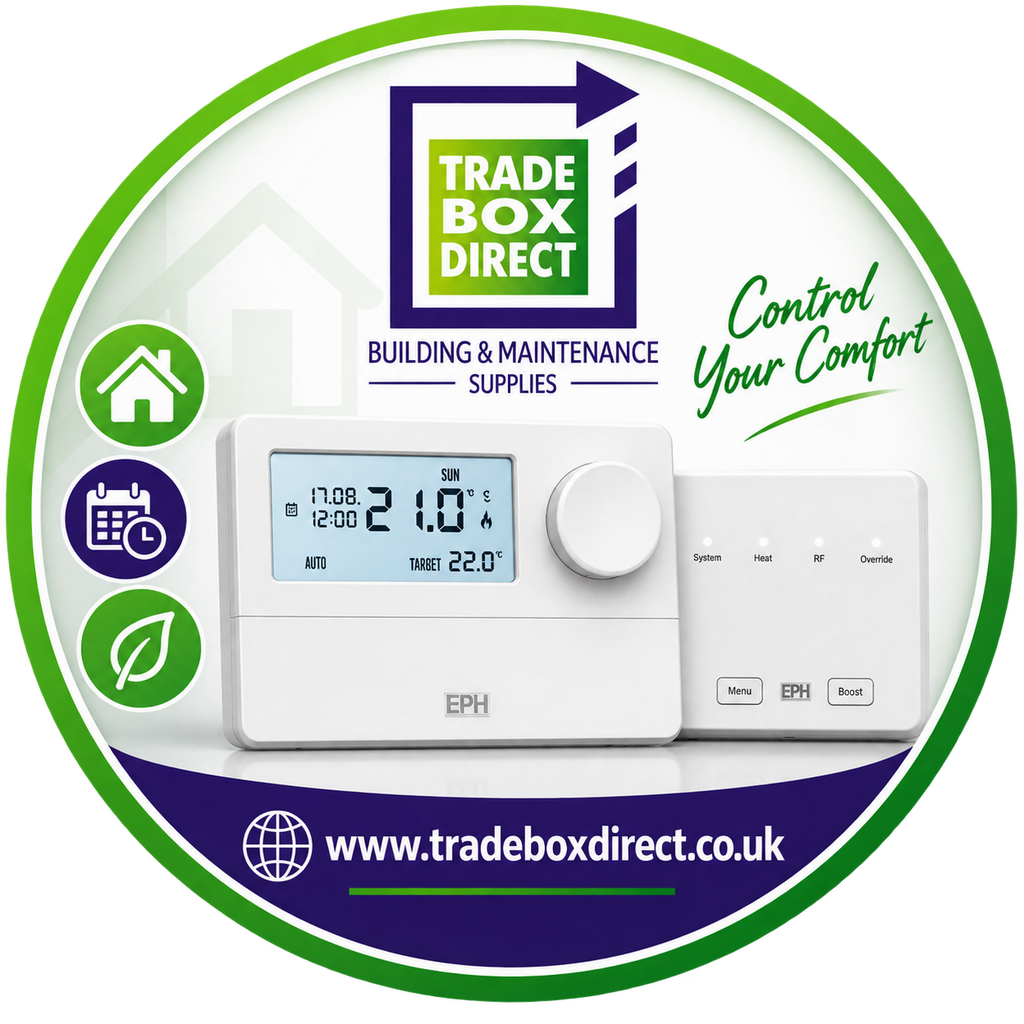
In this guide, we explain how these devices work, how they are made and why they are useful. We also look at the EPH CP4D OpenTherm Programmable RF Thermostat available at TradeBoxDirect.
What Are Thermostats and How Do They Work?
THERMOSTATS are devices that help manage your home’s heating system. They check the temperature in a room and send signals to the heating unit.
For example, you can set your heating to start before you wake up. Then, you can set it to turn down when you leave for work. As a result, you only heat your home when needed.
Most models have simple buttons and a clear screen. Therefore, they are easy to use for people of all ages.
How Are Modern Heating Devices Made?
Modern heating devices have several parts. Each part has a clear job.
The main parts include:
- Sensor: Checks the room’s heat level.
- Circuit board: Reads and processes data.
- Display: Shows the chosen settings.
- Buttons: Let users change the settings.
- Receiver: Gets signals from wireless models.
- Power supply: Gives the unit the power it needs.
In wireless models, the room unit sends signals to a receiver. These signals use radio technology to share information. The frequency depends on the product design.
However, not all models work with every boiler. So, always check the product details before you buy.
Different Types of Heating Devices
There are many options on the market. Therefore, it is worth knowing what each type can do before shopping.
1. Programmable Thermostat
A programmable thermostat lets you set heating times for each day.
For example, you can set it to run in the morning and evening. You can also set a different plan for weekends. As a result, you have more control over your daily heating use.
2. Wireless Thermostat
A wireless thermostat sends signals to a receiver without a direct wire between the two units.
This makes fitting more flexible. In addition, you can place the room unit in a suitable spot, as set out in the product guide.
3. RF Thermostat
An RF thermostat uses radio signals to talk to a matching receiver.
It is a useful choice when you do not want a wired link between the room unit and the heating system. However, both parts must be compatible.
4. Smart Thermostat
A smart thermostat can offer extra features. Depending on the model, you may be able to change your heating settings through a mobile app.
Some models also offer daily plans and energy reports. Therefore, they are a good choice for people who want more ways to manage home heating.
5. Wireless Room Thermostat
A wireless room thermostat lets you set your heating from a separate room unit.
This is useful when your boiler is in a cupboard, garage or another part of the home.
6. OpenTherm Thermostat
An OpenTherm thermostat uses a system that lets a compatible boiler and room unit share more data.
Unlike a basic on/off link, OpenTherm can help the boiler adjust its heat output. However, your boiler must support this system.
7. Programmable RF Thermostat
A programmable RF thermostat brings two useful features together.
You can set heating times and use radio signals to connect with the receiver. Therefore, it offers both flexible fitting and daily heating plans.
8. Wireless Heating Thermostat
A wireless heating thermostat gives you an easy way to manage a compatible heating system.
It is a good option for people who want a separate room unit without a direct wired link.
What Are the Main Benefits?
Choosing the right THERMOSTATS can make daily life easier. Here are some key benefits.
1. Save energy
You can set heating times to match your daily routine. So, your heating does not need to run when nobody is home.
2. Enjoy more comfort
Set your heating to start before you wake up or return home. This helps keep your rooms warm when you need them.
3. Easy to use
Many models have clear screens and simple buttons. Therefore, changing your settings is quick and easy.
4. Flexible fitting
Wireless models give you more choice about where to place the room unit.
5. Better heating plans
Programmable models let you set daily and weekly schedules. As a result, you do not need to change the settings each day.
6. Boiler support
OpenTherm models can share more data with compatible boilers. This may help improve how the heating system runs.
Product Spotlight: EPH CP4D OpenTherm Programmable RF Thermostat
The EPH – CP4D OpenTherm Programmable RF Thermostat is a useful option for people looking for a modern heating device.
It brings together programmable settings, RF communication and OpenTherm technology. Therefore, it can suit heating systems that support these features.
Main Product Features
- Programmable heating times.
- RF communication with a matching receiver.
- OpenTherm support for compatible boilers.
- Flexible room-unit placement.
- Useful settings for daily heating needs.
Before you buy, check that your boiler supports OpenTherm. Also, read the product details to make sure the unit meets your needs.
For fitting, follow the maker’s guide or ask a qualified heating expert. This helps ensure that the device works with your system.
How to Choose the Right Heating Equipment
Not sure which product to choose? Follow these simple tips before shopping.
- Check your boiler: Make sure the product works with your boiler.
- Pick the right type: Choose wired or wireless to suit your home.
- Think about your routine: A programmable model may suit busy homes.
- Check the features: Compare screens, settings and daily plans.
- Read the guide: Check fitting and setup needs before you buy.
- Ask an expert: Get help if you are unsure about the wiring or setup.
At TradeBoxDirect, you can browse a wide range of heating controls and compare the available options.
Why Shop for Heating Products at TradeBoxDirect?
Finding the right heating device does not need to be hard. However, it is important to choose a model that suits your boiler and home.
TradeBoxDirect offers a range of heating products for home improvement projects. You can browse the THERMOSTATS collection and compare the options.
Whether you need a basic model or an advanced RF option, you can explore the range in one place.
You can also view the EPH CP4D model and check its features before placing an order.
Frequently Asked Questions
1. What is the main use of a heating device?
It helps manage your heating system. You can set when the heating runs and choose the settings that suit your home.
2. How does a wireless model work?
It sends signals from the room unit to a matching receiver. This means you do not need a direct wire between these two parts.
3. Is a programmable model worth buying?
Yes, if you want to set heating times in advance. It can help reduce wasted energy and make daily heating easier.
4. What is an OpenTherm model?
It uses a communication system that lets a compatible boiler and room unit share more data. This can help the boiler adjust its heat output.
5. Can I use an RF model with any boiler?
No. You must check that the boiler and receiver are compatible before buying.
6. What are the benefits of the EPH CP4D model?
It offers programmable settings, RF communication and OpenTherm support for compatible heating systems.
7. Where can I shop for heating devices?
You can shop online at TradeBoxDirect. Visit the heating products category to view the range.
Conclusion
Modern THERMOSTATS make home heating easier to manage. They offer useful features such as daily plans, wireless links and support for compatible boilers.
Moreover, the right product can help you make better use of your heating system.
If you want to upgrade your home heating, explore the EPH CP4D OpenTherm Programmable RF Thermostat at TradeBoxDirect. Check its features, compare your options and choose the right product for your needs.
What Is Loft Insulation and Why Choose Knauf Loft Roll 44 – Combi Cut?
A well-insulated home can feel warmer in winter and cooler in summer. It can also help reduce heat loss and lower energy use. However, choosing the right materials is important if you want good results. Whether you are improving an older property or working on a new home, the right INSULATION can make a real difference.
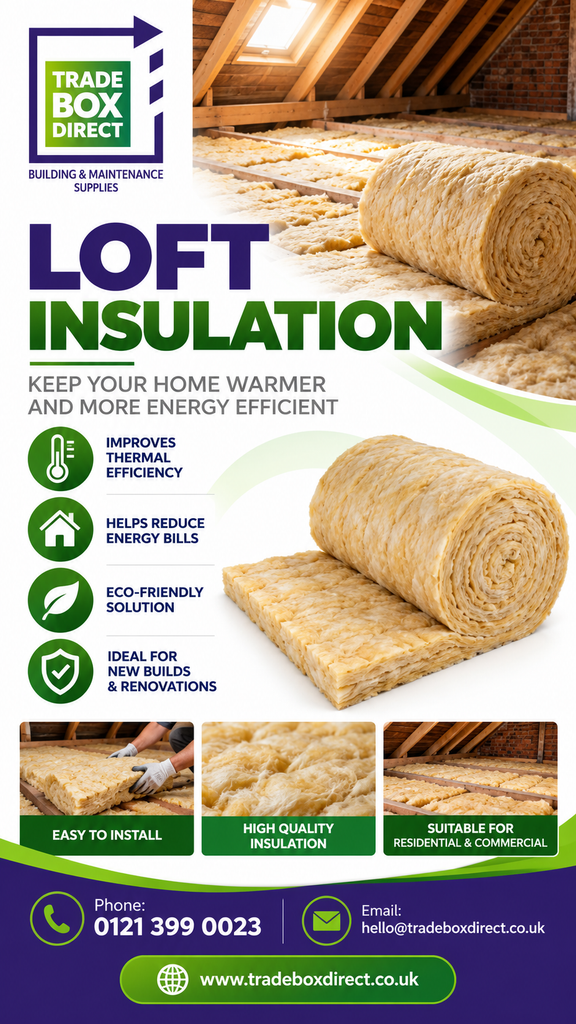
One popular option for home improvement projects is Knauf Loft Roll 44 – Combi Cut. It is designed for loft spaces and helps reduce heat loss through the roof. Moreover, its roll format makes it suitable for many domestic loft projects.
In this guide, we explain how loft materials work, how Knauf Loft Roll 44 is made, and why it may be a useful choice for your next home improvement project. We also explain what to consider before shopping for the right product.
Why Is Loft Insulation Important?
Heat naturally moves from warm areas to cooler areas. Therefore, during colder months, heat from your home can escape through an uninsulated roof. This means your heating system may need to work harder to keep rooms comfortable.
Good INSULATION helps slow this heat transfer. As a result, your home can stay warmer for longer.
There are several benefits to improving your loft:
- Less heat loss: Helps reduce the amount of heat escaping through the roof.
- Better comfort: Helps maintain a more even indoor temperature.
- Lower energy use: Can reduce the need for constant heating.
- Improved home efficiency: Supports better overall energy performance.
- Long-term value: A suitable installation can provide benefits for many years.
Furthermore, choosing the correct loft materials can make home improvement work easier and more effective.
What Types of Loft and Roof Insulation Are Available?
Different homes need different solutions. Therefore, it is worth understanding the main product types before you buy.
1. Loft Insulation
Loft insulation is fitted between or over the ceiling joists. It helps reduce heat loss from the rooms below. Rolls and mineral wool products are common choices for domestic lofts.
2. Roof Insulation
Roof insulation helps reduce heat transfer through roof structures. The right approach depends on whether you have a cold roof or a warm roof design.
3. Thermal Insulation
Thermal insulation slows the movement of heat between spaces. It is used in roofs, walls and floors to help improve building efficiency.
4. Attic Insulation
Attic insulation is another term for materials fitted in attic or loft spaces. It can help make a property more energy efficient.
5. Loft Roll Insulation
Loft roll insulation comes in flexible rolls. It is designed for convenient fitting across suitable loft areas.
What Is Knauf Loft Roll 44 – Combi Cut?
Knauf Loft Roll 44 – Combi Cut
This product is made from glass mineral wool. It is designed for cold pitched roofs at ceiling level and offers a thermal conductivity of 0.044 W/mK.
Available through TradeBoxDirect in 100mm, 150mm and 200mm options, subject to stock.
How Is Knauf Loft Roll 44 Made?
Knauf produces this material using glass mineral wool technology. The process turns glass-based raw materials into fine fibres, which form a soft, flexible insulation material.
The fibres are then bonded using ECOSE® Technology, a plant-based binder. Next, manufacturers form the material into rolls and prepare it in different thicknesses and formats.
The Combi Cut design includes partial perforations. These allow installers to split the roll into narrower sections to suit common joist spacing. Alternatively, they can use the full-width roll as a top layer.
According to Knauf, the product also has an A1 reaction-to-fire classification.
What Are the Main Advantages?
Choosing the right INSULATION means looking at performance, ease of fitting and product quality. Knauf Loft Roll 44 offers several useful features:
- Flexible fitting: The combi-cut format suits different joist widths.
- Good thermal performance: Its declared thermal conductivity is 0.044 W/mK.
- Fire performance: It has an A1 reaction-to-fire classification.
- Easy handling: The roll format makes transportation and storage easier.
- Different thicknesses: You can select 100mm, 150mm or 200mm options.
- Versatile use: It is designed for cold lofts with insulation fitted at ceiling level.
Therefore, it can be a practical option for both renovation and new-build projects.
Which Thickness Should You Choose?
Before shopping, measure your loft and check the existing material. The right thickness depends on the current installation and your required thermal performance.
| Product thickness | Coverage per roll |
|---|---|
| 100mm | 13.89m² |
| 150mm | 9.18m² |
| 200mm | 6.84m² |
These are the listed coverage figures for the standard roll options on the TradeBoxDirect product page.
A 100mm roll may suit a first layer between joists. Meanwhile, 150mm and 200mm rolls can help build up the total depth. However, check the required final depth before ordering.
How Does Loft Roll Insulation Help Save Energy?
A suitable INSULATION layer slows heat transfer through the ceiling. As a result, rooms below the loft can retain more warmth during cold weather.
This can help reduce heating demand. However, actual savings depend on your home, heating system, existing loft condition and energy use.
For homeowners planning improvements, knauf loft insulation is worth considering when comparing products for different loft sizes.
You can also explore insulation for loft projects to find suitable materials for new installations or upgrades.
Furthermore, energy saving insulation can support a more efficient home when fitted correctly.
What Should You Check Before Installation?
Good preparation helps improve the performance of your chosen INSULATION product.
First, check the roof for leaks and signs of damage. Next, look for damp areas and deal with the cause before fitting new material.
It is also important to maintain suitable airflow around the roof space. Do not block eaves ventilation with insulation.
Excess moisture can also cause problems in a loft. Poor ventilation may increase the risk of condensation, so make sure the roof space has suitable ventilation.
Follow the manufacturer’s installation guide and wear suitable protective clothing. Also, avoid compressing the material, as this can reduce its thermal performance. Never cover electrical equipment or recessed lights unless the installation meets the relevant safety requirements.
If you plan to use the loft for storage, install suitable raised flooring rather than placing boards directly on top of the material.
Where Can You Buy Knauf Insulation Products?
Finding the right product is easier when you can compare sizes, specifications and prices in one place.
At TradeBoxDirect, you can explore the home insulation range and compare products for different building projects.
If you need a reliable roll for a domestic loft project, consider Knauf insulation and its available product options.
You can also shop for loft roll insulation to find suitable materials for your project.
Before you buy, check the pack coverage, thickness and quantity required. This helps you avoid ordering too little or too much material.
Frequently Asked Questions
1. Is Knauf Loft Roll 44 suitable for domestic lofts?
Yes. It is designed for cold pitched roofs where installers fit the material at ceiling level. It can suit many domestic loft improvement projects.
2. Can I use Knauf Loft Roll 44 between ceiling joists?
Yes. Its combi-cut design allows the roll to split into narrower sections. You can also use it at full width as a top layer.
3. Does loft insulation help reduce heating costs?
Yes. Good INSULATION reduces heat loss, which can lower the amount of energy needed to heat your home. However, savings vary between properties.
4. Is Knauf Loft Roll 44 fire resistant?
The product has an A1 reaction-to-fire classification. This means it is classified as non-combustible under the relevant European fire classification system.
5. How do I choose the correct insulation thickness?
Check your existing loft depth, joist measurements and required thermal performance. You should also consider current UK building guidance and seek professional advice if needed.
6. Where can I shop for Knauf Loft Roll 44?
You can view the product, compare thickness options and check availability at TradeBoxDirect.
Conclusion
Choosing suitable INSULATION is an important step towards creating a warmer and more energy-efficient home. Loft improvements can help reduce heat loss, improve comfort and support lower heating demand.
Knauf Loft Roll 44 – Combi Cut offers a flexible solution for suitable cold loft projects. Its glass mineral wool construction, different thickness options and combi-cut format make it a useful choice for homeowners and building professionals.
If you are planning a loft improvement project, explore the TradeBoxDirect home insulation range. Compare the available products, check the specifications and choose the right materials for your requirements.
Pipe Stiffener Inserts: Uses, Benefits and How to Choose the Right Size
Introduction
Every plumbing system needs strong and secure connections. Even small parts can make a big difference. One important part is a pipe stiffener insert.
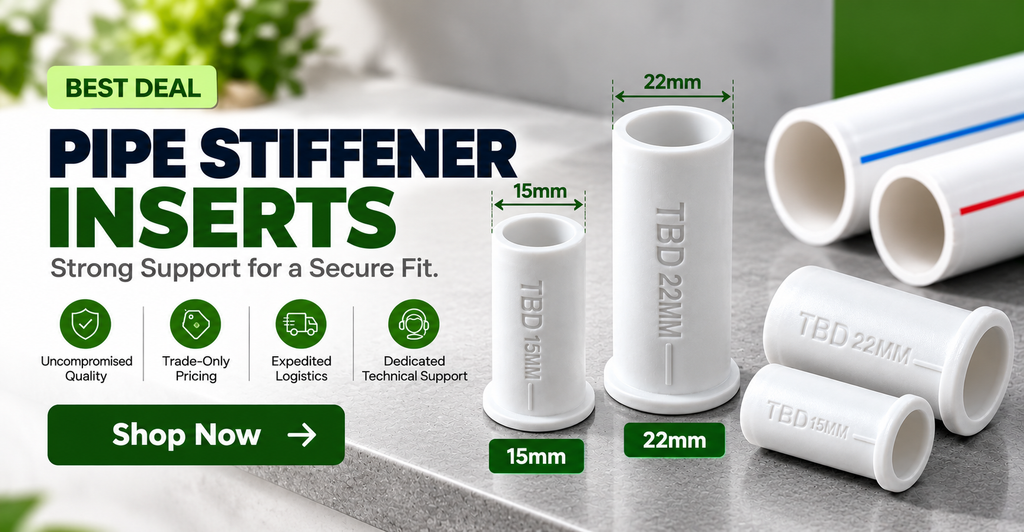
These inserts support plastic pipes from the inside. They also help prevent the pipe from changing shape when you tighten a fitting. As a result, they help create a strong and secure connection.
When choosing Plumbing Supplies, you should consider both large and small parts. For example, pipes, valves, connectors and inserts all have an important role.
In this guide, we explain how pipe inserts work, how they are made and why they are useful. We also look at 15mm and 22mm pipe stiffener inserts available from TradeBoxDirect.
What Are Pipe Stiffener Inserts?
Pipe inserts are small parts that fit inside plastic pipes. They support the inner wall of the pipe during installation.
Plastic pipes can bend or change shape when you tighten a compression fitting. However, an insert provides extra support from inside. Therefore, it helps the pipe keep its shape.
These inserts are useful in many plumbing jobs. They are often used with suitable plastic pipework and compression fittings.
When buying plastic pipe fittings, remember to check whether you also need an insert.
How Are Plastic Pipe Inserts Made?
Manufacturers use a simple but careful process to make these inserts. The aim is to create a strong product with the correct size and shape.
Here are the main steps:
1. Choosing the material
First, manufacturers select a suitable material. It must be strong enough to support the pipe. It should also suit the intended plumbing system.
2. Creating the shape
Next, the material goes through a moulding process. This creates the required shape and size.
3. Checking the measurements
After that, manufacturers check the dimensions. This step helps ensure that the insert fits the correct pipe size.
4. Final quality checks
Finally, each product goes through quality checks. These checks help identify visible faults and size problems.
Good-quality plumbing fittings can help make installation easier. Therefore, always choose products that suit your plumbing system.
What Are the Benefits of Using Pipe Inserts?
Pipe inserts offer several useful benefits. Although they are small, they help support the strength of a plumbing connection.
Here are some key advantages:
- Extra support: They support the inner wall of plastic pipes.
- Less pipe damage: They help reduce the risk of pipe distortion.
- Secure connections: They support a firm connection with suitable fittings.
- Easy fitting: Most inserts are simple to install.
- Better pipe support: They help the pipe keep its shape.
- Useful for many jobs: They suit many domestic and commercial plumbing projects.
Moreover, the correct insert can help reduce problems during installation. This makes it an important part of your plumbing shopping list.
15mm Pipe Stiffener Insert: Features and Uses
A 15mm pipe stiffener insert is made for suitable 15mm plastic pipework. It fits inside the pipe and provides extra internal support.
This product is useful for smaller plumbing connections. For example, it can be used in suitable domestic water pipe installations.
Main benefits
- Designed for suitable 15mm plastic pipes.
- Supports the inner pipe wall.
- Helps reduce pipe distortion.
- Easy to fit during installation.
- Useful for repairs and new plumbing work.
If you need this size, you can buy the 15mm Pipe Stiffener Insert from TradeBoxDirect.
Check the product details before ordering. Also, select the pack size that suits your project.
22mm Pipe Stiffener Insert: Features and Uses
A 22mm pipe stiffener insert provides support for suitable 22mm plastic pipes. It works in the same way as a smaller insert. However, it is designed for a larger pipe size.
It is useful for plumbing work that needs 22mm pipe connections.
Main benefits
- Designed for suitable 22mm plastic pipes.
- Provides support inside the pipe.
- Helps maintain the pipe shape.
- Supports secure compression connections.
- Useful for domestic and commercial projects.
You can buy the 22mm Pipe Stiffener Insert from TradeBoxDirect.
Compare the available pack options before placing your order.
How to Choose the Correct Pipe Insert
Choosing the right insert is very important. The wrong size may not provide the support you need.
Therefore, follow these simple steps before buying.
1. Check the pipe size
First, check whether you need a 15mm or 22mm insert. The size must match the pipe.
2. Check the fitting
Next, look at the fitting manufacturer’s instructions. Some fittings need a specific insert type.
3. Check the material
Make sure the insert suits your pipe material and plumbing system.
4. Check the product details
Always read the product information before ordering. Also, check the pack quantity and dimensions.
5. Choose a trusted supplier
Finally, shop from a supplier that offers clear product details and a good range of plumbing products.
When shopping for Plumbing Supplies, these simple checks can help you choose the right parts.
Where Can You Shop for Plumbing Products?
Finding the right products is easy when you know what you need. However, choosing the correct size and type is just as important.
TradeBoxDirect offers a range of plumbing products for tradespeople, installers and DIY users.
You can browse pipe inserts, plastic fittings and other useful products in one place. This makes it easier to compare options before you buy.
Visit the Plumbing Supplies range at TradeBoxDirect to explore available products.
Whether you need a small insert or several plumbing parts, check the product details before adding items to your basket.
Frequently Asked Questions
1. What is a plastic pipe insert?
A plastic pipe insert is a small support part. It fits inside a suitable plastic pipe and helps the pipe keep its shape.
2. Why do plastic pipes need stiffener inserts?
Plastic pipes can change shape under pressure. An insert supports the inner wall and helps reduce this problem.
3. Are 15mm and 22mm inserts the same?
No. They are made for different pipe sizes. Always choose the size that matches your pipe.
4. Can I use inserts with all compression fittings?
Not always. Check the fitting manufacturer’s instructions before installation.
5. Are pipe inserts easy to install?
Yes, most are simple to fit. However, you should follow the product instructions and check that the insert sits correctly inside the pipe.
6. Where can I buy pipe stiffener inserts?
You can shop for 15mm and 22mm pipe stiffener inserts at TradeBoxDirect. Check the product pages for available pack options.
Conclusion
Pipe stiffener inserts play an important role in many plastic pipe installations. They support the inner pipe wall and help reduce distortion. As a result, they help create more secure plumbing connections.
Both 15mm and 22mm inserts offer useful support for suitable pipework. However, you must choose the correct size for your system.
For quality products and easy online shopping, explore the Plumbing Supplies range at TradeBoxDirect. Find the right inserts, fittings and other essential parts for your next plumbing project.
Dishwasher Detergent: Types, Uses, Benefits and Buying Guide
Introduction
Clean dishes are important in every kitchen. However, washing plates, cups and pans can take time. Grease, oil and food marks can also make cleaning harder. Therefore, choosing the right cleaning product can make a big difference.
Dishwasher detergent helps remove dirt and food marks from dishes. There are several types to choose from. These include powders, tablets, gels and liquids. Each type has a different use.
In this guide, we explain how cleaning liquids work, how they are made and what benefits they offer. We also look at what to check before you buy. Plus, we introduce Fairy Liquid 5L Professional Washing Up Liquid, a useful choice for everyday hand washing.

What Is Dishwasher Detergent?
Dishwasher detergent is a cleaning product used to remove food, grease and dirt from dishes. It helps make washing easier and saves time.
However, not all cleaning liquids work in the same way. Some products are made for automatic dishwashers. Others are made for washing dishes by hand.
For example, dishwasher tablets are designed for automatic machines. In contrast, washing-up liquids are used with water and a sponge.
You can explore the dishwasher liquid range at TradeBoxDirect to find suitable cleaning products.
How Is Dishwasher Liquid Made?
Dishwasher liquid is made by mixing different cleaning ingredients. Each ingredient has a special job.
Here are the main steps used in the manufacturing process.
1. Choosing the Ingredients
First, manufacturers select the ingredients. These may include water, surfactants, fragrances and other cleaning agents.
Each ingredient helps create the final product. For example, some ingredients help remove grease. Others help improve the smell and thickness.
2. Mixing the Ingredients
Next, manufacturers mix the ingredients in set amounts. This helps create a smooth and even liquid.
3. Testing the Product
After mixing, the liquid goes through quality checks. These tests help check its cleaning power, thickness and quality.
4. Filling and Packaging
Finally, the liquid goes into bottles or large containers. It is then packed and sent to shops and suppliers.
As a result, customers can choose the pack size that suits their needs.
How Does Dishwasher Detergent Work?
Cleaning liquids help water remove dirt and grease from dishes.
For example, surfactants help loosen oil and food marks. They also help water wash away dirt.
When you add washing-up liquid to water, it creates foam. Then, a sponge or brush helps lift food from the surface of plates and pans.
Moreover, warm water can help loosen stubborn grease. However, always follow the instructions on the product label.
A good cleaning liquid makes daily washing easier. It can also reduce the time spent scrubbing dirty dishes.
Main Benefits of Dishwasher Liquid
There are many reasons to choose a good washing-up liquid. Here are some of the main benefits.
1. Helps Remove Grease
Grease can be hard to remove with water alone. However, a good cleaning liquid helps break down oily food marks.
This makes it useful for cleaning plates, pans and cooking tools.
2. Saves Time
Washing dishes can take less time when you use the right product. In addition, it can reduce the need for heavy scrubbing.
3. Supports Kitchen Hygiene
Clean dishes help keep your kitchen fresh and tidy. Regular washing also removes leftover food and dirt.
4. Offers Easy Daily Cleaning
Washing-up liquids are simple to use. Just follow the label instructions and use the correct amount.
5. Provides Different Pack Sizes
Cleaning products come in many sizes. Small bottles are useful for home use. On the other hand, larger containers can suit busy kitchens.
What Should You Check Before Buying Dishwasher Detergent?
Choosing the right product is important. Therefore, check these points before shopping.
- Product type: Choose a liquid for hand washing or a special product for an automatic dishwasher.
- Pack size: Think about how much liquid you use each week.
- Cleaning needs: Look for a product that helps remove everyday grease and food marks.
- Price: Compare the price and quantity before you buy.
- Storage: Check that you have enough space for the container.
- Instructions: Always read the product label before use.
Also, check that the product is compatible with your cleaning needs.
If you run a busy kitchen, a larger container may be a practical option. It can also reduce the need for frequent shopping.
PRODUCT: Fairy Liquid 5L – Professional Washing Up Liquid
Fairy Liquid 5L Professional Washing Up Liquid Original is a useful option for regular hand washing.
The large 5-litre container provides a good supply of washing-up liquid. Therefore, it can suit homes, workplaces and busy kitchens.
Main Product Benefits
- Large 5L size: Provides more liquid in one container.
- Everyday cleaning: Helps remove grease and food marks.
- Easy to use: Suitable for regular manual dishwashing.
- Practical storage: Keeps a larger supply in one place.
- Useful for busy kitchens: A handy choice for regular cleaning.
If you need a larger supply, you can shop for Fairy Liquid 5L Professional Washing Up Liquid at TradeBoxDirect.
Dishwasher Liquid for Homes and Businesses
Different kitchens have different needs. Therefore, it is worth choosing the right cleaning products.
Household Kitchens
Families wash dishes every day. As a result, they need products that help remove food marks and grease. A suitable washing-up liquid can make this job easier.
Restaurants and Cafés
Restaurants often wash many plates, cups and pans. Therefore, larger containers can be a useful choice for regular hand washing.
Offices and Workplaces
Office kitchens also need regular cleaning. Staff can use suitable washing-up liquids to clean cups, plates and shared kitchen tools.
For all these settings, the right product can help make daily cleaning simple.
Tips for Better Dishwashing Results
Follow these simple steps to get good results.
- Remove leftover food from plates.
- Use warm water where suitable.
- Add the recommended amount of washing-up liquid.
- Clean dishes with a fresh sponge or brush.
- Pay extra attention to greasy areas and stubborn food marks.
- Rinse dishes well with clean water.
- Let them dry on a clean rack.
In addition, wash your sponges and brushes often. Store cleaning products safely and keep them away from children and pets.
Frequently Asked Questions
1. What is dishwasher detergent used for?
It helps remove food marks, grease and dirt from dishes. However, choose the correct product for hand washing or an automatic dishwasher.
2. How is dishwasher liquid made?
Manufacturers mix water, surfactants and other cleaning ingredients. They then test the liquid before filling and packaging it.
3. What are the benefits of washing-up liquid?
It helps remove grease, loosens food marks and makes washing easier. Furthermore, different pack sizes suit different cleaning needs.
4. Can I use washing-up liquid in an automatic dishwasher?
No. Regular washing-up liquid creates too much foam. This can cause leaks and overflow. Always use a product made for automatic dishwashers.
5. Is Fairy Liquid 5L suitable for daily use?
It is designed for regular manual dishwashing. Follow the product instructions for the correct amount and method of use.
6. Where can I buy cleaning products online?
You can visit TradeBoxDirect and browse its dishwasher detergent products. Compare the available options before placing your order.
7. What is the best way to remove grease from dishes?
Use a suitable washing-up liquid and warm water. Then, clean the dishes with a sponge or brush. For stubborn marks, soak the item where suitable.
Conclusion
Choosing the right cleaning product makes kitchen cleaning easier. A good washing-up liquid helps remove grease, food marks and everyday dirt.
There are many products to choose from. Therefore, always check the type, size and intended use before you buy.
Whether you need cleaning products for your home, office or business, TradeBoxDirect offers options to explore. You can also shop for Fairy Liquid 5L Professional Washing Up Liquid for your regular hand-washing needs.