







How Can Ventilation Help Remove Moisture From a Home?
Introduction
Moisture is a normal part of everyday life. Cooking, washing, bathing, drying clothes, and even breathing can add water vapour to indoor air. However, when this moisture stays inside for too long, it can lead to condensation, damp patches, unpleasant smells, and mould.
Good Ventilation helps move moist air out of the home. At the same time, it brings in fresh air. Therefore, it can help create a cleaner, healthier, and more comfortable indoor space.
This guide explains how Ventilation removes moisture, where it is most useful, and which simple methods can help control humidity.
Why Does Moisture Build Up Inside a Home?
Indoor moisture comes from many everyday activities. For example, a hot shower releases steam into the bathroom. Cooking also creates a large amount of water vapour. Similarly, drying wet clothes indoors can increase humidity.
People also add moisture to the air simply by breathing. Although this may seem small, the amount can become noticeable when several people share a room.
Poor airflow makes the problem worse. When moist air cannot escape, it can settle on colder surfaces. Windows, walls, ceilings, and corners may then become damp.
Over time, repeated condensation can create conditions where mould grows. Therefore, controlling moisture early is much easier than dealing with serious damp problems later.
How Does Ventilation Remove Moisture?
The basic idea is simple. Moist indoor air needs a way to leave the building.
A good Ventilation system removes stale and humid air from areas where moisture is produced. Fresh outdoor air can then enter to replace it.
For instance, an extractor fan in a bathroom pulls humid air outside after a shower. In a kitchen, extraction can remove steam created while boiling water or cooking food.
As a result, less moisture remains in the room. This can help reduce condensation and improve indoor air quality.
However, airflow needs to be balanced. If a home removes air without allowing fresh air to enter, the system may not work as effectively.
The Role of Window Ventilation
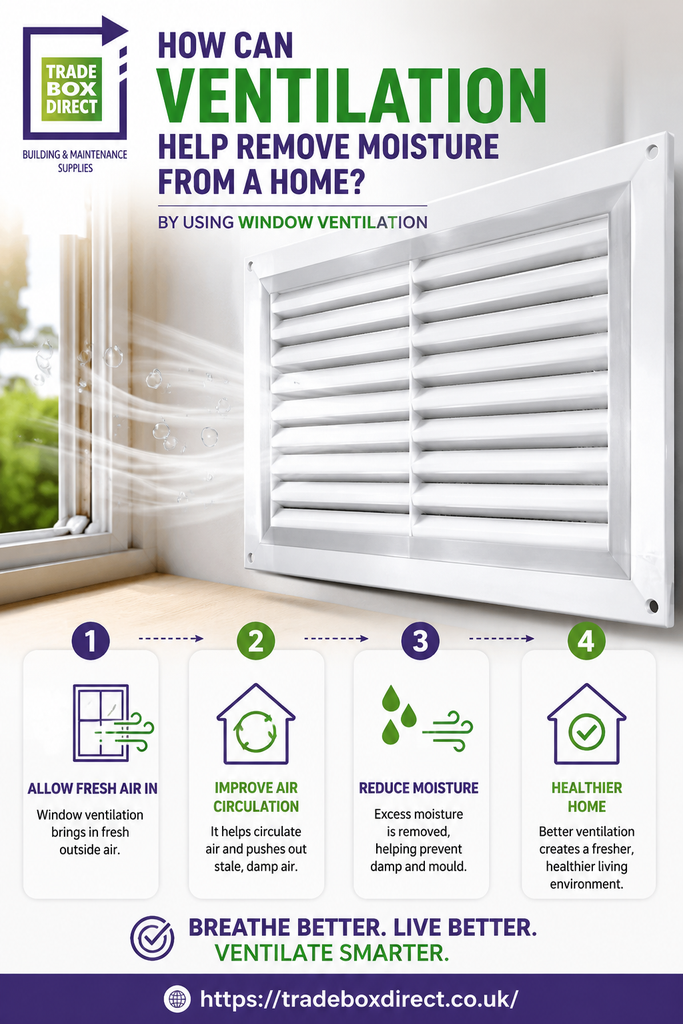
Windows can provide a simple way to increase airflow. Opening a window for a short period can allow humid air to escape quickly.
However, keeping windows open for long periods is not always practical. It can make rooms cold, especially during winter.
This is where window ventilation can become useful. Trickle vents and other small window openings allow a controlled amount of fresh air to enter.
Such vents can support airflow without requiring the window to stay open. Therefore, they can be useful in bedrooms, living rooms, and other areas where people spend time.
Still, window vents should remain clear. Blocking them with paint, dust, curtains, or furniture can reduce airflow.
How Bathroom Ventilation Controls Moisture
Bathrooms are one of the main sources of indoor moisture. A hot shower can quickly fill the room with steam.
An extractor fan can help remove this humid air. Ideally, the fan should run during the shower and for a short time afterwards.
Modern fans may include timers or humidity sensors. A humidity sensor can detect increased moisture and switch the fan on when required.
Keeping the bathroom door closed during a shower can also help. This stops moist air from spreading into bedrooms and hallways.
Afterwards, allow the room to dry properly. Clean wet surfaces where needed, and make sure the extraction outlet remains clear.
These simple steps can make Ventilation much more effective.
Kitchen Extraction and Moisture
Cooking produces steam, especially when boiling water, making pasta, or using a kettle. Without proper airflow, that moisture can spread throughout the home.
A cooker hood or extractor fan can capture steam near its source. This is more effective than waiting for moisture to move around the room.
Where possible, use the extractor while cooking. Keep it running for a short period after cooking as well.
Opening a nearby window can provide extra airflow. However, a suitable extraction system offers more controlled moisture removal.
Good kitchen Ventilation can also help reduce cooking smells and airborne particles. Therefore, it supports both moisture control and general indoor comfort.
Does Ventilation Help Prevent Condensation?
Yes, it can help reduce condensation when high humidity is one of the causes.
Condensation happens when warm, moist air meets a cold surface. Water vapour then changes into liquid water. You may notice this as droplets on windows or wet patches around cold corners.
Reducing indoor humidity can lower the amount of water vapour available to condense.
Better airflow can also move moist air away from cold surfaces. Consequently, rooms may stay drier.
However, Ventilation is not a complete solution for every condensation problem. Poor insulation, cold bridges, leaks, and inadequate heating can also contribute.
For that reason, persistent condensation should be investigated rather than treated with ventilation alone.
Can Ventilation Reduce Mould?
Mould needs moisture to grow. Therefore, reducing excess humidity can help create a less suitable environment for mould.
Bathrooms, kitchens, bedrooms, and rooms used for drying clothes can have higher moisture levels. Good airflow can help keep these areas drier.
However, existing mould should not simply be covered up. The moisture source should also be identified.
Clean affected areas safely and improve airflow where needed. If mould keeps returning, check for leaks, poor insulation, or hidden damp.
A consistent Ventilation routine can help prevent moisture from building up again.
Natural and Mechanical Ventilation
There are two broad ways to move air around a home: natural and mechanical methods.
Natural airflow uses windows, vents, air bricks, and other openings. It does not usually require powered equipment.
Mechanical systems use fans to control airflow. Extractor fans are a common example. More advanced systems can provide continuous air movement throughout a property.
Natural airflow may be enough for some homes. On the other hand, mechanical extraction can be more reliable when moisture levels are high.
The best choice depends on the building, room use, existing airflow, and moisture levels.
How to Improve Moisture Control Every Day
Small changes can make a noticeable difference.
First, use bathroom extraction when showering. Next, use kitchen extraction while cooking. Also, avoid drying large amounts of wet laundry in poorly ventilated rooms.
Keep internal vents and window openings clear. Furthermore, leave enough space around furniture so air can move around walls.
When possible, dry wet surfaces after bathing or cooking. These simple actions reduce the amount of moisture that remains in the air.
During winter, avoid completely sealing the home. While energy efficiency matters, fresh airflow remains important.
A balanced Ventilation approach can help maintain comfort while controlling excess moisture.
What About Energy Efficiency?
Some homeowners worry that ventilation will waste heat. This concern is understandable because warm indoor air leaves the building.
However, moisture control remains important. A damp home can feel colder and less comfortable. Excess humidity can also contribute to building damage over time.
Modern ventilation products can provide controlled airflow instead of relying on permanently open windows.
For larger renovation projects, mechanical ventilation with heat recovery may also be considered. These systems can transfer some heat from outgoing air to incoming fresh air.
The right solution should balance airflow, moisture control, comfort, and energy use.
Signs That Your Home Needs Better Airflow
Several signs may suggest that moisture is not leaving your home properly.
Common signs include:
- Regular condensation on windows
- Musty or stale smells
- Mould around corners
- Damp bathroom surfaces that stay wet
- High humidity after cooking
- Peeling paint or wallpaper
- Frequent moisture on cold walls
These signs do not always mean that poor Ventilation is the only cause. Still, they show that the home needs closer attention.
A humidity monitor can also help. It gives you a clearer idea of how moisture levels change during the day.
Final Thoughts
Moisture is part of normal home life, but too much humidity can cause problems. Good Ventilation provides a simple way to remove humid air and bring fresh air indoors.
Bathrooms and kitchens should receive special attention because they create high levels of moisture. Window vents, extractor fans, and natural airflow can all support moisture control.
At the same time, look at other causes such as leaks, poor insulation, and cold surfaces.
The goal is not simply to move as much air as possible. Instead, the aim is to create steady and controlled airflow where it is needed.
With the right approach, Ventilation can help keep rooms fresher, drier, and more comfortable throughout the year.
Frequently Asked Questions
1. How does ventilation remove moisture from a home?
It removes humid indoor air and allows fresh air to enter. This lowers the amount of water vapour inside the property.
2. Can window ventilation reduce condensation?
Yes. Controlled window ventilation can help remove humid air and introduce fresh air. Trickle vents are one common option.
3. Should I open windows to remove moisture?
Opening windows can quickly remove humid air. However, short periods of opening may be more practical than leaving them open all day.
4. Is an extractor fan useful for damp?
An extractor fan can help when excess moisture causes the problem. It works best when installed correctly and used during moisture-producing activities.
5. Where is ventilation most important?
Bathrooms and kitchens usually need the most attention because they produce high levels of moisture. Bedrooms can also benefit from steady airflow.