








Why Does the Temperature on My Thermostat Keep Fluctuating?
Introduction
Have you ever checked your thermostats and noticed the temperature keeps changing? If so, you are not alone. Many homeowners see small changes throughout the day. In most cases, these changes are normal. However, if the temperature keeps rising and falling by several degrees, it may point to a problem that needs attention.
Your thermostat is the control centre of your heating system. It measures the room temperature and tells your boiler or heating system when to turn on and off. When it works properly, your home stays comfortable while using energy efficiently. On the other hand, if it gives incorrect readings, your heating may switch on too often or stop before your rooms are warm enough.
Fortunately, many thermostats problems have simple solutions. For example, the issue could be caused by poor placement, weak batteries, incorrect settings, or a heating system fault. Understanding the cause can help you fix the problem quickly and avoid higher energy bills.
Whether you use a programmable rf thermostat, wireless thermostat, RF thermostat, smart thermostat, or OpenTherm thermostat, this guide explains everything in simple words.
How Does a Thermostat Work?
A thermostat constantly checks the temperature of the air around it. When the room becomes cooler than the temperature you have selected, it tells your heating system to switch on. Once the room reaches the desired temperature, it tells the system to switch off.
For example:
- Set temperature: 21°C
- Room temperature drops to 20°C
- Heating turns on
- Room warms back to 21°C
- Heating turns off
This process repeats throughout the day. Therefore, seeing small temperature changes is completely normal.
Most heating systems allow the room temperature to move by 0.5°C to 1°C before turning the heating back on. This prevents the boiler from constantly starting and stopping, which helps reduce wear and improve energy efficiency.
Is It Normal for the Temperature to Fluctuate?
Yes, small temperature changes are expected.
Your home naturally warms up and cools down throughout the day. Outdoor weather, sunlight, cooking, and even the number of people in the room can affect indoor temperatures.
However, large or frequent temperature swings are different. If your home feels too warm one minute and too cold the next, your thermostats or heating system may not be working correctly.
Some common signs include:
- Heating turns on too often.
- The room never feels comfortable.
- The displayed temperature changes quickly.
- The heating stops before the room is warm.
- Different rooms have very different temperatures.
If you notice these issues regularly, it is worth checking your thermostat and heating system.
Common Reasons Your Thermostat Keeps Fluctuating
Several factors can cause changing temperatures. Some are easy to fix, while others may require professional help.
1. Poor Thermostat Location
The position of your thermostat has a big impact on how accurately it measures room temperature.
If it is installed near:
- Windows
- External doors
- Radiators
- Fireplaces
- Kitchens
- Direct sunlight
it may give false readings.
For example, sunlight can warm the thermostat without warming the rest of the room. As a result, it thinks your home is warmer than it actually is and turns the heating off too soon.
Later, the room becomes cold again, and the heating switches back on. This creates noticeable temperature changes throughout the day.
For the best results, install your thermostats on an inside wall away from heat sources and cold drafts.
2. Direct Sunlight
Sunlight is one of the most common reasons for incorrect thermostat readings.
Even on cold winter days, the sun can heat the thermostat if it shines directly on it. Although the thermostat becomes warmer, the rest of the house may still be cool.
Because of this, the heating stops before the rooms reach a comfortable temperature.
Once the sun moves or sets, the thermostat cools down and tells the heating to start again.
This repeated cycle causes unnecessary temperature swings and can increase your heating bills.
3. Cold Drafts
Cold air can also affect thermostat accuracy.
If your thermostat is close to:
- A front door
- Patio doors
- Drafty windows
- Air vents
it may constantly detect colder air than the rest of the room.
As a result, it tells the heating to run longer than necessary. This wastes energy and may make other rooms feel too warm.
Keeping the thermostat away from drafts helps maintain a more stable indoor temperature.
4. Incorrect Installation Height
The height of your thermostat also matters.
Most manufacturers recommend installing it about 1.5 metres above the floor. This position usually reflects the average room temperature.
If it is installed too low, it measures cooler air because cold air settles near the floor.
If it is installed too high, it measures warmer air because heat naturally rises.
In either case, the thermostat may switch the heating on or off at the wrong time.
5. Dust and Dirt
Dust may seem harmless, but it can affect how a thermostat works.
Over time, dirt can collect around the temperature sensor, making it slower to respond.
You might notice:
- Heating starts later than normal.
- The temperature display changes frequently.
- The room feels uncomfortable.
- Heating runs for longer than expected.
Cleaning the thermostat carefully with a soft, dry cloth can often improve its performance.
Always switch off the power before cleaning.
6. Weak Batteries
Many wireless thermostats rely on batteries.
As the batteries lose power, the thermostat may not work correctly.
Common signs include:
- Slow response
- Flashing display
- Temperature jumping
- Lost connection with the receiver
- Heating switching on unexpectedly
Replacing the batteries once a year is a simple way to avoid these problems.
7. Wi-Fi or Signal Problems
If you have a smart thermostat or an RF thermostats, a weak signal can affect its performance.
Poor communication between the thermostat and the boiler may cause delayed heating or missed commands.
Common causes include:
- Thick walls
- Large metal objects
- Weak Wi-Fi
- Electrical interference
- Long distances between devices
Improving the signal or moving the thermostat can often solve the issue.
8. Heating System Problems
Sometimes the thermostat is not the problem at all.
Other parts of your heating system can also cause temperature changes.
These include:
- Low boiler pressure
- Dirty filters
- Faulty pumps
- Sticking valves
- Air trapped inside radiators
When these parts do not work properly, heat does not move evenly around your home.
As a result, some rooms stay cold while others become too warm.
The thermostat responds to these changing conditions, causing the heating to switch on and off more often than necessary.
Why Finding the Cause Matters
A thermostats that keeps fluctuating does more than make your home uncomfortable. It can also increase energy use and put extra strain on your heating system.
The good news is that many problems are easy to fix. In many cases, moving the thermostat, replacing the batteries, cleaning the sensor, or checking your heating controls can restore steady temperatures.
Settings, Heating Controls, and Solutions for a Stable Temperature
A thermostat does more than switch your heating on and off. It also works with your boiler and heating controls to keep your home at a comfortable temperature. Therefore, even a small setting or system fault can lead to noticeable temperature changes.
The good news is that many of these problems are easy to identify and fix.
Can Incorrect Thermostat Settings Cause Temperature Fluctuations?
Yes, they can.
Many homeowners install a thermostat and rarely check the settings again. However, heating schedules, temperature limits, or incorrect calibration can all affect performance.
For example, if the temperature changes several times each day, your heating system may struggle to keep a steady indoor temperature.
As a result, your home may feel too warm at one moment and too cool the next.
Reviewing your settings every few months helps your heating system work more efficiently and keeps your home comfortable.
How a Programmable Thermostat Helps
A programmable thermostat lets you create a heating schedule that matches your daily routine.
For example:
- 6:30 AM – Heat to 21°C
- 8:30 AM – Reduce to 18°C
- 5:00 PM – Increase to 21°C
- 10:30 PM – Lower to 17°C
This simple schedule keeps your home warm when you need it while reducing energy use when you are asleep or away.
However, changing the temperature too often can create unnecessary heating cycles.
Instead, use gradual temperature changes throughout the day. This improves comfort and may lower your energy bills.
What Is Short Cycling?
Your heating system works in cycles.
The thermostat tells the boiler when to start and when to stop. If these cycles become too short, the boiler switches on and off more often than it should.
This is known as short cycling.
Common causes include:
- Incorrect thermostat settings
- Oversized boilers
- Faulty sensors
- Heating control problems
- Poor thermostat calibration
Short cycling makes it harder to maintain a steady room temperature. It can also increase energy use and place extra strain on your boiler.
If you notice your boiler starting every few minutes, it is worth having the system checked.
What Is Thermostat Calibration?
Calibration simply means making sure the thermostat shows the correct room temperature.
Over time, some thermostats become slightly inaccurate.
Even a difference of 1°C can affect comfort.
For example:
- Actual room temperature: 20°C
- Thermostat reading: 21°C
In this case, the heating may switch off too early, leaving the room cooler than expected.
Many modern thermostats include a calibration feature in the settings menu.
If your model supports it, compare the reading with a reliable room thermometer and adjust the calibration if necessary.
Why Wireless and RF Thermostats Sometimes Lose Connection
Wireless room thermostats communicate with the boiler using radio signals instead of cables.
Although this system is reliable, communication problems can sometimes occur.
Common causes include:
- Thick walls
- Large mirrors
- Metal objects
- Electrical interference
- Long distances between the thermostat and receiver
When the signal becomes weak, commands may arrive late or fail completely.
As a result, the heating may continue running after reaching the target temperature or fail to start when needed.
Replacing batteries or moving the thermostat often improves the connection.
How Smart Thermostats Improve Comfort
A smart thermostat does much more than allow remote control from your phone.
Many models learn your daily routine and automatically adjust the heating to match your lifestyle.
Common features include:
- Remote control through a mobile app
- Learning your heating habits
- Weather-based temperature adjustments
- Energy reports
- Automatic heating schedules
- Holiday mode
Because the heating system responds more accurately, room temperatures stay more consistent while reducing unnecessary energy use.
Understanding OpenTherm Technology
Many modern boilers now support OpenTherm technology.
Unlike traditional thermostats that simply switch the boiler on or off, an OpenTherm thermostat communicates continuously with the boiler.
Instead of asking for full heat every time, it tells the boiler exactly how much heat is needed.
For example:
On a cold winter morning, the boiler may produce maximum heat.
Later in the day, when the home is already warm, it reduces the heat output instead of switching completely off.
This creates smoother heating and fewer temperature changes.
Benefits of OpenTherm include:
- More consistent room temperatures
- Improved boiler efficiency
- Lower energy use
- Reduced wear on the heating system
- Greater comfort throughout the day
Why Heating Controls Matter
Your thermostat is only one part of your heating system.
It also works alongside several other heating controls, including:
- Boiler controls
- Timers
- Motorised valves
- Zone valves
- Circulation pumps
If one of these parts develops a fault, your heating may not respond correctly.
For example, a sticking valve may delay hot water reaching the radiators.
As a result, the thermostat continues asking for heat.
Eventually, too much heat reaches the room, making it warmer than expected.
Regular servicing helps identify these issues before they become expensive repairs.
Can Different Rooms Affect Thermostat Performance?
Yes.
Every room in your home heats at a different rate.
For example, a south-facing living room usually receives more sunlight than a north-facing bedroom.
If your thermostat is installed in the warmest room, it may stop the heating before cooler rooms reach the desired temperature.
As a result, some family members may feel comfortable while others feel cold.
One solution is to use heating zones.
A zoned heating system allows different areas of your home to have separate temperature settings.
This improves comfort while reducing wasted energy.
Why Good Insulation Supports Your Thermostat
Even the most accurate thermostat cannot stop heat from escaping your home.
If your property has poor insulation, heat leaves quickly, forcing the heating system to work harder.
Common areas where heat escape include:
- Loft insulation
- Walls
- Windows
- Doors
- Floors
- Pipework
Improving insulation helps maintain a steady indoor temperature and reduces the number of heating cycles throughout the day.
As a result, your home stays comfortable for longer while using less energy.
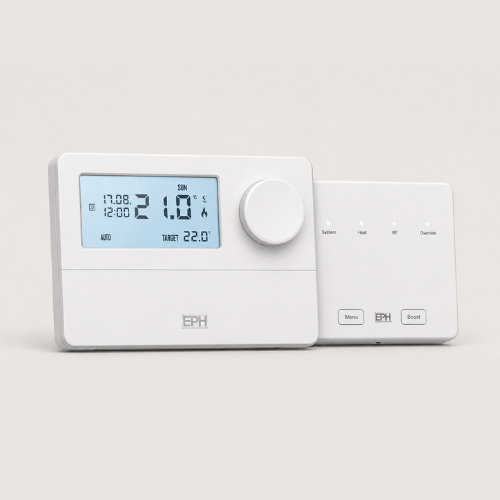
Benefits of the EPH – CP4D OpenTherm Programmable RF Thermostat
If you want more accurate heating control, the EPH – CP4D OpenTherm Programmable RF Thermostat is a practical choice.
It combines modern technology with simple controls to help improve comfort and efficiency.
Key features include:
- OpenTherm communication
- Wireless RF technology
- Large digital display
- Easy daily and weekly programming
- Precise temperature control
- Energy-saving functions
- Reliable wireless heating thermostat connection
Because it adjusts the boiler’s output gradually instead of repeatedly switching it fully on and off, it helps reduce temperature fluctuations.
As a result, your home stays comfortable while your heating system operates more efficiently.
Frequently Asked Questions
Why does my thermostat keep changing temperature?
Small temperature changes are normal because heating systems work in cycles. However, large fluctuations can be caused by poor thermostat placement, weak batteries, incorrect settings, heating system faults, or poor insulation.
How often should I replace a thermostat?
If yours becomes unreliable or inaccurate, replacing it with a modern model can improve comfort and energy efficiency.
Can a smart thermostat reduce energy bills?
Yes. A smart thermostat learns your routine and controls heating more efficiently. As a result, many homeowners use less energy and reduce their heating costs.
What is the difference between a wireless thermostat and an RF thermostat?
A wireless thermostat communicates without cables. An RF thermostat is a type of wireless thermostat that uses radio frequency signals to communicate with the receiver connected to the boiler.
Is an OpenTherm thermostat worth buying?
If your boiler supports OpenTherm technology, it can be an excellent upgrade. It adjusts the boiler’s heat output smoothly, helping maintain a more consistent room temperature while improving energy efficiency.
Can thermostat placement affect heating performance?
Yes. A thermostat installed near windows, doors, radiators, or direct sunlight may produce inaccurate readings. Installing it on an inside wall away from heat sources usually provides the best results.
Final Thoughts
Small temperature changes are a normal part of how heating systems operate.
Fortunately, many problems are simple to fix. Replacing batteries, cleaning the thermostat, adjusting the heating schedule, improving insulation, or moving the thermostat to a better location can often restore a steady indoor temperature.
A quality model such as the EPH – CP4D OpenTherm Programmable RF Thermostat offers accurate temperature control, reliable performance, and advanced energy-saving features.