








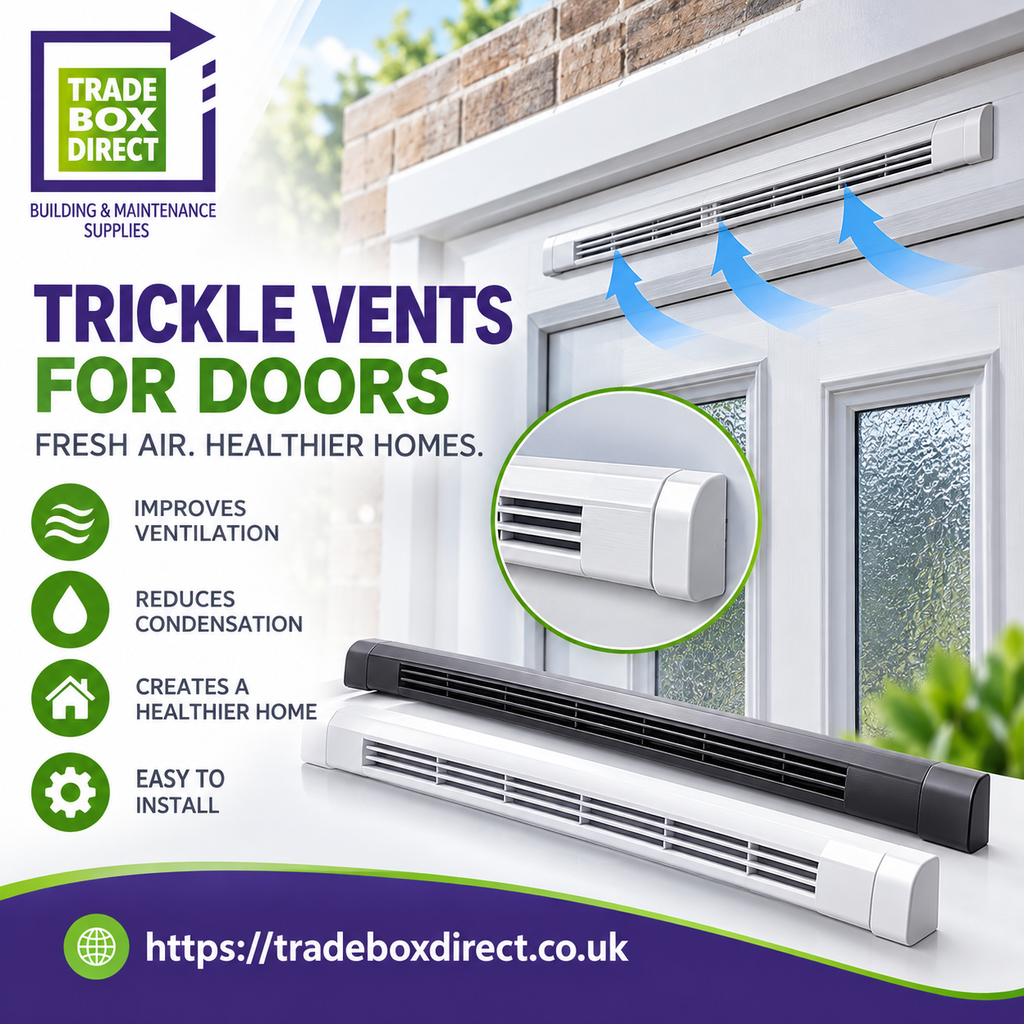
Trickle Vents for Doors: How Do They Improve Home Ventilation?
Good indoor air needs a steady flow of fresh air. However, modern homes often have doors and windows that close tightly. This can reduce natural air movement inside the property. As a result, rooms may feel stuffy, damp, or uncomfortable. A simple way to improve this is to use trickle vents for doors.
These small vents allow fresh air to enter a room without leaving the door wide open. Therefore, they can help create a healthier and more comfortable indoor space. They are also useful in homes, flats, offices, utility rooms, and other areas where controlled air movement matters.
For homeowners looking for suitable products, the trickle vents for doors category offers practical options for improving indoor air movement.
What Are Trickle Vents for Doors?
Trickle vents for doors are small openings or vent systems fitted into a door. They allow a controlled amount of fresh outdoor air to enter the room. At the same time, stale indoor air can move out through other openings or a wider ventilation system.
Unlike leaving a door open, these vents provide a more controlled solution. You can keep the door closed while still allowing some fresh air to pass through.
Furthermore, modern homes often use better insulation and tighter doors. While this can help reduce heat loss, it can also reduce natural air movement. That is why good VENTILATION remains important.
Why Do Doors Need Ventilation?
A closed room can collect stale air over time. People breathe out carbon dioxide, while everyday activities can also create moisture. Cooking, washing, drying clothes, and showering can all add moisture to indoor air.
If this air cannot escape, the room may become damp. You can learn more about moisture and how it affects indoor spaces through the linked definition.
Good VENTILATION helps move stale air away and brings fresh air into the room. Consequently, the indoor environment can feel fresher and more comfortable.
How Do Trickle Vents for Doors Work?
The basic idea is simple. A vent creates a small pathway between the indoor and outdoor areas. Fresh air can enter through the opening, while stale air can move towards another outlet.
Because the opening remains much smaller than an open door, the airflow is more controlled. This makes trickle vents useful where you want fresh air without constantly opening the door.
The amount of airflow depends on the vent design, room layout, outside conditions, and other openings in the building.
Therefore, VENTILATION works best when air has a clear route into and out of the property.
What Problems Can Poor Ventilation Cause?
Poor air movement can create several common indoor problems. For example, a room may smell stale or feel humid. Moist areas may also encourage mould growth if the problem continues for a long time.
Another common issue is condensation. It happens when warm, moist air meets a cooler surface. You may notice water droplets on windows, walls, mirrors, or other cold areas.
Good VENTILATION can help reduce the build-up of humid air. However, vents should form part of a suitable overall approach to indoor air quality.
Where Can Trickle Vents for Doors Be Used?
Trickle vents for doors can work in many parts of a property. Their use depends on the door type, room design, and required level of air movement.
Common areas include:
- Kitchens
- Bathrooms
- Utility rooms
- Bedrooms
- Offices
- Flats
- Conservatories
- Storage areas
- Internal areas that need controlled air movement
For example, a utility room may produce moisture when clothes are washed and dried. A suitable vent can help support better air movement.
Similarly, kitchens can benefit from fresh air because cooking creates heat, steam, and odours.
Benefits of Using Trickle Vents for Doors
There are several reasons why homeowners and installers consider these vents useful.
1. Fresh Air
A vent provides a simple way to bring fresh outdoor air into a room. As a result, the room can feel less stuffy.
2. Controlled Air Movement
Rather than keeping a door open, a vent provides a smaller and more controlled opening. This can make everyday use more convenient.
3. Helps Manage Humidity
Regular air exchange can help reduce humid indoor air. This can support a cleaner and more comfortable environment.
4. Useful for Modern Homes
Modern properties often have sealed doors, windows, insulation, and other features designed to reduce uncontrolled air leakage. Therefore, planned VENTILATION can become even more important.
5. Easy to Understand
The principle is simple. Fresh air enters, stale air moves away, and the room receives a better supply of outdoor air.
How Should You Choose Trickle Vents for Doors?
Before buying a vent, consider the type and size of the door. Check the installation requirements and make sure the product suits the intended application.
Also, think about the room where the vent will be installed. A bathroom may have different air needs from a bedroom or office.
Next, consider the amount of air movement required. A small room may need a different solution from a large space.
Finally, choose a product from a suitable VENTILATION range and follow the manufacturer’s installation guidance.
Are Trickle Vents for Doors Enough on Their Own?
Trickle vents can support good indoor air movement, but they may not solve every air-quality problem. A building can have several ventilation needs, especially when it contains kitchens, bathrooms, or other areas that produce high levels of moisture.
For this reason, consider the complete airflow path. Fresh air needs an entry point, while stale air needs a suitable route out.
Mechanical extraction, window vents, air bricks, and other ventilation products may also form part of the overall system.
Good VENTILATION depends on how all these elements work together.
Can Trickle Vents Help With Condensation?
They can help by allowing fresh air to enter and supporting the movement of humid indoor air. However, condensation can have several causes, including cold surfaces, high humidity, poor insulation, and limited air movement.
Therefore, installing a vent should not be viewed as the only solution.
Instead, combine suitable VENTILATION with sensible heating, insulation, moisture control, and good everyday habits. For example, use extractor fans during cooking and bathing, and avoid allowing wet clothes to dry in poorly ventilated rooms.
How Do You Maintain Door Vents?
Maintenance is usually simple. Check the vent regularly and make sure dust, dirt, or other debris has not blocked the opening.
Clean the visible parts according to the manufacturer’s instructions. Also, check that the vent remains secure and that air can pass through it.
Regular checks help keep VENTILATION products working effectively.
Frequently Asked Questions
Are trickle vents for doors useful in winter?
Yes. They can provide controlled fresh air even when the weather is cold. However, the exact effect on comfort and heat loss depends on the building and the vent design.
Do trickle vents make a room colder?
A vent allows outdoor air to enter, so some heat exchange can occur. However, it provides a much smaller opening than leaving a door open.
Can door vents reduce condensation?
They can support better air exchange, which may help reduce humid air. However, condensation can have several causes, so other measures may also be needed.
Where should door vents be fitted?
The correct position depends on the door, room, product design, and installation guidance. Always check the manufacturer’s instructions before fitting a vent.
Are trickle vents suitable for every door?
Not necessarily. Door material, thickness, construction, and intended use can affect suitability. Always check product specifications before installation.
Conclusion
Trickle vents for doors provide a practical way to introduce controlled fresh air into rooms while keeping doors closed. They can support better indoor comfort and help manage stale or humid air.
They work especially well when combined with other suitable products and good building practices. Therefore, consider the complete air path rather than relying on one product alone.
For homes, offices, and other buildings, well-planned VENTILATION can make a noticeable difference to indoor comfort. With the right product, correct installation, and regular maintenance, you can create a fresher and more comfortable indoor environment.