






How Does a Tile Levelling System Help Create a Smooth Tile Installation?
Laying tiles can look simple. However, getting every tile to sit at the same height can take time and care. Uneven tiles can create raised edges and an untidy finish. Therefore, many installers use a tile leveling system to make the job easier.
A levelling kit helps keep nearby tiles at a similar height while the adhesive sets. It can also help reduce movement during installation. As a result, you can create a cleaner and more even finish.
Today, you can find many products for different tile jobs. These include tile levelling spacers, tile spacers, floor tile spacers and other tiling tools.
This guide explains how these products work, how to use them and what to check before you shop or buy.
What Is a Tile Levelling System?
A tile leveling system uses small parts to help keep tiles level during installation. Most systems use spacers, clips, screws, wedges or caps.
First, you spread the adhesive across the area. Next, you place the tiles. You then add the levelling parts between the tiles.
The system helps hold the tiles in place while the adhesive cures. This can make it easier to keep the tiles at a similar height.
A good system can suit wall and floor projects. However, you should always check the product instructions before use.
How Does a Tile Levelling System Work?
The basic process is easy to understand.
First, apply the correct tile adhesive. Then place the first tile. Next, position the second tile beside it.
After that, place the levelling spacer between the tiles. Add the screw, cap or nut according to the system design.
When you tighten the system, it applies gentle pressure to the tiles. This helps bring nearby tiles to a similar height.
Once the adhesive has set, remove the levelling parts according to the product instructions.
The system can help reduce tile movement while the adhesive sets. Therefore, it can make a large tiling job easier to manage.
What Are Tile Levelling Spacers?
Tile levelling spacers help create an even gap between tiles while also supporting the levelling process.
They can help installers maintain consistent spacing across a tiled area. This matters because uneven gaps can affect the final appearance.
The correct spacer size depends on the joint width you want.
For example, a 2mm spacer can create a narrow joint. Larger tiles may also need a suitable levelling method to keep their edges even.
When you shop for tile levelling spacers, check the size and design before you buy.
What Are Tile Spacers?
Tile spacers help create an even gap between tiles. They sit between tiles during installation and help maintain a consistent joint.
Unlike some levelling systems, basic spacers mainly focus on spacing. However, some modern systems combine spacing and levelling in one product.
You can browse tile spacers when planning a new tiling project.
The right size depends on your design. Therefore, decide on your preferred joint width before you shop.
What Are Floor Tile Spacers?
Floor tile spacers work in the same basic way as standard tile spacers. They help maintain an even gap between floor tiles.
Floor tiles can often have large formats. Large tiles may show uneven height more clearly. Therefore, installers often pay close attention to spacing and levelling.
Floor tile spacers can help keep the layout neat while the adhesive sets.
For large floor projects, a complete levelling kit may offer extra support.
Why Use a Tile Levelling System?
There are several reasons to use a tile leveling system.
1. It Helps Reduce Uneven Tiles
The system helps hold nearby tiles at a similar height. This can reduce noticeable differences between tiles.
2. It Helps Create Straight Joints
Spacers help maintain an even gap. As a result, the grout lines can look more consistent.
3. It Can Make Tiling Easier
A levelling kit can help you manage several tiles at once. This can be useful on larger floors.
4. It Helps During Adhesive Setting
Tiles can move slightly before the adhesive sets. A levelling system helps hold them in position.
5. It Can Improve the Final Look
An even tile layout can create a cleaner finish. This makes levelling tools useful for both DIY users and professional installers.
How Is a Tile Levelling System Made?
Manufacturers usually make levelling parts from strong plastic or similar materials. The parts need to handle pressure during installation.
The exact manufacturing method depends on the product. Some parts use moulding to create the required shape.
A screw, cap or nut must also fit the system correctly. Therefore, each part needs suitable dimensions.
When you shop for a tile leveling system, check the product design and pack contents.
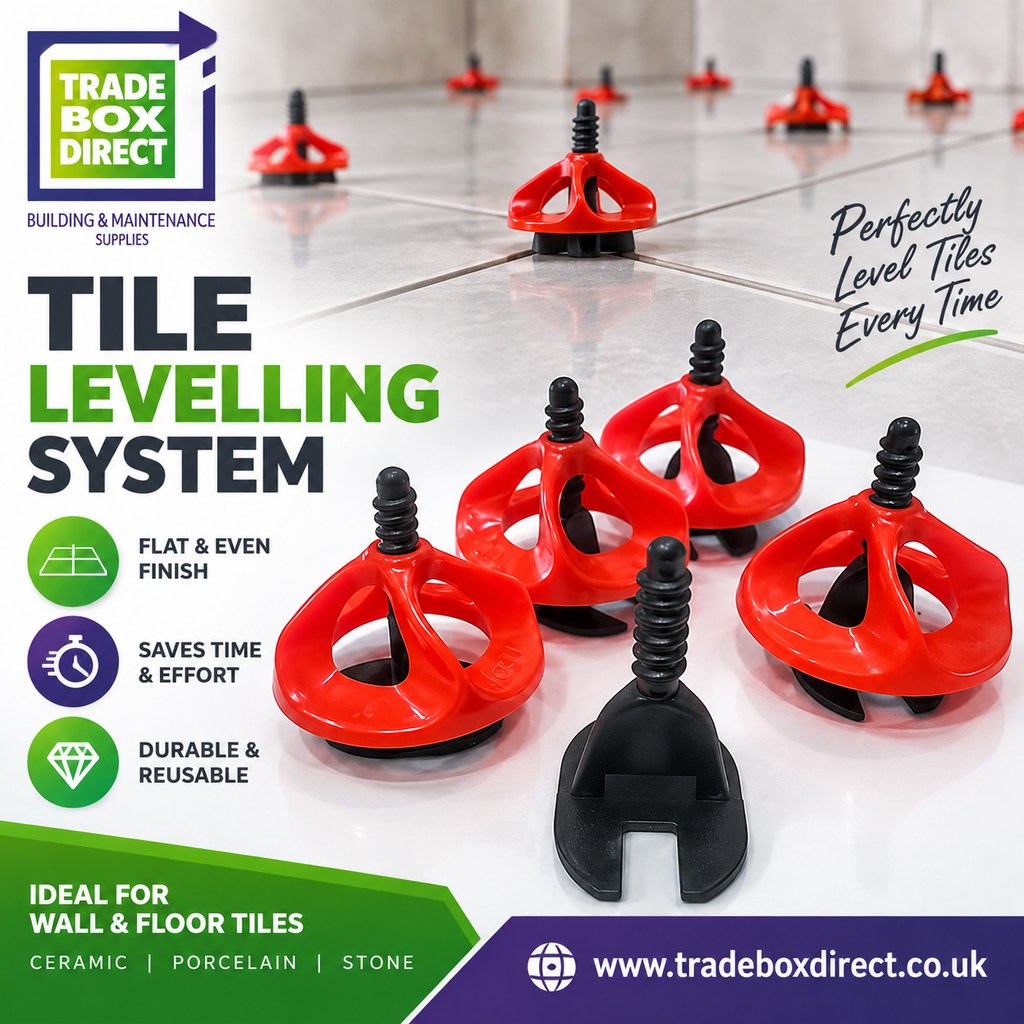
Tile Spacer Levelling System 2mm Floor Twister Spacer Screws + Red Twister Nuts
The Tile Spacer Levelling System 2mm Floor Twister Spacer Screws + Red Twister Nuts provides a practical option for suitable floor tiling projects.
The system uses 2mm spacing and twister-style components. The design helps hold nearby tiles in position while the adhesive sets.
This type of kit can suit installers who want both spacing and levelling support from one system.
If you want to shop for this product, you can buy the Tile Spacer Levelling System 2mm Floor Twister Spacer Screws + Red Twister Nuts from TradeboxDirect.
Before you buy, check your tile size, joint width and installation method.
How Do You Use Tile Levelling Spacers?
Using tile levelling spacers follows a simple process.
First, prepare the area. Make sure the surface is clean and suitable for tiling.
Next, spread the adhesive according to the product instructions. Then place the first tile.
Add the levelling spacer between the first and second tile. Insert the screw or other fixing part.
Tighten the system carefully. Do not apply more pressure than the product instructions allow.
Continue across the tiled area. Keep checking the tile layout as you work.
Once the adhesive has set, remove the levelling parts as directed.
This simple process can help you create a more even tile layout.
What Are the Benefits of Tiling Tools?
Good tiling tools can make a tiling project easier.
A tile cutter helps you create the required tile size. A notched trowel helps spread adhesive. Spacers help maintain joint gaps.
A tile leveling system adds another useful tool to this group. It helps support the position of nearby tiles while the adhesive sets.
Using the right tools can also help reduce mistakes. Therefore, plan your project before you start.
What Should You Check Before Buying?
Before you shop, check the main details of the product.
Look at:
- Spacer size
- Tile thickness
- Tile size
- Pack quantity
- Screw or cap design
- Intended application
- Floor or wall use
- Manufacturer instructions
You should also check whether the system is compatible with your tiles and installation method.
The edge of each tile should also sit correctly within the system.
Good preparation can save time and reduce wasted materials.
How Does Tile Size Affect Levelling?
Large tiles can need extra care during installation. Their size makes small height differences easier to notice.
A suitable tile leveling system can help keep large tiles at a similar height.
However, the system cannot replace good installation. You still need a suitable base, the right adhesive and careful tile placement.
Always check the tile manufacturer’s guidance before starting a large project.
Why Shop for Tile Levelling Products Online?
Online shopping makes it easy to compare products before you buy.
You can check pack sizes, spacer sizes and product details from one place. This can save time when planning a tiling project.
TradeBoxDirect offers a range of flooring and tile products for suitable projects.
You can compare tile spacers, levelling products and other tiling tools before placing an order.
This makes online shopping a useful option for both DIY customers and trade buyers.
Temperature, Frequency and Control During Tiling
The temperature of the work area can affect how some tile adhesives behave.
You should always follow the adhesive manufacturer’s instructions. Keep the work area suitable for the product you use.
The frequency of tile checks also matters during a large project. Check the layout often rather than waiting until the end.
Good control of the installation process can help you spot problems early.
Frequently Asked Questions
What is a tile levelling system?
A tile levelling system uses spacers and fixing parts to help keep nearby tiles at a similar height during installation.
Are tile levelling spacers the same as tile spacers?
Not always. Basic tile spacers mainly create an even joint. Levelling spacers can also help reduce differences in tile height.
Can I use a tile levelling system for floor tiles?
Yes. Many systems suit floor tiling. However, always check the product specifications and tile requirements before use.
What does a 2mm tile spacer mean?
A 2mm spacer creates a 2mm joint between suitable tiles. This gives you a narrow and consistent grout gap.
How do twister tile levelling systems work?
The spacer sits between the tiles. You then add the screw and twister nut. Tightening the nut helps hold nearby tiles at a similar height while the adhesive sets.
Can beginners use a tile levelling system?
Yes. Many systems have a simple design. However, beginners should read the instructions and practise on a small area first.
Where can I buy tile spacers and levelling tools?
You can shop for tile spacers and other tiling products from TradeBoxDirect.
Do I still need tile adhesive when using a levelling system?
Yes. A levelling system does not replace tile adhesive. It helps hold tiles in position while the adhesive sets.
How do I choose the right levelling system?
Check your tile size, tile thickness, joint width and installation method. Then choose a system that suits those requirements.
Conclusion
Tiling takes care and patience. The right tools can make the work much easier.
A tile leveling system can help keep tiles at a similar height. Tile spacers can also help create neat and even joints.
The Tile Spacer Levelling System 2mm Floor Twister Spacer Screws + Red Twister Nuts offers a practical option for suitable floor tiling projects.
Before you shop, check your tile size and joint requirements. Then compare the available products and read the instructions.
With the right tiling tools and careful preparation, you can create a clean and even tiled finish.