

How Do I Stop My THERMOSTATS from Changing Temperature?
Introduction
Have you ever set your heating to the perfect temperature, only to find it changed later? If yes, you are not alone. Many homeowners face the same problem. They often wonder why their THERMOSTATS keep changing the temperature without any warning.
One moment, your home feels warm and cosy. A little later, it feels cold. Sometimes, the heating keeps running longer than expected. Other times, it switches off too soon. As a result, your comfort suffers. In addition, your energy bills may increase.
The good news is that this problem is often easy to fix. In most cases, your thermostat is not broken. Instead, it is following a saved schedule or using an automatic feature that you may not know is active.
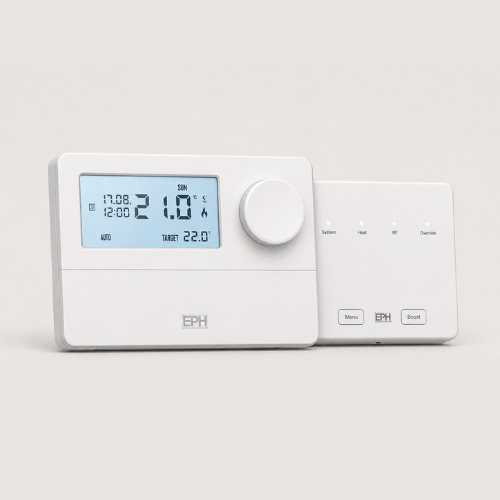
Today, many homes use modern heating controls. You may have a programmable thermostat, a wireless thermostat, an rf thermostat, or even a smart heating system. These products make heating easier to manage. However, if they are not set correctly, they can also change the temperature without you touching them.
Why Does Your Thermostat Change Temperature by Itself?
At first, you may think your thermostat has stopped working properly. However, that is not always true. Most automatic temperature changes happen because of built-in settings, not because of a fault.
Let’s look at the most common reasons.
1. Your Programmable Schedule Is Still Running
A saved heating schedule is one of the biggest reasons a programmable thermostat changes the temperature automatically.
Most modern thermostats allow you to choose different temperatures throughout the day. This helps reduce energy use while keeping your home comfortable.
For example, your schedule may look like this:
- 20°C in the morning
- 17°C while everyone is out
- 21°C in the evening
- 16°C overnight
Although you can change the temperature at any time, the thermostat usually returns to the saved programme. Therefore, your manual setting only works for a short time.
This behaviour is completely normal. In fact, it shows that the thermostat is doing exactly what it was programmed to do.
If you want one temperature all day, you will need to change or remove the schedule.
2. Your Smart Features Take Control
Many modern heating systems include smart technology. These features are designed to improve comfort while lowering energy costs.
For example, a smart thermostat can learn your daily routine. It may lower the heating when nobody is home. Then, it warms your house before you return.
Although this saves energy, it can also surprise homeowners. You may think someone has changed the settings when, in reality, the thermostat is following its own programme.
Some smart systems use features such as:
- Learning schedules
- Weather forecasts
- Motion sensors
- GPS location tracking
- Automatic energy-saving modes
As a result, the temperature may change without any manual input.
If you prefer full control, you can usually switch these features off in the settings.
3. Your Wireless Thermostat Has Saved Settings
A wireless thermostat works differently from a wired model.
Instead of using cables, it sends radio signals to a receiver connected to your boiler. Because of this, installation is quicker and often more flexible.
However, many wireless models store heating programmes inside their memory.
If an old schedule is still active, the thermostat may return to it after you make a manual adjustment.
For example, you might increase the temperature to 22°C. However, an hour later, the thermostat changes it back to 18°C because the saved programme tells it to do so.
This is one of the most common reasons homeowners think their thermostat is faulty.
Fortunately, checking the stored schedule usually solves the problem.
4. Several Heating Controls Are Working Together
Modern heating systems often include more than one control device.
For example, your home may have:
- A thermostat
- A boiler timer
- A programmer
- Smart home controls
- Thermostatic radiator valves (TRVs)
- A mobile heating app
Each device controls part of the heating system. However, if they have different settings, they may send conflicting instructions.
For example, your programmable rf thermostat may ask for 21°C. At the same time, the boiler timer may tell the heating to switch off.
As a result, the heating system behaves in ways that seem confusing.
Therefore, it is important to check every heating control instead of looking only at the thermostat.
When all your devices follow the same schedule, your heating system works much more smoothly.
Could an RF Thermostat Be Causing the Problem?
An rf thermostat uses radio frequency signals to communicate with its receiver.
Most of the time, this system works very well. However, signal problems can sometimes affect communication.
For example, the signal may become weaker because of:
- Thick brick walls
- Metal furniture
- Large mirrors
- Electrical equipment
- Wi-Fi routers placed too close
- Other wireless devices
When this happens, the receiver may not receive the latest command straight away.
As a result, the heating may seem slow to respond.
Fortunately, this problem is usually easy to fix. Moving the wireless room thermostat or receiver to a better location often improves signal strength.
Is Your Thermostat Actually Broken?
Many homeowners assume the thermostat has failed. However, that is not always the case.
Before replacing your THERMOSTATS, ask yourself these simple questions:
- Does the temperature change at the same time every day?
- Is a schedule icon showing on the display?
- Has someone already programmed the thermostat?
- Is Eco Mode switched on?
- Is Holiday Mode active?
- Have you recently replaced the batteries?
- Has anyone changed the settings through a mobile app?
If you answer “yes” to any of these questions, your thermostat is probably working normally.
Therefore, checking the settings should always be your first step.
Why OpenTherm Thermostats Offer Better Control
Not all thermostats work in the same way.
Older models simply turn the boiler fully on or fully off. While this works, it can lead to larger temperature changes throughout the day.
An OpenTherm thermostat works much more smoothly.
Instead of sending simple on-and-off commands, it communicates with the boiler all the time. It tells the boiler exactly how much heat your home needs.
As a result, the boiler produces only the required amount of heat.
This offers several benefits, including:
- Better temperature control
- More comfortable rooms
- Lower heating bills
- Improved energy efficiency
- Less wear on your boiler
- More consistent heating throughout the day
Because of these advantages, many homeowners now choose OpenTherm systems when upgrading their heating controls.
A Reliable Upgrade for Better Heating Control
If you want accurate heating with easy installation, the EPH CP4D OpenTherm Programmable RF Thermostat is worth considering.
This model combines several useful features in one device.
It works as an OpenTherm controller while also offering the convenience of a programmable thermostat and a wireless thermostat. In addition, its rf thermostat technology provides reliable communication between the thermostat and the boiler receiver.
As a result, you can enjoy:
- Accurate temperature control
- Flexible daily schedules
- Wireless installation
- Better energy efficiency
- Consistent comfort throughout your home
For many homeowners, upgrading to a modern thermostat like this makes heating easier to manage while helping reduce energy costs.
When Should You Replace Your Thermostat?
Sometimes adjusting the settings is enough.
However, there are times when replacing your thermostat is the better choice.
Consider upgrading if:
- Your thermostat is more than 10 years old.
- The display freezes often.
- Buttons stop working.
- Temperature readings are inaccurate.
- Heating switches on or off randomly.
- Programming has become difficult.
- Your energy bills keep increasing.
- Your boiler supports OpenTherm, but your thermostat does not.
A modern thermostat offers better control, improved efficiency, and a more comfortable home.
In many cases, replacing an outdated model also helps reduce long-term heating costs.
Check the Temperature Reading Regularly
Modern THERMOSTATS are designed to measure room temperature accurately. Even so, it is still a good idea to check the reading every few months.
Over time, small problems can affect the sensor. As a result, the thermostat may think your room is warmer or colder than it really is.
If that happens, your heating system may:
- Turn on too early.
- Keep running for too long.
- Turn off before the room feels comfortable.
- Waste energy.
- Increase your heating bills.
Fortunately, checking the temperature is easy.
You can compare your thermostat with a reliable room thermometer. If the readings are very different, you should inspect the thermostat or ask a heating engineer for advice.
By checking the temperature regularly, you can spot small problems before they become expensive repairs.
Keep Your Thermostat Clean
Dust may seem harmless, but it can affect how a thermostat works.
Over time, dust builds up around the air vents and sensors. As a result, the thermostat may not measure the room temperature correctly.
Fortunately, cleaning your thermostat is quick and simple.
Follow these easy steps:
- Turn the thermostat off.
- Use a soft, dry cloth.
- Remove dust from the surface.
- Clean around the air vents carefully.
- Avoid using water or cleaning sprays.
- Do not press hard on the screen or buttons.
Regular cleaning helps the thermostat respond more accurately.
Although it only takes a few minutes, it can improve heating performance throughout the year.
Why the EPH CP4D OpenTherm Programmable RF Thermostat Is a Great Choice
If you want dependable heating control, the EPH CP4D OpenTherm Programmable RF Thermostat offers several useful features in one product.
It combines the benefits of an OpenTherm thermostat, a programmable thermostat, a wireless heating thermostat, and an rf thermostat.
As a result, you receive accurate temperature control together with easy installation and flexible scheduling.
Whether you are replacing an older thermostat or upgrading your heating system, this model offers a practical solution for modern homes.
It helps improve comfort, reduce energy use, and keep your heating system working efficiently throughout the year.
Common Mistakes That Cause THERMOSTATS to Change Temperature
Sometimes, your thermostat is not the problem. Instead, small mistakes can cause your heating system to behave unexpectedly. Fortunately, most of these issues are easy to fix.
By avoiding these common mistakes, you can keep your THERMOSTATS working properly and enjoy a more comfortable home.
Forgetting About the Heating Schedule
One of the biggest mistakes is forgetting that your heating schedule is still active.
Many homeowners manually increase the temperature and expect it to stay there. However, a programmable thermostat will usually return to its saved programme.
Leaving Eco Mode Turned On
Eco Mode is designed to reduce energy use.
Although this feature helps lower heating bills, it can also change the temperature automatically.
Installing the Thermostat in the Wrong Place
The location of your thermostat makes a big difference.
If it is installed near a radiator, fireplace, sunny window, or kitchen, it may read the wrong temperature.
As a result, your heating system may turn on or off at the wrong time.
Final Thoughts
If your THERMOSTATS keep changing the temperature, there is no need to panic. In most cases, the problem is caused by a saved heating schedule, an automatic energy-saving feature, or another heating control in your home.
If your thermostat is old, unreliable, or difficult to programme, upgrading to a modern programmable thermostat, wireless thermostat, or rf thermostat can make a noticeable difference. Newer models provide better temperature control, improved energy efficiency, and greater everyday comfort.
