







How Can Ventilation Reduce Condensation and Mould?
Introduction
Condensation is a common problem in many homes. It can appear on windows, walls, ceilings, and other cold surfaces. If the moisture stays for too long, mould may also develop. Therefore, finding a simple way to control moisture is important.
Good Ventilation can help. It allows moist indoor air to leave and lets fresh air enter. As a result, humidity can stay at a more suitable level.
However, ventilation alone does not solve every damp problem. Good heating, insulation, cleaning, and moisture control also matter. The best results come when these steps work together.
In this guide, we will explain how Ventilation can reduce condensation and mould. We will also explain how trickle vents can support fresh airflow and why they can be useful in modern homes.
What Causes Condensation?
Condensation happens when warm, moist air touches a cold surface.
Think about a cold drink on a warm day. Water drops appear on the outside of the glass. A similar process happens inside your home.
Warm indoor air contains moisture. When that air reaches a cold window, wall, or ceiling, the moisture can turn into water droplets.
Several everyday activities add moisture to indoor air, including:
- Taking showers and baths
- Cooking food
- Boiling water
- Drying clothes indoors
- Washing dishes
- Cleaning
- Breathing and sleeping
Consequently, moisture levels can rise quickly in rooms with poor airflow.
Bathrooms and kitchens usually have the highest moisture levels. Bedrooms can also develop condensation because people release moisture while sleeping.
Why Is Condensation a Problem?
A small amount of condensation may not cause serious damage. However, regular condensation can create a more difficult problem.
Water can collect around window frames and walls. Over time, these damp areas may stay wet for long periods.
That creates a suitable environment for mould.
Mould can appear as black, green, brown, or white patches. It may also create a musty smell.
Furthermore, repeated moisture can damage paint, wallpaper, plaster, sealants, and other materials.
Therefore, controlling indoor moisture early is much better than waiting until mould becomes visible.
How Does Ventilation Reduce Condensation?
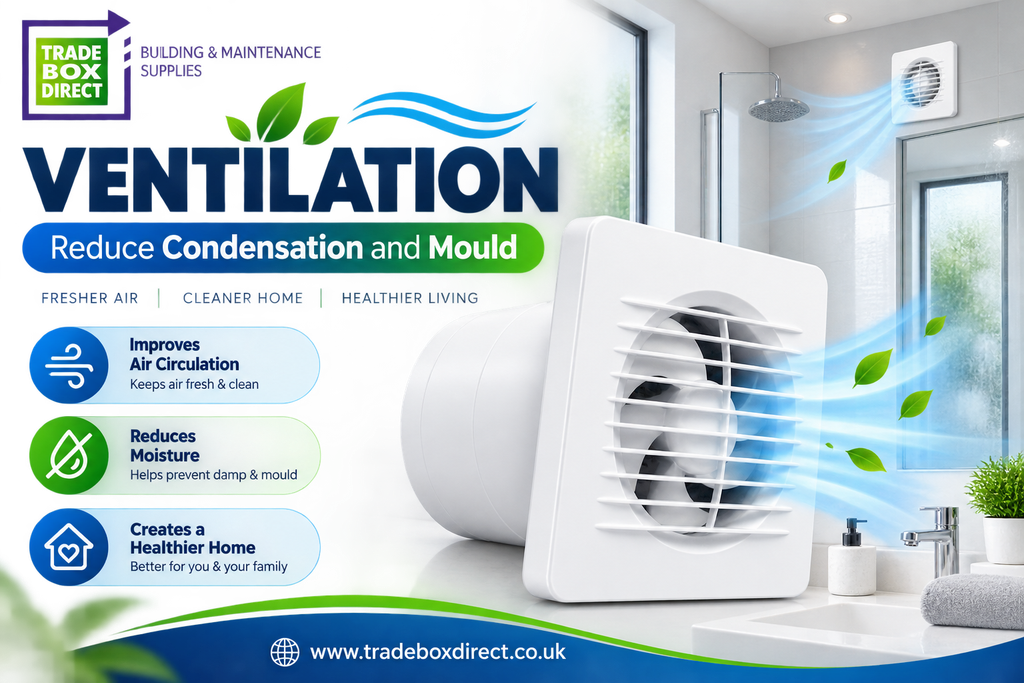
Good Ventilation helps remove moisture from indoor air.
The process is simple. Moist air leaves the room while fresher air enters.
For example, imagine someone taking a hot shower. Steam quickly fills the bathroom. If the room has poor airflow, that moisture can remain inside.
With suitable extraction, humid air can be removed. Fresh air can then replace some of the air that has left.
As a result, less moisture remains available to form condensation.
This is why proper airflow is an important part of moisture control.
How Does Ventilation Help Prevent Mould?
Mould needs moisture to grow. Therefore, reducing excess moisture can make it harder for mould to develop.
Good Ventilation does not kill mould that already exists. Instead, it helps reduce one of the conditions that allows mould to grow.
For instance, bathroom moisture can spread to nearby walls if steam is not removed. A suitable extractor fan can remove much of that humid air.
Likewise, background airflow can help prevent stale, damp air from becoming trapped in bedrooms and living spaces.
However, existing mould should still be cleaned safely, and the source of the moisture should be addressed.
What Are Trickle Vents?
Trickle vents are small openings fitted into windows or doors. They provide a controlled flow of fresh outdoor air.
Unlike opening a full window, a trickle vent provides background airflow while the main window stays closed.
This can be useful during colder months. Homeowners can maintain some fresh-air movement without leaving windows wide open for long periods.
Trickle vents are often used in modern homes because improved insulation and airtight windows can reduce natural air leakage.
While a more airtight home can help reduce unwanted heat loss, it also makes planned airflow more important.
How Can Trickle Vents Reduce Condensation?
Trickle vents can help by allowing fresh air to enter rooms continuously.
Consider a bedroom. Several hours of sleeping can add a large amount of moisture to the air. If the bedroom remains closed, humidity may rise.
A suitable window vent can provide background airflow. As a result, humid air can be reduced over time.
The same principle can work in living rooms and other occupied spaces.
However, trickle vents are not usually enough for high-moisture areas such as bathrooms. These rooms often need stronger extraction.
Where Should Trickle Vents Be Used?
Trickle vents can be useful in rooms where background airflow is needed.
Bedrooms
Bedrooms often benefit from steady airflow because people spend many hours there.
During sleep, moisture and carbon dioxide build up naturally. A suitable vent can help keep the room fresher.
Living Rooms
Living rooms may contain several people, carpets, furniture, and other items that affect indoor air quality.
Background airflow can help prevent the room from becoming stuffy.
Home Offices
People working from home may spend most of the day in one room.
Without enough airflow, the space can quickly feel warm and stale. A suitable window vent can provide a simple source of fresh air.
Bathrooms Need Stronger Moisture Control
Bathrooms produce a large amount of moisture in a short period.
A hot shower can fill the room with steam. Therefore, a bathroom usually needs effective extraction.
An extractor fan can remove humid air directly from the bathroom.
A timer fan can continue running after the shower. Meanwhile, a humidity-sensing fan can switch on when moisture levels rise.
Trickle vents can provide additional background airflow, but they should not normally replace suitable bathroom extraction.
Keeping the bathroom door closed during a shower can also help stop steam from spreading into other rooms.
Kitchens Also Need Good Airflow
Cooking creates steam, heat, and smells.
Boiling water can increase humidity quickly. Frying and other cooking methods can also release particles into the air.
Therefore, a suitable kitchen extractor should be used while cooking.
Where possible, place the extractor close to the source of steam and smells.
Fresh air should also be able to enter the property. Otherwise, the extractor may struggle to move air effectively.
This shows why Ventilation should be planned as a complete system rather than a single product.
Open Windows and Condensation
Opening windows can quickly refresh indoor air.
For example, opening a bedroom window for a short period in suitable weather can reduce stale air and moisture.
However, leaving windows open for a long time during cold weather can waste heating energy.
It can also make rooms uncomfortable.
Therefore, short periods of natural airflow can be useful, while background vents and mechanical extraction can provide more controlled airflow.
The best approach depends on the property and its ventilation design.
Does Heating Help Reduce Condensation?
Yes. Heating can help keep surfaces warmer.
Warm surfaces are less likely to reach the cold temperatures where condensation forms.
However, heating alone is not enough.
If indoor humidity remains high, condensation can still appear on colder surfaces.
Therefore, combine suitable heating with good airflow.
For example, keep rooms at a reasonably stable temperature and use extraction when cooking or showering.
This balanced approach can help control both temperature and moisture.
How Insulation Works With Ventilation
Insulation and Ventilation solve different problems.
Insulation helps slow heat loss. It can also keep internal surfaces warmer.
Ventilation helps remove moist and stale air.
Both are important.
If a home has poor insulation, walls and windows may remain cold. Even with good airflow, condensation can still occur on very cold surfaces.
On the other hand, a well-insulated home can still suffer from mould if moisture has nowhere to go.
Therefore, the two systems should work together.
Simple Ways to Reduce Condensation
You can take several simple steps at home.
Use Extractor Fans
Run bathroom and kitchen fans when moisture is being produced.
Keep Trickle Vents Clear
Do not block or cover your trickle vents. They need a clear airflow path to work correctly.
Dry Clothes Carefully
Drying wet clothes indoors can add a lot of moisture. Where possible, dry them outside.
Use Pan Lids
Covering pans while cooking can reduce the amount of steam released into the room.
Keep Air Moving
Avoid placing large furniture directly against cold external walls when this restricts airflow.
Wipe Excess Water
If condensation appears on windows, wipe it away rather than allowing the water to remain.
Keep Rooms Warm
A steady indoor temperature can help keep surfaces warmer and reduce the chance of condensation.
Common Signs of Poor Ventilation
Your home may need better airflow if you notice:
- Regular condensation on windows
- Mould around window frames
- Musty smells
- Damp patches
- Steamy bathrooms
- Stale bedrooms
- High indoor humidity
- Water collecting on walls
- Clothes taking a long time to dry
One sign does not always mean there is a major ventilation problem. However, repeated issues should be investigated.
Can Too Much Ventilation Cause Problems?
Yes. The goal is not to create unlimited airflow.
Excessive uncontrolled airflow can create draughts and increase heat loss. It may also make rooms uncomfortable.
Instead, the aim is controlled airflow.
This means providing enough fresh air while removing humid air at the right places.
For example, a home may use trickle vents in living spaces and bedrooms, while extractor fans remove moisture from kitchens and bathrooms.
That approach can provide a better balance.
How Should Trickle Vents Be Maintained?
Trickle vents need to remain clean and unobstructed.
Dust can collect around small openings over time. Therefore, check them regularly.
Use the manufacturer’s cleaning instructions. Avoid blocking the opening with tape, furniture, or other materials.
If a vent does not seem to provide airflow, check whether it is closed or blocked.
A damaged or poorly fitted vent may also need attention.
FAQs About Ventilation, Condensation and Mould
Can Ventilation stop condensation completely?
Not always. Good airflow can reduce excess moisture, but condensation may also be caused by cold surfaces, poor insulation, or high indoor humidity.
Do trickle vents help with condensation?
Yes. Trickle vents can provide background airflow and help remove excess moisture from occupied rooms. They work best as part of a complete ventilation plan.
Should I close trickle vents in winter?
Generally, they should remain available for background airflow unless the manufacturer or a qualified professional advises otherwise. Blocking them can reduce fresh-air supply.
Are trickle vents enough for a bathroom?
Usually not. Bathrooms often need an extractor fan because showers create high levels of moisture in a short time.
Can opening windows reduce mould?
Opening windows can reduce indoor moisture and refresh the air. However, this works best when combined with suitable extraction, heating, and moisture control.
Final Thoughts
Condensation and mould often develop when excess moisture stays inside the home. Good Ventilation can help by moving humid air out and bringing fresh air in.
Simple solutions such as extractor fans, window vents, and trickle vents can all play a role. However, each product has a different purpose.
Bathrooms and kitchens usually need stronger extraction because they produce more moisture. Bedrooms and living rooms can benefit from steady background airflow.