

How Do You Choose the Right Tile Levelling Clips for Tiles in the West Midlands?
Introduction
Tiling can change the look of a room. However, getting a smooth and even finish takes care and the right equipment. Uneven tiles can create raised edges, uneven joints and an untidy surface. Therefore, many DIY users and professional tilers use a TILE LEVELING SYSTEM to help keep tiles at a similar height during installation.
Choosing the right system depends on the tile size, thickness, layout and type of project. You also need to consider the size of the grout joint you want. With the correct tile leveling spacers, you can make the installation process easier and achieve a more consistent result.
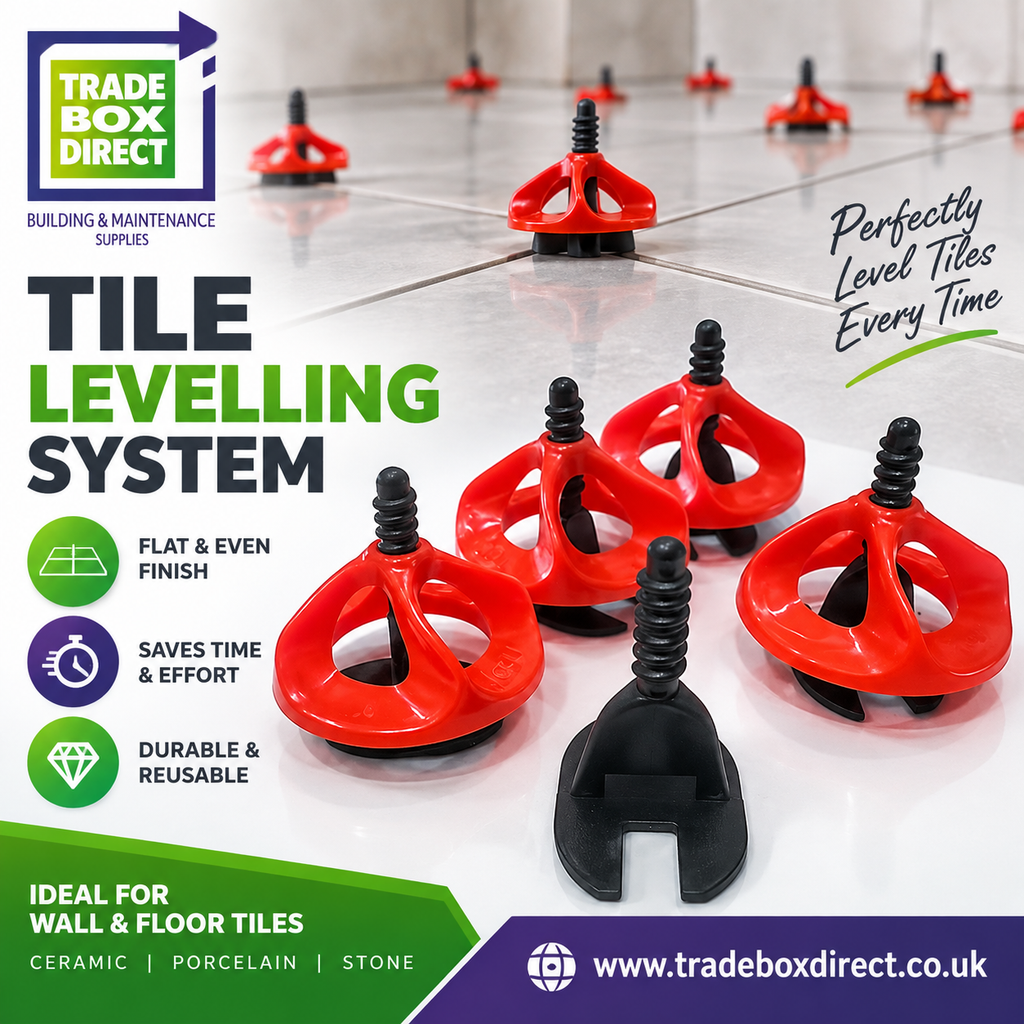
What Is a TILE LEVELING SYSTEM?
A TILE LEVELING SYSTEM is a group of small tools that helps keep neighbouring tiles level while adhesive sets. It can reduce differences in height between tiles and help create cleaner grout lines.
Most systems use clips, spacers, screws, wedges or nuts. The exact design depends on the product.
For example, some systems use a screw and nut arrangement. You place the spacer between the tiles and then tighten the nut. This applies pressure across the tile surface and helps bring nearby tiles to a similar level.
However, a leveling system does not replace good tiling skills. The floor or wall should still be clean, flat and properly prepared.
Why Are Tile Leveling Spacers Important?
Tile leveling spacers help create a consistent gap between tiles. At the same time, they can help reduce lippage, which means one tile sits higher than the tile beside it.
This is especially useful with large-format tiles. Larger tiles can show small differences more clearly. Therefore, careful spacing and leveling can make a big difference to the final appearance.
Tile leveling spacers are also useful for bathroom floors, kitchen walls, hallways and other tiled areas.
How Do Tile Spacers Work?
Tile spacers are placed between tiles to create an even joint. Their size determines the approximate gap between the tiles.
A 2mm spacer, for example, creates a narrow joint when the tiles are positioned correctly.
A leveling system adds another function. It helps keep adjacent tiles at a similar height while the adhesive cures.
The process is simple:
- Prepare the surface.
- Spread the correct tile adhesive.
- Place the first tile.
- Position the next tile.
- Put the spacer or leveling clip between them.
- Tighten the screw, nut or wedge as required.
- Continue across the area.
- Allow the adhesive to cure.
- Remove the leveling components according to the product instructions.
As a result, the tiles can form a more even surface.
Choosing Floor Tile Spacers
When selecting floor tile spacers, first consider the joint width you want.
Common sizes include 1mm, 2mm, 3mm and larger options. The correct size depends on the tile design, installation method and grout requirements.
For a clean modern look, narrow joints are often preferred. However, some tiles require wider joints. Always follow the tile manufacturer’s guidance.
Tile size also matters. Large tiles often benefit from a leveling system because even a small height difference can become noticeable.
What Tiling Tools Do You Need?
A good collection of tiling tools can make the job easier and more accurate.
Useful tools may include:
- Tile spacers
- Tile leveling clips
- Screws or leveling nuts
- Tile cutters
- Notched trowels
- Rubber mallets
- Grout floats
- Measuring tools
- Tile nippers
- Spacers for corners and edges
Each tool has a different purpose. Therefore, selecting the right equipment before starting can save time during the installation.
Tile Levelling System vs Tile Spacers
The terms are sometimes used together, but they have different roles.
A tile levelling system helps control height differences between neighbouring tiles. Standard tile spacers mainly create a consistent gap.
Some products combine both functions.
For example, a 2mm leveling spacer can help create the joint while a screw and nut system applies pressure to keep the tile surfaces aligned.
Therefore, when shopping for a TILE LEVELING SYSTEM, check exactly what is included in the pack.
What Should You Check Before Buying?
There are several points to check before you buy.
1. Tile Thickness
Check the thickness range supported by the product. Tiles can vary greatly in thickness, so the leveling component must suit your tiles.
2. Joint Width
Check the required grout gap. If you need a 2mm joint, look for a compatible 2mm system.
3. Tile Size
Large-format tiles often need careful leveling. A suitable system can make installation easier.
4. Reusable Components
Some systems have reusable parts, while others use disposable clips. Check what the product contains before shopping.
5. Installation Method
Read the instructions before use. Each TILE LEVELING SYSTEM can have slightly different fitting and removal methods.
Tile Spacer Levelling System 2mm Floor Twister
If you are looking for a practical option, the Tile Spacer Levelling System 2mm Floor Twister Spacer Screws + Red Twister Nuts is designed for tile leveling applications.
The system uses 2mm spacers with twister spacer screws and red twister nuts. The components work together to help maintain an even gap and reduce height differences between tiles.
This type of system can be useful for floor tiling projects where consistent joints and a level surface are important.
Before you buy, check your tile thickness and make sure the product is suitable for your installation.
How Does the Twister System Work?
The idea behind the system is straightforward.
First, place the tiles onto the prepared surface with adhesive. Next, position the 2mm spacer between the tiles.
The spacer helps create the required joint. Then, place the screw through the spacer and secure it with the twister nut.
As the nut is tightened, it applies pressure across the tiles. This helps bring the tile surfaces closer to the same level.
Once the adhesive has cured, remove the leveling components as directed.
The process can help reduce tile movement while the adhesive sets.
What Are the Advantages of a Tile Leveling System?
A TILE LEVELING SYSTEM can provide several practical benefits.
More consistent joints: The spacers help maintain an even gap between tiles.
Reduced lippage: The system can help reduce height differences between neighbouring tiles.
Easier installation: Leveling components can make tile positioning simpler.
Cleaner finish: Even tile surfaces can create a more professional-looking result.
Useful for large tiles: Large-format tiles can be more difficult to align by hand.
However, the system works best when the base is properly prepared. A leveling system cannot correct major problems in an uneven floor or wall.
Are Tile Spacers Suitable for DIY Projects?
Yes. Many DIY users can use tile spacers and leveling systems when they follow the product instructions carefully.
Start with a small area if you have never used a leveling system before. Take your time when placing the first few tiles.
Also, avoid overtightening the components. Excessive pressure can damage tiles or affect the adhesive bed.
With practice, the process becomes easier.
Choosing the Right System in the West Midlands
Whether you are tiling a home in Birmingham, Wolverhampton, Coventry, Dudley, Walsall or another part of the West Midlands, the basic selection process remains the same.
Think about your tile size, tile thickness and required grout joint first. Then choose compatible tile spacers and leveling components.
For larger projects, having enough tiling tools ready before work begins can also help prevent delays.
If you need a 2mm solution, you can shop for the Tile Spacer Levelling System 2mm Floor Twister Spacer Screws + Red Twister Nuts and check its product specifications before placing an order.
Frequently Asked Questions
What is the purpose of a TILE LEVELING SYSTEM?
A TILE LEVELING SYSTEM helps keep neighbouring tiles at a similar height during installation. It can also help maintain consistent joints when used with suitable spacers.
What size tile spacer should I use?
The correct size depends on your tile and the grout joint you want. A 2mm spacer is suitable when a 2mm joint is required and the tile manufacturer allows that joint size.
Are tile leveling spacers the same as tile spacers?
Not always. Standard tile spacers mainly maintain the gap between tiles. Leveling spacers can also help control height differences between neighbouring tiles.
Are floor tile spacers useful for large tiles?
Yes. Floor tile spacers can help maintain consistent joints. A leveling system can provide additional support when working with large-format tiles.
How are tile leveling clips made?
The components are commonly made from durable plastic or similar materials. The design allows them to hold tiles in position while adhesive sets. Product materials can vary, so check the manufacturer’s product details.
How does a twister tile leveling system work?
A twister system uses a spacer, screw and nut. The components are positioned between neighbouring tiles, and the nut is tightened to help align their surfaces.
Can I use a tile leveling system for wall tiles?
Some systems can be used for both floors and walls. However, always check the product instructions and supported applications before use.
Can I reuse tile leveling tools?
Some parts of a system may be reusable, while other parts are designed for single use. Check the product specification before shopping.
Where can I buy tile leveling products?
You can browse the TILE LEVELING SYSTEM range to find tile spacers, leveling products and other tiling accessories.
Final Thoughts
Choosing the right TILE LEVELING SYSTEM does not need to be difficult. Start by checking your tile thickness, tile size and required joint width. Then choose compatible tile leveling spacers and other accessories.
For a 2mm application, the Tile Spacer Levelling System 2mm Floor Twister Spacer Screws + Red Twister Nuts provides a practical option to consider.
Most importantly, prepare the surface well and follow the product instructions. Good preparation, suitable tile spacers and the right TILE LEVELING SYSTEM can make the tiling process easier and help you achieve a neat, even finish.
