No products in the basket.









Solar Panel Mounting Brackets: A Complete Guide to Choosing and Buying the Right Mounting Solution
Installing panels on a roof requires more than the panels themselves. A secure support system helps keep the installation stable, aligned and suitable for long-term use. This is where solar panel mounting brackets become an important part of a complete roof installation.
Whether you are a homeowner, installer, builder or DIY customer, choosing the right mounting equipment can make the installation process easier. In addition, suitable components can help provide a strong connection between the roof structure and the panel support system.
What Are Solar Panel Mounting Brackets?
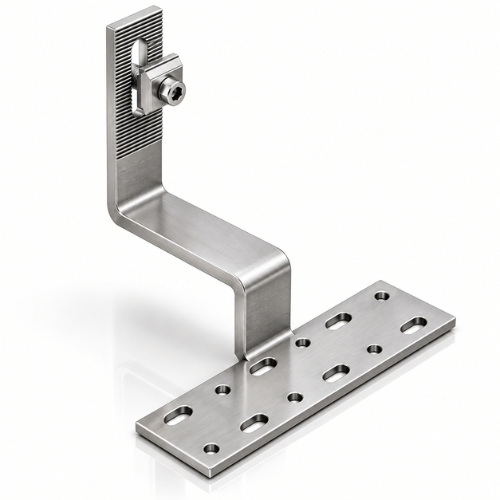
Solar panel mounting brackets are support components designed to help secure panels to suitable roof surfaces. They are commonly used with roof hooks, rails, clamps and other mounting accessories.
The brackets help create a stable fixing point. Therefore, they play an important role in keeping the installation properly positioned. Depending on the roof type, different fixing methods and support components may be required.
For example, tiled roofs, slate roofs and other surfaces can have different installation needs. As a result, it is important to check the roof construction before choosing your mounting products.
How Are Solar Panel Mounting Brackets Made?
Most solar panel mounting brackets are made from strong, durable materials designed for outdoor use. Aluminium and stainless steel are common choices because they can provide a good balance of strength, weight and resistance to outdoor conditions.
During manufacturing, the material is formed or shaped into the required profile. Holes, bends and fixing points can then be created to suit the intended installation.
A quality product should have accurate dimensions and a suitable finish. Furthermore, the fixing points should work correctly with compatible rails, fasteners and other accessories.
The exact construction can vary between products. Therefore, always check the product specifications before buying.
What Are the Advantages of Solar Panel Mounting Brackets?
The main advantage of solar panel mounting brackets is that they provide a practical way to secure a panel support system to a suitable roof structure.
Other benefits can include:
- Strong and reliable support
- Easy connection with compatible mounting systems
- Suitable options for different roof applications
- Durable materials for outdoor environments
- Better positioning of the panel system
- Support for professional installation work
- Useful replacement options for existing systems
Moreover, the correct component can save time during installation. When all parts are compatible, installers can work more efficiently and reduce the need for unsuitable modifications.
How Do Solar Panel Mounting Brackets Work?
A typical mounting system uses several components that work together. The fixing point connects to the roof structure, while rails provide a support path for the panels. Clamps can then hold the panels securely in position.
In many installations, the bracket is one part of this wider system. Therefore, selecting a product based only on appearance or price is not enough.
Before shopping, check the roof type, fixing method, rail compatibility, panel arrangement and required hardware. This simple preparation can help you choose the correct product.
Choosing the Right Mounting Products
When buying mounting equipment, compatibility should be one of your first checks. The product needs to match the installation method and the roof structure.
Consider the following points:
1. Roof Type
Different roofs may require different fixing solutions. A tiled roof can have different requirements from a slate or metal roof.
2. Material
Look for materials designed for outdoor installation. Aluminium and stainless steel are widely used because they offer useful strength and durability.
3. Compatibility
Check whether the product works with your chosen rails, clamps and fasteners. A compatible system makes installation much easier.
4. Size and Dimensions
Always check measurements before you buy. Even a small difference in dimensions can affect how components fit together.
5. Installation Requirements
Professional installers should follow the relevant installation guidance and manufacturer instructions. The roof structure must also be suitable for the intended fixing method.
Where Can You Buy Solar Panel Mounting Brackets?
If you are looking to shop for mounting components, TradeBoxDirect provides a dedicated MOUNTING category for suitable installation products.
You can browse the MOUNTING range here:
Shop MOUNTING products at TradeBoxDirect
Shopping online can make it easier to compare product specifications, sizes and intended applications. However, always read the product information carefully before placing an order.
If you already know the type and size of component you need, buying the correct item from a dedicated product category can also make the ordering process quicker.
Related Mounting Components
A complete installation may include several related products. These can include roof fixing components, rails, clamps, fasteners and support accessories.
For example, a roof hook may be used as part of a suitable fixing arrangement, depending on the roof design and installation method.
Likewise, brackets can provide support where the installation design requires them.
The term solar relates to energy from the sun, which is the basis of photovoltaic panel systems.
These terms are useful to understand when comparing products and planning an installation.
Why Quality Matters
A roof-mounted system is exposed to wind, rain, temperature changes and other outdoor conditions. Therefore, choosing suitable components matters.
Poorly matched parts can create installation problems. In contrast, compatible products can help create a more organised and secure system.
Quality should not be judged by price alone. Instead, check the material, dimensions, compatibility, intended use and manufacturer information.
For installers, using the correct products can also help reduce unnecessary adjustments during a project.
Are Solar Panel Mounting Brackets Suitable for DIY Installation?
Some mounting products may look simple to install. However, roof work can involve important structural and safety considerations.
If you are not experienced with roof installation, it is sensible to use a qualified professional. A professional can assess the roof, select suitable fixing points and install the system according to the relevant guidance.
DIY customers should also avoid assuming that one product will work on every roof. Always check the product specifications first.
What Should You Check Before You Buy?
Before buying solar panel mounting brackets, create a simple checklist:
- Identify your roof type.
- Check the required dimensions.
- Confirm compatible rails and fixings.
- Check the material and finish.
- Review the manufacturer’s installation guidance.
- Confirm the quantity required.
- Compare the product specifications.
- Make sure the fixing method suits your roof.
This approach can make shopping easier and reduce the risk of ordering the wrong component.
Frequently Asked Questions
What are solar panel mounting brackets used for?
They are used as part of a support and fixing system for roof-mounted panels. They can connect suitable mounting components to the roof structure.
How are solar panel mounting brackets made?
They are commonly manufactured from materials such as aluminium or stainless steel. The material is formed and finished to create the required shape, fixing points and dimensions.
Can I use the same mounting bracket on every roof?
No. Roof construction and fixing requirements can vary. Always choose products that are suitable for your specific roof and installation system.
Are mounting brackets important?
Yes. They form part of the support structure that helps keep the installation securely positioned. The correct product should be selected according to the complete system design.
Can I buy mounting products online?
Yes. Online shopping allows you to compare product specifications and available options. TradeBoxDirect has a dedicated MOUNTING category where customers can browse relevant products.
Should I install mounting products myself?
Roof installation can involve safety and structural risks. If you are unsure about the installation method, using a qualified installer is recommended.
Conclusion
Choosing the right solar panel mounting brackets can make a major difference to the installation process. The correct product should match the roof, fixing method, dimensions and other mounting components.
Furthermore, good-quality materials can provide dependable support for outdoor applications. Before you buy, always check compatibility and product specifications.
If you are ready to shop for suitable installation components, explore the TradeBoxDirect MOUNTING category and compare the available options. With careful product selection and correct installation, the mounting system can provide a practical foundation for a well-planned roof installation.
EPH – CP4D OpenTherm Programmable RF Thermostat: A Complete Guide
Choosing the right heating device can make everyday life more comfortable and help you manage energy use. A modern programmable thermostats gives you a simple way to set heating schedules around your daily routine. One product worth considering is the EPH – CP4D OpenTherm Programmable RF Thermostat.
This product combines programmable heating settings with wireless RF communication and OpenTherm technology. As a result, it can offer a practical solution for homes that need flexible heating management.
If you are looking to upgrade your heating system, you can browse the THERMOSTATS at TradeboxDirect and compare suitable products for your project.
What Is the EPH – CP4D OpenTherm Programmable RF Thermostat?
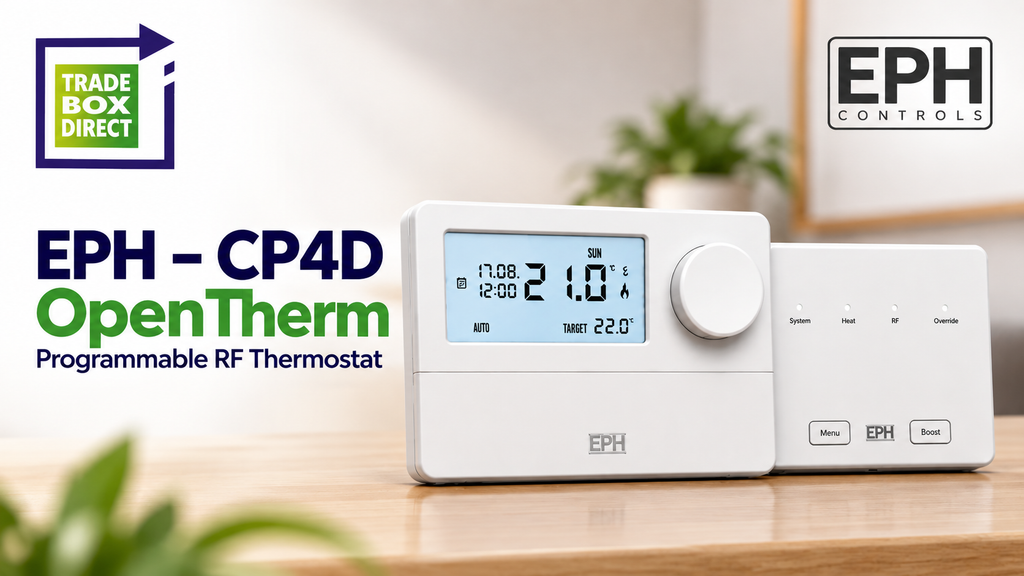
The EPH – CP4D OpenTherm Programmable RF Thermostat is a programmable heating device designed to work with compatible OpenTherm heating systems. Its wireless RF design allows communication between the thermostat and the connected receiver.
Instead of manually changing the heating setting throughout the day, users can create a schedule that suits their routine. For example, heating can be planned for mornings, evenings and other times when warmth is needed.
The product is designed for people who want convenient heating management without relying on constant manual adjustments.
How Does the EPH – CP4D Work?
The EPH – CP4D uses wireless RF communication to send heating instructions to its compatible receiver. The receiver then communicates with the heating system according to the programmed requirements.
OpenTherm technology can allow compatible heating equipment to communicate more effectively with the thermostat. This can help the heating system respond to changing requirements rather than simply switching on and off in a basic way.
The programmable design is also useful for households with regular routines. Once a suitable schedule has been set, the system can follow it automatically.
For a simple explanation of temperature, you can refer to the Cambridge Dictionary.
How Is This Thermostat Made?
The EPH – CP4D is designed as a compact electronic heating device with controls and internal components housed within a protective casing. Its construction is intended for regular indoor use, while the wireless design helps reduce the need for a direct wired connection between the thermostat and receiver.
Electronic components allow the thermostat to communicate with the heating system. The casing also provides a practical finish suitable for installation within a home.
As with other electronic heating products, installation should follow the manufacturer’s instructions and the requirements of the heating system. Compatibility should always be checked before you buy.
What Are the Main Advantages?
There are several reasons why homeowners may choose programmable THERMOSTATS such as the EPH – CP4D.
1. Programmable Heating
The programmable function allows users to create heating periods around their daily routine. This can be useful for households that follow regular working, sleeping or school schedules.
2. Wireless RF Communication
The RF design provides wireless communication between the thermostat and receiver. This can offer greater flexibility when planning the installation.
For anyone unfamiliar with the term frequency, a dictionary definition can provide more background.
3. OpenTherm Compatibility
OpenTherm technology is one of the key features of this product. When connected to a compatible heating system, it can support communication between the thermostat and boiler.
This makes the EPH – CP4D different from a basic manual heating switch.
4. Convenient Daily Use
Once a schedule has been programmed, less manual adjustment may be needed. Therefore, the heating can follow the user’s preferred routine more conveniently.
5. Flexible Installation
Wireless communication can make the installation arrangement more flexible, subject to compatibility and professional installation requirements.
Why Choose Programmable THERMOSTATS?
Modern THERMOSTATS can provide more flexibility than traditional manual heating controls. Instead of adjusting the heating every time you need warmth, a programmable model can follow a planned schedule.
This can be especially useful in busy homes. For instance, you may want heating during the morning before leaving for work, followed by another heating period later in the day.
A programmable system can also help avoid unnecessary heating when nobody is using the property.
However, the best schedule depends on the household. Each property has different insulation, heating equipment and occupancy patterns.
How Does OpenTherm Help?
OpenTherm is a communication protocol used by compatible heating equipment. It allows compatible devices to exchange information rather than relying only on a simple on-and-off signal.
The EPH – CP4D is designed for OpenTherm applications, making compatibility an important point to check before purchasing.
A suitable heating setup can provide more responsive operation. However, performance depends on the boiler, installation and other parts of the heating system.
This means users should not assume that every boiler will provide the same result. Always check the product specifications and your existing heating equipment before placing an order.
Who Can Use the EPH – CP4D?
The EPH – CP4D can be useful for homeowners, landlords, property managers and installers working with compatible heating systems.
It may suit properties where programmable heating is preferred over constant manual adjustment. It can also be useful when a wireless arrangement is desirable.
For a new heating project, it is sensible to check compatibility before shopping. If you already have an OpenTherm-compatible boiler, the product may be worth considering as part of your heating upgrade.
What Should You Check Before You Buy?
Before you buy THERMOSTATS, consider the following points:
- Check compatibility with your heating system.
- Confirm whether OpenTherm is supported.
- Check the wireless RF requirements.
- Review the manufacturer’s installation information.
- Consider the programming features you need.
- Check the product dimensions and installation requirements.
- Use a qualified installer where electrical or heating-system work is required.
Taking a few minutes to check these details can prevent compatibility problems later.
Shop the EPH – CP4D OpenTherm Programmable RF Thermostat
If you want a programmable heating solution, you can shop the EPH – CP4D OpenTherm Programmable RF Thermostat from TradeboxDirect.
The product is a useful option for compatible OpenTherm heating systems where wireless programming is required. Its combination of programmable operation and RF communication makes it suitable for a range of domestic heating applications.
When shopping online, always read the product information carefully and compare the specifications with your existing heating system.
How Can Good Heating Control Improve Daily Comfort?
Good heating management can make a home easier to use throughout the day. A programmable thermostat lets you plan heating around your routine instead of making repeated manual changes.
The word control describes the ability to manage or direct something. In a heating system, effective control can help users decide when the heating should operate.
Programmable THERMOSTATS can therefore be useful for households that want a more organised approach to heating.
Frequently Asked Questions
What is the EPH – CP4D OpenTherm Programmable RF Thermostat?
It is a programmable wireless RF thermostat designed for compatible OpenTherm heating systems. It allows users to create heating schedules and communicate with a compatible receiver.
How does the wireless feature work?
The thermostat communicates with its compatible receiver using RF technology. The receiver then passes the relevant heating instructions to the connected system.
Is the EPH – CP4D suitable for every boiler?
No. Compatibility depends on the heating system and whether the required OpenTherm connection is supported. Always check compatibility before buying.
What are the benefits of programmable THERMOSTATS?
Programmable THERMOSTATS can help users create heating schedules based on their daily routine. This can reduce the need for constant manual adjustments.
Can I install the EPH – CP4D myself?
Installation requirements depend on the existing heating system. Where electrical or boiler connections are involved, professional installation should be considered. Always follow the manufacturer’s instructions.
Where can I buy the EPH – CP4D?
You can buy the product through TradeboxDirect. Check the product details and compatibility information before placing your order.
Conclusion
The EPH – CP4D OpenTherm Programmable RF Thermostat offers a practical combination of wireless communication, programmable scheduling and OpenTherm compatibility. For suitable heating systems, it can provide a convenient way to organise daily heating requirements.
Modern THERMOSTATS can make heating easier to manage, particularly when users have regular daily routines. The EPH – CP4D is especially worth considering where an OpenTherm-compatible and wireless solution is required.
Before you shop, always check compatibility, installation requirements and product specifications. With the right heating equipment and a suitable installation, programmable THERMOSTATS can become an important part of a comfortable and well-managed home heating system.
Window Trickle Vents: A Simple Guide to Better Indoor Airflow
Good indoor ventilation quality is important in homes, offices, flats and other buildings. Fresh air helps create a more comfortable space and can reduce problems caused by damp air. One simple way to support this is by using window trickle vents.
These small vents are fitted into or around windows to allow a controlled flow of fresh outdoor air. Unlike opening a window fully, they provide a smaller and more consistent opening. Therefore, they can be useful when you want fresh air without leaving a window wide open.
What Are Window Trickle Vents?
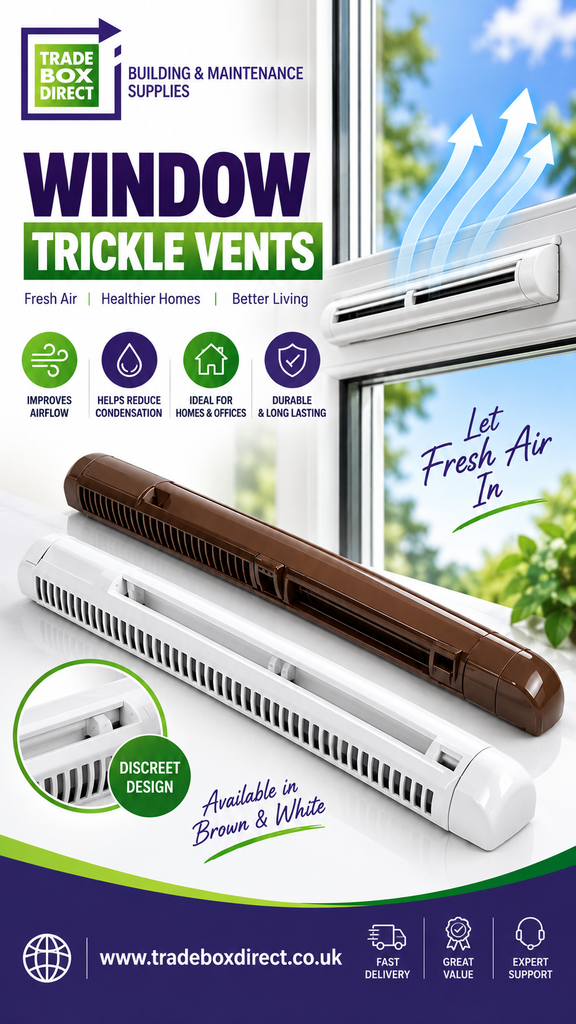
Window trickle vents are compact ventilation products designed to fit onto windows and window frames. They usually have a narrow opening that allows fresh air to enter while stale indoor air can move towards other extraction points.
The design is simple, but the purpose is important. Modern homes are often built with better insulation and improved sealing. While this can help reduce heat loss, it can also reduce natural air movement. As a result, a suitable ventilation system becomes important.
Window trickle vents help provide a controlled route for fresh air. They are commonly used in homes, flats, offices and other buildings where additional airflow is required.
If you are looking for products for your next project, you can browse the VENTILATION at TradeboxDirect.
How Are Window Trickle Vents Made?
Most window trickle vents are made from strong, lightweight plastic or similar durable materials. Their construction usually includes an outer vent section, an internal opening and, depending on the design, a simple control mechanism.
Some models allow the opening to be adjusted. This gives the user more control over the amount of fresh air entering the room.
The products are designed to be practical and easy to maintain. Many are available in neutral colours, which allows them to blend with common window frames.
Because they are small, they can provide a useful solution without taking up much space. However, the correct product should always be selected according to the window type, room requirements and installation conditions.
How Do Window Trickle Vents Work?
The basic principle is straightforward. Outdoor air enters through the small opening in the vent. At the same time, stale indoor air can move towards an extraction fan, open vent or another suitable outlet.
This creates a more balanced movement of air around the property.
For example, moisture can build up when people cook, shower, wash clothes or simply breathe. Without enough fresh air, humid conditions may remain inside a room for longer.
You can learn more about moisture and why controlling it matters in indoor spaces.
Good airflow is also important. The term airflow refers to the movement of air from one place to another. A suitable window vent can support this movement when used as part of a wider ventilation plan.
What Are the Advantages of Window Trickle Vents?
There are several reasons why homeowners, landlords, builders and installers choose window trickle vents.
1. They Allow Fresh Air to Enter
The main purpose is to introduce fresh outdoor air into a room. This can make indoor spaces feel less stuffy and more comfortable.
2. They Support Moisture Control
Everyday activities can add moisture to the air. Cooking, bathing and drying clothes can all increase humidity. A controlled fresh-air route can help manage these conditions.
3. They Help Reduce Condensation Risk
Poor air movement can contribute to condensation, especially around colder surfaces such as windows. You can read more about condensation to understand how water vapour changes into liquid.
A suitable window vent may help reduce excessive humidity when it forms part of a properly designed system.
4. They Provide Controlled Air Entry
Opening a window fully is not always practical. It can allow too much outdoor air into the room and may also create security, noise or comfort concerns.
A trickle vent provides a smaller opening that can be controlled according to the product design.
5. They Are Compact
The slim design means these products can fit neatly around many window installations. This makes them useful where space is limited.
6. They Can Support Modern Homes
Well-insulated properties can benefit from planned fresh-air routes. As homes become more energy efficient, controlled air movement becomes increasingly important.
Where Can Window Trickle Vents Be Used?
Window trickle vents are commonly used in bedrooms, living rooms, kitchens, offices and other occupied areas.
Bedrooms can benefit because people spend many hours there, particularly overnight. Kitchens and bathrooms may also need good air management because everyday activities can create higher humidity.
However, a trickle vent should not be viewed as a replacement for an extractor fan where mechanical extraction is required. Instead, it can work alongside other systems to create a better overall air strategy.
Before installation, always check the product specifications and the requirements of the building.
Are Window Trickle Vents Easy to Maintain?
In many cases, maintenance is simple. Dust and debris can collect around small openings over time, so regular inspection is useful.
A soft brush or suitable cloth can normally be used to remove surface dirt. Avoid blocking the opening or using unsuitable chemicals that could damage the material.
If a vent becomes damaged, replacing it may be more practical than trying to repair it.
What Should You Check Before You Buy?
Before you buy window trickle vents, consider the following:
- Window type and frame design
- Required vent size
- Material and build quality
- Colour and appearance
- Adjustable or fixed opening
- Installation method
- Airflow requirements
- Building regulations and project specifications
It is also useful to compare different products before shopping. TradeboxDirect offers a range of products within its ventilation category, making it easier to find suitable options for different building projects.
If you are planning a renovation, replacement window project or new installation, choosing the correct product at the start can help avoid unnecessary changes later.
Why Is Ventilation Important in a Property?
A good VENTILATION strategy helps manage the movement of fresh and stale air. It can also support better control of humidity and improve general indoor comfort.
However, every property is different. Room size, occupancy, insulation, heating and existing extraction systems can all affect the amount of fresh air required.
For that reason, VENTILATION products should be selected carefully rather than simply added without considering the wider building.
Window vents can form one part of a complete VENTILATION approach. When correctly selected and installed, they can help create a steady fresh-air supply.
Frequently Asked Questions
How do window trickle vents work?
They provide a small controlled opening in or around a window. Fresh outdoor air enters through the vent, helping support air movement within the room.
Are window trickle vents useful in winter?
Yes. They can provide controlled fresh air without requiring the window to be opened fully. However, the actual performance depends on the building and the product used.
Can window trickle vents stop condensation?
They can help manage indoor humidity, which may reduce condensation risk. However, they cannot guarantee that condensation will disappear because heating, insulation, room use and extraction also affect moisture levels.
Can I buy window trickle vents online?
Yes. When shopping online, check the dimensions, material, design and installation requirements before placing an order. You can shop the ventilation range at TradeboxDirect.
Do window trickle vents replace extractor fans?
No. They serve a different purpose. A trickle vent provides a controlled fresh-air route, while an extractor fan actively removes air from areas such as kitchens and bathrooms.
Are window trickle vents suitable for every window?
Not necessarily. Compatibility depends on the window design, frame, size and installation method. Always check the product information before buying.
Conclusion
VENTILATION plays an important role in creating comfortable indoor spaces. Window trickle vents offer a simple way to support fresh-air movement while helping manage indoor humidity.
They are compact, practical and suitable for many residential and commercial projects. With the right product, they can work alongside extraction systems to support a balanced approach to indoor air management.
When you are ready to shop, compare the available window trickle vents carefully and choose a product that matches your window and project requirements. Good product selection, correct installation and regular maintenance can all contribute to effective VENTILATION.
Remember that VENTILATION should always be considered as part of the wider building design. A suitable solution can help support comfort, air quality and moisture management for everyday living.
How Do Air Bricks, Window Vents and Trickle Vents Improve Home Air Quality?
Good VENTILATION helps a home feel fresh, comfortable and well balanced. It allows stale indoor air to leave while fresh outdoor air enters. As a result, rooms can feel less stuffy, especially after cooking, bathing or drying clothes.
A well-planned system can include air bricks, window vents, trickle vents, grilles and covers. Each product has a different role. Therefore, choosing the right type depends on the room, window, door and building design.
For homes, offices and other buildings, suitable VENTILATION products can support better indoor air movement without the need to keep windows fully open all day.

What Is an Air Brick Vent?
An air brick vent provides an opening through a wall. It allows fresh air to move between the outside and inside of a building. These products are often used where a steady supply of fresh air is needed.
A ventilation air brick can be useful for walls, utility areas and other spaces that need regular air movement. Likewise, air bricks come in different designs and materials.
A terracotta airbrick can suit buildings where a traditional appearance is important. Meanwhile, modern plastic designs can provide a simple option for newer properties.
The right air brick should match the opening and the needs of the building. It should also allow air to pass freely without creating an unwanted opening for insects or debris.
How Do Window Vents Work?
Windows play an important part in home air movement. However, opening a window may not always be practical. Cold weather, rain, noise and security concerns can make this difficult.
That is where window vents can help. These small vents allow air to enter or leave through a controlled opening.
Window air vents can be useful in bedrooms, kitchens, bathrooms and other rooms where fresh air matters. They can also form part of wider window ventilation plans.
For homes with modern glazing, plastic window vents can provide a practical solution. They can be fitted into suitable window systems, depending on the product and installation method.
Good VENTILATION should balance fresh air with comfort. A vent that is too small may not provide enough air. On the other hand, a poorly selected vent may create unwanted drafts.
Why Are Trickle Vents Useful?
Trickle vents are designed to provide a small, steady opening for air. They are often fitted to windows or doors. Unlike a wide-open window, they allow controlled air movement.
Trickle vents for UPVC windows are commonly used with suitable UPVC window systems. They can also be used as trickle vents for doors when the product is designed for that purpose.
Other useful terms include UPVC trickle vents, window trickle vents and trickle vents for windows.
The main benefit is simple. Air can move through the opening while the window stays closed. This can make daily VENTILATION easier, especially during colder months.
Trickle vents can also be opened or closed on many designs. Therefore, users can adjust the opening to suit the room and weather.
Product: 5000 AirFlow UPVC Trickle Vent
The 5000 AirFlow UPVC Trickle Vent for Windows & Doors | White is designed for suitable window and door applications.
Its simple design makes it useful for projects that need a controlled air opening. Before buying, check the dimensions and installation requirements. The product should also suit the window or door system being used.
This type of vent can be considered when planning house window vents or improving air movement in rooms.
What Are Ventilation Grilles?
Ventilation grilles cover openings while still allowing air to move. They are useful in walls, doors, panels and other areas.
A ventilation grille can also provide a neat finish around an opening. Some designs include mesh or screens. These features can help reduce the entry of insects and unwanted debris.
Ventilation grilles – Axia are another term buyers may see when searching for suitable products.
Good VENTILATION design does not only depend on the opening. The grille, cover and surrounding area also matter.
Product: Vent Axia Double Louvred Airbrick
The Vent Axia – Double Louvred Airbrick Terracotta – 220x90mm is a louvred air brick designed for suitable ventilation applications.
Its terracotta appearance can work well with buildings where the external finish matters. The louvred design provides an opening for air while helping to protect the opening.
Before installation, always check the required size and the building structure. A suitable product should match the opening and intended use.
What Is an Air Vent Cover?
An air vent cover protects the opening while keeping air movement possible. Covers can be used with many types of vents and openings.
An air vent cover with fly screen can be useful where insect protection is also needed. Likewise, an air vent cover can give a cleaner finish.
Some projects may need a vent box. Others may need a simple grille. The correct choice depends on the location and purpose.
The aim is to maintain useful air movement without leaving an opening fully exposed.
Product: PVC Trickle Vents for Windows
The Trickle Vents for Windows – Real PVC Plastic 300mm and 400mm provide options for window ventilation projects.
These products can be considered when a longer vent is needed. Always measure the available space first. Then check the fitting method before starting work.
For homes with UPVC windows with air vents, the right product can help create a more controlled air opening.
Product: Louvred Air Vent Cover With Flyscreen
The Louvred Air Vent Cover with Fixed Flyscreen Fly Mesh combines a louvred opening with a fixed flyscreen.
This can be useful for areas where air needs to move while insects should be kept out. It can suit selected wall, panel or other ventilation openings.
When choosing a vent cover, check its size, material and installation method. Also, make sure the opening is suitable for the product.
Why Is Home Ventilation Important?
Daily activities create stale air inside a home. Cooking, showers, cleaning and drying clothes can all add extra moisture to indoor air.
Fresh airflow helps move this air through the building. If warm indoor air meets a cold surface, condensation may form.
A suitable VENTILATION setup can help manage normal indoor air movement. However, vents should not be blocked by furniture, dirt or other objects.
A complete house ventilation plan may include wall vents, window vents, air bricks and grilles. Larger buildings may also need a home ventilation system or a dedicated air ventilation system for home.
How Should You Choose the Right Vent?
Start by looking at the location. Is the product going into a wall, window, door or panel? Next, measure the opening carefully.
Then consider the purpose. You may need an air brick for a wall or air vents for a smaller opening. A window may need trickle vents instead.
Also, check the material. Plastic products can suit many modern applications. Terracotta products may work better with traditional finishes.
Finally, review the fitting method. If you are unsure, ask a qualified installer before making changes to a wall, window or door.
Good VENTILATION starts with the correct product and careful installation.
Can You Buy Ventilation Products Online?
Yes. You can shop for different ventilation products based on the needs of your project. A category such as Ventilation makes it easier to compare air bricks, grilles, window vents and trickle vents in one place.
Before you buy, check the product size, application and fitting requirements. Shopping carefully can help you choose a product that suits your project instead of replacing an unsuitable item later.
Frequently Asked Questions
What is the purpose of an air brick vent?
An air brick vent creates an opening that allows air to move through a wall or building area. It can support fresh air movement and may form part of a wider ventilation plan.
Are trickle vents useful for UPVC windows?
Yes. Suitable UPVC trickle vents can provide a small, controlled opening for air. They can be useful when you want regular air movement without keeping the whole window open.
Can trickle vents be used on doors?
Some products are designed for doors. However, you should check the product specifications before fitting one. The door design and available space also matter.
What are ventilation grilles used for?
Ventilation grilles cover openings while allowing air to pass through. Some models also include mesh to help reduce insect entry.
What is the difference between an air brick and a trickle vent?
An air brick usually provides ventilation through a wall. A trickle vent normally provides a smaller controlled opening through a window or door.
How do I choose the right ventilation product?
First, check where the product will be installed. Next, measure the opening. Then compare the product size, material, design and fitting method. If the work involves structural changes, seek professional advice.
Can ventilation products improve indoor comfort?
Suitable products can help fresh air move through a building. They can support a more comfortable indoor environment when they form part of a well-planned system.
Conclusion
Effective VENTILATION does not have to be complicated. Air bricks, window vents, trickle vents, grilles and covers each serve a useful purpose.
For a small window project, UPVC trickle vents may be suitable. For a wall opening, an air brick may be more practical. Meanwhile, a grille or cover can protect an opening while keeping air moving.
The key is to choose the right product for the right location. Measure carefully, check the product details and use professional help when needed. With the right approach, VENTILATION can become a simple and useful part of a comfortable home.
How Furniture Accessories Improve Safety, Strength and Finish
Furniture accessories needs more than wood, boards, and screws. Small parts can make a big difference. They can protect corners, join panels, and improve the final look.
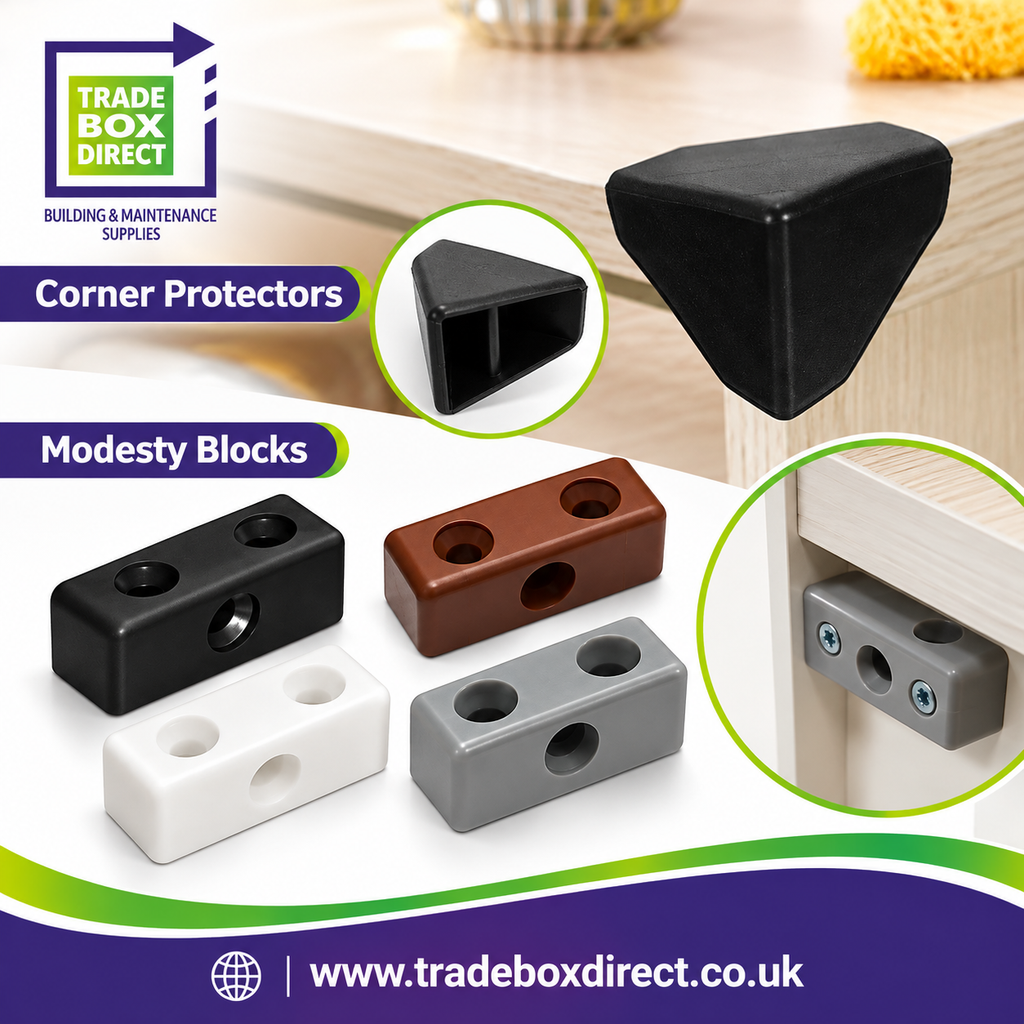
FURNITURE ACCESSORIES help with many home, office, kitchen, and workshop jobs. These products include corner protectors, furniture fittings, furniture hardware, modesty blocks, and other useful parts.
The right accessory can make furniture safer and stronger. It can also make repairs much easier. So, it helps to know what each product does before you start.
You can explore the FURNITURE ACCESSORIES range to find useful products for your next project.
What Are Furniture Accessories?
FURNITURE ACCESSORIES are small parts that help build, join, protect, or finish furniture.
For example, corner protectors can cover sharp furniture corners. Modesty blocks can join panels inside cabinets and other units.
These small parts can make a piece of furniture more useful. They can also help with repairs. Instead of replacing a whole unit, you may only need to replace one small part.
This can save both time and money.
Why Are Corner Protectors Useful?
Furniture corners can get knocks during daily use. Sharp corners can also cause problems in busy homes, offices, and shops.
A plastic corner protector can cover an exposed corner. It can give the corner a smoother finish and add a simple layer of protection.
A furniture corner protector can also help reduce damage from small knocks. This makes corner guards useful for tables, desks, cabinets, counters, shelves, and storage units.
Before you choose one, measure the corner. Also, check the size and shape of the protector. A good fit gives a cleaner look.
You can browse corner protectors for suitable options.
How Does a Plastic Corner Protector Work?
A plastic corner protector fits over an exposed furniture corner. Its shape helps cover the corner and create a smoother finish.
Plastic can work well for many furniture jobs. It is light and easy to handle. It can also suit many modern furniture designs.
The fitting method can vary between products. So, check the product details first.
Clean the area before fitting the protector. A clean area can help you get a better fit and a neater result.
Product: Plastic Corner Protector – Black
The Plastic Corner Protector – Black offers a simple option for furniture projects.
You can view the Plastic Corner Protector – Black before you choose a product.
The black finish can suit dark desks, cabinets, tables, and other furniture. It can also give a simple and neat look.
Before you buy, measure the furniture corner. Then compare your measurements with the product size.
What Are Furniture Fittings?
Furniture fittings are small parts that help connect, support, or move furniture parts.
They can include hinges, brackets, joining blocks, handles, and runners.
For example, a hinge lets a cabinet or furniture door open and close. Other fittings help join fixed panels.
Good fittings can make furniture easier to use. They can also make repairs faster.
That is why furniture hardware plays an important role in many DIY and trade projects.
How Do Modesty Blocks Work?
A modesty block is a small joining part. It can connect or support two furniture panels.
Modesty blocks often sit inside the furniture. This helps keep the outside looking clean.
You can use them in desks, cupboards, cabinets, shelves, and kitchen units.
People also call these parts mod blocks. They offer a simple way to join panels without using large visible fixings.
Always check the size of the block before you start. It should suit the panels and the planned fixing method.
Product: Modesty Blocks Kitchen Mod Block
The MODESTY BLOCKS KITCHEN MOD BLOCK – VARIOUS PACKS can help with furniture assembly and panel joining.
You can view the Modesty Blocks Kitchen Mod Block to see the available options.
These blocks can work well inside kitchen cabinets and furniture units. They can help create clean joints while keeping the fixing less visible.
Check the pack size before you buy. Choose a pack that gives you enough blocks for your project.
What Are the Benefits of Furniture Accessories?
FURNITURE ACCESSORIES can offer several useful benefits.
First, they can help protect furniture. Corner guards can cover exposed corners.
Next, they can help with assembly. Modesty blocks can join panels and support simple furniture construction.
They can also improve the final look. Small fittings can keep fixings neat and less noticeable.
Finally, they can make repairs easier. You may only need to replace one small part instead of replacing a whole piece of furniture.
How Are Plastic Furniture Parts Made?
Manufacturers use different methods to make plastic furniture parts. One common method uses a mould.
The manufacturer heats plastic and places it into a mould. The plastic then cools and takes the required shape.
The exact method can vary by product. The design, size, and material all play a part.
Good production helps create parts with a consistent size and shape. This helps users fit them more easily.
Where Can You Use Corner Guards?
You can use corner guards in many places.
They can suit desks, tables, cabinets, counters, shelves, cupboards, and storage units.
Busy areas may need extra corner protection. Furniture in homes, schools, offices, shops, and workshops can face regular knocks.
Choose a guard that matches the furniture size. Also, consider the colour and overall design.
For example, a black protector can blend well with dark furniture.
How Do Modesty Blocks Help Kitchen Furniture?
Kitchen furniture gets used every day. Cabinet doors open and close often. Shelves also hold many items.
FURNITURE ACCESSORIES such as modesty blocks can help join cabinet panels.
They can also make assembly simple. A modesty block can sit inside the unit, which helps keep the outside neat.
Before you fit one, check the panel thickness. Also, make sure the block suits the planned fixing method.
How Do You Choose the Right Furniture Accessories?
Start with the job you need to complete.
Do you need corner protection? Look at corner protectors.
Do you need to join two panels? Look at modesty blocks.
Do you need a moving door? Check suitable furniture fittings.
Next, measure the furniture. Check the corner size, panel thickness, and fixing space.
Then think about the finish. Choose a colour that suits the furniture.
Finally, check the pack size. Make sure you have enough parts for the full project.
You can shop the FURNITURE ACCESSORIES category and compare products before you buy.
What Should You Check Before Buying?
Before you buy FURNITURE ACCESSORIES, check the product size and material.
Also check the colour, pack quantity, and intended use.
Think about where you will use the product. For example, moisture can matter in kitchens and utility rooms. You can read more about moisture.
Storage conditions can also matter. Good airflow can help in some storage areas. In some spaces, condensation may also need attention.
Always follow the product instructions.
Why Are Furniture Accessories Useful for DIY?
DIY projects often need small parts. These parts can make a project much easier.
A corner protector can help protect an exposed corner. A modesty block can help join furniture panels. Other fittings can help doors, drawers, and shelves work properly.
Small parts are also easy to store. You can keep them ready for future repairs.
If you often repair or build furniture, having common fittings nearby can save time.
How Can You Shop for the Right Products?
Online shopping lets you compare products before you buy. You can check product names, sizes, pack quantities, and uses.
If you need furniture parts, visit the FURNITURE ACCESSORIES category.
Read the product details before placing an order. Check the size first. Then check the quantity and intended use.
This simple process can help you choose the right item for your project.
Frequently Asked Questions
What are corner protectors used for?
Corner protectors cover exposed furniture corners. They can help create a smoother finish and reduce damage from everyday knocks.
What is a furniture corner protector?
A furniture corner protector is a small part that fits over or around a furniture corner. Plastic options can work well for many furniture projects.
What are modesty blocks used for?
Modesty blocks help join furniture panels. They work well in desks, cabinets, cupboards, shelves, and kitchen units.
Can I use modesty blocks in kitchen cabinets?
Yes, modesty blocks can suit many kitchen furniture projects. Always check the product size and fitting method first.
What does furniture hardware include?
Furniture hardware includes small parts that help build, join, open, close, support, or repair furniture.
How do I choose a corner protector?
Measure the furniture corner first. Then check the protector size, shape, material, colour, and fitting method.
Where can I buy furniture fittings?
You can shop furniture fittings and related products at TradeboxDirect for home, office, kitchen, and DIY projects.
Conclusion
Small parts can make a big difference to furniture. FURNITURE ACCESSORIES can help protect corners, join panels, improve safety, and create a cleaner finish.
Corner protectors work well for exposed edges. Modesty blocks can help join panels inside furniture. Other fittings can improve doors, drawers, shelves, and cabinets.
So, measure your furniture before you buy. Check the product size and read the product details.
With the right accessories, you can complete furniture repairs and DIY projects with less effort and a better finish.
How to Choose the Right Screws for Wood and Construction Projects
Choosing the right fixing can make every project easier. Whether you build furniture, repair timber, or complete general construction work, the correct fastener gives you a secure joint. It can also improve the final look.
Different jobs need different types of fixings. For example, countersunk screws work well when you want a neat finish. Wood screws suit many timber projects, while construction screws offer strong support for building work.
Before you start, think about the material, screw size, head shape, drive type, and finish. These simple checks can help you avoid mistakes and save time.
You can explore the SCREWS to find suitable products for different projects.
What Are Screws Used For?
SCREWS join or secure two or more materials. People use them for furniture, timber frames, shelves, cabinets, boards, repairs, and many construction jobs.
The threaded body grips the material as you turn the fastener. This action creates a strong connection when you choose the correct size and type.
For example, wood screws work well with timber. You can use them for furniture, shelving, wooden frames, and home improvement projects.
On the other hand, construction screws suit many heavier building tasks. They can provide strong fixing support when you choose the right product for the material.
Understanding Countersunk Screws
Countersunk screws have a shaped head that allows them to sit level with the material. This design creates a smooth and tidy finish.
You can use them for wooden boards, cabinets, furniture, doors, frames, and other timber projects. They work especially well when you do not want the screw head to stand above the material.
A countersunk design can also make finishing easier. After installation, you can leave the head level or prepare the area for further finishing.
Always select the correct size for your project. A screw that goes too deep can damage the material, while one that sits too high can spoil the final finish.
Why Choose Countersunk Wood Screws?
Countersunk wood screws combine a timber-friendly thread with a shaped head. This combination makes them useful for many woodworking jobs.
The correct length gives the screw enough grip without passing too far through the timber. Therefore, measure your material before choosing a size.
You should also use the correct driver bit. A poor fit can cause the bit to slip. It can also damage the screw head.
For best results, place the screw straight into the material. Apply steady pressure as you drive it. Avoid using excessive force.
What Are Pozi Screws?
Pozi screws use a Pozidriv-style drive. The matching driver bit fits into the head and helps you turn the screw smoothly.
Many furniture, woodworking, repair, and construction projects use this type of fixing. The design makes installation simple when you use the correct driver.
Before starting a large job, check your driver size. A correct fit gives you better control and can reduce head damage.
Pozi fixings also work well for repeated installation tasks. For this reason, they remain a popular choice for both DIY users and tradespeople.
How Do Construction Screws Work?
Construction screws support many building and repair tasks. They can join timber and other suitable materials while providing a firm fixing.
Your project may require a particular length, diameter, coating, or head design. Therefore, check the product details before you buy.
For timber work, choose a fastener that matches the material and expected load. You may also need to pre-drill the material, especially when you work near an edge or use harder timber.
Good preparation makes installation easier. It also helps you create a stronger and cleaner joint.
Product Spotlight: Multi-Purpose Golden Pozi Countersunk Wood Screws
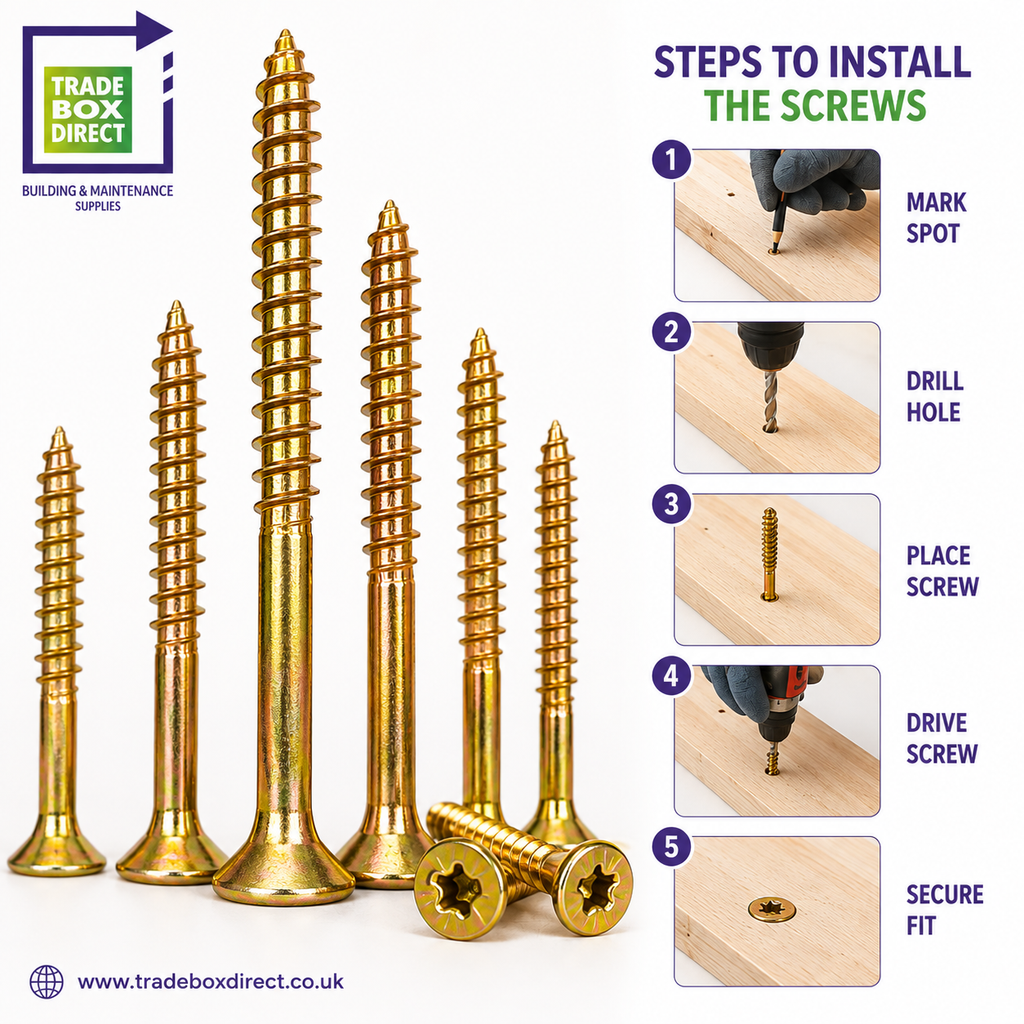
The MULTI-PURPOSE GOLDEN POZI COUNTERSUNK WOOD SCREWS offer a useful option for woodworking, furniture assembly, repairs, and other timber tasks.
You can view the Multi-Purpose Golden Pozi Countersunk Wood Screws to review the product and its available options.
The countersunk head helps create a clean finish. Meanwhile, the Pozi drive works with a matching driver bit for straightforward installation.
Before you buy, check the available sizes and pack quantities. Think about how many fixings your project needs. Buying the correct quantity can help you avoid delays during the job.
How Are Wood Screws Made?
Manufacturers start with metal wire or rod. They shape this material into the required form and create the threaded body.
Next, they form the head and drive section. The manufacturer may then add a protective coating, depending on the product.
Each part needs to work together. The thread must grip the material, while the head must accept the correct driver.
Good manufacturing also helps create consistent sizes. As a result, users can expect easier installation and a more reliable fit.
What Are the Benefits of Choosing the Right Fixing?
The correct fixing can improve the strength of a joint. It can also make your work faster and give the project a cleaner finish.
For example, countersunk designs work well when you want a level finish. Wood screws provide useful grip in timber. Pozi drives can make installation easier when you use the right driver.
A suitable fastener can also reduce common problems. These include damaged heads, loose joints, poor alignment, and uneven finishes.
Therefore, do not choose a product based only on price. Consider the material and job first.
How Do You Choose the Correct Size?
Size plays an important role in every fixing project. A short screw may not grip the material properly. However, an overly long screw can pass through the material or cause damage.
Start by measuring the material thickness. Then consider how much fixing depth you need.
The diameter also matters. A thicker screw may provide greater holding strength, but it may not suit every material.
You should also check the drive type. Match the driver bit to the screw head before you start.
Can You Use Screws Outdoors?
You can use some fixings outdoors, but you should choose a product that suits the environment.
Outdoor projects can expose metal to rain, humidity, and changing weather. Over time, moisture can affect unsuitable materials. You can learn more about moisture before choosing products for demanding areas.
Storage conditions also matter. Good airflow can help reduce problems in some enclosed areas. In addition, condensation can affect certain environments.
Always check the product information before using a fixing outdoors.
Tips for Better Installation
Good preparation can make the whole job easier.
First, mark each fixing point clearly. Next, choose the correct driver bit. Then check the fixing length before installation.
Pre-drilling can help when you work with harder timber. It may also reduce splitting near the ends of boards.
Keep the drill or driver straight as you work. Apply steady pressure instead of forcing the tool.
Avoid over-tightening. Too much force can damage the head or material. Instead, stop when the fixing reaches the required depth and holds the joint securely.
Why Does Screw Head Design Matter?
The head shape affects both appearance and performance. A countersunk head can create a flatter finish, while other head shapes may suit different applications.
Think about the final look before you choose. Furniture and visible timber often benefit from a neat head design.
For construction work, strength and fitting requirements may matter more than appearance. Therefore, always match the head style to the task.
Should You Shop Online for Fixings?
Online shopping makes it easy to compare products before you buy. You can check sizes, pack quantities, product types, and intended applications from one place.
If you need fixings for your next project, visit the SCREWS and review the available options.
Before you order, check the product name, size, quantity, drive type, and intended use. This quick step can help you choose the right product and avoid unnecessary returns.
Frequently Asked Questions
What are countersunk screws used for?
Countersunk screws work well when you want the head to sit level with the material. They suit furniture, timber boards, cabinets, doors, and other woodworking projects.
Are wood screws good for furniture?
Yes. Suitable wood screws can provide strong and reliable joints for many furniture projects. Always choose the correct size for the material.
What makes Pozi screws useful?
Pozi screws work with matching Pozidriv bits. The design gives the driver good engagement and can make installation easier.
What are construction screws used for?
Construction screws support many building and repair tasks. Choose the correct product based on the material, fixing depth, and project requirements.
How do I choose the right size?
Measure the material thickness first. Then consider the required fixing depth and screw diameter. Always check the product information before installation.
Can one type of screw suit every project?
No. Different materials and tasks need different fixings. Size, head shape, drive type, coating, and length can all affect your choice.
Where can I buy suitable fixings?
You can shop the SCREWS range at TradeboxDirect for options suited to woodworking, furniture, construction, and repair work.
Conclusion
The right fixing can improve both the strength and appearance of your project. Countersunk wood screws, Pozi options, and construction products each serve different purposes.
Before you buy, check the material, size, head style, drive type, and working conditions. Then choose a product that matches the job.
With good preparation and careful installation, you can create strong, neat, and reliable joints for home improvement, woodworking, furniture assembly, and construction projects.
How Does a Tile Leveling System Make Tiling Easier?
Laying tiles can look simple, but getting every tile even can take time and care. Small height differences can make a floor look uneven. They can also create edges that are easy to notice when light falls across the tiles.
A tile leveling system can help reduce this problem. It helps keep nearby tiles at a similar height while the adhesive sets. As a result, the finished floor can look cleaner and more even.
This guide explains how the system works, what parts it uses, and why it can be useful for home and trade projects.
What Is a Tile Leveling System?
A tile leveling system is a group of small tiling tools used to help keep tiles level during installation.
Most systems use spacers, screws, clips, caps, or similar parts. The exact design depends on the product.
The main aim is simple. The system helps reduce differences in height between tiles while the adhesive is setting.
For example, when two large floor tiles are placed next to each other, one tile may sit slightly higher than the other. A suitable leveling system can apply gentle pressure and help bring the tile faces closer to the same level.
This makes the process easier for both DIY users and professional tilers.
How Does a Tile Leveling System Work?
First, the correct adhesive is spread across the prepared surface. The tiles are then placed into position.
Next, suitable spacers are placed between the tiles. These create a consistent joint between each tile.
A leveling screw or cap can then be fitted with the spacer. As it is tightened, it helps hold the nearby tiles at a similar height.
The process should be gentle. Too much pressure can affect the adhesive bed or move the tiles.
Once the adhesive has set enough, the leveling parts can be removed according to the product instructions.
Therefore, a tile leveling system is not a replacement for good tile preparation. Instead, it is a helpful tool that supports accurate tile placement.
What Are Tile Leveling Spacers?
Tile leveling spacers help create an even joint between tiles while also supporting the leveling process.
Traditional tile spacers mainly help maintain the selected grout gap. Leveling spacers can provide an additional function by helping reduce height differences.
The correct spacer size depends on the desired grout joint.
For example, 2mm spacers are often selected when a narrow joint is required. However, the correct size should always match the tile and installation plan.
What Are Floor Tile Spacers Used For?
Floor tile spacers are useful when installing tiles across larger areas.
They help maintain consistent gaps between tiles. This can make the finished floor look more balanced.
Large tiles can be harder to position evenly because even small height changes may become noticeable. That is why many tilers use a tile leveling system when working with suitable large-format tiles.
The spacers also help keep grout joints consistent during installation.
Product: Tile Spacer Levelling System 2mm
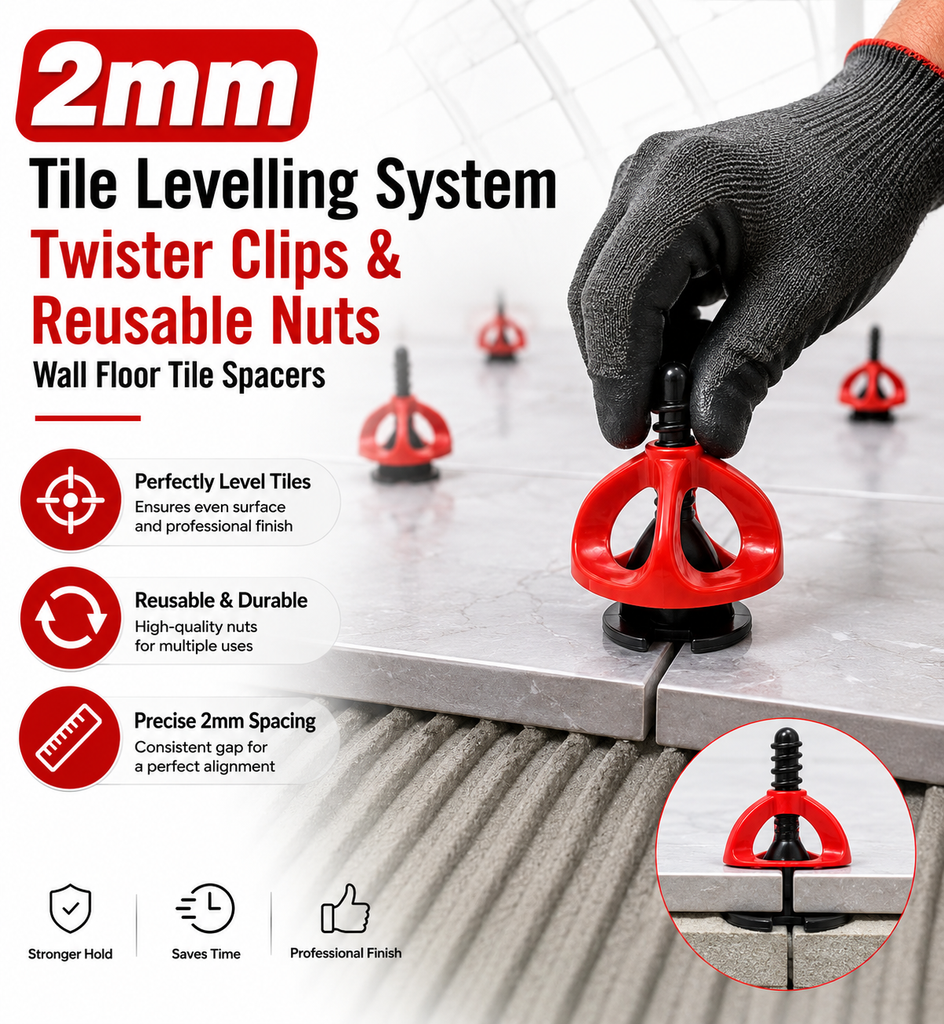
The Tile Spacer Levelling System 2mm Floor Twister Spacer Screws + Red Twister Nuts is designed for tile installation where a 2mm joint is required.
The product combines spacers with twister screws and red twister nuts. Together, these parts help hold tiles in position during the setting stage.
This type of system can be useful for floor and wall tiling projects where consistent joints and tile height are important.
Before use, check the product details and installation instructions. The tiles, adhesive and base should also be suitable for the chosen method.
How Is a Tile Leveling System Made?
How is a tile leveling system made? The parts are commonly produced from durable materials designed for use during tile installation.
Plastic components can be moulded into precise shapes. Screws and other parts are formed to provide the required fit and pressure.
The parts must work together smoothly. A well-designed system should be simple to place, adjust and remove.
Manufacturing accuracy is important because small differences in the parts can affect how they work.
The finished system is then packed into sets or packs for use on tiling projects.
What Are the Main Benefits?
There are several benefits to using a tile leveling system.
Helps Create an Even Finish
The system can help reduce height differences between nearby tiles.
Supports Consistent Tile Gaps
Spacers help maintain a regular grout joint across the installation.
Useful for Large Tiles
Large tiles can show uneven joints more clearly. A leveling system can make positioning easier.
Saves Time During Installation
Once users understand the process, the system can make tile alignment more straightforward.
Helps DIY Users
A suitable system can give homeowners extra support when completing a tiling project.
What Other Tiling Tools May Be Needed?
A tile leveling system works best when used with the right tools and materials.
You may also need a tile cutter, notched trowel, rubber mallet, measuring tools and suitable adhesive.
A good adhesive is important because the tiles need a stable bed.
A spacer helps create the planned joint width. Meanwhile, a clean surface gives the adhesive a suitable base.
The tile edge should also be checked before installation. Damaged or uneven tiles may affect the finished appearance.
How Should You Use the System?
Start by preparing the floor or wall. It should be clean, stable and suitable for tiling.
Apply the adhesive according to its instructions. Then place the first tile carefully.
Continue with the next tile and add the required spacer. Fit the leveling component as instructed.
Tighten the system carefully. Avoid forcing the tiles into position.
Check the tile line regularly. Small corrections are easier to make before the adhesive sets.
Once the adhesive has cured for the required period, remove the leveling parts as directed.
Is a Tile Leveling System Suitable for Every Tile?
Not always. Tile size, thickness, shape and installation method can all affect suitability.
Some systems are designed for particular tile thicknesses or joint sizes. Therefore, check the product specifications before buying.
The chosen system should also be compatible with the planned tile installation.
If you are unsure, ask a professional tiler for advice.
Why Are 2mm Tile Spacers Popular?
A 2mm joint provides a narrow and neat appearance when the tile and installation method allow it.
The exact grout width should depend on the tile manufacturer’s guidance and the project requirements.
The 2mm system featured here is designed around this joint size. It can therefore be useful for projects where a narrow, consistent gap is wanted.
Can You Buy a Tile Leveling System Online?
Yes. You can shop online for different tiling tools and compare sizes, designs and pack options.
Before you buy, check the tile thickness, joint width and system specifications.
It is also useful to calculate how many spacers and leveling parts your project may need.
Buying the correct product at the start can help prevent delays during installation.
Frequently Asked Questions
What does a tile leveling system do?
A tile leveling system helps reduce height differences between nearby tiles while the adhesive sets. It can also help maintain consistent tile joints.
Are tile spacers and leveling spacers the same?
Not exactly. Traditional tile spacers mainly maintain the grout gap. Leveling spacers can also help reduce height differences between tiles.
Can beginners use a leveling system?
Yes, many systems are designed to be simple to use. However, beginners should read the instructions carefully before starting.
Is a 2mm system suitable for all tiles?
No. The correct joint depends on the tile and installation requirements. Always check the product specifications first.
Can the system replace proper tile preparation?
No. A tile leveling system supports good installation, but it cannot fix an unstable or poorly prepared base.
When should the leveling parts be removed?
They should be removed according to the product instructions and adhesive setting time. Do not remove them too early.
Can I use the system on walls?
Some leveling systems can be used for wall tiles as well as floors. Check the specific product before use.
Conclusion
A tile leveling system can make tile installation easier and more controlled. It helps reduce height differences, supports consistent joints and can be useful for large-format tiles.
The 2mm Floor Twister Spacer Screws and Red Twister Nuts provide a practical option for projects that require a narrow joint.
Good preparation still matters. Choose the correct adhesive, prepare the base properly and follow the product instructions.
With the right tools and a careful approach, tiling can become a simpler and more manageable job.
Knauf Loft Roll 44 – Combi Cut: What Is It and How Does It Help Loft Insulation?
A warm home starts with a well-insulated roof space. Heat can escape through the loft insulation when the roof area does not have enough protection. As a result, rooms may feel colder, and more energy may be needed to keep them warm.
This is where INSULATION can make a useful difference. Loft products are designed to slow down heat loss and help maintain a more comfortable indoor space.
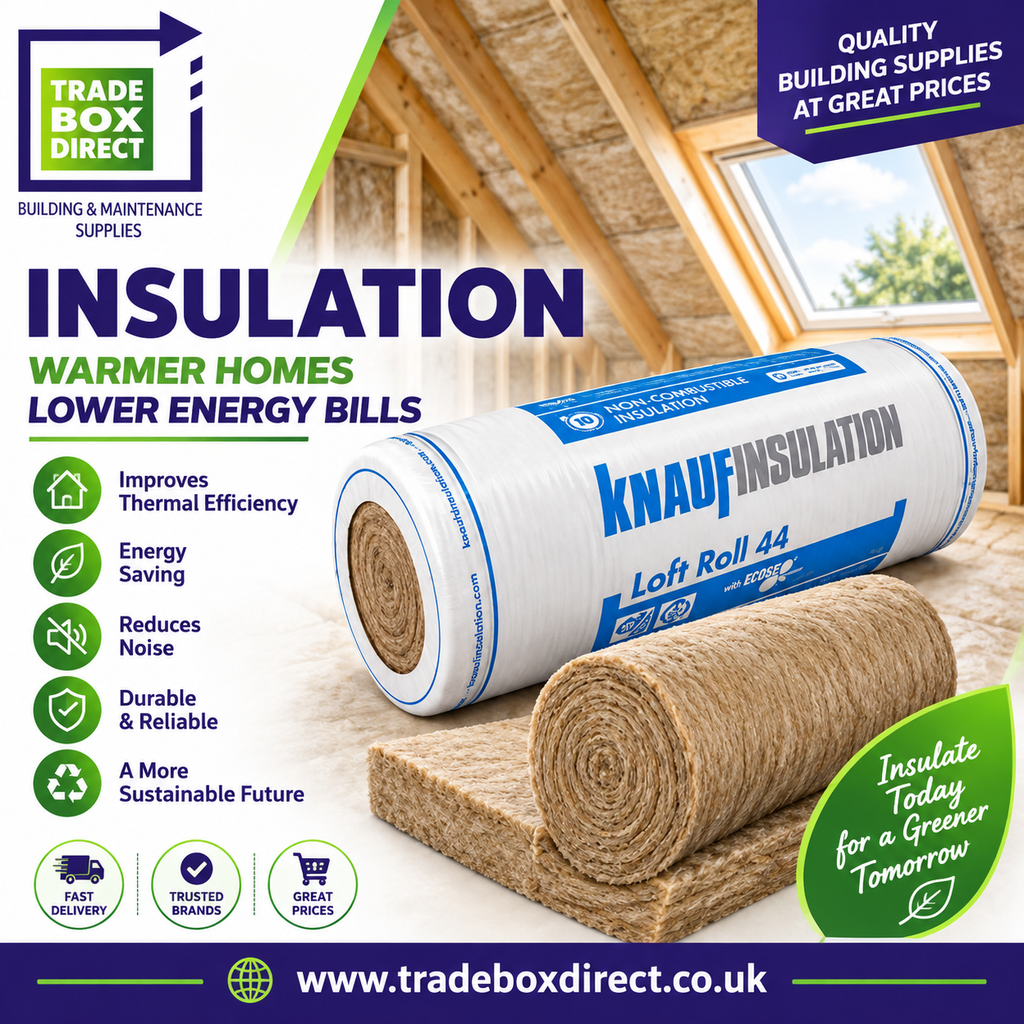
One product worth considering is Knauf Loft Roll 44 – Combi Cut. It is made for loft applications and can be used to improve thermal performance when installed correctly.
But what is this product? How does it work? What are its benefits? Also, how should you choose and install loft roll?
This guide explains the key points in simple language.
What Is Knauf Loft Roll 44 – Combi Cut?
INSULATION products are used to reduce heat transfer through parts of a building. Loft roll is one common option for roof spaces.
Knauf Loft Roll 44 – Combi Cut is a loft roll product designed for use in suitable roof and loft areas.
The roll format makes it practical for covering larger sections of a loft. It can be cut to fit around areas that need different lengths or shapes.
Before installation, always check the manufacturer’s guidance. The product should be used in a suitable location and installed correctly.
Why Is Loft Insulation Important?
Heat naturally moves from warmer areas towards colder areas. During cold weather, heat from rooms below can move upwards into the loft.
Good INSULATION helps slow this process.
A well-insulated loft can help a home retain more of its indoor heat. Therefore, the heating system may not need to work as hard to maintain a comfortable room.
This can also make rooms feel more comfortable during colder months.
However, insulation is only one part of an energy-efficient home. Windows, doors, walls, heating systems and ventilation can also affect overall performance.
How Does Knauf Loft Roll 44 Work?
The product works by creating a layer that slows heat transfer through the loft area.
When installed across the correct part of the loft, the material helps reduce the amount of heat moving through the roof space.
Its roll format can make it easier to cover long and wide areas. The combi-cut design can also make cutting and handling more convenient for suitable applications.
Good fitting is important. Gaps or poorly covered areas can reduce the overall benefit of the installation.
What Are the Benefits of Loft Roll?
There are several reasons to consider INSULATION for a loft.
Helps Reduce Heat Loss
A suitable loft layer can help slow heat escaping from rooms below.
Supports Home Comfort
Better heat retention can help rooms stay warmer for longer.
Useful for Large Areas
A loft roll can cover broad sections of a roof space. This can make it practical for larger projects.
Easy to Cut
The combi-cut format can make it easier to adjust the material for different areas.
Suitable for Loft Projects
The product is designed for loft applications. However, users should always confirm that the product suits their specific project.
How Is Loft Roll Made?
How is loft roll made? Manufacturing starts with materials selected for thermal performance and safe building use.
The material is processed and formed into a consistent insulation product. It is then made into rolls for easier transport, storage and installation.
Quality checks are carried out during production to help maintain consistent dimensions and performance.
The final product is packaged so it can be delivered to building suppliers, installers and customers.
Always read the product information before installation. It will provide the details needed for safe and suitable use.
Can Knauf Loft Roll 44 Be Used in Any Loft?
Not every loft is the same.
Some roof spaces have different layouts, storage areas, pipes, cables or other features. Therefore, the product needs to be suitable for the planned installation.
INSULATION should also be installed without blocking areas that need ventilation.
For example, roof spaces may require clear ventilation routes. Blocking these areas can cause problems.
If you are unsure about the layout, ask a qualified installer for advice before starting work.
Why Is Airflow Important in a Loft?
A loft needs suitable ventilation as well as thermal protection.
Good airflow helps move air through the roof space. This can be important where the building design requires ventilation.
Insulation should not simply be placed wherever there is empty space. The installation must follow the correct method for the roof and building.
Keeping required ventilation paths clear can help protect the roof structure.
Can Loft Insulation Help With Moisture?
Loft insulation and moisture control are related, but they are not the same thing.
Moisture can enter a building in several ways. Everyday activities can also add water vapour to indoor air.
A properly designed roof space needs suitable ventilation and moisture management.
Insulation should not be treated as a cure for damp problems. If a loft already has signs of damp, leaks or mould, the cause should be investigated first.
What About Condensation?
Condensation happens when water vapour turns into liquid after touching a colder surface.
A cold loft space can be affected if warm, moist air reaches areas where it should not.
Correct installation, ventilation and building design all matter. Therefore, do not cover ventilation paths or roof components without checking the correct installation method.
How Do You Install Knauf Loft Roll 44?
Installation should follow the manufacturer’s instructions.
First, prepare the loft area. Remove unwanted items and make sure the working space is safe.
Next, measure the area that needs to be covered. Cut the roll carefully where required.
Place the material evenly across the required area. Avoid leaving large gaps between sections.
Do not compress the material unnecessarily. Follow the recommended installation depth and method.
Electrical cables, light fittings and other services also need attention. Some areas may require specialist advice.
How Can You Buy the Right Product?
When you shop for INSULATION, start by looking at the size and type of area you need to cover.
Measure the loft before shopping. This can help you work out how much material you may need.
Next, check the product details. Look at the intended application, dimensions and installation guidance.
You can shop for Knauf Loft Roll 44 – Combi Cut and review the product information before you buy.
For a larger project, consider speaking with a professional installer. They can help you understand the requirements of the loft.
Is Loft Roll Good for Energy Saving?
A suitable INSULATION layer can help reduce heat loss through a loft. This may support lower heating demand, although actual energy savings depend on the building.
Factors such as home size, heating use, existing insulation and weather can all affect results.
Therefore, it is better to view loft insulation as one part of a wider energy-saving plan.
Simple improvements, such as reducing draughts and using heating controls correctly, can also support energy efficiency.
Frequently Asked Questions
What is Knauf Loft Roll 44 – Combi Cut?
It is a loft roll product designed for suitable roof-space applications. Its roll format makes it useful for covering larger areas.
What does loft insulation do?
It helps slow heat transfer between the rooms below and the loft space. This can help the home retain heat.
Can I install loft roll myself?
Some homeowners may install suitable products themselves. However, the work must follow the manufacturer’s instructions and relevant building requirements.
Does loft insulation stop condensation?
Not by itself. Condensation can have several causes. Suitable ventilation and correct building design are also important.
Should loft ventilation be blocked?
No. Required ventilation paths should remain clear. Always follow the correct installation guidance.
How much loft roll do I need?
The amount depends on the size of the loft and the required installation depth. Measure the area before buying.
Can I put items over loft insulation?
Storage needs to be planned carefully. Heavy items should not compress insulation unless the system is designed for that purpose.
Is Knauf Loft Roll suitable for every roof?
Not necessarily. Check the product guidance and the construction of your roof before installation.
Conclusion
INSULATION is an important part of an energy-efficient home. A suitable loft product can help reduce heat loss and improve indoor comfort.
Knauf Loft Roll 44 – Combi Cut offers a practical roll format for suitable loft applications. It can be cut to fit different areas and used to create a consistent layer when installed correctly.
Good results depend on more than the product alone. Correct fitting, suitable ventilation and proper roof-space planning are also important.
Before you buy, measure the loft and check the product information. If the project is complex, speak with a qualified installer.
With the right approach, loft INSULATION can form an important part of a warmer and more efficient home.
Upvc Trickle Vents: How Do They Improve Home Ventilation?
Fresh air is important in every home. Good VENTILATION helps move stale air out and fresh air in. However, opening windows all day is not always practical. This is where small window vents can help.
Upvc trickle vents provide a simple way to allow a steady flow of fresh air through windows. They can be useful in homes, flats, offices and other buildings. Unlike a fully open window, a trickle vent can provide background air movement without leaving the whole window open.
But how do these vents work? Why are they useful? How should you choose the right type?
This guide explains the main points in simple UK English.
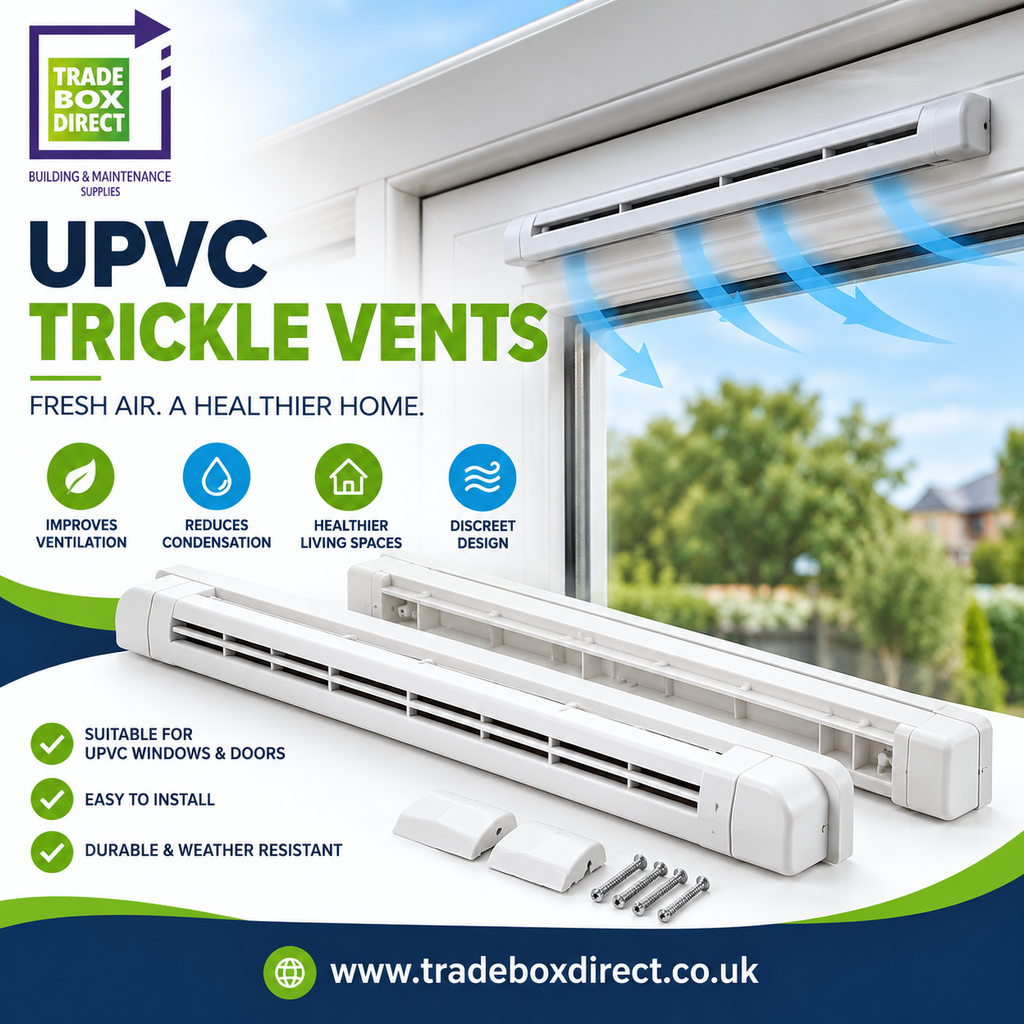
What Are Upvc Trickle Vents?
Upvc trickle vents are small ventilation openings fitted to UPVC windows. They allow fresh outdoor air to enter the room at a controlled rate.
The design is usually compact. Therefore, it can fit neatly along the window frame. Many models can also be opened or closed when needed.
You can explore the upvc trickle vents category to find suitable products for different window and door applications.
These vents are often used as part of a wider home ventilation plan. They can help provide background fresh air while windows remain closed.
How Do Upvc Trickle Vents Work?
The idea is simple. A small opening allows outdoor air to enter the room.
As air moves through the vent, stale indoor air can be replaced gradually. This helps create a more comfortable indoor environment.
Good airflow is important because rooms can become stuffy when there is not enough fresh air.
Unlike a large open window, a trickle vent provides a smaller opening. As a result, it can offer background ventilation without fully opening the window.
Why Is Ventilation Important?
VENTILATION helps manage the air inside a building. Everyday activities such as cooking, washing and drying clothes can add water vapour to indoor air.
Without enough fresh air, this vapour may remain in the room for longer. Over time, it can contribute to damp conditions.
Understanding moisture is therefore useful when planning home ventilation.
Fresh air can also help reduce stale smells and improve the general feel of a room.
What Are the Benefits of Upvc Trickle Vents?
There are several reasons why upvc trickle vents are popular.
Fresh Background Air
The main benefit is a steady supply of outdoor air. This can help reduce stuffiness in rooms.
Easy to Use
Most vents have a simple opening mechanism. Users can adjust them when required.
Compact Design
Trickle vents are small. Therefore, they can fit neatly into many UPVC window systems.
Useful All Year
A vent can provide background ventilation during different seasons. However, users should adjust the opening according to their needs and local conditions.
Helps Support Home Air Quality
Regular fresh air can make rooms feel more comfortable. It can also support a wider home ventilation system.
Where Can Upvc Trickle Vents Be Used?
Upvc trickle vents are commonly associated with windows. They may also be available for certain door systems.
Bedrooms can benefit from background fresh air, especially when windows remain closed at night.
Living rooms and home offices may also need regular air changes. Kitchens and bathrooms can have higher ventilation needs because of cooking, washing and other activities.
The correct solution depends on the building and its existing ventilation system.
Can Trickle Vents Help With Condensation?
Yes, suitable background ventilation can help manage indoor humidity. However, a trickle vent should not be treated as the only solution for every condensation problem.
Condensation can occur when warm, moist air meets a colder surface.
Better air movement may help reduce the amount of damp air that remains inside a room. Still, insulation, heating and other ventilation measures can also matter.
If condensation is severe or persistent, it is worth finding the underlying cause.
Are Upvc Trickle Vents Easy to Install?
Installation depends on the window design and the type of vent.
Some products are designed for straightforward fitting. However, cutting or modifying a window frame needs care.
A professional installer can check the window first and confirm the correct position. This is especially useful when replacing existing windows or working on a large project.
Before installation, always check the manufacturer’s instructions.
How Do You Choose the Right Vent?
Choosing the right VENTILATION product starts with the window or door.
First, identify the material. UPVC windows need a suitable vent designed for that application.
Next, check the required size. Measure the available space before ordering.
It is also useful to consider the room. A bedroom may have different needs from a kitchen or bathroom.
Finally, check the product specifications. The correct product should match the installation requirements.
Are Plastic Window Vents a Good Option?
Plastic window vents are widely used because they are light and practical.
They can be available in different shapes, sizes and colours. This makes it easier to find a design that suits the window.
A good quality product should also be easy to operate. Regular cleaning can help keep the vent opening clear.
However, the product must be suitable for the specific window system before installation.
How Should Upvc Trickle Vents Be Maintained?
Regular care is simple.
Keep the vent opening free from dust and dirt. A soft cloth can be used to clean accessible areas.
Do not block the opening with tape, furniture or other objects. Doing so can reduce its purpose.
Check the vent from time to time. If it becomes damaged or difficult to operate, consider replacing it.
Good maintenance helps keep the ventilation opening useful for longer.
Can Upvc Trickle Vents Replace a Full Home Ventilation System?
Not always.
VENTILATION needs vary from one building to another. A trickle vent can provide background air movement, but it may not replace a mechanical ventilation system where one is required.
Large homes, new buildings and properties with specific ventilation requirements may need a more complete solution.
For this reason, consider the whole building rather than relying on one product.
How Do You Shop for Upvc Trickle Vents?
Shopping becomes easier when you know your window type and required size.
Start by checking the existing window. Measure the available space and note the material.
Next, compare the product specifications. Look at the dimensions, design and intended application.
If you need to buy new vents for several windows, check the required quantity before ordering.
You can browse the upvc trickle vents range and compare suitable options for your project.
Why Choose the Right Ventilation Product?
A suitable product can make a big difference to how well a room receives fresh air.
VENTILATION products should always be selected according to the building and installation requirements.
A correctly chosen trickle vent can provide useful background air movement. It can also work alongside other ventilation methods.
However, every property is different. Therefore, check the requirements before making changes to windows or doors.
Frequently Asked Questions
What are upvc trickle vents?
They are small vents fitted to UPVC windows. They allow a controlled amount of fresh outdoor air into a room.
Do trickle vents need to stay open?
They are designed to provide background ventilation, but the correct use depends on the product and the needs of the room.
Can trickle vents reduce condensation?
They may help by improving background air movement. However, persistent condensation can have several causes and may need further investigation.
Are trickle vents suitable for bedrooms?
They can be useful in bedrooms because they allow background fresh air while the main window remains closed.
Can I fit a trickle vent myself?
Some installations may be straightforward, but modifying a window frame requires care. Professional installation may be safer for many projects.
How often should I clean a trickle vent?
Check it regularly and clean away visible dust or dirt. The opening should remain clear.
Do trickle vents replace mechanical ventilation?
Not necessarily. They provide background ventilation, while some buildings may require a mechanical system.
Conclusion
Upvc trickle vents provide a simple way to introduce fresh outdoor air into rooms through UPVC windows. Their compact design makes them useful for homes, offices and other buildings.
Good VENTILATION can help reduce stuffiness and support a healthier indoor environment. Trickle vents can form part of that solution by providing background air movement.
Before you buy, check the window type, measurements and product specifications. Also, consider the wider ventilation needs of the property.
With the right product and correct installation, a small window vent can become a useful part of a home’s fresh-air strategy.
Thermostats: How Do Programmable and Wireless Heating Controls Work?
Choosing the right heating system can make a home more comfortable. It can also help reduce wasted energy. Modern THERMOSTATS give you better control over room temperature. They can turn heating on or off when needed.
There are many types available today. For example, you can choose a programmable thermostat, wireless thermostat, RF thermostat or smart thermostat. Each type has different features.
So, how do these devices work? What makes one model different from another? Most importantly, how can you choose the right one for your heating system?
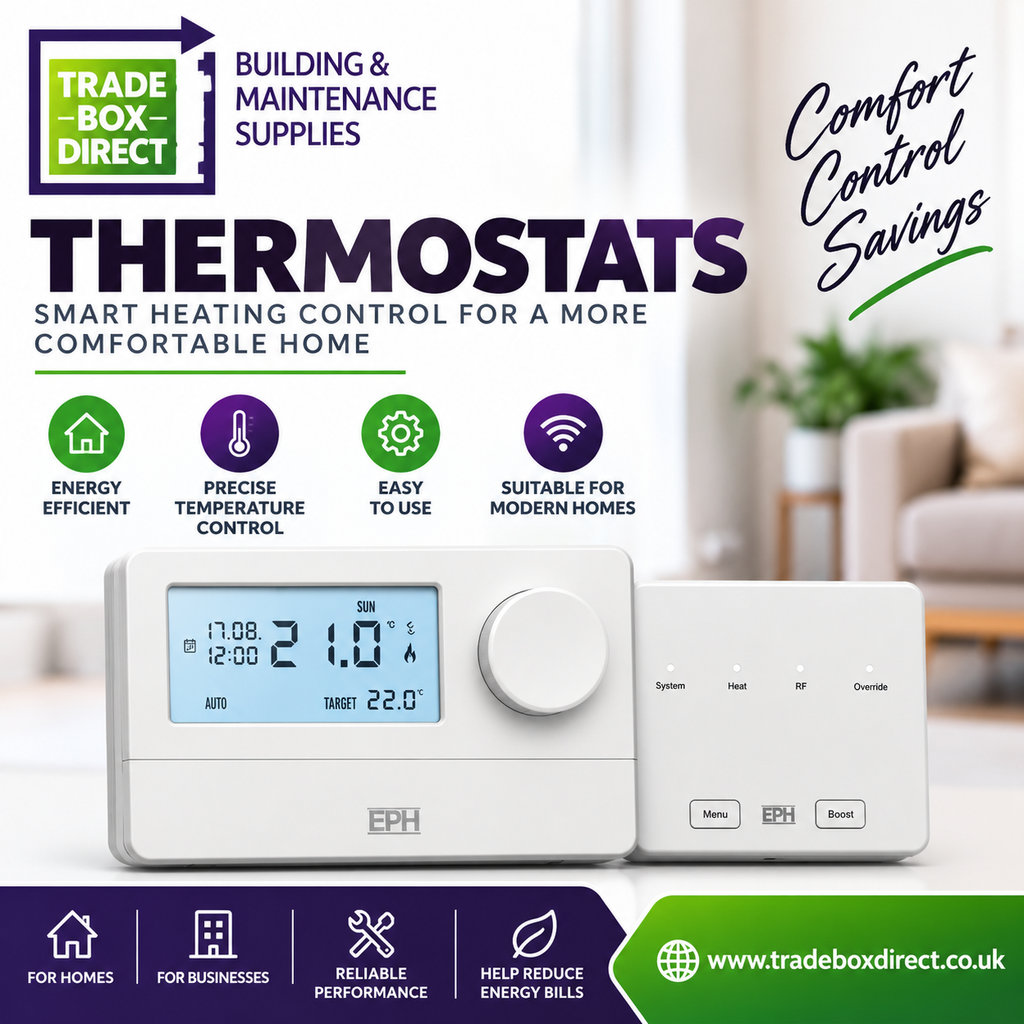
What Are Thermostats?
THERMOSTATS are devices that help manage heating. They measure the temperature in a room. Then, they tell the heating system when to run.
For example, you may set the room to 20°C. When the room gets colder, the thermostat can ask the heating system to turn on. Once the room reaches the set level, it can stop the heating.
This simple process helps maintain a steady room temperature. It can also prevent the heating from running for too long.
How Does a Thermostat Work?
A thermostat uses a sensor to detect room temperature. The sensor sends information to the heating system. The system then responds to the set temperature.
For instance, imagine that you set your heating to 21°C. If the room falls below this level, the thermostat can call for heat. Once the room reaches 21°C, it can stop the call.
As a result, the system does not need to run all the time. This can help improve comfort and reduce wasted energy.
Modern THERMOSTATS can also offer extra features. These may include timers, wireless connections and smart controls.
Programmable Thermostat
A programmable thermostat lets you set heating times in advance. This makes it useful for busy homes.
You could set the heating to start before you wake up. Later, it can turn down when you leave for work. The system can then warm the home again before you return.
This approach can reduce unnecessary heating. It also means you do not need to change the settings each day.
Many programmable models let you create different settings for weekdays and weekends. Therefore, you can match the heating to your daily routine.
Wireless Thermostat
A wireless thermostat does not always need a wired connection between the thermostat and the boiler.
Instead, it can send signals to a receiver. This gives you more freedom when choosing where to place the thermostat.
A wireless thermostat can work well in homes where running new cables would be difficult. You can also move the thermostat to a more suitable position when needed.
However, correct placement still matters. Keep the unit away from strong heat sources, direct sunlight and draughts. This helps the sensor give a more accurate reading.
RF Thermostat
An RF thermostat uses radio signals to communicate with a receiver. RF means radio frequency.
This design allows the thermostat to communicate without a fixed cable between both parts. Therefore, it can offer flexible installation.
A programmable RF thermostat combines wireless communication with scheduled heating. You can set different times for heating to run. The thermostat then sends the required signal to the receiver.
For many homes, this can make heating control simple and convenient.
Smart Thermostat
Smart thermostats take heating control a step further. They can connect to a home network and may work with a smartphone app.
Depending on the model, you may be able to change the heating from your phone. Some systems can also learn from your routine.
For example, you could lower the heating while you are away. Then, you could raise it before you arrive home.
Smart models can also provide heating information. This may help you understand how your system uses energy.
Heating Controls
Good heating controls can make a major difference to comfort. They help you decide when the heating should run and when it should stop.
Modern THERMOSTATS can form part of a wider heating control system. This may include timers, programmers, receivers and smart devices.
Together, these parts can help manage your heating in a simple way.
The right control method depends on your boiler, heating system and daily routine. Therefore, always check compatibility before installation.
How Is a Wireless Thermostat Made?
A wireless thermostat contains several small electronic parts. These include a temperature sensor, control board, display and wireless communication parts.
The sensor checks the room temperature. Next, the control board compares the reading with your chosen setting.
If the room needs heat, the unit sends a signal to the receiver. The receiver then communicates with the heating system.
Battery power is common in wireless models. Because of this, you should check the batteries from time to time.
EPH CP4D OpenTherm Programmable RF Thermostat
The EPH CP4D OpenTherm Programmable RF Thermostat is one option for homes that need flexible heating control.
This model combines programmable settings with RF communication. It also supports OpenTherm systems.
You can find the EPH CP4D OpenTherm Programmable RF Thermostat when looking for a suitable heating control product.
OpenTherm can allow compatible boilers and thermostats to communicate in more detail. This can help the system adjust heating output instead of using only a simple on-and-off signal.
Always check the boiler requirements before choosing an OpenTherm thermostat.
What Is an OpenTherm Thermostat?
An OpenTherm thermostat communicates with a compatible boiler using the OpenTherm system.
Unlike a basic thermostat, it can send more detailed heating information. The boiler can then adjust its output based on demand.
This can help provide smoother heating control. It may also improve comfort because the boiler does not always need to work at full output.
However, both the boiler and thermostat must support OpenTherm. Check the product information before you buy.
Benefits of Wireless Heating Thermostats
Wireless heating thermostats offer several useful benefits.
First, installation can be more flexible. You do not always need to run a new cable to the thermostat.
Second, the thermostat can sit in a suitable room position. This can help improve temperature readings.
Third, programmable models can follow your daily routine. As a result, the heating can run only when needed.
Finally, RF models can provide a reliable connection between the thermostat and receiver when installed correctly.
These benefits make wireless heating controls a popular option for many homes.
How Should You Choose THERMOSTATS?
Start by checking your boiler and heating system. Not every thermostat works with every boiler.
Next, think about how you use your heating. A simple model may suit a small home. A programmable or smart model may suit a busy household.
You should also consider installation. Wireless models can offer more flexibility. Meanwhile, wired models may suit systems that already have suitable wiring.
Battery life is another useful point to check. A clear display can also make daily use easier.
Finally, check the available features. Look at timers, RF communication, OpenTherm support and smart controls before making your choice.
Can You Buy THERMOSTATS Online?
Yes. You can shop online for many types of heating controls.
Online shopping makes it easy to compare features and specifications. You can also check whether a model suits your boiler.
Before you buy, read the product details carefully. Check the connection type, compatibility and required power.
If you are unsure, ask a qualified heating professional for advice.
Why Are Modern THERMOSTATS Useful?
Modern heating controls can make everyday heating easier. They can also help reduce heating waste.
A programmable model can follow your schedule. Wireless units offer flexible placement. Smart options can give you remote access.
For that reason, THERMOSTATS are an important part of many modern heating systems.
The key is to choose a model that matches your boiler and your needs.
FAQs
What does a thermostat do?
It checks room temperature and tells the heating system when to heat or stop heating.
Are wireless thermostats reliable?
Yes. A good wireless model can provide reliable communication when installed in the correct position.
What is an RF thermostat?
An RF thermostat uses radio signals to communicate with a receiver. This removes the need for a direct cable between the two units.
Can I use a smart thermostat with any boiler?
Not always. Compatibility depends on the boiler and thermostat. Always check the product specifications first.
What is an OpenTherm thermostat?
It is a thermostat that can communicate with a compatible OpenTherm boiler. This allows more detailed heating control.
Are programmable thermostats useful?
Yes. They let you set heating times in advance. This can help match heating to your daily routine.
Conclusion
The right heating control can make a home more comfortable and easier to manage. THERMOSTATS can control room temperature and reduce unnecessary heating.
There are many options to consider. Programmable models suit scheduled heating. Wireless and RF models offer flexible installation. Smart models provide extra features and remote access.
Before choosing a product, check your boiler, heating system and required features. With the right model, you can enjoy simple and practical heating control.