






How Do Push-Fit Plastic Fittings Work? A Complete Guide
Introduction
Push-fit connections have changed the way many plumbing jobs are done. They are quick, simple, and easy to use. Unlike some older connections, they do not always need soldering, glue, or special tools. Instead, the pipe is pushed into the fitting until it locks in place.
But how does this simple connection stay secure and prevent leaks? What are push-fit fittings made of? How should you install them? Also, when should you use them?
This guide explains how plastic fittings work in simple terms. It also covers pipe inserts, plastic pipe fittings, plumbing fittings, and the important role of a plastic pipe insert.
What Are Push-Fit Fittings?
Push-fit fittings are connectors designed to join pipes without complex joining methods. They are often used in domestic plumbing, heating systems, water lines, and other pipework.
The basic idea is very simple. You push the pipe into the fitting. Inside the fitting, special parts grip the pipe and create a seal. This creates a strong connection that can carry water through the pipe.
There are many sizes and shapes available. For example, you can find straight connectors, elbows, tees, reducers, and other plumbing fittings.
The correct fitting depends on the pipe size and the job. Therefore, always check the pipe diameter before buying a fitting.
How Do Push-Fit Plastic Fittings Work?
The working process is easier to understand when you look at the parts inside the fitting.
A typical push-fit connection has several key parts:
- A fitting body
- An internal sealing ring
- A gripping ring or locking mechanism
- A pipe stop
- Sometimes a removable release collar
When the pipe is pushed into the fitting, it passes through the gripping section and reaches the pipe stop.
The sealing ring then sits around the outside of the pipe. It creates a tight seal. At the same time, the gripping ring helps hold the pipe in place.
As a result, water can flow through the pipe without easily escaping from the joint.
This design makes plastic fittings useful for many repair and installation jobs where speed and simplicity matter.
What Are Push-Fit Fittings Made Of?
Push-fit fittings can be made from different materials. Plastic is one of the most common choices for many plumbing applications.
The body may be made from strong engineered plastic. This material is light but can still provide good strength for suitable pipe systems.
Some designs also use metal parts inside the fitting. These parts can help grip the pipe and improve connection strength.
The sealing ring is usually made from a flexible material. Its job is to create a watertight seal around the pipe.
So, although the fitting may look like one simple piece, it can contain several parts that work together.
What Is the Role of Pipe Inserts?
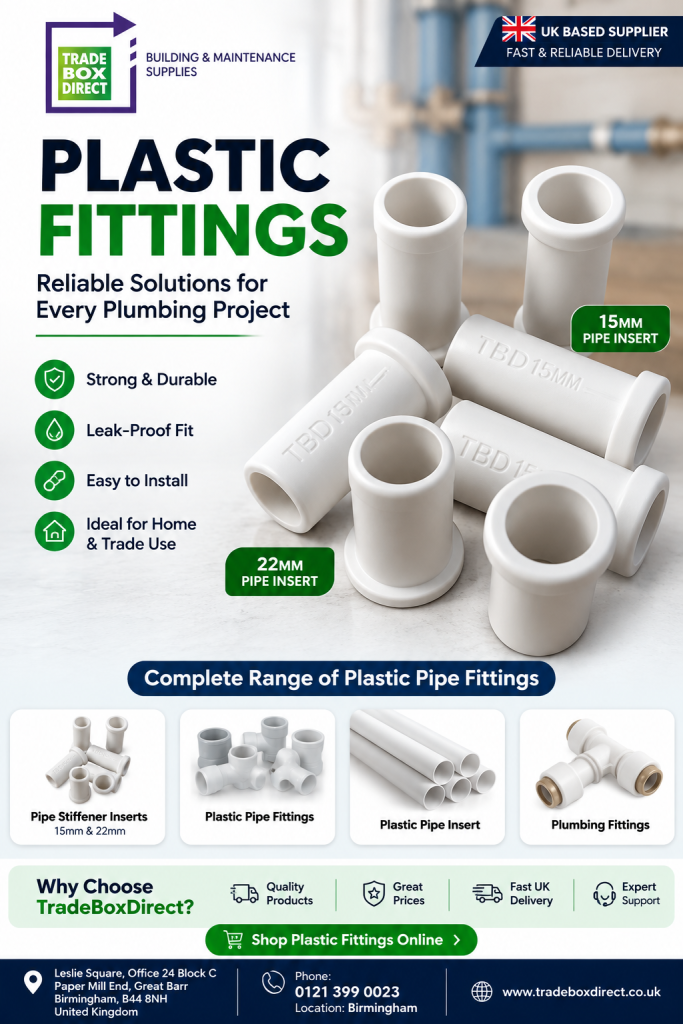
Pipe inserts are small components that fit inside certain types of flexible or semi-flexible plastic pipe.
They are also called pipe stiffeners or support inserts in some applications.
Their main purpose is to support the inside wall of the pipe. This can help the pipe keep its shape when it enters a push-fit connection.
Without suitable support, a soft pipe may deform when it is pushed into the fitting. That can affect the seal.
Therefore, using the correct pipe insert can be an important part of making a secure connection.
The insert should match the pipe size and the fitting system. Never assume that one insert will fit every pipe.
What Is a Plastic Pipe Insert?
A plastic pipe insert is a small piece designed to go inside a plastic pipe before the pipe is connected to a fitting.
Its purpose is simple. It supports the pipe from the inside.
When the pipe enters the fitting, the insert can help prevent the pipe wall from being pushed inward. This can make the connection more stable.
However, the need for an insert depends on the pipe type and the fitting manufacturer’s instructions.
Some systems are designed to work without inserts. Others require them for safe and reliable connections.
So, always check the product instructions before installation.
What Is a 15mm Pipe Insert?
A 15mm pipe insert is designed for pipework with a 15mm internal connection size, depending on the pipe system and manufacturer specifications.
It is commonly used with suitable 15mm plastic or multilayer pipe systems where internal support is needed.
For example, if you are connecting a compatible flexible 15mm pipe to a push-fit connector, the correct insert can help support the pipe.
It is important to check the exact pipe specification. A fitting or insert that looks similar may not be suitable.
Do not choose an insert only because the number matches. Check the pipe material, wall thickness, and manufacturer’s instructions too.
How Do You Install Push-Fit Fittings?
Installing push-fit fittings is usually straightforward. However, careful preparation is still important.
Step 1: Measure the Pipe
First, check the pipe size. Common sizes include 15mm and 22mm in many UK plumbing systems.
Make sure the fitting matches the pipe.
Step 2: Cut the Pipe
Cut the pipe cleanly using a suitable pipe cutter.
The end should be straight. Avoid leaving a rough or damaged edge.
Step 3: Prepare the Pipe
Remove dirt and debris from the pipe.
Check the end for scratches, cracks, or deep marks. A damaged pipe may not create a reliable seal.
Step 4: Add the Pipe Insert
If the pipe system requires an insert, place the correct pipe insert inside the pipe.
Push it fully into position.
Step 5: Mark the Insertion Depth
Some manufacturers recommend marking the pipe before inserting it. This helps you see whether the pipe has gone far enough into the fitting.
Step 6: Push the Pipe Into the Fitting
Push the pipe firmly into the fitting.
Do not twist it aggressively or force it at an angle. The pipe should enter straight.
Step 7: Check the Connection
Once connected, gently pull the pipe to check that it is locked.
Then inspect the joint carefully.
Step 8: Test the System
Turn the water back on slowly.
Check the connection for leaks before using the system normally.
Why Is Correct Pipe Preparation Important?
A push-fit connection depends on a good seal. Therefore, pipe preparation is very important.
A rough or uneven pipe end can damage the sealing ring. Dirt can also interfere with the connection.
Likewise, a pipe that has not been pushed far enough may not lock correctly.
For this reason, take a little extra time to prepare the pipe.
A clean, straight, and undamaged pipe can make the installation much easier.
What Are the Main Advantages?
Push-fit systems offer several useful benefits.
Fast Installation
The biggest benefit is speed. You can often make a connection by simply pushing the pipe into the fitting.
This can save time during repairs and new installations.
No Soldering
Many push-fit systems do not need soldering. This means you do not need a flame or soldering equipment for the connection.
That can make some jobs easier, especially in tight spaces.
Easy Repairs
Push-fit connections can be useful when replacing a damaged section of pipe.
For example, a connector can join a new section of compatible pipe to an existing system.
Easy Access
Some fittings can be released using the manufacturer’s recommended method. This can make future changes easier.
However, always follow the instructions for the specific fitting.
Lightweight Design
Many plastic pipe fittings are light and easy to carry. This can make them convenient for both professionals and DIY users.
Clean Installation
Because many push-fit systems do not require heat or glue, installation can be cleaner.
There is also less preparation compared with some traditional joining methods.
Are Push-Fit Fittings Reliable?
When correctly selected and installed, push-fit connections can provide a reliable joint.
However, reliability depends on several factors.
The fitting must be suitable for the pipe. The pipe must be cut correctly. The sealing area must be clean. The pipe must also be inserted to the correct depth.
Using the wrong product can lead to poor results.
Therefore, quality matters. When buying plastic fittings, choose products that are suitable for your pipe system and intended application.
What Types of Plastic Pipe Fittings Are Available?
There are many designs available for different plumbing needs.
Straight Connectors
These join two pipes in a straight line.
They are useful when extending or repairing a pipe run.
Elbow Fittings
Elbows change the direction of the pipe.
Common angles include 90 degrees and 45 degrees.
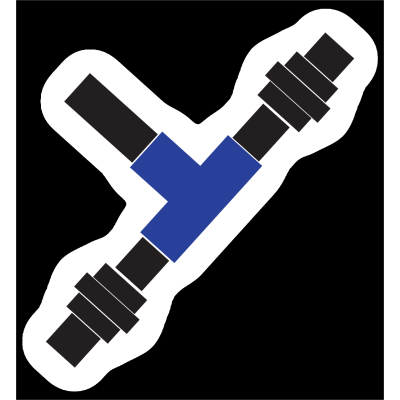
Tee Fittings
A tee allows one pipe run to split into two directions.
They are useful for creating branches in a pipe system.
Reducers
Reducers connect pipes of different sizes.
For example, they can be used where a larger pipe needs to connect to a smaller pipe.
End Stops
End stops close the end of a pipe.
They can be useful during repairs or when a pipe run is no longer required.
Choosing the correct shape and size makes installation easier and helps create a neat pipe system.
Push-Fit vs Traditional Plumbing Connections
Traditional plumbing methods can include soldering, threading, compression connections, or other joining techniques.
Push-fit systems offer a different approach.
They are often faster to install and require fewer tools. This can be useful for simple repair work.
However, traditional methods still have important uses. The best connection depends on the pipe material, location, pressure, temperature, and system requirements.
Therefore, push-fit should not be viewed as the answer for every plumbing job.
Instead, consider the application before choosing the connection type.
Where Can You Use Push-Fit Fittings?
Suitable applications depend on the product. However, push-fit systems can be found in many domestic plumbing and heating situations.
They may be used for:
- Cold water pipework
- Hot water systems where approved
- Heating systems where approved
- Bathroom plumbing
- Kitchen plumbing
- Pipe repairs
- Pipe extensions
- Temporary modifications
- Domestic water distribution
Always check the manufacturer’s specifications before using a fitting for hot water, heating, drinking water, or other specialist applications.
How Do You Remove a Push-Fit Connection?
Many push-fit systems have a release mechanism.
The exact method depends on the design.
Some fittings use a release collar. You may need to press or hold the collar while pulling the pipe out.
However, do not force the connection.
First, isolate the water supply and release system pressure. Then follow the manufacturer’s removal instructions.
If the fitting has been damaged, replacing it may be safer than trying to reuse it.
Common Mistakes to Avoid
Even simple plumbing work can go wrong if small details are ignored.
Here are some common mistakes to avoid.
Using the Wrong Size
A 15mm fitting should not automatically be used with every pipe labelled 15mm. Check compatibility carefully.
Skipping the Insert
If the pipe system requires an insert, do not leave it out.
Cutting the Pipe Poorly
A crooked or rough cut can affect the seal.
Failing to Clean the Pipe
Dirt can damage the seal or stop the pipe from entering fully.
Not Inserting the Pipe Fully
A pipe that is only partly inserted may not lock correctly.
Using Damaged Pipe
Deep scratches near the sealing area can cause leaks.
Ignoring Manufacturer Instructions
Every system can have its own requirements. Always read the product instructions.
How Should You Choose Plastic Fittings?
When buying plastic fittings, start with the pipe size.
Next, check the pipe material. A fitting designed for one type of pipe may not be suitable for another.
Then consider the application. Is the connection for cold water, hot water, heating, or another system?
Also check the pressure and temperature limits.
If you are buying pipe inserts, make sure the insert matches the pipe. For example, a suitable 15mm pipe insert should be selected for the correct 15mm pipe system.
If you are unsure, check the manufacturer’s product information before placing an order.
Buying Plumbing Fittings Online
Online stores can make it easier to compare different products.
Before buying, check the product description, size, material, compatibility, and quantity.
You should also look at the fitting type. A straight connector, elbow, tee, and reducer all have different purposes.
For a repair job, it can help to measure the existing pipe before ordering.
If you need several connections, buying the correct pack size can also make the job more convenient.
When browsing plastic fittings, focus on compatibility rather than choosing only by price.
Where Can You Find the Right Pipe Products?
For UK plumbing projects, you can search online stores for pipe connectors, pipe inserts, plastic pipe fittings, and other plumbing accessories.
TradeBoxDirect provides a range of plumbing-related products for different repair and installation needs.
When looking for a product, use the pipe size and fitting type as your starting point. This makes it easier to find the right item.
You can also compare products based on their intended use and specifications.
Are Push-Fit Fittings Good for DIY Projects?
Push-fit connections can be convenient for DIY users because the installation process is relatively simple.
Still, simple does not mean risk-free.
Water systems can cause serious damage if a connection leaks. Therefore, work carefully and test every joint.
If you are working on a complex system, a high-pressure system, gas pipework, or an installation that requires certification, use a suitably qualified professional.
For smaller, suitable plumbing repairs, following the manufacturer’s instructions can make the process much easier.
How Can You Make a Push-Fit Connection Last Longer?
Good installation is the first step.
Use the correct pipe and fitting. Prepare the pipe properly. Use the required insert. Keep the connection clean. Then test the joint.
It is also useful to avoid putting unnecessary stress on the pipe.
For example, do not bend the pipe sharply next to the fitting. Provide suitable support where needed.
A neat installation can reduce strain on the connection.
Frequently Asked Questions
Are push-fit fittings easy to install?
Yes, many push-fit fittings are designed for quick installation. The pipe is prepared and pushed into the fitting until it reaches the correct position. However, you must follow the manufacturer’s instructions.
Do plastic fittings need glue?
Many push-fit plastic fittings do not require glue. They use an internal grip and sealing system instead. However, different products work in different ways, so check the product instructions.
Do all plastic pipes need inserts?
No. The need for an insert depends on the pipe type and fitting system. Some pipes require an insert for proper support, while others are designed to connect without one.
What does a pipe insert do?
A pipe insert supports the inside of the pipe. It can help stop the pipe wall from deforming when it enters a push-fit connection.
Can I use a 15mm pipe insert in any 15mm pipe?
Not necessarily. The pipe size alone is not always enough. Check the pipe material, wall thickness, and manufacturer’s compatibility information before using a 15mm pipe insert.
Can push-fit fittings be used for hot water?
Some can, but not all. Always check the temperature rating and intended application before using a fitting on hot water or heating systems.
Can push-fit fittings be reused?
Some systems allow removal and reuse under certain conditions. Others may recommend replacing the fitting. Always follow the manufacturer’s instructions.
Why is my push-fit connection leaking?
A leak can happen for several reasons. The pipe may not be inserted fully, the pipe end may be damaged, the wrong insert may have been used, or the seal may be dirty or damaged.
How do I stop a push-fit fitting from leaking?
First, turn off the water supply and release pressure. Then inspect the pipe and fitting. Check that the pipe is correctly prepared and fully inserted. If the seal or fitting is damaged, replace the affected component.
Are push-fit fittings better than compression fittings?
Neither is automatically better. Push-fit fittings are often faster to install, while compression fittings have their own benefits. The right choice depends on the pipe, application, location, and installation requirements.
Conclusion
Push-fit connections provide a simple way to join compatible pipes. Their design uses internal gripping and sealing parts to hold the pipe and reduce the chance of leaks.
The process is simple, but correct preparation is still important. Always use the correct pipe size, fitting, and insert. Keep the pipe clean, make a straight cut, and push the pipe fully into position.
A suitable plastic pipe insert can provide extra support where the pipe system requires it. Likewise, choosing the correct plastic fittings can help create a neat and reliable installation.
Whether you are repairing a small domestic pipe or planning a larger project, understanding how push-fit systems work can help you make better choices. Most importantly, always check the manufacturer’s instructions before installation.
With the right products and careful preparation, push-fit plumbing can offer a fast, clean, and practical solution for many suitable pipework applications.