









Why Does My Thermostat Not Stay at One Temperature? A Simple Guide to Fixing It
Introduction
Keeping your home at a comfortable temperature should be simple. However, many homeowners find that their THERMOSTATS do not stay at the temperature they set. As a result, rooms can become too hot or too cold. In addition, your heating system may work harder and use more energy.
The good news is that most thermostat problems are easy to fix. In many cases, you do not need a new heating system. Instead, a few simple checks can help you find the cause.
For example, your thermostat may follow a schedule, use smart settings, or have a sensor problem. Therefore, understanding how your thermostat works can help you solve the issue quickly.
In this guide, we will explain why THERMOSTATS change temperature by themselves. We will also look at different thermostat types, heating controls, and simple ways to keep your home at a steady temperature.
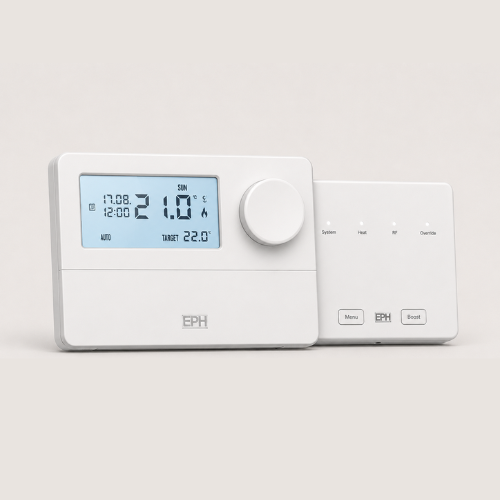
What Does a Thermostat Do?
A thermostat is the main control point for your heating system. It checks the room temperature and tells your boiler or heating system when to start and stop.
For example, imagine you set your thermostat to 21°C. The thermostat checks the room temperature all the time. When the temperature drops below 21°C, it tells the heating system to turn on.
Then, when the room reaches the chosen temperature, the heating turns off.
Because of this simple process, THERMOSTATS help keep your home comfortable. They also reduce wasted energy by stopping the heating when it is not needed.
However, if your thermostat keeps changing temperature, there may be a setting or system issue that needs attention.
If your thermostat does not stay at one temperature, start with these easy checks.
How Do I Get My Thermostat to Stay at One Temperature?
1. Check Your Heating Schedule
Many modern thermostats use automatic schedules. These schedules change the temperature at different times of the day.
For example, your thermostat may keep the temperature at 21°C during the day. However, it may lower the temperature to 17°C at night to save energy.
Therefore, check the programmed schedule first.
If you want the same temperature all day, update the schedule settings. This simple change often fixes the problem.
2. Turn On Hold Mode
Many programmable thermostats have a Hold feature.
This setting keeps your chosen temperature for a longer period. As a result, the thermostat will stop following its normal schedule.
For example, if you set the temperature to 21°C and turn on Hold mode, the thermostat will keep that temperature until you change it again.
Therefore, Hold mode is useful when you want full control.
3. Turn Off Smart Learning Features
Smart thermostats are designed to make heating easier. They learn your daily habits and adjust the temperature automatically.
For example, a smart thermostat may lower the heating when you leave home. Then, it may warm your home before you return.
Although this feature can save energy, some people prefer manual control.
Therefore, if your thermostat keeps changing temperature, check the smart learning settings. You can disable this feature if you want a fixed temperature.
4. Replace Old Batteries
Weak batteries can also cause thermostat problems.
When batteries become low, the thermostat may show incorrect information. In some cases, it may lose settings or stop communicating properly with your heating system.
Fortunately, replacing batteries is quick and simple.
Most thermostat batteries last between one and two years. However, checking them regularly can prevent unexpected problems.
5. Check Wi-Fi Connections
Smart and wireless thermostats often connect to Wi-Fi.
This allows you to control your heating from a mobile phone or tablet. However, it also means another person with access can change the temperature.
Therefore, check your connected devices and app settings.
Also, make sure your thermostat has a stable Wi-Fi connection. A poor connection may affect smart features and remote controls.
Why Does My Thermostat Keep Changing by Itself?
There are several common reasons why your thermostat changes temperature without warning.
Programmed Settings
The most common reason is automatic programming.
Many thermostats are designed to change temperatures at certain times. This helps reduce energy use and lower heating costs.
However, it can be confusing if you forget that a schedule is active.
Therefore, always check your thermostat programme before making major changes.
Smart Thermostat Features
Smart thermostats use advanced technology to improve comfort.
They can learn your routine, detect when you are away, and adjust heating automatically.
For example, the thermostat may reduce heating while the house is empty. Then, it may increase the temperature before you arrive home.
This is useful for energy saving. However, it can feel like the thermostat is changing settings by itself.
Temperature Sensor Problems
Every thermostat uses a sensor to measure room temperature.
However, if the sensor becomes dirty or damaged, it may read the wrong temperature.
As a result, your heating may turn on too early or stop too soon.
Therefore, keeping the thermostat clean can improve accuracy.
Incorrect Thermostat Location
The location of your thermostat has a big effect on performance.
For accurate readings, avoid placing thermostats near:
- Windows
- Direct sunlight
- Radiators
- Fireplaces
- Ovens
- Kitchen areas
For example, a thermostat near a radiator may think the room is warmer than it really is.
Therefore, the heating may stop before the rest of the room feels comfortable.
Electrical Problems
Sometimes, wiring problems can cause thermostat issues.
Loose connections may interrupt communication between the thermostat and boiler.
As a result, the heating system may turn on and off at the wrong time.
Because electrical work can be dangerous, it is better to ask a qualified professional to check wiring problems.
Different Types of THERMOSTATS
Choosing the right thermostat can make your heating system easier to control. In addition, the correct thermostat can improve comfort and help reduce energy waste.
Today, there are many types of THERMOSTATS available. Each type offers different features, from simple manual controls to advanced smart technology.
Therefore, understanding the differences can help you choose the best option for your home.
Manual Thermostat
A manual thermostat is the simplest type of heating control.
It allows you to change the temperature by turning a dial or moving a switch. However, it does not include automatic schedules or smart features.
Because of this, you need to adjust the temperature yourself.
Manual thermostats are easy to use. However, they provide fewer energy-saving benefits compared with modern models.
Programmable Thermostat
A programmable thermostat gives you more control over your heating.
You can create heating schedules based on your daily routine.
For example, you can set different temperatures for:
- Morning
- Afternoon
- Evening
- Night
As a result, your heating only runs when you need it.
Furthermore, programmable thermostats help reduce energy waste because they avoid unnecessary heating when nobody is home.
Wireless Thermostat
A wireless thermostat connects to your heating system without long cables.
Therefore, installation is usually easier and more flexible.
You can place the thermostat in a better location where it can measure room temperature accurately.
In addition, wireless models are useful for homes where installing new cables would be difficult.
Wireless Room Thermostat
A wireless room thermostat measures the temperature of the room where it is installed.
This helps your heating system maintain a more comfortable temperature.
For example, if your living room feels cold, the wireless room thermostat can tell the boiler to provide more heat.
As a result, your home can stay warmer without unnecessary heating.
RF Thermostat
An RF thermostat uses radio frequency signals to communicate with the boiler receiver.
Unlike traditional thermostats, it does not need a direct wired connection.
Therefore, installation is faster and causes less disruption.
Programmable rf thermostats are popular because they offer reliable communication and flexible placement.
Programmable RF Thermostat
A programmable RF thermostat combines two useful features:
- Wireless communication
- Automatic heating schedules
Because of this, you get better control and improved energy management.
For example, you can programme lower temperatures while you sleep. Then, you can schedule the heating to increase before you wake up.
This creates a comfortable home while helping reduce heating costs.
Wireless Heating Thermostat
A wireless heating thermostat allows you to control your heating system without fixed wiring.
This gives you more freedom when choosing the thermostat location.
Moreover, it can improve comfort because the thermostat can be placed in the area where temperature control is most important.
OpenTherm Thermostat
An OpenTherm thermostat works differently from a standard thermostat.
A standard thermostat usually turns the boiler on or off. However, an EPH – CP4D OpenTherm Programmable RF thermostat can communicate continuously with compatible boilers.
As a result, it can adjust the boiler output instead of only switching it between two settings.
Therefore, your heating system works more smoothly.
Benefits of an OpenTherm thermostat include:
- Better temperature control
- Lower energy use
- Reduced boiler cycling
- Improved comfort
- Quieter heating operation
Because of these benefits, many modern heating systems use OpenTherm technology.
Smart Thermostat
A smart thermostat is one of the most advanced heating controls available.
It connects to Wi-Fi and allows you to control your heating using a smartphone.
For example, you can increase the temperature before arriving home. You can also lower the heating when you are away.
In addition, many smart thermostats include:
- Energy reports
- Learning schedules
- Weather information
- Holiday settings
- Voice control
Therefore, smart thermostats make heating easier while helping reduce wasted energy.
Why Heating Controls Matter
Modern heating controls do more than simply turn your heating on and off.
Instead, they help your entire heating system work more efficiently.
Good heating controls can:
- Improve home comfort
- Reduce energy waste
- Lower heating bills
- Prevent unnecessary boiler use
- Extend boiler life
Furthermore, when thermostats and heating controls work together, your home temperature becomes easier to manage.
For example, a programmable thermostat can heat your home before you wake up. Then, it can lower the temperature when you leave.
As a result, you get comfort without wasting energy.
Benefits of Keeping One Temperature
Many people change their thermostat settings several times a day.
However, keeping a steady temperature often works better.
A stable temperature can provide:
Better Comfort
A consistent temperature helps every room feel more comfortable.
Instead of feeling hot one moment and cold the next, your home stays more balanced.
Lower Energy Waste
Large temperature changes can make your heating system work harder.
Therefore, small adjustments are often better than turning the heating up and down frequently.
Less Pressure on Your Boiler
When your thermostat maintains a steady temperature, your boiler does not need to work as hard.
This can reduce unnecessary heating cycles.
Improved Efficiency
A well-controlled heating system uses energy more effectively.
As a result, you may notice better performance and lower heating costs.
Should You Leave Heating On All Day?
This depends on your home, insulation, and heating habits.
For example, a well-insulated home may keep heat for a long time. Therefore, it may not need constant heating.
However, older homes often lose heat faster.
Instead of switching heating fully off, many homeowners choose to lower the temperature when they leave.
For example, reducing the thermostat by a few degrees can save energy while keeping the home comfortable.
Therefore, the best approach depends on your property and lifestyle.
Common Thermostat Mistakes
Many thermostat problems happen because of simple mistakes.
However, these issues are usually easy to correct.
Common mistakes include:
- Setting the temperature too high
- Blocking the thermostat with furniture
- Ignoring low battery warnings
- Forgetting old schedules
- Installing the thermostat near heat sources
- Using the wrong heating mode
For example, placing a thermostat behind furniture can stop it from measuring the room temperature correctly.
Therefore, always keep the thermostat area clear.
Also, check your settings regularly to make sure they match your needs.
Can One Thermostat Control the Whole House?
Yes, many homes use one thermostat to control the entire heating system.
However, larger homes may benefit from heating zones.
A zoned heating system allows different areas of your home to have separate temperature controls.
For example:
- Bedrooms can have a lower temperature at night
- Living rooms can stay warmer during the evening
- Empty rooms can use less heating
As a result, zoning can improve comfort and reduce wasted energy.
Simple Tips to Reduce Heating Bills
Reducing heating costs does not always mean turning your heating off completely.
Instead, small improvements can make a big difference.
Try these simple tips:
- Keep a steady temperature
- Use heating schedules correctly
- Improve home insulation
- Close curtains at night
- Bleed radiators regularly
- Service your boiler every year
- Upgrade old heating controls
Furthermore, using the right thermostat settings can help your heating system work more efficiently.
Therefore, small changes can create long-term savings.
People Also Ask
Why won’t my thermostat stay on one temperature?
Usually, the problem is caused by automatic schedules, smart features, incorrect settings, or sensor issues. Check these areas before replacing the thermostat.
Is it better to keep one constant temperature?
Yes. A steady temperature often improves comfort and reduces unnecessary heating changes.
Can a smart thermostat change temperature automatically?
Yes. Smart thermostats can adjust temperatures based on schedules, location, and learning features.
What is an RF thermostat?
An RF thermostat uses radio frequency signals to communicate with the heating system without physical control wires.
What is a wireless room thermostat?
A wireless room thermostat measures room temperature and sends signals to the heating system without cables.
Is OpenTherm better than standard thermostats?
Yes. OpenTherm thermostats can control boiler output more smoothly, which can improve efficiency and comfort.
Conclusion
Modern THERMOSTATS make home heating easier, smarter, and more efficient.
However, problems can occur when settings, schedules, sensors, or thermostat locations are not correct.
Fortunately, most issues are simple to solve.
First, check your heating schedule and smart settings. Next, check the thermostat location and battery condition. Finally, consider upgrading if your thermostat is old or unreliable.
Products such as the EPH – CP4D OpenTherm Programmable RF Thermostat combine modern technology with simple controls. Therefore, they make it easier to maintain a comfortable temperature while using energy more effectively.