








What Happens If You Don’t Insulate Your House? A Complete Guide
Introduction
Have you ever wondered what happens if your home has little or no insulation? Many people spend money on heating, cooling, or home improvements. However, they often overlook one of the most important parts of an energy-efficient home.
Good insulation helps keep your house warm in winter and cool in summer. It also lowers energy bills, improves comfort, and protects your home from moisture. Without it, heat escapes quickly. As a result, your heating system works harder, and your energy costs rise.
Poor Heat loss prevention can also lead to damp walls, mould, and uneven room temperatures. Over time, these problems can affect both your home and your health.
In this guide, you will learn what happens when a house is not insulated properly. You will also discover why loft insulation, roof insulation, thermal insulation, and attic insulation are worthwhile investments for every homeowner.
Why Is Insulation Important?
Every home loses heat. However, the amount of heat that escapes depends on how well the building is insulated.
Think about a hot drink in a travel mug. It stays warm for much longer than one in an open cup. Your home works in a similar way. Insulation creates a barrier that slows heat movement.
Because of this, warm air stays inside during winter. At the same time, unwanted heat stays outside during summer.
As a result, your heating system does not need to work as hard. Therefore, you use less energy and save money on your bills.
Many homeowners install energy-saving insulation because it offers long-term benefits. It makes the home more comfortable while reducing heating costs throughout the year.
How Does Heat Escape From a House?
Heat always moves from a warm place to a colder one. During winter, warm air inside your home naturally tries to escape outside.
Heat usually leaves through these areas:
- The roof
- The loft
- External walls
- Floors
- Windows
- Doors
The roof is often the biggest source of heat loss. In many homes, around one-quarter of all heat escapes through the roof if it is not insulated well.
Because of this, experts often recommend improving roof insulation or adding insulation for loft spaces first. These upgrades usually provide the fastest return on your investment.
What Happens If Your Home Has Poor Insulation?
A house without enough insulation can develop several problems. Some appear quickly, while others become worse over time.
Let’s look at the most common issues.
1. Your Home Loses Heat Faster
The biggest problem is rapid heat loss.
Warm air naturally rises toward the ceiling. If your loft or roof has little protection, that warm air escapes outside.
As a result:
- Rooms cool down quickly.
- The heating switches on more often.
- Your boiler works harder.
- Energy use increases.
Many people notice that their home feels warm while the heating is running. However, the warmth disappears soon after the heating turns off.
This happens because heat cannot stay inside without proper Heat loss prevention.
2. Your Energy Bills Increase
Higher energy bills are another common result of poor insulation.
When heat escapes, your heating system must replace the lost warmth. Therefore, it runs for longer and uses more gas or electricity.
For example:
- Boilers stay on for longer.
- Radiators work harder.
- Heat pumps run more often.
- Electric heaters use extra power.
Over time, these extra costs can add up.
On the other hand, a well-insulated home keeps heat inside for longer. As a result, the heating system works less, and monthly energy bills often fall.
That is why many homeowners see insulation as one of the smartest home improvements they can make.
Why Loft Insulation Matters
Many people ask if Heat loss prevention is really necessary.
The simple answer is yes.
Since warm air rises, the loft is one of the main places where heat escapes. Without enough protection, your heating system keeps replacing the same lost heat.
Loft insulation slows this process.
Because less heat escapes, your home stays warm for longer. This means your heating system runs less often, which helps reduce energy use.
Another benefit is that loft insulation works all year.
During winter, it keeps warmth inside.
During summer, it slows down heat entering through the roof.
As a result, your home feels more comfortable in every season.
What Is Attic Insulation?
Many people use the words attic and loft to describe the same space.
Attic insulation works in the same way as loft insulation. It creates a layer that slows heat transfer between your home and the outside.
This helps to:
- Keep bedrooms warmer.
- Improve indoor comfort.
- Reduce heat loss.
- Lower heating costs.
- Maintain a steady indoor temperature.
Even if you rarely use your attic, adding insulation can make a noticeable difference throughout the house.
Why Roof Insulation Is Essential
Your roof protects your home from rain, wind, and changing weather. It should also help keep heat inside.
Without roof insulation, warm air escapes through the roof with ease.
After installing roof insulation, many homeowners notice several improvements.
These include:
- Warmer rooms
- Shorter heating cycles
- Better temperature control
- Lower energy waste
Because of these benefits, roof insulation remains one of the most effective ways to improve energy efficiency.
What Is Thermal Insulation?
The term thermal insulation means reducing the movement of heat.
Heat barrier materials contain tiny pockets of trapped air. These air pockets slow the flow of heat, making your home more comfortable.
Good thermal insulation can:
- Reduce heat loss
- Lower heating costs
- Improve indoor comfort
- Increase energy efficiency
- Reduce carbon emissions
As a result, thermal insulation benefits both homeowners and the environment.
How Energy-Saving Insulation Helps
Many homeowners want lower energy bills without replacing their heating system.
Energy-saving Heat barrier makes this possible by keeping existing heat inside the home.
Because less heat escapes:
- Boilers run less often.
- Heat pumps work more efficiently.
- Rooms stay warm for longer.
- Heating costs become lower.
- Your home feels more comfortable.
At the same time, using less energy also helps reduce your home’s carbon footprint.
What Problems Can Poor Insulation Cause?
Poor insulation affects more than your energy bills. It can also make your home damp, uncomfortable, and expensive to heat. Over time, these problems can become more serious if they are not fixed.
Let’s look at the biggest issues.
Damp and Mould Can Develop
A home with poor insulation is more likely to suffer from damp and mould.
Every day, your home produces moisture. Cooking, showering, drying clothes, and even breathing release water vapour into the air.
Normally, this moisture is harmless. However, problems begin when warm, damp air touches cold walls or ceilings.
The moisture then turns into tiny water droplets. This process is called condensation.
At first, you may only notice water on your windows. Later, damp patches can appear on walls and ceilings. If the problem continues, mould starts to grow.
Poor insulation makes walls much colder. Therefore, condensation forms more often.
As a result, you may notice:
- Black mould around windows
- Damp patches on walls
- Peeling wallpaper
- Flaking paint
- Musty smells
- Wet corners behind furniture
These problems can damage your home and reduce indoor comfort.
Mould Can Affect Your Health
Mould is more than an eyesore. It can also affect the air you breathe.
Mould releases tiny spores into the air. When people breathe in these spores, they may develop health problems.
Common symptoms include:
- Sneezing
- Coughing
- Watery eyes
- Skin irritation
- Asthma flare-ups
- Breathing difficulties
Young children and older adults are often more sensitive. People with allergies may also notice stronger symptoms.
Fortunately, good insulation keeps walls warmer. As a result, condensation becomes less common, and mould has fewer places to grow.
Why Does Your Home Feel Cold Even With the Heating On?
Have you ever turned up the heating but still felt cold?
Poor Heat barrier is often the reason.
Without a proper barrier, warm air escapes almost as fast as your heating system produces it.
Because of this, your heating keeps running. Even so, your home never feels truly warm.
You may notice:
- Cold walls
- Chilly ceilings
- Cold bedrooms
- Uneven room temperatures
- Drafty living areas
Some rooms stay comfortable, while others remain cold throughout the day.
Good insulation helps keep heat inside. Therefore, every room feels warmer and more comfortable.
Cold Floors Make Your Home Less Comfortable
Many homeowners focus on walls and roofs. However, floors also play an important role.
Cold floors make the whole house feel cooler.
Even when the air is warm, cold flooring can make a room feel uncomfortable.
As a result, many people turn up the heating.
Unfortunately, this also increases energy use.
Adding the right Heat barrier helps reduce heat loss through the floor. Therefore, your home feels warmer from top to bottom.
Your Home Can Become Too Hot During Summer
Many people think insulation only helps during winter.
In fact, it also keeps your home cooler during summer.
Without Heat barrier, the sun heats the roof very quickly. That heat then moves into the loft and upstairs rooms.
As a result, bedrooms can become hot and uncomfortable.
Many homeowners then use fans or air conditioning to cool their homes.
However, these appliances increase electricity costs.
Good roof Heat barrier slows heat transfer. Therefore, your home stays cooler for longer, even on warm days.
Why Loft Insulation Roll Is a Popular Choice
One of the easiest ways to improve energy efficiency is by installing a loft insulation roll.
This type of insulation covers large areas quickly. It also helps reduce heat escaping through the roof.
Many homeowners choose a loft insulation roll because it is:
- Easy to install
- Cost-effective
- Long-lasting
- Suitable for most lofts
- Highly energy efficient
When fitted correctly, it keeps indoor temperatures steady throughout the year.
What Is Loft Roll Insulation?
Another popular option is loft roll insulation.
It works by creating a thick layer above your ceiling.
This layer traps warm air inside the home and reduces heat loss.
As a result:
- Rooms stay warm for longer.
- Heating systems run less often.
- Energy bills become lower.
- Indoor comfort improves.
Because warm air naturally rises, loft roll insulation remains one of the best ways to improve home energy efficiency.
Why Many Homeowners Choose Knauf Insulation
Choosing the right product is just as important as adding insulation.
Many homeowners trust Knauf insulation because it offers reliable performance and long-lasting quality.
Knauf products are known for:
- Excellent thermal performance
- Long lifespan
- Easy installation
- Good sound reduction
- High energy efficiency
These features make them suitable for both new homes and renovation projects.
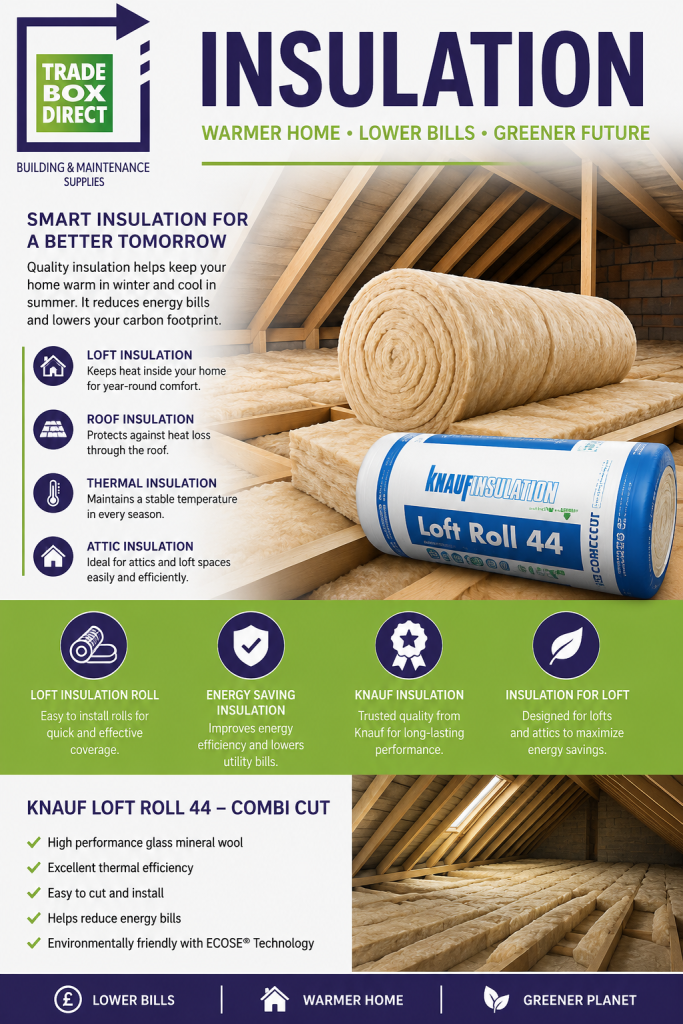
Why Knauf Loft Roll 44 – Combi Cut Is a Popular Option
One of the best-known products is Knauf Loft Roll 44 – Combi Cut.
It is designed for loft spaces and fits neatly between ceiling joists.
It also adds another layer across the joists, which helps reduce heat loss even further.
Homeowners often choose this product because it is:
- Lightweight
- Easy to handle
- Flexible
- Durable
- Designed for long-term performance
When installed correctly, it helps create a warmer, more energy-efficient home while lowering heating costs.
Conclusion
Good insulation is one of the smartest upgrades you can make to your home. It keeps your house warm during winter and cooler in summer. As a result, your heating system works less, and your energy bills become more manageable.
Without proper Heat barrier, heat escapes quickly. Therefore, your home may feel cold, damp, and uncomfortable. Over time, you may also face problems such as mould, condensation, and higher repair costs. These issues can reduce comfort and affect the condition of your property.
On the other hand, adding loft insulation, roof insulation, thermal insulation, or attic insulation helps create a healthier and more energy-efficient home. It improves indoor comfort, protects your property, and supports lower carbon emissions.
If you are planning to upgrade your home, choose high-quality products such as Knauf Loft Roll 44 – Combi Cut. Investing in reliable insulation today can provide long-term savings, better comfort, and greater peace of mind for many years to come.
Frequently Asked Questions (FAQs)
1. What happens if a house has no insulation?
A house without insulation loses heat much faster. As a result, your heating system works harder, energy bills increase, and rooms become cold more quickly. You may also experience damp, condensation, and mould.
2. Is loft insulation really worth it?
Yes. Loft insulation is one of the most cost-effective home improvements. Because a large amount of heat escapes through the roof, insulating your loft can reduce heat loss and lower heating costs.
3. How does insulation reduce energy bills?
Insulation slows the movement of heat. Therefore, your home stays warm for longer, and your heating system runs less often. This reduces the amount of gas or electricity you use.
4. Can poor insulation cause damp and mould?
Yes. Poor insulation creates cold surfaces where moisture can collect. Over time, condensation can lead to damp patches and mould growth, especially in colder areas of the home.
5. Which part of the house should I insulate first?
In most homes, the loft is the best place to start. Since warm air rises, improving loft insulation often delivers the biggest energy savings.