No products in the cart.



What Is Solar Equipment and How Do Solar Panel Components Work?
Introduction
Solar power is a simple way to produce clean energy from sunlight. More homes and businesses now use solar panels to lower their energy bills. However, a solar system needs more than panels to work well. It also needs several parts that work together.
These parts include inverters, batteries, cables, mounting rails and roof hooks. Each one has a special job. Together, they help turn sunlight into useful electricity.
In this guide, we explain how these parts work, how they are made and why they matter. We also share tips to help you choose the right products when shopping.
What Is Solar Equipment?
Solar equipment includes the products used to build and run a solar power system. These products help collect sunlight, produce electricity and send power to your home or business.
A typical solar system may include:
- Solar panels to collect sunlight.
- Inverters to change DC power into AC power.
- Batteries to store extra electricity.
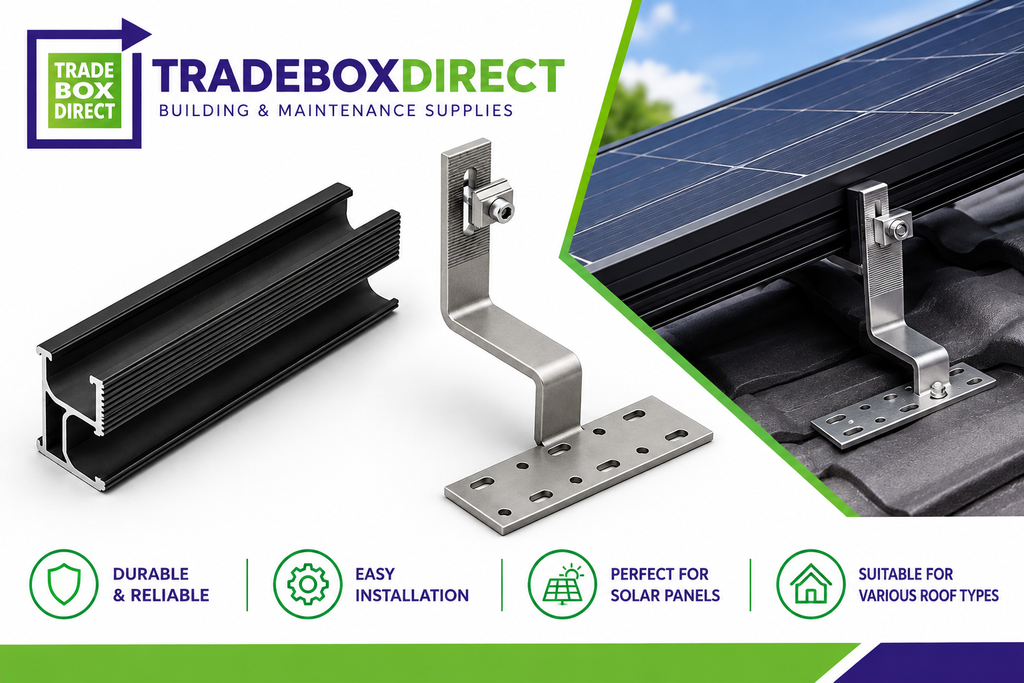
- Mounting rails to hold the panels.
- Roof hooks to secure the mounting system.
- Cables and connectors to carry electricity.
- Safety devices to protect the system.
Each part has a clear purpose. Therefore, choosing the right products can help your system work as planned.
You can explore the solar equipment range at TradeBoxDirect to find products for different solar projects.
What Are Solar Panel Components?
Solar panel components are the parts that help a solar system produce and manage power. Some parts collect sunlight, while others carry, store or control electricity.
Let’s look at the main parts and how they work.
1. Solar Panels
Solar panels collect energy from sunlight. They contain small cells, which are often made from silicon.
When sunlight hits these cells, they produce direct current (DC) electricity. The inverter then changes this power into a form used by most home appliances.
Solar panels come in different sizes and power ratings. So, check your roof space and energy needs before choosing a panel.
2. Solar Inverters
An inverter changes DC electricity into alternating current (AC). This is the type of power used by most homes and businesses.
There are three common types:
- String inverters.
- Microinverters.
- Hybrid inverters.
A hybrid inverter can also work with a battery. As a result, you can store extra solar power for later use. However, always check that your inverter suits your battery and panels.
3. Solar Mounting Rails
Mounting rails hold solar panels in place. They connect to roof hooks or other suitable fixings.
Good rails provide firm support. In addition, they help keep panels in straight rows and at the right angle.
Most rails use aluminium because it is light and strong. However, the correct rail depends on your roof and panel design.
4. Roof Hooks and Brackets
Roof hooks connect the mounting rails to the roof structure. They help keep the panels secure in different weather conditions.
Different roofs need different fixing products. For example, tiled roofs often need tile roof hooks. On the other hand, metal roofs may need special roof fixings.
Always check the roof type before you buy these parts.
5. Solar Cables and Connectors
Cables carry electricity between panels, inverters and batteries. Meanwhile, connectors join the cables and help create secure links.
These parts must have the correct electrical ratings. Also, outdoor cables need strong insulation to handle rain, heat and sunlight.
6. Solar Batteries
Solar batteries store extra electricity for later use. For example, your panels may produce more power than your home needs during the day.
Instead of wasting this extra energy, you can store it in a suitable battery. Then, you can use it in the evening or when solar output is low.
However, check the battery size and inverter type before buying.
How Are Solar Panel Components Made?
Different materials and methods are used to make solar products.
Solar cells often use silicon. Manufacturers turn this material into thin wafers. They then treat the wafers so they can produce electricity when sunlight reaches them.
Next, manufacturers join the cells and place them between protective layers. Glass helps protect the front, while other layers help protect the back. A frame then gives the panel extra support.
Other parts use different materials:
- Mounting rails often use aluminium.
- Roof hooks may use stainless steel.
- Solar cables use copper wires.
- Connectors use strong plastic and metal parts.
- Batteries use special cells to store energy.
As a result, each part can perform a different job within the system.
What Are the Benefits of Quality Solar Panel Components?
Choosing good solar products can make a real difference. Here are some key benefits.
Better System Performance
Suitable parts help your system work as planned. For example, the right inverter can manage the power from your panels.
Strong Roof Support
Good rails and roof hooks help hold panels firmly. This is important during strong winds and heavy rain.
Longer Product Life
Solar products face heat, rain and sunlight every day. Therefore, strong materials can help them last longer.
Easier Installation
Well-made parts can make fitting easier. Also, compatible products help reduce problems during installation.
Better Energy Use
Batteries store extra power for later. As a result, you can make better use of the energy your panels produce.
How to Choose the Right Products When Shopping
Before you shop, think about the needs of your solar project. First, check your panel size and system type. Next, look at the ratings of your inverter, cables and connectors.
You should also check these points:
- Read the product details.
- Check the size and material.
- Choose parts for outdoor use.
- Check electrical ratings.
- Make sure all parts fit together.
- Compare products before ordering.
Also, check the surface where the mounting parts will sit. Make sure the fixing method suits the roof.
Pay attention to the edge of each panel when planning the layout. Finally, make sure all parts are compatible before you place an order.
If you need products for your project, you can buy solar panel components from TradeBoxDirect.
Why Choose TradeBoxDirect?
Finding the right solar products can take time. However, shopping from one product range can make the task easier.
TradeBoxDirect offers a range of products for solar installations and other building needs. You can browse the solar category to find suitable accessories for your project.
Before ordering, read each product description. Check the sizes, materials and technical details as well. This helps you choose the right solar equipment for your needs.
Frequently Asked Questions
1. What are the main parts of a solar system?
The main parts include solar panels, an inverter, mounting rails, roof hooks, cables and connectors. Some systems also use batteries.
2. How do solar panels make electricity?
Solar panels use special cells to collect sunlight. These cells produce DC electricity, which an inverter changes into AC power.
3. Why are mounting rails important?
Mounting rails hold the panels in place. They also connect the panels to the roof fixing system.
4. Can I add a battery to my solar system?
Yes, many systems can use a battery. However, you must check that the inverter and battery work together.
5. What should I check before buying solar parts?
Check the size, material, product rating and system fit. Also, make sure the parts suit your roof and installation.
6. Where can I shop for solar products?
You can browse the solar category at TradeBoxDirect. Read the product details to find suitable items for your project.
Conclusion
A solar system needs several parts to produce and manage electricity. Solar panels collect sunlight, while inverters change the power into a usable form. Meanwhile, batteries store extra energy, and mounting parts keep the panels secure.
Understanding how these parts work makes choosing products much easier. Therefore, take time to check sizes, ratings and product details before ordering.
Whether you are planning a new installation or replacing old parts, choose products that suit your needs. Visit TradeBoxDirect to explore the range of solar products and accessories for your next project.