No products in the cart.








Tile Levelling System: Benefits, Uses and How to Choose the Right Product
What Is a Tile Levelling System?
A tile leveling system helps you lay floor tiles evenly and achieve a neat, professional finish. It keeps nearby tiles at a similar height while the adhesive sets. As a result, you can reduce uneven edges and create a smooth floor.
This tool is useful for DIY projects and professional tilers. Moreover, it works well with many floor tiling jobs, including kitchens, bathrooms and hallways. The right equipment can also save time and reduce the need for costly corrections.
If you plan to replace old flooring, explore the tile leveling system range at TradeBoxDirect. You can compare useful products and choose the tools that suit your project.
How Does a Tile Levelling System Work?
A tile levelling system uses spacers and tightening parts to help keep tiles level as you work. First, spread tile adhesive across a clean, prepared base. Next, place the tiles and insert the levelling spacers along their edges.
Then, tighten the system according to the product instructions. This helps bring nearby tile surfaces into alignment. Leave the adhesive to set for the recommended time before removing the levelling parts.
However, always check the tile maker’s instructions and the product guidelines. Correct fitting helps you achieve an even finish without putting too much pressure on the tiles.
How Is a Tile Levelling System Made?
A typical system contains plastic levelling spacers, clips or threaded screws, and tightening nuts or caps. Manufacturers shape these parts to hold tiles in place during installation.
The spacer section creates a gap between tiles, while the tightening part helps align their top surfaces. Some designs use a twisting action, which allows the user to adjust the pressure by hand.
Materials and designs vary between products. Therefore, check the product details before you buy. Choose a system that suits your tile thickness, joint width and installation method.
What Are Tile Levelling Spacers Used For?
Tile levelling spacers help reduce lippage. This means a height difference between the edges of two nearby tiles. Uneven edges can affect the look of a floor and may create uncomfortable raised points.
They also help keep the tile layout consistent. In addition, they can make it easier to maintain straight lines across a large area.
When choosing a suitable spacer, consider the required joint width and the type of tiles you plan to fit. Always follow the instructions for the specific product.
Why Choose 2mm Tile Spacers?
A 2mm joint can create a neat, narrow grout line when the tiles and installation method allow it. However, not every tile suits this joint size. Check the tile maker’s guidance before starting.
You can browse tile spacers to find options for your project. For many jobs, matching the spacer size to the tile and grout requirements is more important than choosing the smallest gap.
PRODUCT: Tile Spacer Levelling System 2mm Floor Twister Spacer Screws + Red Twister Nuts
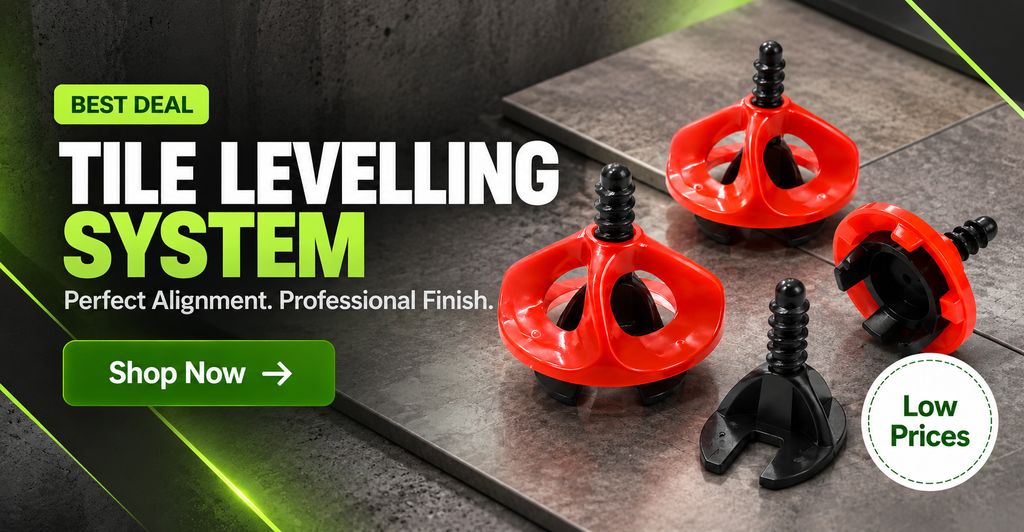
The Tile Spacer Levelling System 2mm Floor Twister Spacer Screws + Red Twister Nuts is designed to help create even tile joints and align nearby floor tiles.
Its twisting design helps users tighten the levelling parts during installation. This can make tile positioning easier, especially when working across larger floor areas.
Key Benefits
- More even tile surfaces: Helps reduce height differences between adjacent tiles.
- Consistent joints: Supports a regular 2mm gap where suitable for the chosen tiles.
- Simple adjustment: The twisting mechanism allows you to tighten the parts by hand.
- Useful for DIY and trade work: Suitable for users who want better control during floor tiling.
- Neater results: Helps create a tidy finish when used correctly with good preparation.
Explore the Tile Spacer Levelling System 2mm Floor Twister Spacer Screws + Red Twister Nuts at TradeBoxDirect to review the product details before shopping.
How to Use Floor Tile Spacers Correctly
For the best results, prepare your tools and materials before you start. Follow these simple steps:
- Prepare the base: Make sure the surface is clean, stable and suitable for tiling.
- Apply adhesive: Use the correct adhesive and spread it as directed.
- Position the tiles: Place each tile carefully and check its alignment.
- Insert the spacers: Fit the floor tile spacers between the tiles according to the product instructions.
- Tighten the system: Twist the nuts or caps gently until the tile edges align. Avoid excessive pressure.
- Check the layout: Use a suitable level to check the floor as you work.
- Allow the adhesive to set: Follow the recommended setting time before removing the levelling parts.
Remember to check each tile’s edge as you go. Careful fitting can help prevent problems later.
What Other Tiling Tools Do You Need?
A levelling system is useful, but it is only one part of a successful tiling job. You may also need a tile cutter, measuring tape, spirit level, notched trowel, grout float and cleaning sponge.
Good preparation helps you work more efficiently. For example, accurate measurements reduce waste, while the right cutter helps create clean cuts around corners and fittings.
You should also check that the levelling parts are compatible with your tiles and installation method. Consider the tile thickness, joint width and the manufacturer’s guidance.
How to Choose the Right Tile Levelling System
Before you buy, think about the size of your project and the finish you want. Small rooms may need fewer levelling parts, while large floors can require more.
Check the following points:
- Joint size: Choose a gap that suits your tile and grout requirements.
- Tile thickness: Make sure the product supports the thickness of your tiles.
- Ease of use: A simple twisting design can help speed up installation.
- Material quality: Look for parts made for repeated handling during normal tiling work.
- Project needs: Consider the floor layout, temperature conditions and the frequency of use.
If you are shopping for professional or home renovation supplies, compare the available floor tile spacers and other tiling tools before making your choice.
FAQs About Tile Levelling Systems
1. What is the main purpose of a tile levelling system?
Its main purpose is to help keep nearby tiles at a similar height while the adhesive sets. It can reduce uneven edges and improve the finished appearance.
2. Are 2mm tile spacers suitable for every floor tile?
No. A 2mm gap suits some tiles, but others need wider joints. Always check the tile manufacturer’s advice and the grout requirements.
3. Can beginners use a tile levelling system?
Yes. Many systems are simple to use, so beginners can benefit from them. However, good surface preparation, careful alignment and correct adhesive use remain essential.
4. When should I remove the levelling parts?
Remove them only after the adhesive has set for the period stated in the product and adhesive instructions. Removing them too early may move the tiles.
5. Where can I buy a tile levelling system?
You can shop for tile levelling products through the TradeBoxDirect flooring and tiles category. Check the product details to find a suitable option for your next project.
Conclusion
A tile levelling system can help you achieve a cleaner, more even floor. It supports consistent joints, reduces uneven tile edges and makes alignment easier during installation.
For the best results, choose the right spacer size, prepare the base carefully and follow the product instructions. If you need a practical option for your next flooring project, consider the 2mm Floor Twister Spacer Screws and Red Twister Nuts from TradeBoxDirect.