No products in the cart.








Insulation: A Complete Guide to Loft Insulation and Energy Saving
What Is Insulation and Why Is It Important?
A warm home feels more comfortable, especially during cold weather. However, heat can escape through the roof and loft if a home lacks proper insulation. As a result, your heating system may need to work harder to keep rooms warm.
INSULATION helps slow the movement of heat between spaces. In winter, it helps keep warmth inside your home. During warmer weather, it can also help reduce unwanted heat entering the building.
Good insulation can improve comfort and help lower energy use. Therefore, it is worth exploring the right products before starting a home improvement project.
TradeBoxDirect offers a range of insulation products for building and home improvement work. You can compare options and find products that suit your project and budget.
What Is Loft Insulation?
Loft insulation is a layer of material placed between or over the ceiling joists in a loft. It helps reduce heat loss through the roof space. Since warm air rises, an uninsulated loft can allow a large amount of heat to escape.
There are several types of loft insulation, including mineral wool rolls, loose-fill materials and rigid boards. Each type has its own uses, so choose one that suits your roof design.
A good loft insulation product can help keep your home warm for longer. In addition, it may reduce the need for frequent heating and support lower energy bills.
Before installation, check the depth needed, the condition of the roof and the recommended ventilation requirements.
What Is Roof Insulation and How Does It Work?
Roof insulation helps slow the transfer of heat through a roof. The best method depends on whether you have a cold loft, a warm roof or a room built into the roof space.
In a cold loft, insulation usually sits at ceiling level. In a warm roof, insulation forms part of the roof structure. Each approach needs careful planning to manage heat, water and ventilation.
Suitable roof insulation can improve comfort and help reduce heat loss. However, the correct product and installation method depend on the building design.
It is also important to manage airflow around the roof space. Good ventilation helps remove damp air and supports a healthy roof structure.
What Is Thermal Insulation?
Thermal insulation slows the movement of heat from one area to another. It is used in roofs, walls, floors and other parts of buildings.
The performance of an insulation product often depends on its thermal conductivity and thickness. A lower thermal conductivity value means the material conducts less heat under the stated test conditions.
When choosing INSULATION, check the product specifications rather than relying on thickness alone. You should also consider the building’s design and the level of performance required.
For example, mineral wool is widely used because it traps air within its fibres. This helps slow heat transfer and can make it useful for loft and roof applications.
What Is Attic Insulation?
Attic insulation is another term for insulation used in an attic or loft. It can help keep the rooms below warmer in winter and more comfortable throughout the year.
The right method depends on whether the attic is used for storage, contains living space or forms part of the roof structure.
For an unused loft, rolls laid across the ceiling joists are a common option. However, if you plan to use the loft as a room, the insulation may need to sit within the roof slopes instead.
Before buying attic insulation, measure the space and check the recommended depth. Also, keep required ventilation paths clear during installation.
Why Choose Loft Insulation Roll?
A loft insulation roll is a practical choice for many homes. It comes in a rolled form, which makes it easier to transport and lay across suitable areas.
Many rolls are made from mineral wool or glass wool. These materials contain fine fibres that trap air and help slow heat movement.
Here are some key benefits of a suitable loft insulation roll:
- Reduced heat loss: Helps keep warmth inside the home.
- Improved comfort: Supports more stable indoor temperatures.
- Simple handling: Rolls can be cut to fit suitable spaces.
- Energy savings: May reduce heating demand when installed correctly.
- Versatile use: Suitable products can be used in different loft layouts.
However, do not compress the material more than the manufacturer allows. Compression can reduce its insulating performance.
Product Spotlight: Knauf Loft Roll 44 – Combi Cut
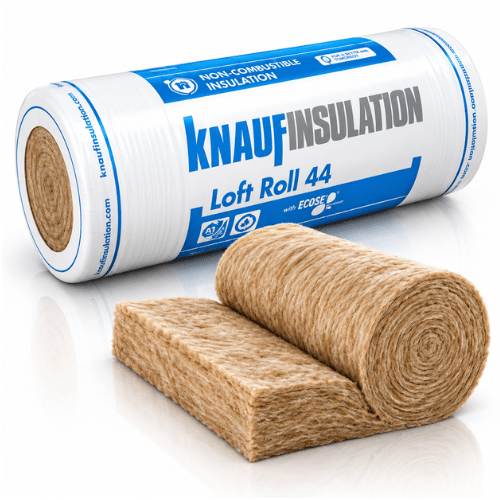
The Knauf Loft Roll 44 – Combi Cut is an option for suitable loft insulation projects.
This product uses mineral wool and has a stated thermal conductivity of 0.044 W/mK. Its width is 1140mm, so check the product dimensions and your loft layout before ordering.
What Are the Benefits of Knauf Loft Insulation?
Knauf loft insulation can help reduce heat loss through a suitable ceiling or loft structure. The roll format also offers a practical way to cover larger areas.
Key points include:
- Thermal performance: The stated conductivity helps you compare the product with other insulation materials.
- Practical format: The roll can suit suitable loft layouts.
- Home comfort: Proper installation helps reduce unwanted heat loss.
- Project planning: Checking the product dimensions helps you estimate the quantity needed.
The exact performance of the finished installation depends on the depth, coverage and condition of the building.
If you are planning a home improvement project, explore the Knauf insulation range and compare the available products before you buy.
How Is Knauf Loft Insulation Made?
Mineral wool insulation is made by melting suitable mineral raw materials at high temperatures. The molten material is then spun into fine fibres.
Next, the fibres are formed into a wool-like mat. A binding agent may help hold the fibres together, and the material is processed to reach the required thickness and density.
Manufacturers then cut the insulation into rolls or other shapes. Quality checks help confirm that the finished product meets the required specifications.
Always check the product label for the exact material details and installation instructions.
How Does Energy Saving Insulation Help Reduce Bills?
Energy-saving insulation helps reduce the rate at which heat escapes from a building. Therefore, a well-insulated home may need less heating to maintain a comfortable temperature.
The actual savings depend on several factors, including the home’s age, current insulation, heating system and energy use.
Suitable insulation for loft projects can be a useful starting point because roofs are a common route for heat loss.
Before choosing energy saving insulation, compare product performance and installation needs. A suitable product, fitted correctly, can support better energy efficiency over time.
How to Prevent Moisture and Condensation Problems
Insulation works best when the roof space remains in good condition. Poor ventilation, roof leaks and indoor humidity can cause problems if you do not manage them.
Check for signs of moisture, such as damp patches or wet insulation. Also, watch for condensation on cold surfaces or roof timbers.
Do not cover damaged areas without finding the cause. Repair leaks, follow ventilation guidance and seek professional advice if you find persistent dampness.
Where Can You Shop for Loft Roll Insulation?
Choosing the right product is easier when you compare dimensions, thermal performance and pack details before ordering.
TradeBoxDirect offers an online insulation category where you can explore suitable products for home improvement and building projects.
If you need mineral wool for a loft, review the specifications for Knauf Loft Roll 44 – Combi Cut. Measure your space carefully and estimate the required coverage before placing an order.
By comparing products first, you can choose an option that suits your building, budget and installation plan.
Frequently Asked Questions
1. What is the main purpose of insulation?
Insulation slows heat transfer. It helps keep homes warm in winter and can reduce unwanted heat gain during warmer weather.
2. Is loft insulation worth installing?
It can be a worthwhile improvement in a home with insufficient insulation. It may improve comfort and reduce heating demand, although savings depend on the property and energy use.
3. What is the difference between loft insulation and roof insulation?
Loft insulation often sits at ceiling level in an unused loft. Roof insulation may sit along the roof slopes or form part of a warm roof design.
4. What is Knauf Loft Roll 44 used for?
It is a mineral wool insulation product for suitable loft applications. Check the product instructions and building requirements before installation.
5. How much loft insulation do I need?
The amount depends on the loft area, required depth and product coverage. Measure the space and check the pack information before ordering.
6. Can loft insulation cause damp?
Insulation does not automatically cause damp. However, roof leaks, poor ventilation and trapped moisture can lead to problems. Correct installation and suitable ventilation are important.
7. Where can I buy loft insulation online?
You can browse the TradeBoxDirect insulation category to compare products, including Knauf Loft Roll 44 – Combi Cut.
Conclusion
Choosing the right INSULATION can improve home comfort and help reduce heat loss. Loft rolls, roof insulation and mineral wool products all have useful roles, depending on the building and the space you need to insulate.
Before ordering, compare thermal performance, dimensions and installation requirements. TradeBoxDirect offers a range of products to help you plan your next project, including Knauf Loft Roll 44 – Combi Cut.
With careful product selection and correct installation, you can make your home more energy efficient and comfortable throughout the year.