









Thermostats: How Do Programmable and Wireless Heating Controls Work?
Choosing the right heating system can make a home more comfortable. It can also help reduce wasted energy. Modern THERMOSTATS give you better control over room temperature. They can turn heating on or off when needed.
There are many types available today. For example, you can choose a programmable thermostat, wireless thermostat, RF thermostat or smart thermostat. Each type has different features.
So, how do these devices work? What makes one model different from another? Most importantly, how can you choose the right one for your heating system?
What Are Thermostats?
THERMOSTATS are devices that help manage heating. They measure the temperature in a room. Then, they tell the heating system when to run.
For example, you may set the room to 20°C. When the room gets colder, the thermostat can ask the heating system to turn on. Once the room reaches the set level, it can stop the heating.
This simple process helps maintain a steady room temperature. It can also prevent the heating from running for too long.
How Does a Thermostat Work?
A thermostat uses a sensor to detect room temperature. The sensor sends information to the heating system. The system then responds to the set temperature.
For instance, imagine that you set your heating to 21°C. If the room falls below this level, the thermostat can call for heat. Once the room reaches 21°C, it can stop the call.
As a result, the system does not need to run all the time. This can help improve comfort and reduce wasted energy.
Modern THERMOSTATS can also offer extra features. These may include timers, wireless connections and smart controls.
Programmable Thermostat
A programmable thermostat lets you set heating times in advance. This makes it useful for busy homes.
You could set the heating to start before you wake up. Later, it can turn down when you leave for work. The system can then warm the home again before you return.
This approach can reduce unnecessary heating. It also means you do not need to change the settings each day.
Many programmable models let you create different settings for weekdays and weekends. Therefore, you can match the heating to your daily routine.
Wireless Thermostat
A wireless thermostat does not always need a wired connection between the thermostat and the boiler.
Instead, it can send signals to a receiver. This gives you more freedom when choosing where to place the thermostat.
A wireless thermostat can work well in homes where running new cables would be difficult. You can also move the thermostat to a more suitable position when needed.
However, correct placement still matters. Keep the unit away from strong heat sources, direct sunlight and draughts. This helps the sensor give a more accurate reading.
RF Thermostat
An RF thermostat uses radio signals to communicate with a receiver. RF means radio frequency.
This design allows the thermostat to communicate without a fixed cable between both parts. Therefore, it can offer flexible installation.
A programmable RF thermostat combines wireless communication with scheduled heating. You can set different times for heating to run. The thermostat then sends the required signal to the receiver.
For many homes, this can make heating control simple and convenient.
Smart Thermostat
Smart thermostats take heating control a step further. They can connect to a home network and may work with a smartphone app.
Depending on the model, you may be able to change the heating from your phone. Some systems can also learn from your routine.
For example, you could lower the heating while you are away. Then, you could raise it before you arrive home.
Smart models can also provide heating information. This may help you understand how your system uses energy.
Heating Controls
Good heating controls can make a major difference to comfort. They help you decide when the heating should run and when it should stop.
Modern THERMOSTATS can form part of a wider heating control system. This may include timers, programmers, receivers and smart devices.
Together, these parts can help manage your heating in a simple way.
The right control method depends on your boiler, heating system and daily routine. Therefore, always check compatibility before installation.
How Is a Wireless Thermostat Made?
A wireless thermostat contains several small electronic parts. These include a temperature sensor, control board, display and wireless communication parts.
The sensor checks the room temperature. Next, the control board compares the reading with your chosen setting.
If the room needs heat, the unit sends a signal to the receiver. The receiver then communicates with the heating system.
Battery power is common in wireless models. Because of this, you should check the batteries from time to time.
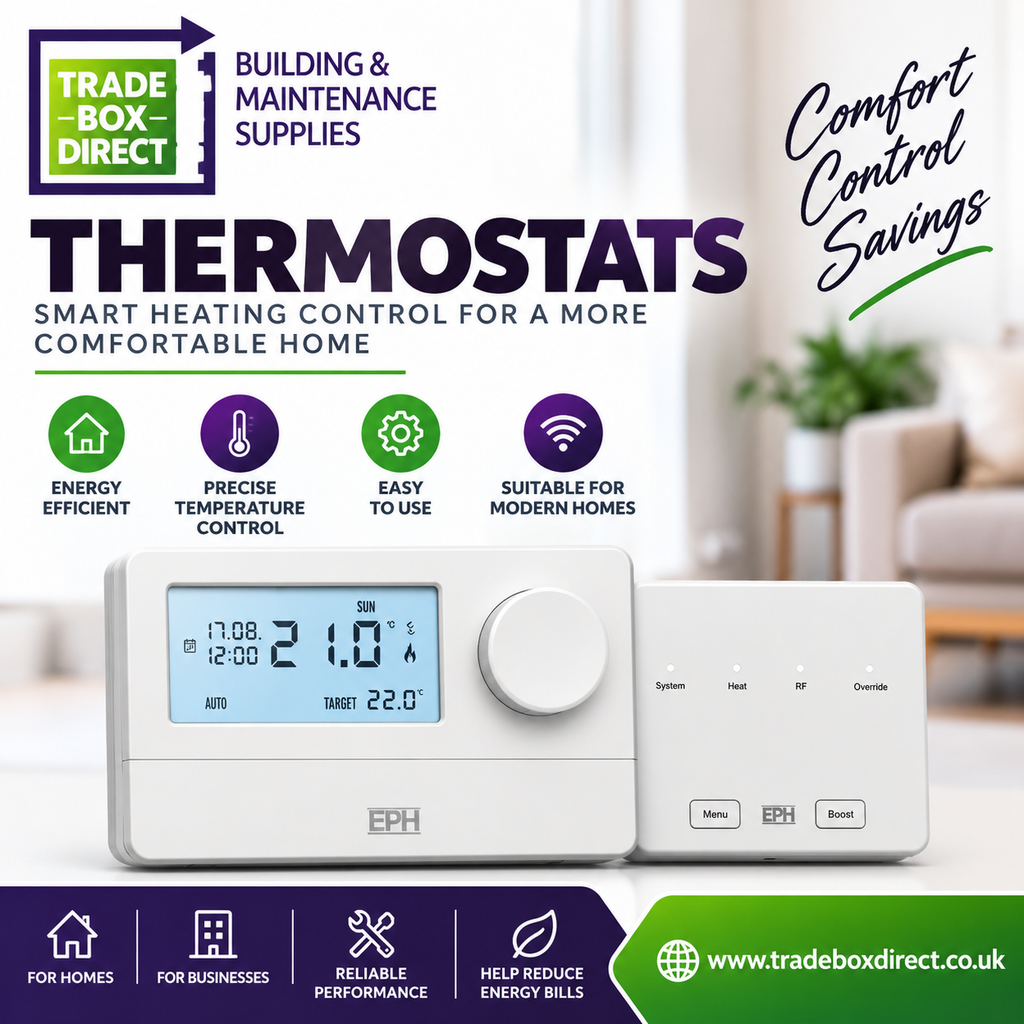
EPH CP4D OpenTherm Programmable RF Thermostat
The EPH CP4D OpenTherm Programmable RF Thermostat is one option for homes that need flexible heating control.
This model combines programmable settings with RF communication. It also supports OpenTherm systems.
You can find the EPH CP4D OpenTherm Programmable RF Thermostat when looking for a suitable heating control product.
OpenTherm can allow compatible boilers and thermostats to communicate in more detail. This can help the system adjust heating output instead of using only a simple on-and-off signal.
Always check the boiler requirements before choosing an OpenTherm thermostat.
What Is an OpenTherm Thermostat?
An OpenTherm thermostat communicates with a compatible boiler using the OpenTherm system.
Unlike a basic thermostat, it can send more detailed heating information. The boiler can then adjust its output based on demand.
This can help provide smoother heating control. It may also improve comfort because the boiler does not always need to work at full output.
However, both the boiler and thermostat must support OpenTherm. Check the product information before you buy.
Benefits of Wireless Heating Thermostats
Wireless heating thermostats offer several useful benefits.
First, installation can be more flexible. You do not always need to run a new cable to the thermostat.
Second, the thermostat can sit in a suitable room position. This can help improve temperature readings.
Third, programmable models can follow your daily routine. As a result, the heating can run only when needed.
Finally, RF models can provide a reliable connection between the thermostat and receiver when installed correctly.
These benefits make wireless heating controls a popular option for many homes.
How Should You Choose THERMOSTATS?
Start by checking your boiler and heating system. Not every thermostat works with every boiler.
Next, think about how you use your heating. A simple model may suit a small home. A programmable or smart model may suit a busy household.
You should also consider installation. Wireless models can offer more flexibility. Meanwhile, wired models may suit systems that already have suitable wiring.
Battery life is another useful point to check. A clear display can also make daily use easier.
Finally, check the available features. Look at timers, RF communication, OpenTherm support and smart controls before making your choice.
Can You Buy THERMOSTATS Online?
Yes. You can shop online for many types of heating controls.
Online shopping makes it easy to compare features and specifications. You can also check whether a model suits your boiler.
Before you buy, read the product details carefully. Check the connection type, compatibility and required power.
If you are unsure, ask a qualified heating professional for advice.
Why Are Modern THERMOSTATS Useful?
Modern heating controls can make everyday heating easier. They can also help reduce heating waste.
A programmable model can follow your schedule. Wireless units offer flexible placement. Smart options can give you remote access.
For that reason, THERMOSTATS are an important part of many modern heating systems.
The key is to choose a model that matches your boiler and your needs.
FAQs
What does a thermostat do?
It checks room temperature and tells the heating system when to heat or stop heating.
Are wireless thermostats reliable?
Yes. A good wireless model can provide reliable communication when installed in the correct position.
What is an RF thermostat?
An RF thermostat uses radio signals to communicate with a receiver. This removes the need for a direct cable between the two units.
Can I use a smart thermostat with any boiler?
Not always. Compatibility depends on the boiler and thermostat. Always check the product specifications first.
What is an OpenTherm thermostat?
It is a thermostat that can communicate with a compatible OpenTherm boiler. This allows more detailed heating control.
Are programmable thermostats useful?
Yes. They let you set heating times in advance. This can help match heating to your daily routine.
Conclusion
The right heating control can make a home more comfortable and easier to manage. THERMOSTATS can control room temperature and reduce unnecessary heating.
There are many options to consider. Programmable models suit scheduled heating. Wireless and RF models offer flexible installation. Smart models provide extra features and remote access.
Before choosing a product, check your boiler, heating system and required features. With the right model, you can enjoy simple and practical heating control.