








What Mounting Bracket for Wood Cabinets?
Introduction
Choosing the right bracket for a wood cabinet can make a big difference. A good bracket keeps the cabinet steady, spreads the weight, and gives a neat finish. However, the best option depends on the cabinet size, wall type, weight, and intended use.
If you are fitting a wall cabinet, kitchen cabinet, storage unit, or display cabinet, you need hardware that can handle the load. You also need the right screws and wall fixings. This guide explains the main bracket types in simple language. It also explains how to choose, install, and maintain them safely.
Why Do Wood Cabinets Need Brackets?
Wood cabinets can become heavy when you add shelves, books, dishes, tools, or other items. Therefore, a strong bracket helps hold the cabinet in place. It also reduces movement and helps keep the cabinet level.
The right Mounting bracket should match both the cabinet and the wall. For example, a small display cabinet may need light-duty support. On the other hand, a large kitchen cabinet may need a stronger system with several fixing points.
Before buying a bracket, check the cabinet weight and the expected load. Then check the wall material. Brick, concrete, timber studs, and plasterboard all need different types of fixings.
What Types of Brackets Work for Wood Cabinets?
Several bracket types can work well with wood cabinets. Each type has a different purpose, so choosing the right design is important.
1. L-Shaped Brackets
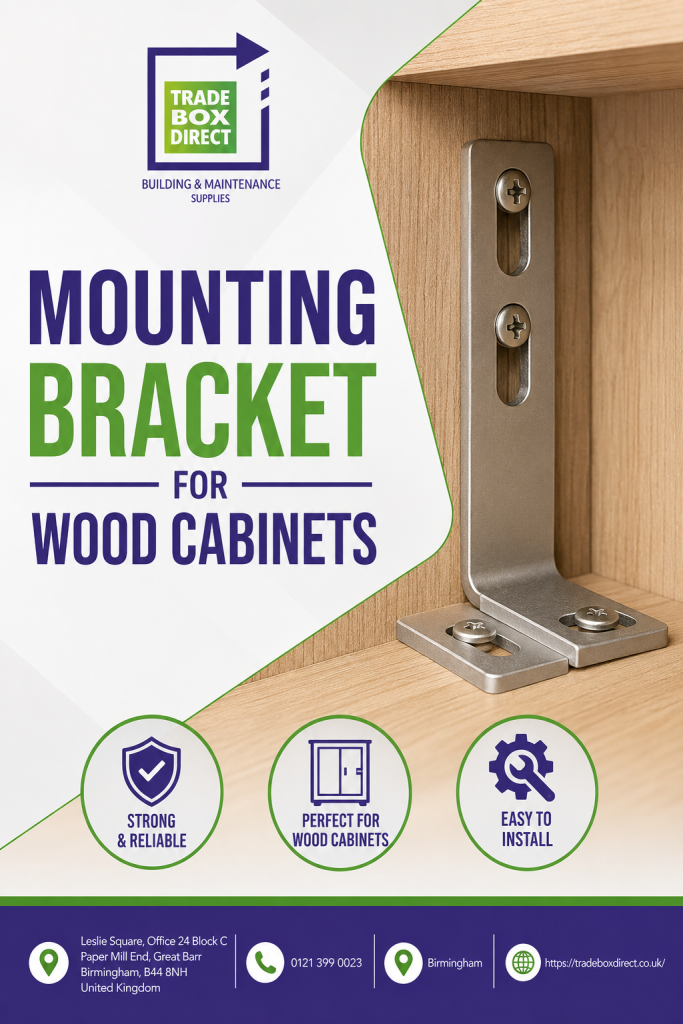
L-shaped brackets are simple and popular. They have two flat sides that meet at a right angle. One side attaches to the wall, while the other side supports the cabinet.
These brackets work well for smaller cabinets, shelves, panel and storage units. They are also easy to install. For heavier cabinets, choose a thicker metal bracket with a suitable load rating.
2. Heavy-Duty Angle Brackets
Heavy-duty angle brackets provide extra support. They suit large wood cabinets and units that carry heavier items. The wider design can spread the load over a larger area.
For better results, use more than one bracket on a long cabinet. Place the supports near strong points in the cabinet. Also, make sure the wall fixing solar can handle the full load.
3. Concealed Cabinet Brackets
Concealed brackets sit behind or inside the cabinet. As a result, they keep the outside clean and neat. This option works well when appearance matters.
Many modern wall cabinets use concealed support systems. They can provide strong support while keeping the hardware out of sight. However, installation must be accurate because the bracket and wall fixings need to line up correctly.
4. Corner Brackets
Corner brackets provide support at cabinet corners. They can help strengthen joints and reduce movement. They are useful for cabinet frames, storage boxes, and DIY furniture projects.
When using corner brackets, select screws that suit the wood thickness. Avoid screws that are too long because they may come through the cabinet surface.
What Should You Look for in a Cabinet Bracket?
The first thing to check is load capacity. Never choose a bracket only because it looks strong. Instead, check its rated capacity and compare it with the cabinet and its contents.
Next, consider the material. Steel brackets are common because they offer good strength. Stainless steel can be useful in areas where moisture may be present.
Size also matters. A bracket should have enough surface area for secure fixing. At the same time, it should fit neatly inside or behind the cabinet.
You should also check the wall. A strong bracket cannot solve a weak wall fixing. For brick or concrete, use suitable masonry fixings. For timber, fix into a solid stud where possible. For plasterboard, use a fixing designed for the board and expected load.
How to Choose the Right Mounting Bracket
Start by measuring the cabinet. Note its width, depth, and weight. Then estimate the weight of the items you plan to store.
Next, inspect the wall. Find studs if the wall uses timber framing. If you have a masonry wall, choose a suitable masonry anchor.
After that, select the bracket size. A larger cabinet often needs more support points. A heavy cabinet may need heavy-duty brackets instead of basic L-shaped supports.
Also, think about the final look. Visible brackets can add an industrial style. Concealed brackets provide a cleaner finish. Therefore, choose a design that suits both the cabinet and the room.
Do Solar Mounting Keywords Relate to Cabinet Brackets?
The word Mounting appears in many hardware categories, including solar products. However, solar hardware is designed for solar panels and roof structures, not wood cabinets.
For example, solar mounting systems support solar equipment on roofs or other structures. Solar mounting rails create a secure rail system for panel installation. A pantile roof hook is made for tiled roof applications, while a solar roof hook connects solar support structures to the roof.
Solar brackets and solar panel mounting brackets also serve a different purpose. Likewise, a solar mounting rail and solar panel rail are designed to hold solar panels rather than furniture.
These terms can appear in a wider hardware category, but you should not use a solar bracket as a substitute for a cabinet bracket. Always choose hardware for its intended application.
What Makes Mounting Safe and Reliable?
Good Mounting depends on more than the bracket itself. The wall, screws, fixings, and cabinet material all play a role.
A strong cabinet can still become unsafe if it has weak wall fixings. Similarly, a strong wall bracket may fail if the screws cannot grip the cabinet properly.
Therefore, check every part before installation. Look at the bracket rating, screw size, fixing type, cabinet thickness, and wall condition.
It is also useful to leave a safety margin. If your cabinet and contents weigh close to the bracket’s maximum rating, choose a stronger option.
Installation Tips for Wood Cabinet Brackets
Before installation, gather a drill, level, pencil, tape measure, suitable screws, wall fixings, and the correct drill bit.
First, mark the cabinet position. Use a level to keep the cabinet straight. Then mark the bracket holes.
Next, check the marks again. This small step can prevent uneven installation. Drill the holes with the correct bit for the wall type.
After that, install the wall fixings. Attach the brackets and tighten the screws firmly. Do not overtighten them because this can damage the wood or fixing.
Finally, place the cabinet on the brackets or attach it to the support system. Check the level again. Add the remaining screws or safety fixings if the bracket design requires them.
For large cabinets, ask another person to help. A second person can hold the cabinet while you align and secure the hardware.
Common Bracket Installation Mistakes
One common mistake is choosing a bracket based only on price. A cheap bracket may not offer enough strength for a heavy cabinet.
Another mistake is using the wrong wall plug. A fixing that works in brick may not work in plasterboard. Therefore, always match the fixing to the wall.
Some people also use too few brackets. Long or heavy cabinets may need several support points. Follow the bracket instructions and consider the load across the full cabinet.
Do not ignore the cabinet material either. Thin wood or weak board may not hold a screw well. In such cases, fix through a stronger section or use a suitable reinforcement method.
Why Does Bracket Placement Matter?
Good bracket placement helps spread weight. It also reduces stress on cabinet joints. Place brackets close to strong areas, such as solid sides, rails, or reinforced sections.
For a wide cabinet, avoid placing all supports in the middle. Spread them across the width instead. This approach helps reduce bending.
A level check is also important. Even a strong cabinet can look poor if it sits at an angle. Therefore, measure twice and drill once.
Correct Mounting also helps prevent unwanted movement. When the supports sit in the right positions, the cabinet can stay more stable during daily use.
When Should You Use Heavy-Duty Brackets?
Heavy-duty brackets are a good choice when a cabinet will carry a high load. They can suit kitchen storage, tool storage, books, and other heavy items.
However, the bracket is only one part of the system. The screws, wall plugs, cabinet material, and wall must also support the load.
If you are unsure, choose a system with a suitable safety margin. For a very heavy cabinet, professional installation may be the safest option.
How to Maintain Cabinet Brackets
Once installed, check the brackets from time to time. Look for loose screws, cracks, bending, rust, or movement.
If a screw becomes loose, tighten it carefully. If the wood hole has become damaged, do not simply force in a larger screw without checking the structure.
For metal brackets, clean away dust and moisture. In damp areas, inspect the metal more often. Early checks can help prevent bigger problems.
Regular Mounting checks are especially useful for cabinets that hold heavy items. A quick inspection can help you find problems before they become serious.
FAQs
1. What is the best bracket for a wood cabinet?
The best bracket depends on the cabinet weight, wall type, size, and design. Heavy-duty angle brackets suit heavier cabinets, while L-shaped brackets can work well for smaller units.
2. Can I use L brackets for wall cabinets?
Yes, L brackets can support some wall cabinets. However, choose a suitable load rating and use enough brackets. The wall fixings must also match the wall material.
3. How many brackets does a wood cabinet need?
There is no single number for every cabinet. A small unit may need two supports, while a wider or heavier cabinet may need three or more. Follow the bracket instructions and consider the total load.
4. Can I install a cabinet on plasterboard?
Yes, but you need the correct plasterboard fixings. For heavier cabinets, fixing into wall studs is often a better option when possible.
5. Should cabinet brackets be hidden?
That depends on your preferred style. Concealed brackets give a clean look, while visible brackets can add character and make the hardware easy to inspect.
6. What screws should I use for wood cabinets?
Use screws that match the bracket, cabinet material, and fixing method. The screw should provide enough grip without being so long that it damages the cabinet.
7. Are solar brackets suitable for wood cabinets?
No. Solar brackets are designed for solar panel support. They are not a replacement for furniture or cabinet brackets.
8. Can a Mounting bracket support a heavy cabinet?
Yes, but only when the bracket, screws, wall fixings, and cabinet structure can handle the total load. Always check the product rating before installation.
Conclusion
The right Mounting bracket can make a wood cabinet safer, stronger, and more stable. Start by checking the cabinet size, load, wall type, and fixing points. Then choose a bracket that matches those needs.
L-shaped brackets offer a simple option. Heavy-duty angle brackets provide more support. Concealed brackets suit clean designs, while corner brackets can strengthen cabinet joints.
Most importantly, do not focus on the bracket alone. The wall, screws, fixings, and cabinet material all matter. With careful measurements and the correct hardware, you can create a secure and neat cabinet installation.