








Do Air Bricks Improve Airflow? A Simple Guide for Better Home Airflow
Introduction
Airflow is important in every home. Fresh air helps reduce moisture, stale smells, and indoor pollutants. However, many homes need a simple way to allow air to move in and out. This is where air bricks can help.
An air brick is a vent built into a wall. It has openings that allow air to pass through. At the same time, it can help protect the opening from unwanted objects and pests. Therefore, an air brick can play an important role in VENTILATION.
But do air bricks really improve airflow? The short answer is yes, when they are used and placed correctly. However, they are not a complete solution for every home. Their main purpose, location, size, and condition all affect how well they work.
What Is an Air Brick?
Unlike a normal brick, it has holes or openings through its body.
These openings create a path for air to move between the inside and outside of a building. As a result, an air brick can support natural airflow.
Air bricks are often found near ground level. They can be used to provide airflow under floors, inside walls, or around certain building areas that need a steady flow of fresh air.
A ventilation air brick may be made from terracotta, plastic, or another suitable material. A terracotta airbrick is a popular choice because it can blend well with traditional brickwork.
Do Air Bricks Improve Airflow?
Yes, air bricks can improve airflow. They provide a direct route for air to enter or leave a space.
For example, a room or under-floor area may have poor natural airflow. Adding a suitable air brick can create an opening for fresh air. Consequently, stale or damp air may move out more easily.
However, an air brick does not force air to move. It relies mainly on natural air pressure and differences in temperature. Therefore, the results can vary from one building to another.
The design of the air brick also matters. A blocked, damaged, or poorly sized air brick will not work as well.
For this reason, good VENTILATION depends on more than simply installing a vent. The whole airflow path needs to work properly.
How Do Air Bricks Work?
Air bricks work by creating openings through a wall. These openings allow air to travel between two areas.
Natural airflow can happen because of wind pressure. It can also happen because warm air rises while cooler air moves into its place.
For example, warm air inside a building may rise. Cooler outside air can then enter through a lower opening. This creates a natural movement of air.
The process is simple, but it can be useful. In particular, air bricks can help ventilate areas such as suspended timber floors.
However, airflow needs both an entry and an exit path.
Therefore, a well-planned VENTILATION system should consider the position of every vent.
Where Are Air Bricks Used?
Air bricks are used in several areas of a building. Their most common use is to provide airflow to spaces below floors.
Under-floor airflow is especially important in some properties. Good airflow can help reduce the build-up of damp air.
Air bricks can also be used alongside other products. For example, ventilation grilles, window vents, and other air vents may form part of a wider home airflow plan.
However, each building is different. The right product should always suit the structure and the required airflow.
Air Bricks and Damp Prevention
Damp air can create problems in a building. It may contribute to condensation, unpleasant smells, and damage to some materials.
Air bricks can help by allowing air to move through areas that need ventilation. This can be useful under suspended floors, where trapped moisture can become a concern.
However, air bricks do not fix every damp problem.
If water is entering through walls, roofs, pipes, or damaged gutters, installing an air brick alone will not solve the cause.
Air Bricks vs Window Vents
Air bricks and window vents have different jobs.
Window vents, on the other hand, allow controlled airflow through windows. For example, trickle vents for windows can provide a small amount of fresh air without opening the whole window.
There are also trickle vents for UPVC windows, window trickle vents, and plastic window vents designed for modern window systems.
These products can support window ventilation while helping reduce the need to keep a window fully open.
What Are Trickle Vents?
They allow a controlled amount of outside air to enter a building.
They are useful because they can provide background airflow while the window remains closed.
For example, upvc trickle vents can be fitted to suitable UPVC windows. There are also trickle vents for doors and other types of window air vents.
However, trickle vents and air bricks are not the same. An air brick is usually part of a wall, while a trickle vent is fitted into a window or door.
Both can support VENTILATION, but they serve different purposes.
Choosing the Right Air Brick
Choosing the correct air brick is important. First, consider where it will be installed.
Next, check the required size and airflow. The material should also suit the building.
A terracotta option can work well with traditional brickwork. For example, Vent Axia – Double Louvred Airbrick Terracotta – 220x90mm is designed as a louvred airbrick solution.
Louvres help guide airflow while providing a practical cover for the opening.
It is also important to keep the air brick clear. Soil, leaves, paint, dust, and other materials can reduce the open area.
Therefore, regular checks can help maintain good airflow.
Using Air Vent Covers
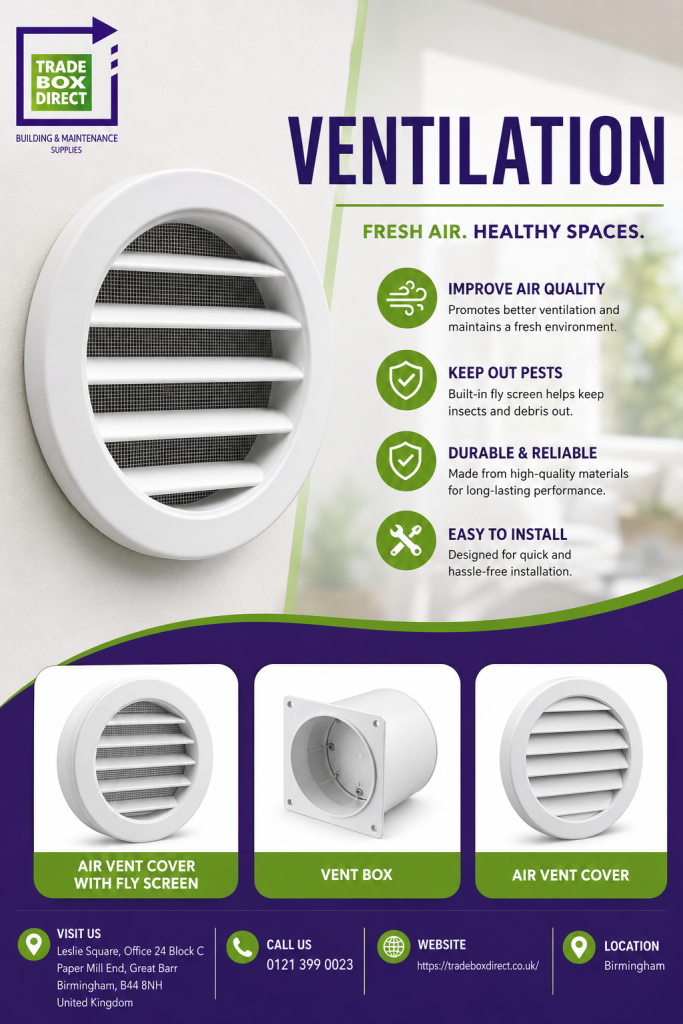
An air vent cover with fly screen can be useful where protection from insects is needed. A suitable cover can help keep unwanted insects out while still allowing air to pass.
An air vent cover can also provide a neat finish around an opening.
However, the cover should not block most of the vent area. A cover that is too restrictive can reduce airflow.
Likewise, an air box or vent box should be selected based on the type of installation.
The key is to protect the opening without stopping the airflow.
Can Air Bricks Work With a Home Ventilation System?
Yes. Air bricks can form part of a larger home ventilation system.
A modern air ventilation system for home use may include several components. These can include air vents, window vents, trickle vents, fans, grilles, and ducting.
For example, a property may use wall air bricks for under-floor airflow and window trickle vents for background airflow inside living spaces.
These systems can work together.
A professional assessment may be useful when a property has serious condensation, damp, or airflow problems.
Common Airflow Problems With Air Bricks
Although air bricks can improve airflow, several problems can reduce their performance.
Blocked Air Bricks
An air brick may become blocked by soil, leaves, dust, or other debris. Therefore, check the openings regularly.
Damaged Air Bricks
Cracked or broken vents may need repair or replacement. Damage can reduce airflow and may also allow unwanted pests to enter.
Poor Positioning
An air brick needs to be placed where it can provide useful airflow. A poor location may limit its benefit.
Covered Air Bricks
Never cover an air brick without understanding its purpose. Covering an important airflow route can reduce natural airflow.
Incorrect Covers
A poorly designed cover can restrict air movement. Therefore, always choose a suitable ventilation grille or vent cover.
Product Options for Better Airflow
Different products can be useful for different areas of a building.
5000 AirFlow UPVC Trickle Vent for Windows & Doors | White is a practical option for window and door applications where controlled background airflow is required.
For wall-based airflow, the Vent Axia – Double Louvred Airbrick Terracotta – 220x90mm can be considered for suitable installations.
Another useful option is the Trickle Slot Vents Window Ventilation Real PVC Plastic 300mm 400mm.
These products have different uses. Therefore, the correct choice depends on the location, window or wall type, and airflow needs.
How to Keep Air Bricks Working Properly
Keeping an air brick clear is simple but important.
First, check the opening from time to time. Remove visible dirt, leaves, or other debris.
If the opening has a fly screen, make sure dust has not built up on the screen.
Also, check for cracks or damage.
Do not seal an air brick simply because cold air is entering the building. Instead, consider why the vent is there.
Good VENTILATION often requires a balance between fresh air and heat retention.
Are Air Bricks Enough for a Whole House?
Usually, no.
Air bricks can improve airflow in the areas they serve. However, they are not normally a complete whole-house solution.
A modern home may need several forms of airflow. These can include window vents, trickle vents, extractor fans, wall vents, and other systems.
For example, house window vents can provide background airflow through windows. Meanwhile, air bricks can serve wall or under-floor areas.
Together, these products can support better house ventilation.
The best approach depends on the building. Older homes, newer homes, flats, and houses with different construction types can all have different airflow needs.
Benefits of Good Home Airflow
Good airflow can provide several benefits.
First, it helps bring fresh air into indoor spaces. It can also help remove stale air and excess moisture.
Furthermore, good airflow can reduce the feeling of stuffiness. In some areas, it may also help manage condensation.
However, airflow should be controlled. Too much uncontrolled airflow can make a home feel cold and may increase heat loss.
Therefore, the goal is balanced VENTILATION, not simply having as many vents as possible.
Final Thoughts
So, do air bricks improve airflow?
Yes, they can. Air bricks provide a simple path for air to move through walls and into areas that need airflow. They are particularly useful for certain under-floor and wall applications.
However, their performance depends on correct installation, good positioning, suitable sizing, and regular maintenance.
Air bricks can also work alongside window vents, trickle vents, ventilation grilles, and other products. As a result, they can become part of a wider home ventilation system.
Whether you need an air brick vent, window air vents, UPVC trickle vents, or an air vent cover, always choose a product that matches the intended application.
Most importantly, keep vents clear and make sure airflow routes are not blocked. With the right products and a sensible approach, your home can have a healthier and more comfortable airflow system.
Frequently Asked Questions
1. Do air bricks increase airflow?
Yes. Air bricks create openings that allow air to move between different areas. However, the amount of airflow depends on the vent size, position, weather, and the building design.
2. Should air bricks be covered?
Air bricks should not normally be covered if they are providing necessary airflow. If protection is needed, use a suitable vent cover that still allows air to pass.
3. Can air bricks help with damp?
They can help improve airflow in areas where moisture may become trapped. However, they cannot fix damp caused by leaks, rising damp, or other water problems.
4. Are air bricks and trickle vents the same?
No. Air bricks are generally installed in walls, while trickle vents are usually fitted into windows or doors. Both can support airflow, but they have different applications.
5. How often should air bricks be checked?
It is sensible to check them regularly for dirt, leaves, insects, or damage. Keeping the openings clear helps maintain airflow.