






Why Are Signs of Poor Air Ventilation Important? A Complete Guide to Better Ventilation in Your Home
Introduction
Ventilation plays a big part in keeping your home healthy and comfortable. It helps fresh air come in and stale air go out. As a result, your home feels cleaner, smells better, and stays drier. Good airflow also helps remove dust, moisture, and indoor pollutants.
However, many people do not notice poor ventilation until problems become serious. At first, the signs seem small. For example, you may notice a damp smell or fog on your windows. Later, mould, condensation, and poor air quality may appear. Because of this, it is important to understand the warning signs early.
Moreover, poor ventilation can affect both your home and your health. It can lead to breathing problems, allergies, headaches, and even damage to walls and furniture. Therefore, improving airflow should be a priority in every property.
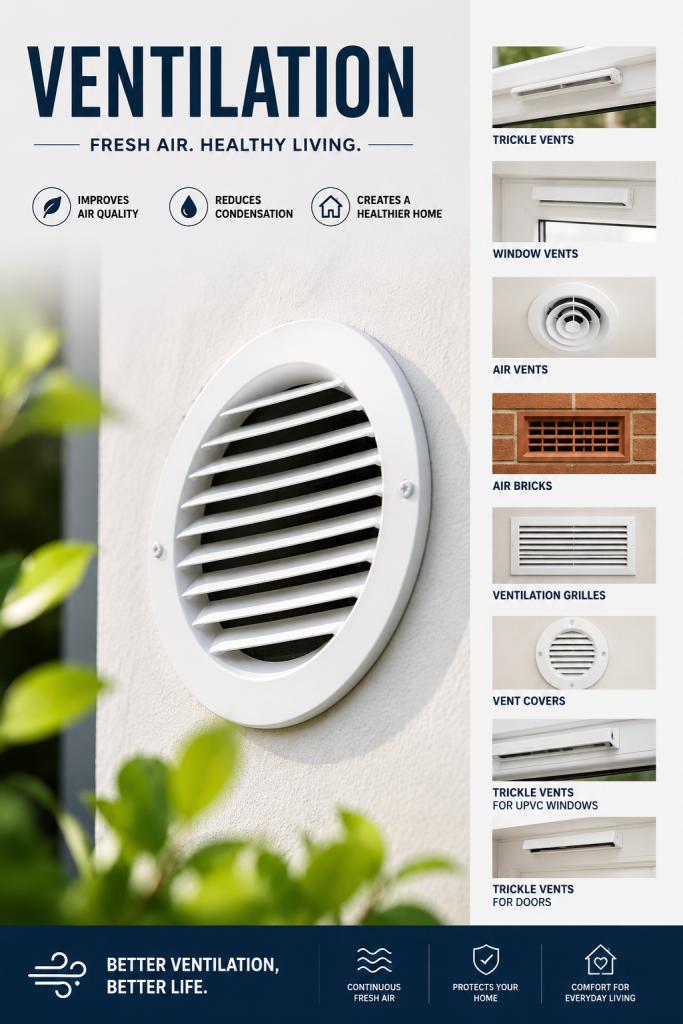
Fortunately, there are many simple ways to improve airflow. Products such as air brick vent, ventilation air brick, terracotta airbrick, trickle vents, window vents, air vents, air bricks, ventilation grilles, vent covers, trickle vents for UPVC windows, window trickle vents, window ventilation, and air vent cover all help fresh air move around your home.
In this guide, you will learn the common signs of poor ventilation, why they happen, and how you can fix them before they become expensive problems.
What Is Ventilation?
Ventilation is the movement of fresh air into a building while stale air moves out. This process removes moisture, smoke, dust, cooking smells, and harmful gases.
Without enough fresh air, indoor air quality becomes poor. Consequently, your home may feel stuffy and uncomfortable.
There are different ways to improve airflow. For example, homes often use window vents, house window vents, window air vents, ventilation grilles, and air brick vent systems. These products allow fresh air to enter while helping damp air leave.
Why Is Good Ventilation So Important?
Good ventilation does much more than keep rooms fresh.
It also:
- Reduces excess moisture.
- Prevents condensation.
- Helps stop mould growth.
- Removes bad smells.
- Improves indoor air quality.
- Protects furniture and walls.
- Supports better breathing.
- Makes your home more comfortable.
Furthermore, good airflow helps reduce allergens such as dust mites and mould spores. As a result, people with asthma or allergies often feel better in a well-ventilated home.
What Are the Main Signs of Poor Air Ventilation?
Many homes show warning signs before serious damage happens. Therefore, knowing these signs can save money and protect your family’s health.
1. Condensation on Windows
One of the first signs is water droplets on windows.
This usually appears in the morning or after cooking and showering.
When warm air meets a cold window, moisture forms. If this happens every day, your home may not have enough airflow.
Installing trickle vents for windows, UPVC trickle vents, or window trickle vents can help reduce this moisture by allowing fresh air inside.
2. Damp or Musty Smells
A home should smell fresh.
However, if rooms have a damp smell that does not disappear, poor ventilation may be the reason.
This smell often develops because moisture becomes trapped. Over time, mould begins to grow behind furniture, inside cupboards, or on walls.
Therefore, improving window ventilation can remove stale air before mould develops.
3. Mould Growing on Walls or Ceilings
Mould is one of the clearest signs of poor ventilation.
You may notice black, green, or grey spots near windows, ceilings, bathrooms, or kitchens.
Although cleaning mould removes what you see, it does not solve the real problem.
Instead, your home needs better airflow. Products like ventilation grilles, air vents, and air brick vent systems help moisture escape naturally.
4. Stuffy Indoor Air
Does your home feel heavy or uncomfortable?
If opening a door immediately makes the room feel fresher, poor airflow is likely the cause.
Stale air often contains carbon dioxide, dust, and indoor pollutants.
Consequently, people may feel tired or uncomfortable after spending several hours indoors.
5. Lingering Cooking Smells
Cooking smells should disappear after a short time.
However, if food smells remain for many hours, your kitchen may not have enough ventilation.
Likewise, smoke and steam may stay inside instead of leaving the room.
Adding vent covers, extractor fans, or ventilation grilles helps remove cooking fumes more effectively.
6. High Humidity Levels
A healthy home should not feel damp.
If your walls, windows, or furniture often feel wet, excess humidity may be building up indoors.
High humidity encourages mould, bacteria, and dust mites.
Therefore, improving airflow with air bricks, terracotta airbrick, or ventilation air brick products can help reduce moisture naturally.
7. Peeling Paint or Wallpaper
Too much moisture slowly damages decorating materials.
You may notice wallpaper lifting from the wall or paint beginning to bubble.
Although many people blame poor decorating, trapped moisture is often the real cause.
As airflow improves, these problems usually become much less common.
8. Allergies That Become Worse Indoors
Indoor air should help you feel comfortable.
Instead, poor ventilation may make allergies worse.
Dust, mould spores, pet hair, and pollen stay trapped inside when fresh air cannot circulate properly.
Because of this, people may sneeze more often or develop itchy eyes and coughing while indoors.
Why Does Poor Ventilation Happen?
Many homes experience poor airflow for simple reasons.
For example, modern houses are built to save energy. Although this reduces heating bills, it also traps indoor air.
Likewise, keeping windows closed all year limits fresh air.
Other common causes include:
- Blocked air bricks
- Covered ventilation grilles
- Broken extractor fans
- Sealed window vents
- Missing trickle vents
- Poor loft airflow
- Furniture blocking vents
- Dirty air vent covers
Fortunately, most of these problems are easy to fix.
Practical Solutions to Fix Poor Air Ventilation
Now that you know the signs of poor ventilation, the next step is to improve the airflow in your home. Fortunately, many solutions are simple and affordable. Moreover, they can protect both your health and your property for years to come.
Install Air Brick Vents
An air brick vent is one of the easiest ways to improve natural airflow. It allows fresh air to enter your home while letting stale, damp air escape.
Many homes already have air bricks, but they may become blocked by dirt, leaves, or paint. Therefore, check them regularly and keep them clean.
If you are building or renovating a property, installing a ventilation air brick or a terracotta airbrick can provide long-lasting airflow while matching the style of your home.
Fit Trickle Vents to Your Windows
Modern homes are often sealed very tightly. As a result, fresh air cannot enter easily.
This is where trickle vents help. They allow a small amount of fresh air to enter without opening the whole window.
There are several options available, including:
- Trickle vents for UPVC windows
- UPVC trickle vents
- Window trickle vents
- Trickle vents for doors
- Trickle vents for windows
These products improve window ventilation throughout the day. In addition, they help reduce condensation and improve indoor air quality.
Use Window Vents and Air Vents
Fresh air needs a clear path into your home.
Installing window vents, window air vents, house window vents, or other air vents helps keep air moving naturally.
Furthermore, these vents work well in bedrooms, living rooms, and home offices where people spend many hours each day.
Install Ventilation Grilles and Vent Covers
A ventilation grille allows air to move between rooms while protecting the opening.
Likewise, ventilation grilles improve airflow in cupboards, lofts, garages, and utility rooms.
At the same time, an air vent cover or quality vent covers protect vents from insects, dirt, and debris while allowing air to pass through.
Therefore, they improve both airflow and appearance.
Open Windows Every Day
Although mechanical systems help, opening windows is still one of the easiest ways to improve ventilation.
Even opening them for 10 to 15 minutes each morning allows stale air to leave and fresh air to enter.
As a result, moisture levels fall, and indoor air becomes cleaner.
Use Extractor Fans
Bathrooms and kitchens create a large amount of moisture.
Therefore, always use extractor fans while cooking or showering.
Moreover, leave the fan running for several minutes after you finish. This removes steam before it turns into condensation.
Keep Vents Clear
Sometimes the solution is very simple.
Furniture, curtains, or storage boxes may block airflow without you noticing.
For this reason, keep all vents, air brick vents, and ventilation grilles free from obstructions.
Regular cleaning also keeps dust from reducing airflow.
How to Prevent Poor Ventilation
Preventing poor ventilation is much easier than repairing mould or damp damage later.
Follow these simple habits:
- Open windows every day.
- Clean air bricks regularly.
- Keep ventilation grilles dust free.
- Leave trickle vents open.
- Use extractor fans after cooking and showering.
- Dry clothes outside whenever possible.
- Avoid blocking window vents.
- Check vent covers for dirt or damage.
- Monitor humidity levels during winter.
- Inspect your home for condensation every week.
These small steps can make a big difference over time.
Frequently Asked Questions
What is the biggest sign of poor ventilation?
The most common sign is condensation on windows. However, mould, damp smells, stale air, peeling wallpaper, and high humidity are also strong warning signs.
Do trickle vents really work?
Yes. Trickle vents provide a constant supply of fresh air. Consequently, they help reduce condensation, improve indoor air quality, and lower moisture levels.
Are air bricks important?
Yes. Air bricks improve airflow beneath floors and inside walls. As a result, they help prevent damp, timber decay, and mould growth.
Can poor ventilation damage a house?
Yes. Over time, trapped moisture can damage paint, wallpaper, plaster, timber, flooring, and furniture. Therefore, improving ventilation protects your home as well as your health.
Conclusion
Good ventilation is one of the easiest ways to create a healthier and more comfortable home. Although poor airflow may seem like a small problem at first, it can quickly lead to condensation, mould, unpleasant smells, and expensive property damage. Furthermore, it can affect your family’s health by reducing indoor air quality and increasing allergens.
Fortunately, improving airflow does not have to be difficult. Installing an air brick vent, ventilation air brick, terracotta airbrick, trickle vents, window vents, air vents, air bricks, ventilation grilles, vent covers, or an air vent cover can make a noticeable difference. Likewise, keeping vents clean, opening windows daily, and using extractor fans help fresh air circulate throughout your home.
By recognising the early signs and taking action quickly, you can prevent costly repairs and enjoy cleaner, fresher indoor air all year round. Investing in proper ventilation today will help protect both your home and your family’s well-being for many years to come.